Kirjojen hintavertailu – 12 859 819 kirjaa ja 27 kauppaa

Kirjailija

Andrea Felicetti

Kirjat ja teokset yhdessä paikassa: 4 kirjaa, julkaisuja vuosilta 2016–2025, suosituimpiin kuuluu Pandemic Communication and Participation. Vertaile teosten hintoja ja tarkista saatavuus suomalaisista kirjakaupoista.

4 kirjaa

Kirjojen julkaisuvuodet: 2016–2025.

Pandemic Communication and Participation

Pandemic Communication and Participation

Donatella della Porta; Riccardo Emilio Chesta; Daniela Chironi; Stella Christou; Andrea Felicetti

EDWARD ELGAR PUBLISHING LTD
2025
sidottu
This innovative book situates research on the COVID-19 pandemic in terms of institutional and grassroots participation, participatory and deliberative democracy, and science and risk communication. The authors analyse the democratic challenges and opportunities faced by social movements and civil society organizations in emergency situations, and emphasize the crucial importance of their engagement in solidarity actions. Providing in-depth analysis of the COVID-19 pandemic in Italy, with international applications, this book pairs qualitative empirical data with sociological and political theory, drawing on an extensive original collection of interview data. Authors situate civilian responses to the pandemic within a broader crisis framework to explore ongoing debates on social movements, active citizenship, participation, and contemporary political communication. Chapters highlight the role of political actors, media, and scientific expertise in influencing mobilization and public discourse, to analyze the processes that shaped action during the health emergency. Pandemic Communication and Participation is an essential resource for scholars and students of sociology, political communication, and social movement studies. Its practical guidance and focus on mitigating the risks of future health emergencies also makes it a beneficial read for policymakers and practitioners in public health.

Discursive Turns and Critical Junctures

Discursive Turns and Critical Junctures

Donatella della Porta; Pietro Castelli Gattinara; Konstantinos Eleftheriadis; Andrea Felicetti

Oxford University Press Inc
2020
sidottu
Among the violent acts perpetrated by radical Islamist groups in Europe, the Charlie Hebdo massacre in Paris has been one of those that has challenged established categories of public debate the most. Through a multifaceted and detailed analysis of the public discourse around the Charlie Hebdo episode in France, Germany, Italy, and the UK, Discursive Turns and Critical Junctures offers an in-depth analysis of how political groups and religious organizations have reacted to the event, which claims they have made in the public sphere, and how they have justified such claims. Drawing on newspaper sources and discourse analysis, the authors navigate the complexities caused by political violence. They develop a threefold comparison that considers how the debate differs across countries; how it evolved over time; and how it varies when one looks at mainstream media compared to social movement arenas. Based on a triangulation of quantitative and qualitative analyses, the volume pays particular attention to radical left, radical right and religious actors and to issues related to migration and integration, secularism and cultural diversity, security and civil rights. In particular, they focus on the way in which transformative events act as critical junctures within different public spheres. Starting from the nefarious attacks on January 2015, this highly relevant, theoretically compelling, and methodologically sophisticated study of public debates in Europe adds substantially to the growing body of research into critical junctures as discursive turning points and gives insights into into a number of debates ranging including citizenship and political violence.
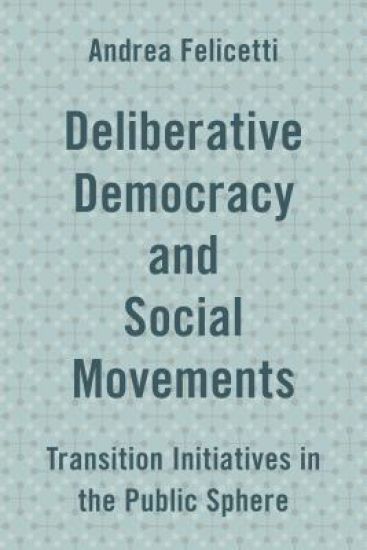
Deliberative Democracy and Social Movements

Deliberative Democracy and Social Movements

Andrea Felicetti

Rowman Littlefield
2018
nidottu
Deliberative democracy is increasingly central in democratic theory and its concepts are employed in a growing number of fields, including social movement studies and environmental politics. At the same time, contemporary citizen activism seems to feature some forms of engagement that resonate with deliberative democratic ideas. This book provides an in-depth investigation of the qualities of citizens' engagement from a deliberative democratic standpoint. The key concept through which such qualities are investigated is 'deliberative capacity', the extent to which organisations host authentic, inclusive, and consequential discursive processes. This book is based on a comparative study of four grassroots local initiatives, two from Australia (in Tasmania and Queensland) and two from Italy (in Emilia-Romagna and Sicily). By offering a critical assessment of deliberation in social movement organisations, this study identifies key aspects affecting their ability to pursue democratic deliberation and sheds new light on the role of community actors in deliberative democracy.
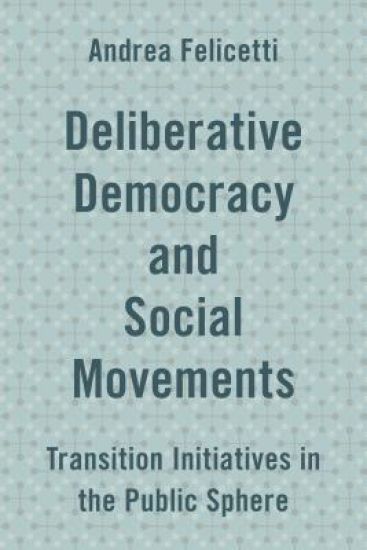
Deliberative Democracy and Social Movements

Deliberative Democracy and Social Movements

Andrea Felicetti

Rowman Littlefield
2016
sidottu
Deliberative democracy is increasingly central in democratic theory and its concepts are employed in a growing number of fields, including social movement studies and environmental politics. At the same time, contemporary citizen activism seems to feature some forms of engagement that resonate with deliberative democratic ideas. This book provides an in-depth investigation of the qualities of citizens' engagement from a deliberative democratic standpoint. The key concept through which such qualities are investigated is 'deliberative capacity', the extent to which organisations host authentic, inclusive, and consequential discursive processes. This book is based on a comparative study of four grassroots local initiatives, two from Australia (in Tasmania and Queensland) and two from Italy (in Emilia-Romagna and Sicily). By offering a critical assessment of deliberation in social movement organisations, this study identifies key aspects affecting their ability to pursue democratic deliberation and sheds new light on the role of community actors in deliberative democracy.