Kirjojen hintavertailu – 12 903 735 kirjaa ja 27 kauppaa

Kirjailija

Andrea Janes

Kirjat ja teokset yhdessä paikassa: 4 kirjaa, julkaisuja vuosilta 2014–2025, suosituimpiin kuuluu Lean Software Development in Action. Vertaile teosten hintoja ja tarkista saatavuus suomalaisista kirjakaupoista.

4 kirjaa

Kirjojen julkaisuvuodet: 2014–2025.

America’s Most Gothic

America’s Most Gothic

Leanna Renee Hieber; Andrea Janes

CITADEL PRESS INC.,U.S.
2025
sidottu

Halvin toimitettuna 27,60 €

From the Bram Stoker nominated author team who penned A Haunted History of Invisible Women, the first book of its kind to investigate gothic tropes that define American lore. Here is the hidden, dark history of what frightens us - and why. The Gothic. Brooding, atmospheric, chilling, and not always the outpouring of a feverish imagination. Reality can be even stranger as borne out in this lush and ghostly look at real people who lived--and died--amidst the trappings of the Gothic. Fog clinging to an isolated mansion. A dangerous patriarch or an overbearing matron. Locked doors and forbidden rooms. Whispers of murder and madness. And a woman shadowed by omnipresent threats. You've guessed it. You've stumbled into a Gothic tale, and it will haunt you like a ghost. We often think of the enduring tropes of the Gothic in terms of fiction and film--breath-catching escapes that tap into our fears, anxieties, forbidden desires, and unsettling dreams. But what if some of these chilly vibes are rooted in the experiences of real and tragic people who danced a macabre waltz with love and death? That's why we're here. Take the case of teenage Mercy Brown, victim--or was it predator?--of Rhode Island's vampire hysteria of the 1890s. Marguerite de la Roque, a French noblewoman condemned for "sexual crimes" to Canada's long-lost Isle of Demons. What happened to her and the barren landscape itself is the stuff of legend. And "Mad Lucy" Ludwell, the decidedly peculiar eighteenth-century high-society hauteur driven mad in the Virginia estate she prowls to this day. President Helen Peabody's spirit still stringently watches over her Women's College, now part of Ohio's Miami University. Ghosts of workers lost in horrific conditions while building the Hoosac Tunnel warn of imminent danger. Settle in. There are more. Welcome to the phantom ships, haunted academic halls, menacing landscapes, and family curses of America's Most Gothic--a tour of true spectral sightings and disordered minds. But beware: it's sure to get under your skin. The haunted--and haunting--figures herein want it that way.

A Haunted History Of Invisible Women

A Haunted History Of Invisible Women

Leanna Renee Hieber; Andrea Janes; Elizabeth Kerri Mahon

CITADEL PRESS INC.,U.S.
2022
nidottu

Halvin toimitettuna 27,90 €

From the notorious Lizzie Borden to the innumerable, haunted rooms of Sarah Winchester's mysterious mansion, this offbeat, insightful, first-ever book of its kind explores the history behind America's female ghosts, the stereotypes, myths, and paranormal tales that swirl around them, what their stories reveal about us--and why they haunt us... Sorrowful widows, vengeful jezebels, innocent maidens, wronged lovers, former slaves, even the occasional axe-murderess--America's female ghosts differ widely in background, class, and circumstance. Yet one thing unites them: their ability to instill fascination and fear, long after their deaths. Here are the full stories behind some of the best-known among them, as well as the lesser-known--though no less powerful. Tales whispered in darkness often divulge more about the teller than the subject. America's most famous female ghosts, from from 'Mrs. Spencer' who haunted Joan Rivers' New York apartment to Bridget Bishop, the first person executed during the Salem witchcraft trials, mirror each era's fears and prejudices. Yet through urban legends and campfire stories, even ghosts like the nameless hard-working women lost in the infamous Triangle Shirtwaist Factory fire --achieve a measure of power and agency in death, in ways unavailable to them as living women. Riveting for skeptics and believers alike, with humor, curiosity, and expertise, A Haunted History of Invisible Women offers a unique lens on the significant role these ghostly legends play both within the spook-seeking corners of our minds and in the consciousness of a nation. A Haunted History of Invisible Women looks beyond the legends of maligned female ghosts and gives us their real histories. It is both a meditation on the misogyny of a ghost-hunting culture that capitalizes on false narratives of sex and death, and a fascinating look at the flesh-and-blood women behind the ghost stories. This book is a long-overdue search for historic truth, yet it recognizes that "When it comes to ghosts, truth is as elusive as the spirits themselves." --Chris Woodyard, Author of The Victorian Book of the Dead. Afterword by Bram Stoker Award-winning author Linda D. Addison
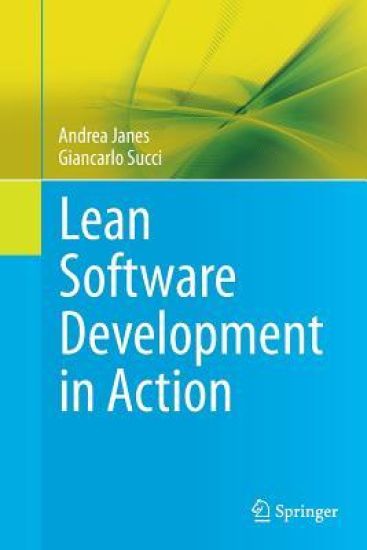
Lean Software Development in Action

Lean Software Development in Action

Andrea Janes; Giancarlo Succi

Springer-Verlag Berlin and Heidelberg GmbH Co. K
2016
nidottu
This book illustrates how goal-oriented, automated measurement can be used to create Lean organizations and to facilitate the development of Lean software, while also demonstrating the practical implementation of Lean software development by combining tried and trusted tools. In order to be successful, a Lean orientation of software development has to go hand in hand with a company’s overall business strategy. To achieve this, two interrelated aspects require special attention: measurement and experience management. In this book, Janes and Succi provide the necessary knowledge to establish “Lean software company thinking,” while also exploiting the latest approaches to software measurement. A comprehensive, company-wide measurement approach is exactly what companies need in order to align their activities to the demands of their stakeholders, to their business strategy, etc. With the automatic, non-invasive measurement approach proposed in this book, even small and medium-sized enterprises that do not have the resources to introduce heavyweight processes will be able to make their software development processes considerably more Lean. The book is divided into three parts. Part I, “Motivation for Lean Software Development,” explains just what “Lean Production” means, why it can be advantageous to apply Lean concepts to software engineering, and which existing approaches are best suited to achieving this. Part II, “The Pillars of Lean Software Development,” presents the tools needed to achieve Lean software development: Non-invasive Measurement, the Goal Question Metric approach, and the Experience Factory. Finally, Part III, “Lean Software Development in Action,” shows how different tools can be combined to enable Lean Thinking in software development. The book primarily addresses the needs of all those working in the field of software engineering who want to understand how to establish an efficient and effectivesoftware development process. This group includes developers, managers, and students pursuing an M. Sc. degree in software engineering.
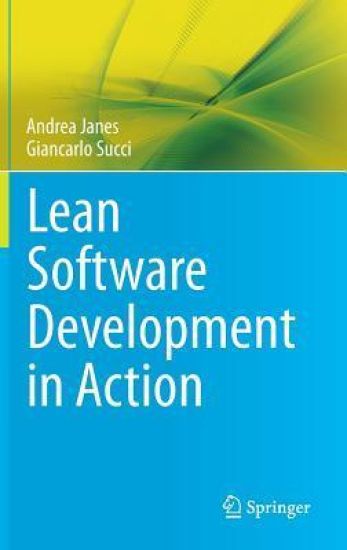
Lean Software Development in Action

Lean Software Development in Action

Andrea Janes; Giancarlo Succi

Springer-Verlag Berlin and Heidelberg GmbH Co. K
2014
sidottu
This book illustrates how goal-oriented, automated measurement can be used to create Lean organizations and to facilitate the development of Lean software, while also demonstrating the practical implementation of Lean software development by combining tried and trusted tools. In order to be successful, a Lean orientation of software development has to go hand in hand with a company’s overall business strategy. To achieve this, two interrelated aspects require special attention: measurement and experience management. In this book, Janes and Succi provide the necessary knowledge to establish “Lean software company thinking,” while also exploiting the latest approaches to software measurement. A comprehensive, company-wide measurement approach is exactly what companies need in order to align their activities to the demands of their stakeholders, to their business strategy, etc. With the automatic, non-invasive measurement approach proposed in this book, even small and medium-sized enterprises that do not have the resources to introduce heavyweight processes will be able to make their software development processes considerably more Lean. The book is divided into three parts. Part I, “Motivation for Lean Software Development,” explains just what “Lean Production” means, why it can be advantageous to apply Lean concepts to software engineering, and which existing approaches are best suited to achieving this. Part II, “The Pillars of Lean Software Development,” presents the tools needed to achieve Lean software development: Non-invasive Measurement, the Goal Question Metric approach, and the Experience Factory. Finally, Part III, “Lean Software Development in Action,” shows how different tools can be combined to enable Lean Thinking in software development. The book primarily addresses the needs of all those working in the field of software engineering who want to understand how to establish an efficient and effectivesoftware development process. This group includes developers, managers, and students pursuing an M. Sc. degree in software engineering.