Kirjojen hintavertailu – 12 903 725 kirjaa ja 27 kauppaa

Kirjailija

Andrea Natale

Kirjat ja teokset yhdessä paikassa: 9 kirjaa, julkaisuja vuosilta 2002–2016, suosituimpiin kuuluu Implantable Defibrillator Therapy: A Clinical Guide. Vertaile teosten hintoja ja tarkista saatavuus suomalaisista kirjakaupoista.

9 kirjaa

Kirjojen julkaisuvuodet: 2002–2016.

Cardioembolic Stroke, An Issue of Cardiology Clinics

Cardioembolic Stroke, An Issue of Cardiology Clinics

Ranjan K. Thakur; Ziyad M. Hijazi; Andrea Natale

Elsevier - Health Sciences Division
2016
sidottu
This issue of the Cardiology Clinics, edited by Ranjan K. Thakur, Andrea Natale, and Ziyad Hijazi, focuses on Cardioembolic Stroke. Topics covered in this issue include, but are not limited to: epidemiology of atrial fibrillation and stroke, atrial fibrillation and stroke, device detected atrial fibrillation, left atrial appendage closure for stroke prevention, cryptogenic strokes, and atrial fibrillation and cognitive decline.
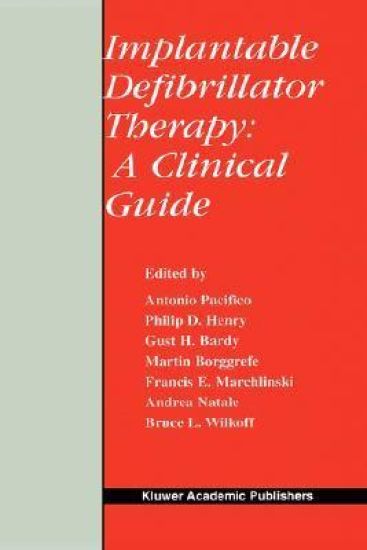
Implantable Defibrillator Therapy: A Clinical Guide

Implantable Defibrillator Therapy: A Clinical Guide

Antonio Pacifico; Philip D. Henry; Gust H. Bardy; Martin Borggrefe; Francis E. Marchlinski; Andrea Natale; Bruce L. Wilkoff

Springer-Verlag New York Inc.
2012
nidottu
Implantable defibrillators as originally conceived by Michel Mirowski were limited to the detection and automatic termination of ventricular fibrillation. In the original "AID" device, the detection algoritlun sought to distinguish sinus rhytlun from ventricular fibrillation by identifying the "more sinusoidal waveform of ventricular fibrillation. " The therapeutic intervention was elicited only once deadly polymorphic rhythms had developed. It was rapidly learned, however, that ventricular fibrillation is usually preceded by ventricular tachycardia. Mirowski recognized the pivotal importance of developing algoritllms based on heart rate. Ventricular tachycardia detection allowed the successful development of interventions for the termination of ventricular tachyarrhythmias before they degenerated into ventricular fibrillation. Current device therapy no longer confines itself to tlle termination of chaotic rhythms but seeks to prevent them. Diagnostic algorithms moved upward along the chain of events leading to catastrophic rhytlulls. Rate smoothing algorithms were developed to prevent postextrasystolic pauses from triggering ventricular and atrial tachyarrhytlmlias. Beyond the renaissance of ectopy-centered strategies, long-term prevention received increasing attention. Multisite pacing therapies provided by "Arrhythmia Management Devices" were designed to reduce the "arrhytlunia burden" and optimize the synergy of cardiac contraction and relaxation. Clinical evidence now suggests that atrial fibrillation prevention by pacing is feasible and tllat biventricular pacing may be of benefit in selected patients with heart failure. However, these applications of device therapy that generally require ventricular defibrillation backup remain investigational and were not considered in this book.
Implantable Defibrillator Therapy: A Clinical Guide

Implantable Defibrillator Therapy: A Clinical Guide

Antonio Pacifico; Philip D. Henry; Gust H. Bardy; Martin Borggrefe; Francis E. Marchlinski; Andrea Natale; Bruce L. Wilkoff

Springer-Verlag New York Inc.
2002
sidottu
Implantable defibrillators as originally conceived by Michel Mirowski were limited to the detection and automatic termination of ventricular fibrillation. In the original "AID" device, the detection algoritlun sought to distinguish sinus rhytlun from ventricular fibrillation by identifying the "more sinusoidal waveform of ventricular fibrillation. " The therapeutic intervention was elicited only once deadly polymorphic rhythms had developed. It was rapidly learned, however, that ventricular fibrillation is usually preceded by ventricular tachycardia. Mirowski recognized the pivotal importance of developing algoritllms based on heart rate. Ventricular tachycardia detection allowed the successful development of interventions for the termination of ventricular tachyarrhythmias before they degenerated into ventricular fibrillation. Current device therapy no longer confines itself to tlle termination of chaotic rhythms but seeks to prevent them. Diagnostic algorithms moved upward along the chain of events leading to catastrophic rhytlulls. Rate smoothing algorithms were developed to prevent postextrasystolic pauses from triggering ventricular and atrial tachyarrhytlmlias. Beyond the renaissance of ectopy-centered strategies, long-term prevention received increasing attention. Multisite pacing therapies provided by "Arrhythmia Management Devices" were designed to reduce the "arrhytlunia burden" and optimize the synergy of cardiac contraction and relaxation. Clinical evidence now suggests that atrial fibrillation prevention by pacing is feasible and tllat biventricular pacing may be of benefit in selected patients with heart failure. However, these applications of device therapy that generally require ventricular defibrillation backup remain investigational and were not considered in this book.
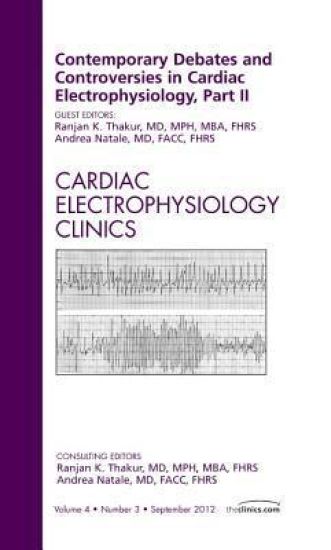
Contemporary Debates and Controversies in Cardiac Electrophysiology, Part II, An Issue of Cardiac Electrophysiology Clinics
Debates and controversies about how to treat difficult problems or conditions abound in cardiac electrophysiology. This issue attempts to bring together a variety of controversial subjects and to present differing views on how to resolve these questions so clinicians will have a handy guide to the most current thinking about these difficult subjects.
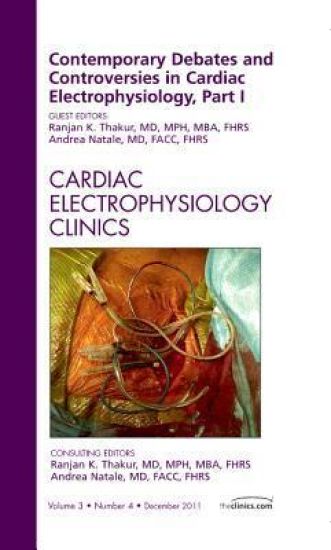
Contemporary Debates and Controversies in Cardiac Electrophysiology, Part I, An Issue of Cardiac Electrophysiology Clinics
Cardiac electrophysiologists face many challenging situations in which there is no clear-cut answer about the best way to handle a particular clinical problem. This issue brings together articles on many such situations, presents arguments on both sides, and lets the reader conclude which is the best way to manage a particular patient. Among the controversial and debatable topics included are how to handle device recalls, optimal timing for assessment of ICD efficacy, extraction o f broken leads, and anticoagulation therapy in device patients.
Sudden Cardiac Death, An Issue of Cardiac Electrophysiology Clinics

Sudden Cardiac Death, An Issue of Cardiac Electrophysiology Clinics

Ranjan K. Thakur; Andrea Natale

W B Saunders Co Ltd
2009
sidottu
In the United States, 50-60 individuals suffer a cardiac arrest each hour, amounting to approximately 250,000 deaths every year. In the first five minutes of a cardiac arrest, ventricular tachycardia (VT) and ventricular fibrillation are the most frequent cardiac arrhythmias encountered. Despite emergency medical response systems, the long-term survival from out-of-hospital cardiac arrest remains poor in most US cities. Paramount to achieving successful resuscitation of a cardiac arrest victim is providing early defibrillation. This issue of Cardiac Electrophysiology Clinics covers a full spectrum of issues related to sudden cardiac death, including the epidemiology of sudden cardiac death, advances in CPR, the implantable cardiac defibrillator (ICD), and VT ablation.
Atrial Fibrillation, An Issue of Medical Clinics

Atrial Fibrillation, An Issue of Medical Clinics

Ranjan K. Thakur; Andrea Natale

W B Saunders Co Ltd
2009
sidottu
Atrial fibrillation is the most common sustained arrhythmia in humans. An incredible worldwide effort from physicians, scientists and industry over the last decade has brought forth new insights and therapeutic tools. We are fortunate to have achieved a level of understanding about this complex disease that we can indeed cure some patients. While we proceed at full speed ahead looking for cures for the rest, we have taken this opportunity in the Medical Clinics of North America to reflect on how much we have learned and on the task that lies ahead. This issue opens with a historical perspective, discusses many of the clinical issues in the management of atrial fibrillation, such as cardioversion, anticoagulation and ablation, and concludes with the current guidelines for treatment and a view of the future.
Atrial Fibrillation, An Issue of Cardiology Clinics

Atrial Fibrillation, An Issue of Cardiology Clinics

Ranjan K. Thakur; Andrea Natale

W B Saunders Co Ltd
2009
sidottu
Atrial fibrillation (AF) is the most common sustained arrhythmia, affecting approximately 2.3 million people in the US. One of the most serious side effects of AF is embolic stroke. Technology developed in the last 10 years has made AF treatable and potentially curable. This issue discusses many of the clinical issues in the management of AF, including cardioversion, anticoagulation, and ablation. Also included are current guidelines for treatment and a view of the future.