Kirjojen hintavertailu – 12 859 828 kirjaa ja 27 kauppaa

Kirjailija

Andrea Rizzi

Kirjat ja teokset yhdessä paikassa: 5 kirjaa, julkaisuja vuosilta 2017–2026, suosituimpiin kuuluu Looking Trustworthy. Vertaile teosten hintoja ja tarkista saatavuus suomalaisista kirjakaupoista.

5 kirjaa

Kirjojen julkaisuvuodet: 2017–2026.

Looking Trustworthy

Looking Trustworthy

Andrea Rizzi

Cambridge University Press
2026
sidottu
In this Element I investigate how Renaissance humanist translators used the printed page to construct a trustworthy persona and persuade readers of their translations' value. These portraits did more than decorate books – they shaped the public identity of translators, lent credibility to their work, and positioned them within broader networks of cultural authority. As the early modern book trade expanded, portraits became key instruments in establishing recognisability – what we might now call a 'brand' – that reassured readers and patrons alike. By revealing how trustworthiness was deliberately performed and circulated in print, this Element reframes the role of translators in Renaissance culture and offers new insights into the social and symbolic economies of early modern trust.
Looking Trustworthy

Looking Trustworthy

Andrea Rizzi

Cambridge University Press
2026
nidottu
In this Element I investigate how Renaissance humanist translators used the printed page to construct a trustworthy persona and persuade readers of their translations' value. These portraits did more than decorate books – they shaped the public identity of translators, lent credibility to their work, and positioned them within broader networks of cultural authority. As the early modern book trade expanded, portraits became key instruments in establishing recognisability – what we might now call a 'brand' – that reassured readers and patrons alike. By revealing how trustworthiness was deliberately performed and circulated in print, this Element reframes the role of translators in Renaissance culture and offers new insights into the social and symbolic economies of early modern trust.

What is Translation History?

What is Translation History?

Andrea Rizzi; Birgit Lang; Anthony Pym

Springer Nature Switzerland AG
2019
sidottu
This book presents a dynamic history of the ways in which translators are trusted and distrusted. Working from this premise, the authors develop an approach to translation that speaks to historians of literature, language, culture, society, science, translation and interpreting. By examining theories of trust from sociological, philosophical, and historical studies, and with reference to interdisciplinarity, the authors outline a methodology for approaching translation history and intercultural mediation from three discrete, concurrent perspectives on trust and translation: the interpersonal, the institutional and the regime-enacted. This book will be of particular interest to students and scholars of translation studies, as well as historians working on mediation and cultural transfer.
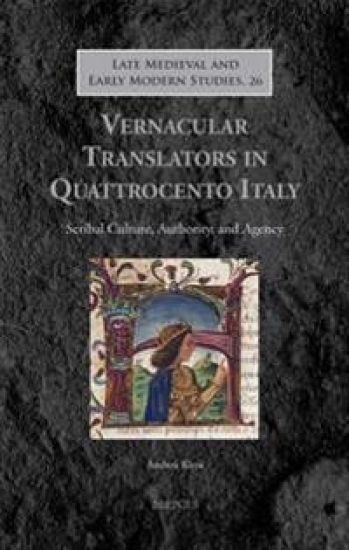
Vernacular Translators in Quattrocento Italy
This book provides a richly documented study of vernacular translators as agents within the literary culture of Italy during the fifteenth century. Through a fresh and careful examination of these early modern translators, Rizzi shows how humanist translators went about convincing readers of the value of their work in disseminating knowledge that would otherwise be inaccessible to many. The translators studied in this book include not only the well-known 'superstars' such as Leonardo Bruni, but also little-known and indeed obscure writers from throughout the Italian peninsula. Rizzi demonstrates that vernacular translation did not cease with the rise of 'humanism'. Translations from Greek into Latin spurred the concurrent production of 'new' vernacular versions. Humanists challenged themselves to produce creative and authoritative translations both from Greek and occasionally from the vernacular into Latin, and from Latin into the vernacular. Translators grew increasingly self-assertive when taking on these tasks. The findings of this study have wide implications: they trace a novel history of the use of the Italian language alongside Latin in a period when high culture was bilingual. They also shed further light on the topic of Renaissance self-fashioning, and on the workings of the patronage system, which has been studied far less in literary history than in art history. Finally, the book gives welcome emphasis to the concept that the creation and the circulation of translations (along with other literary activities) were collaborative activities, involving dedicatees, friends, and scribes, among others.