Kirjojen hintavertailu – 12 859 819 kirjaa ja 27 kauppaa

Kirjailija

Andrea Saltelli

Kirjat ja teokset yhdessä paikassa: 4 kirjaa, julkaisuja vuosilta 2004–2027, suosituimpiin kuuluu Equations of Power. Vertaile teosten hintoja ja tarkista saatavuus suomalaisista kirjakaupoista.

4 kirjaa

Kirjojen julkaisuvuodet: 2004–2027.

Equations of Power

Equations of Power

Andrea Saltelli

Anthem Press
2027
Sidottu
Mathematical models have become one of the principal infrastructures through which contemporary societies are governed, shaping decisions in science, policy and the economy, often beyond meaningful public scrutiny. Used in domains such as climate change, finance, public health and environmental policy, models do more than describe the world: they frame problems, distribute responsibility and influence collective choices. Their technical complexity often confers epistemic authority, enabling them to shape policy while remaining largely insulated from critical examination. Equations of Power explores how mathematical models acquire this authority, why they have become such influential instruments of governance, and what happens when their assumptions and limitations remain insufficiently examined. Drawing on examples from pandemic modelling, climate policy, economic forecasting and environmental assessment, the book argues that models are best understood as socio-technical instruments embedded within political and institutional processes rather than as neutral technical tools. It concludes by examining practical proposals for making modelling more transparent, accountable and scientifically robust.
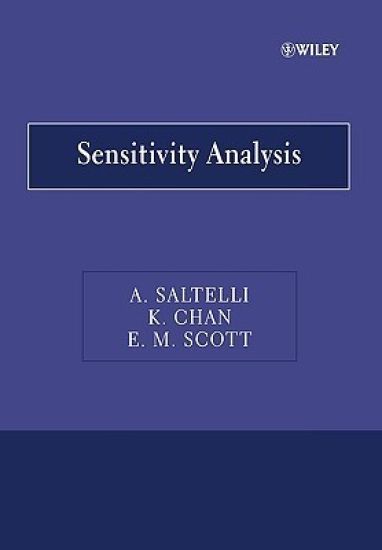
Sensitivity Analysis

Sensitivity Analysis

Andrea Saltelli; K. Chan; E. M. Scott

John Wiley Sons Inc
2008
nidottu
The Wiley Paperback Series makes valuable content more accessible to a new generation of statisticians, mathematicians and scientists. Sensitivity analysis is used to ascertain how a given model output depends upon the input parameters. This is an important method for checking the quality of a given model, as well as a powerful tool for checking the robustness and reliability of its analysis. The topic is acknowledged as essential for good modelling practice and is an implicit part of any modelling field. Offers an accessible introduction to sensitivity analysis. Covers all the latest research. Illustrates concepts with numerous examples, applications and case studies. Includes contributions from the leading researchers active in developing strategies for sensitivity analysis. The principles of sensitivity analysis are carefully described and suitable methods for approaching many types of problems are given. The book introduces the modeller to the entire casual assessment chain, from data to predictions, whilst explaining the impact of source uncertainties and framing assumptions. A ‘hitch-hikers guide’ is included to allow the more experienced reader to readily access specific applications. Modellers from a wide range of disciplines, including biostatistics, economics, environmental impact assessment, chemistry and engineering will benefit greatly from the numerous examples and applications. "Presents many different sensitivity analysis methodologies and demonstrates their usefulness in scientific research." (Zentralblatt MATH)
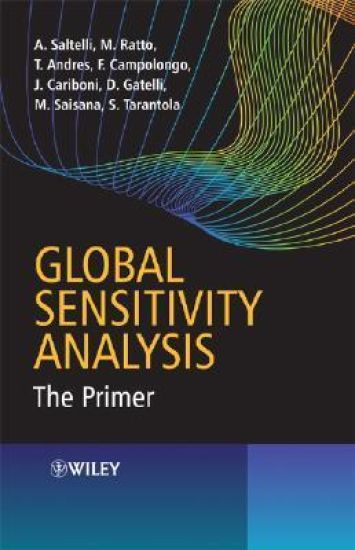
Global Sensitivity Analysis

Global Sensitivity Analysis

Andrea Saltelli; Marco Ratto; Terry Andres; Francesca Campolongo; Jessica Cariboni; Debora Gatelli; Michaela Saisana; Stefano Tarantola

John Wiley Sons Inc
2008
sidottu
Complex mathematical and computational models are used in all areas of society and technology and yet model based science is increasingly contested or refuted, especially when models are applied to controversial themes in domains such as health, the environment or the economy. More stringent standards of proofs are demanded from model-based numbers, especially when these numbers represent potential financial losses, threats to human health or the state of the environment. Quantitative sensitivity analysis is generally agreed to be one such standard. Mathematical models are good at mapping assumptions into inferences. A modeller makes assumptions about laws pertaining to the system, about its status and a plethora of other, often arcane, system variables and internal model settings. To what extent can we rely on the model-based inference when most of these assumptions are fraught with uncertainties? Global Sensitivity Analysis offers an accessible treatment of such problems via quantitative sensitivity analysis, beginning with the first principles and guiding the reader through the full range of recommended practices with a rich set of solved exercises. The text explains the motivation for sensitivity analysis, reviews the required statistical concepts, and provides a guide to potential applications. The book: Provides a self-contained treatment of the subject, allowing readers to learn and practice global sensitivity analysis without further materials. Presents ways to frame the analysis, interpret its results, and avoid potential pitfalls. Features numerous exercises and solved problems to help illustrate the applications. Is authored by leading sensitivity analysis practitioners, combining a range of disciplinary backgrounds. Postgraduate students and practitioners in a wide range of subjects, including statistics, mathematics, engineering, physics, chemistry, environmental sciences, biology, toxicology, actuarial sciences, and econometrics will find much of use here. This book will prove equally valuable to engineers working on risk analysis and to financial analysts concerned with pricing and hedging.
Sensitivity Analysis in Practice

Sensitivity Analysis in Practice

Andrea Saltelli; Stefano Tarantola; Francesca Campolongo; Marco Ratto

John Wiley Sons Inc
2004
sidottu
Sensitivity analysis is the study of how variation in the output of a statistical model can be apportioned, qualitatively or quantitatively, to different sources of variation. It should be considered a pre-requisite for statistical model building in any scientific discipline where modelling takes place. Choosing the most appropriate method of sensitivity analysis for a particular model can be complex, and depends on a number of factors. Sensitivity Analysis in Practice guides applied scientists through their modelling problem enabling them to choose and apply the most appropriate sensitivity analysis method. It offers a review of the state-of-the-art in sensitivity analysis, and is suitable for a wide range of practitioners. It includes discussion of implementation of the methods using SIMLAB – freely available sensitivity analysis software. *Provides an accessible overview of the most widely used sensitivity analysis methods. *Covers a range of methodologies, including variance-based methods, Bayesian uncertainty estimation, selected screening methods and Monte Carlo filtering. *Opens with a detailed worked example to explain the motivation behind methods described. *Includes a range of further worked examples to illustrate the practical applications. *Discusses implementation of the methods using SIMLAB – freely available sensitivity analysis software. *Contains a large number of references to sources for further reading. *Supported by a Website featuring a SIMLAB download, data sets and additional material. Sensitivity Analysis in Practice is primarily aimed at researchers and practitioners working in scientific modelling from statistics, mathematics, medicine, and environmental science. The book is suitable for applied scientists working with statistical models in virtually any discipline, including economics, biology, chemistry and engineering, as well as graduate students of statistical modelling.