Kirjojen hintavertailu – 12 903 725 kirjaa ja 27 kauppaa

Kirjailija

Andrea Wiley

Kirjat ja teokset yhdessä paikassa: 3 kirjaa, julkaisuja vuosilta 2008–2015, suosituimpiin kuuluu Medical Anthropology. Vertaile teosten hintoja ja tarkista saatavuus suomalaisista kirjakaupoista.

3 kirjaa

Kirjojen julkaisuvuodet: 2008–2015.

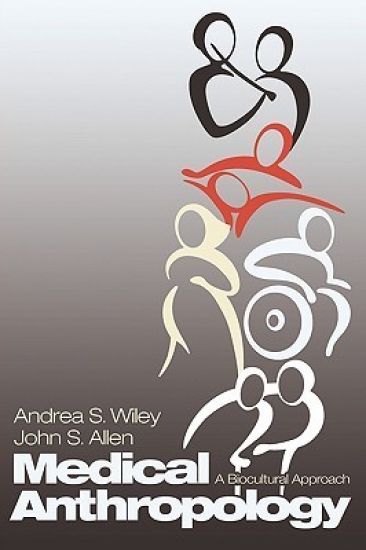
Medical Anthropology

Medical Anthropology

Andrea Wiley; John S. Allen

Oxford University Press Inc
2008
nidottu
Intended as the primary text for introductory courses on medical anthropology, this text integrates human biological data relevant to health and disease with both evolutionary theory and the social environments that more often than not produce major challenges to health and survival. Students who take this fastest-growing anthropology course come from a variety of disciplines (anthropology, biology, especially pre-med students, and health sciences, especially), so the text does not assume anything beyond a basic high-school level familiarity with human biology and anthropology. In addition to being the only current text that takes a biocultural approach, it provides a state-of-the-science review of selected topics and looks at the potential application of the biocultural anthropological approach to health interventions/prevention. Among the topics covered are nutrition, infectious disease, stress, reproductive health, behavioral disease, aging, race/racism and health, mental health, and healers and healing.
Re-imagining Milk

Re-imagining Milk

Andrea Wiley

Routledge
2015
sidottu
Milk is a fascinating food: it is produced by mothers of each mammalian species for consumption by nursing infants of that species, yet many humans drink the milk of another species (mostly cows) and they drink it throughout life. Thus we might expect that this dietary practice has some effects on human biology that are different from other foods. In Re-imagining Milk Wiley considers these, but also puts milk-drinking into a broader historical and cross-cultural context. In particular, she asks how dietary policies promoting milk came into being in the U. S., how they intersect with biological variation in milk digestion, how milk consumption is related to child growth, and how milk is currently undergoing globalizing processes that contribute to its status as a normative food for children (using India and China as examples). Wiley challenges the reader to re-evaluate their assumptions about cows' milk as a food for humans. Informed by both biological and social theory and data, Re-imagining Milk provides a biocultural analysis of this complex food and illustrates how a focus on a single commodity can illuminate aspects of human biology and culture.
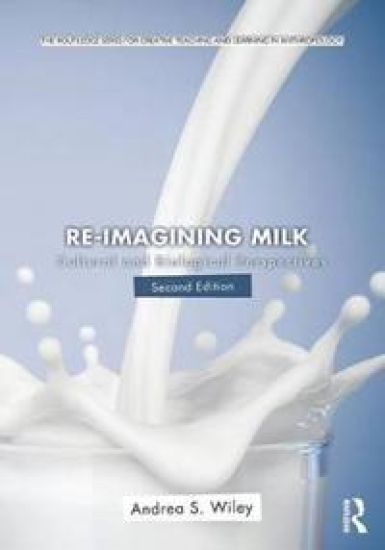
Re-imagining Milk

Re-imagining Milk

Andrea Wiley

Routledge
2015
nidottu
Milk is a fascinating food: it is produced by mothers of each mammalian species for consumption by nursing infants of that species, yet many humans drink the milk of another species (mostly cows) and they drink it throughout life. Thus we might expect that this dietary practice has some effects on human biology that are different from other foods. In Re-imagining Milk Wiley considers these, but also puts milk-drinking into a broader historical and cross-cultural context. In particular, she asks how dietary policies promoting milk came into being in the U. S., how they intersect with biological variation in milk digestion, how milk consumption is related to child growth, and how milk is currently undergoing globalizing processes that contribute to its status as a normative food for children (using India and China as examples). Wiley challenges the reader to re-evaluate their assumptions about cows' milk as a food for humans. Informed by both biological and social theory and data, Re-imagining Milk provides a biocultural analysis of this complex food and illustrates how a focus on a single commodity can illuminate aspects of human biology and culture.