Kirjojen hintavertailu – 12 903 724 kirjaa ja 27 kauppaa

Kirjailija

Andreas Goldthau

Kirjat ja teokset yhdessä paikassa: 5 kirjaa, julkaisuja vuosilta 2009–2019, suosituimpiin kuuluu Imported Oil and U.S. National Security. Vertaile teosten hintoja ja tarkista saatavuus suomalaisista kirjakaupoista.

5 kirjaa

Kirjojen julkaisuvuodet: 2009–2019.

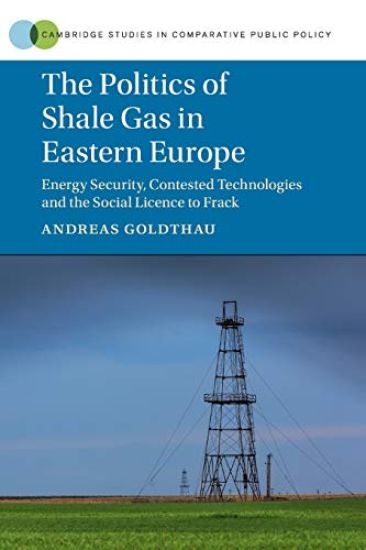
The Politics of Shale Gas in Eastern Europe

The Politics of Shale Gas in Eastern Europe

Andreas Goldthau

Cambridge University Press
2019
pokkari
Fracking is a novel but contested energy technology – so what makes some countries embrace it whilst others reject it? This book argues that the reason for policy divergence lies in procedures and processes, stakeholder inclusion and whether a strong narrative underpins governmental policies. Based on a large set of primary data gathered in Poland, Bulgaria and Romania, it explores shale gas policies in Central Eastern Europe (a region strongly dependent on Russian gas imports) to unveil the importance of policy regimes for creating a 'social license' for fracking. Its findings suggest that technology transfer does not happen in a vacuum but is subject to close mutual interaction with political, economic and social forces; and that national energy policy is not a matter of 'objective' policy imperatives, such as Russian import dependence, but a function of complex domestic dynamics pertaining to institutional procedures and processes, and winners and losers.
The Politics of Shale Gas in Eastern Europe

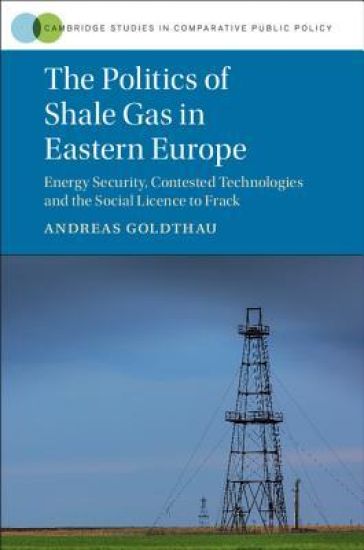
The Politics of Shale Gas in Eastern Europe

Andreas Goldthau

Cambridge University Press
2018
sidottu
Fracking is a novel but contested energy technology – so what makes some countries embrace it whilst others reject it? This book argues that the reason for policy divergence lies in procedures and processes, stakeholder inclusion and whether a strong narrative underpins governmental policies. Based on a large set of primary data gathered in Poland, Bulgaria and Romania, it explores shale gas policies in Central Eastern Europe (a region strongly dependent on Russian gas imports) to unveil the importance of policy regimes for creating a 'social license' for fracking. Its findings suggest that technology transfer does not happen in a vacuum but is subject to close mutual interaction with political, economic and social forces; and that national energy policy is not a matter of 'objective' policy imperatives, such as Russian import dependence, but a function of complex domestic dynamics pertaining to institutional procedures and processes, and winners and losers.
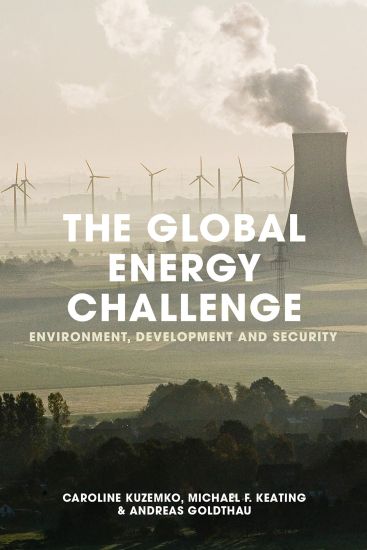
The Global Energy Challenge

The Global Energy Challenge

Caroline Kuzemko; Andreas Goldthau; Michael Keating

Red Globe Press
2015
nidottu
The supply and demand of energy, its security and environmental sustainability are increasingly central issues in the contemporary world. This broad-ranging new text provides an international and interdisciplinary introduction to today's political, economic, security, policy and technological challenges set in a clear historical context.
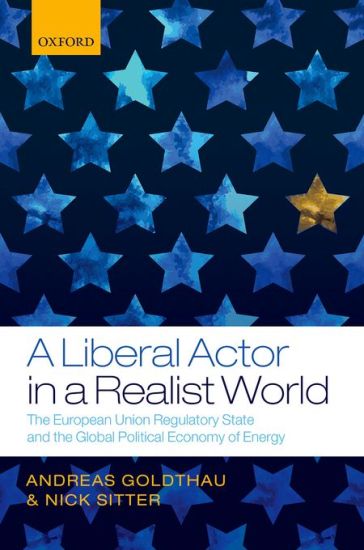
A Liberal Actor in a Realist World

A Liberal Actor in a Realist World

Andreas Goldthau; Nick Sitter

Oxford University Press
2015
sidottu
Since 1992, the European Union has put liberalisation at the core of its energy policy agenda. This aspiration was very much in line with an international political economy driven by the neo-liberal (Washington) consensus. The central challenge for the EU is that the energy world has changed, while the EU has not. The rise of Asian energy consumers (China and India), more assertive energy producers (Russia), and the threat of climate change have securitized the IPE of energy, and turned it more 'realist'. The main research question is therefore: 'What does a liberal actor do in a realist world?' The overall answer as far as the EU is concerned is that it approaches energy challenges as a problem of market failure: imperfect competition on the supply side; inadequate supply of public goods on the demand side and in terms of infrastructure; and large externalities that arise both from non-energy events and from large-scale consumption of fossil fuels. A Liberal Actor in a Realist World assesses the changing nature of the global political economy of energy and the European Union's response, and the external dimension of the regulatory state. The book concludes that the EU's soft power has a hard edge, which is derived primarily from its regulatory power. This works best when it targets companies rather than governments, and it is more effective in the 'Near Abroad' than at the global level. This makes the EU emerge an actor in its own right in the global political economy of energy - a 'Regulatory Power Europe'.
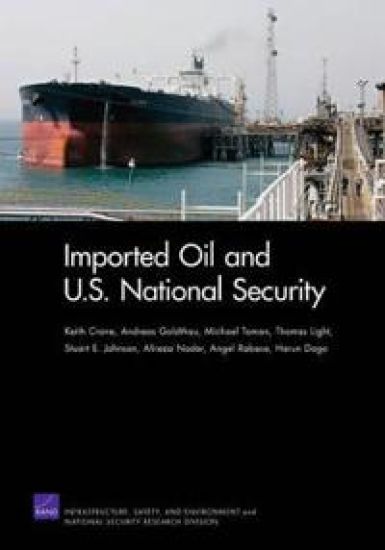
Imported Oil and U.S. National Security

Imported Oil and U.S. National Security

Keith Crane; Andreas Goldthau; Michael Toman; Thomas Light; Stuart E Johnson

RAND
2009
pokkari
In 2007, on a net basis, the United States imported 58 percent of the oil it consumed. This book critically evaluates commonly suggested links between these imports and U. S. national security and assesses the economic, political, and military costs and benefits of potential policies to alleviate imported oil-related challenges to U. S. national security.