Kirjojen hintavertailu – 12 903 725 kirjaa ja 27 kauppaa
Kirjailija
Andreas Hasenclever
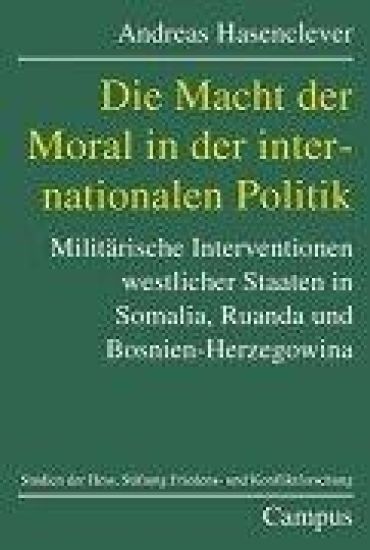
Kirjat ja teokset yhdessä paikassa: 3 kirjaa, julkaisuja vuosilta 1997–2023, suosituimpiin kuuluu Die Macht der Moral in der internationalen Politik. Vertaile teosten hintoja ja tarkista saatavuus suomalaisista kirjakaupoista.
Welche Bedeutung spielen Erwägungen zu den allgemeinen Menschenrechten bei militärischen Interventionen westlicher Demokratien? An den Beispielen Somalia, Ruanda und Bosnien- Herzegowina geht Andreas Hasenclever dieser Frage nach und kommt zu dem Ergebnis, dass diese Interventionen in der humanitären Pflicht zur Hilfeleistung wurzeln.
International regimes have been a major focus of research in international relations for over a decade. Three schools of thought have shaped the discussion: realism, which treats power relations as its key variable; neoliberalism, which bases its analysis on constellations of interests; and cognitivism, which emphasizes knowledge dynamics, communication, and identities. Each school articulates distinct views on the origins, robustness, and consequences of international regimes. This book examines each of these contributions to the debate, taking stock of, and seeking to advance, one of the most dynamic research agendas in contemporary international relations. While the differences between realist, neoliberal and cognitivist arguments about regimes are acknowledged and explored, the authors argue that there is substantial scope for progress toward an inter-paradigmatic synthesis.
International regimes have been a major focus of research in international relations for over a decade. Three schools of thought have shaped the discussion: realism, which treats power relations as its key variable; neoliberalism, which bases its analysis on constellations of interests; and cognitivism, which emphasizes knowledge dynamics, communication, and identities. Each school articulates distinct views on the origins, robustness, and consequences of international regimes. This book examines each of these contributions to the debate, taking stock of, and seeking to advance, one of the most dynamic research agendas in contemporary international relations. While the differences between realist, neoliberal and cognitivist arguments about regimes are acknowledged and explored, the authors argue that there is substantial scope for progress toward an inter-paradigmatic synthesis.