Kirjojen hintavertailu – 12 859 818 kirjaa ja 27 kauppaa

Kirjailija

Andreas Mayer

Kirjat ja teokset yhdessä paikassa: 21 kirjaa, julkaisuja vuosilta 1989–2025, suosituimpiin kuuluu Sites of the Unconscious. Vertaile teosten hintoja ja tarkista saatavuus suomalaisista kirjakaupoista.

21 kirjaa

Kirjojen julkaisuvuodet: 1989–2025.

Sites of the Unconscious

Sites of the Unconscious

Andreas Mayer

University of Chicago Press
2013
sidottu
In the late nineteenth century, scientists, psychiatrists, and medical practitioners began employing a new experimental technique for the study of neuroses: hypnotism. Though their efforts to transform hypnosis into a laboratory science failed, soon thereafter Sigmund Freud took up the heritage of hypnotism when establishing psychoanalysis. In Sites of the Unconscious, Andreas Mayer examines the relationship between hypnosis and psychoanalysis, showing how the theories and experimental techniques of hypnosis paved the way for the familiar psychoanalytic setting established by Freud. Mayer analyzes Jean-Martin Charcot's research program in Paris and the so-called Nancy school led by Hippolyte Bernheim, stressing their divergent views on the relation between clinical practice and knowledge and their different ways of deploying hypnosis. Mayer then reconstructs the reception of French hypnotism in German-speaking countries, arguing that Freud's abandonment of hypnosis and subsequent development of the psychoanalytic setting was less a flash of singular genius than a fitting response to the issues raised by the French controversies. In addition, Mayer addresses the distinctive features of Freud's psychoanalytic setting, revealing how Freud's couch emerged out of the clinical laboratories and private consulting rooms of the practitioners of hypnosis.

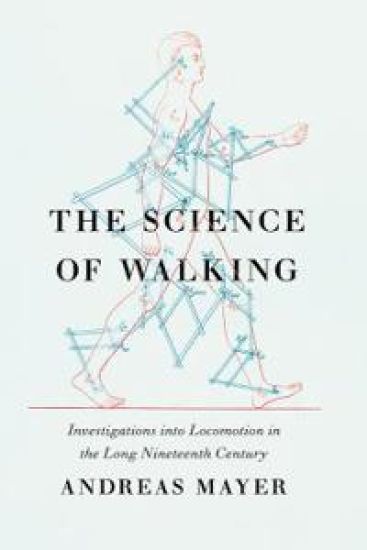
The Science of Walking

The Science of Walking

Andreas Mayer

University of Chicago Press
2020
sidottu
The Science of Walking recounts the story of the growing interest and investment of Western scholars, physicians, and writers in the scientific study of an activity that seems utterly trivial in its everyday performance yet essential to our human nature: walking. Most people see walking as a natural and unremarkable activity of daily life, yet the mechanism has long puzzled scientists and doctors, who considered it an elusive, recalcitrant, and even mysterious act. In The Science of Walking, Andreas Mayer provides a history of investigations of the human gait that emerged at the intersection of a variety of disciplines, including physiology, neurology, orthopedic surgery, anthropology, and psychiatry. Looking back at more than a century of locomotion research, Mayer charts, for the first time, the rise of scientific endeavors to control and codify locomotion and analyzes their social, political, and aesthetic ramifications throughout the long nineteenth century. In an engaging narrative that weaves together science and history, Mayer sets the work of the most important representatives of the physiology of locomotion—including Wilhelm and Eduard Weber and Étienne-Jules Marey—in their proper medical, political, and artistic contexts. In tracing the effects of locomotion studies across other cultural domains, Mayer reframes the history of the science of walking and gives us a deeper understanding of human movement.