Kirjojen hintavertailu – 12 859 818 kirjaa ja 27 kauppaa

Kirjailija

Andrei Znamenski

Kirjat ja teokset yhdessä paikassa: 4 kirjaa, julkaisuja vuosilta 2011–2025, suosituimpiin kuuluu Red Shambhala. Vertaile teosten hintoja ja tarkista saatavuus suomalaisista kirjakaupoista.

4 kirjaa

Kirjojen julkaisuvuodet: 2011–2025.

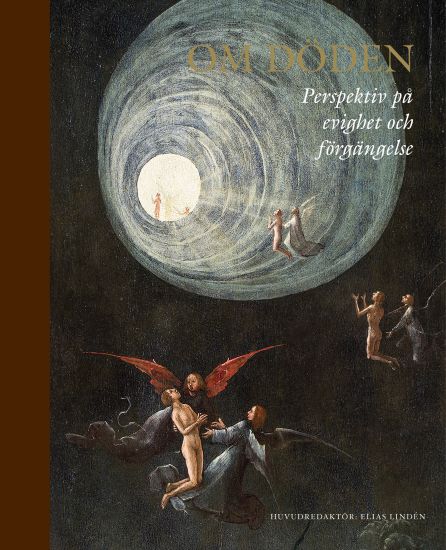
Om döden : perspektiv på evighet och förgängelse

Om döden : perspektiv på evighet och förgängelse

Andrei Znamenski; Martin Worthington; Angela Sumegi; Simon Sorgenfrei; Sheldon Solomon; Per Snaprud; Hans Ruin; Patrick O'Sullivan; Per-Johan Norelius; Anna Nordlund; Svante Nordin; Michael Hviid Jacobsen; Ole Martin Høystad; Joel Halldorf; Helena Granström; Peter J. Forshaw; Magnus Florin; Per Faxneld; Ingrid Dunér; Marie Daouda; Stephen Cave; Pär Cassel; Måns Broo; Nils Billing; Philip Almond

Bokförlaget Stolpe
2025
sidottu
Döden är människans grundvillkor, våra rädslors fixpunkt och förutsättningen för våra strävanden. Idéer om döden präglar alla kulturer och har gett upphov till såväl världsreligioner som lokala myter. I sekulära miljöer är dödens tillvaro dock mer undanskymd. Livsförlängande åtgärder har ersatt tanken om döden som meningsfull i sig eller en passage in i det okända. Denna volym täcker hela spektrumet av dödens skepnader med global spännvidd och historiskt djup; från några av de tidigast nedtecknade poetiska texterna via religiösa källskrifter och schamanistiska praktiker till rådande filosofiska och vetenskapliga perspektiv. I tjugofyra essäer utforskar svenska och inter­nationella experter olika vägar att närma sig döden. Bidragen omfattar egyptiska och sumeriska dödsriken, de stora religionernas etik, antika och moderna teorier om själen och medvetandet samt konstnärliga och litterära gestaltningar. I centrum för denna rikligt bildsatta antologi står frågan om vad historien kan lära oss inför vårt eget umgänge med döden och de döda. Boken finns även i engelsk utgåva.

Socialism as a Secular Creed

Socialism as a Secular Creed

Andrei Znamenski

BLOOMSBURY PUBLISHING PLC
2022
nidottu
Andrei Znamenski argues that socialism arose out of activities of secularized apocalyptic sects, the Enlightenment tradition, and dislocations produced by the Industrial Revolution. He examines how, by the 1850s, Marx and Engels made the socialist creed “scientific” by linking it to “history laws” and inventing the proletariat—the “chosen people” that were to redeem the world from oppression. Focusing on the fractions between social democracy and communism, Znamenski explores why, historically, socialism became associated with social engineering and centralized planning. He explains the rise of the New Left in the 1960s and its role in fostering the cultural left that came to privilege race and identity over class. Exploring the global retreat of the left in the 1980s–1990s and the “great neoliberalism scare,” Znamenski also analyzes the subsequent renaissance of socialism in wake of the 2007–2008 crisis.
Socialism as a Secular Creed

Socialism as a Secular Creed

Andrei Znamenski

Lexington Books
2021
sidottu
Andrei Znamenski argues that socialism arose out of activities of secularized apocalyptic sects, the Enlightenment tradition, and dislocations produced by the Industrial Revolution. He examines how, by the 1850s, Marx and Engels made the socialist creed “scientific” by linking it to “history laws” and inventing the proletariat—the “chosen people” that were to redeem the world from oppression. Focusing on the fractions between social democracy and communism, Znamenski explores why, historically, socialism became associated with social engineering and centralized planning. He explains the rise of the New Left in the 1960s and its role in fostering the cultural left that came to privilege race and identity over class. Exploring the global retreat of the left in the 1980s–1990s and the “great neoliberalism scare,” Znamenski also analyzes the subsequent renaissance of socialism in wake of the 2007–2008 crisis.
Red Shambhala

Red Shambhala

Andrei Znamenski

Quest Books,U.S.
2011
nidottu
Many know of Shambhala, the Tibetan Buddhist legendary land of spiritual bliss popularized by the film, Shangri-La. But few may know of the role Shambhala played in Russian geopolitics in the early twentieth century. Perhaps the only one on the subject, Andrei Znamenski's book presents a wholly different glimpse of early Soviet history both erudite and fascinating. Using archival sources and memoirs, he explores how spiritual adventurers, revolutionaries, and nationalists West and East exploited Shambhala to promote their fanatical schemes, focusing on the Bolshevik attempt to use Mongol-Tibetan prophecies to railroad Communism into inner Asia. We meet such characters as Gleb Bokii, the Bolshevik secret police commissar who tried to use Buddhist techniques to conjure the ideal human; and Nicholas Roerich, the Russian painter who, driven by his otherworldly Master and blackmailed by the Bolshevik secret police, posed as a reincarnation of the Dalai Lama to unleash religious war in Tibet. We also learn of clandestine activities of the Bolsheviks from the Mongol-Tibetan Section of the Communist International who took over Mongolia and then, dressed as lama pilgrims, tried to set Tibet ablaze; and of their opponent, Ja-Lama, an "avenging lama" fond of spilling blood during his tantra rituals.