Kirjojen hintavertailu – 12 903 724 kirjaa ja 27 kauppaa

Kirjailija

Andreja Zevnik

Kirjat ja teokset yhdessä paikassa: 3 kirjaa, julkaisuja vuosilta 2016–2025, suosituimpiin kuuluu The Politics of Unbelonging. Vertaile teosten hintoja ja tarkista saatavuus suomalaisista kirjakaupoista.

3 kirjaa

Kirjojen julkaisuvuodet: 2016–2025.

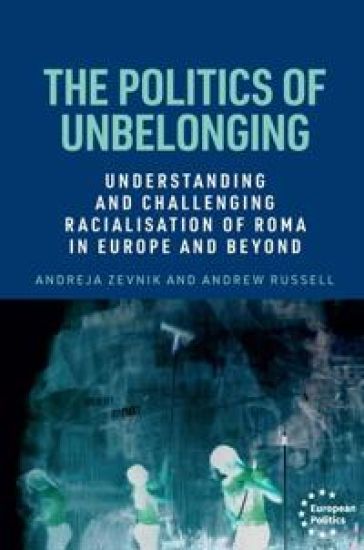
The Politics of Unbelonging

The Politics of Unbelonging

Andreja Zevnik; Andrew Russell

MANCHESTER UNIVERSITY PRESS
2025
sidottu

Halvin toimitettuna 116,80 €

This book offers a comprehensive study of racialisation of Romani communities in Europe (and beyond). Drawing on the idea of unbelonging it demonstrates how Romani communities are placed in a position of visceral visibility by local, national and international institutions as well as public media discourses. It shows how such positionality impacts the ability of Roma to self-represent politically and build capacity for change. From the position of unbelonging the book offers an account of Romani agency which both challenges the mainstream representations of Roma but also develops an alternative none-nation-state sense of belonging. In doing so the book outlines an account of Romani alternative expressions in order to take control of their relationship with their own history, future, knowledge, and identity, and the rest of the society.
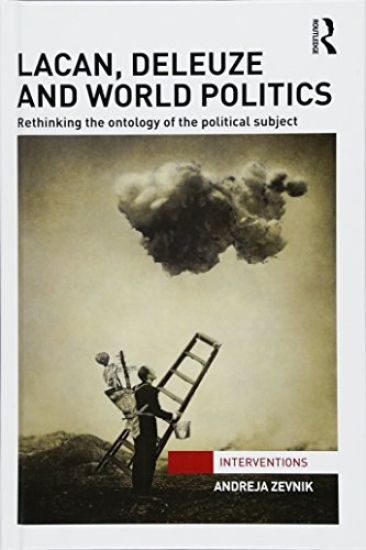
Lacan, Deleuze and World Politics

Lacan, Deleuze and World Politics

Andreja Zevnik

CRC Press Inc
2017
nidottu
This book aims to re-think the way in which the subject is inscribed in the modern political, and does so by exploring the potentiality of Lacano-Deleuzian theoretical framework. It concerns a different ontology and a non-dualist understanding of political and legal existence, by focusing on questions such as how to think alternative notions of political existence and what kind of political, social and legal order do these come to create. This investigation into political appearance of subjects through concepts of law, body and life is led and influenced by the thought of Gilles Deleuze and Jacques Lacan, as well as Alain Badiou, Antonio Negri and Slavoj Žižek. The book takes on various conceptualisations of life, explores the relationship between law and life and develops an alternative notion of legal and political existence in particular in the context of rights. On the back of Guantánamo’s legal and political discourses this work aims to show why and how the problems of world politics or the limitations of (human) rights discourse require an engagement with questions such as what it means to exist as a human being, what forms of life are politically recognised, which are not, and why this distinction. By pointing to a different ontology for thinking and understanding global politics and demonstrating how a trans-disciplinary and philosophical approaches can foster the debates in world politics, this book will be of interest to postgraduates and scholars working on critical normative ideas in international politics, critical security studies and critical legal studies.
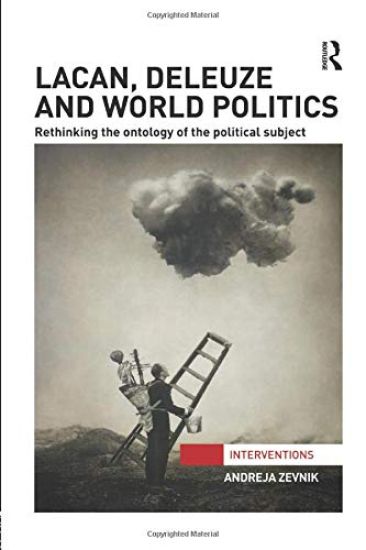
Lacan, Deleuze and World Politics

Lacan, Deleuze and World Politics

Andreja Zevnik

Routledge
2016
sidottu
This book aims to re-think the way in which the subject is inscribed in the modern political, and does so by exploring the potentiality of Lacano-Deleuzian theoretical framework. It concerns a different ontology and a non-dualist understanding of political and legal existence, by focusing on questions such as how to think alternative notions of political existence and what kind of political, social and legal order do these come to create. This investigation into political appearance of subjects through concepts of law, body and life is led and influenced by the thought of Gilles Deleuze and Jacques Lacan, as well as Alain Badiou, Antonio Negri and Slavoj Žižek. The book takes on various conceptualisations of life, explores the relationship between law and life and develops an alternative notion of legal and political existence in particular in the context of rights. On the back of Guantánamo’s legal and political discourses this work aims to show why and how the problems of world politics or the limitations of (human) rights discourse require an engagement with questions such as what it means to exist as a human being, what forms of life are politically recognised, which are not, and why this distinction. By pointing to a different ontology for thinking and understanding global politics and demonstrating how a trans-disciplinary and philosophical approaches can foster the debates in world politics, this book will be of interest to postgraduates and scholars working on critical normative ideas in international politics, critical security studies and critical legal studies.