
Kirjailija
Andrés Morales
Kirjat ja teokset yhdessä paikassa: 12 kirjaa, julkaisuja vuosilta 2012–2026, suosituimpiin kuuluu Extrañas ínsulas. Vertaile teosten hintoja ja tarkista saatavuus suomalaisista kirjakaupoista.
Nimi esiintyy myös muodoissa: Andres Morales, Andrès Morales
12 kirjaa
Kirjojen julkaisuvuodet: 2012–2026.


Andr s Morales ha publicado un nuevo libro que aborda el problema de la desinformaci n interesada en el Ultra smo. Este libro busca resaltar la importancia de Vicente Huidobro en la escena literaria hispanoamericana, a pesar de intentos por borrar su legado. Morales destaca la relevancia de llenar el vac o cr tico y ampliar la informaci n sobre Huidobro en Espa a. Reconoce el aporte de Ren de Costa, Cedomil Goic y otros en la bibliograf a sobre Huidobro. A pesar de sus diferencias con escritores de su generaci n, Huidobro sigue siendo admirado por su obra.

Poeta chileno, de ascendencia europea (croata y espa ola, para ser espec ficos) y ahora residente en Madrid; tras su identidad figuran, naturalmente, el llamado "viejo mundo" y el esp ritu latinoamericano; si no es acaso que estas dos grandes visiones subrayan dos espacios que, aparentemente, est n separados geogr fica y culturalmente: mito e historia de Europa y Am rica; Andr s Morales nos muestra que el canto, la poes a, dentro de sus temas: el amor, la muerte y el tiempo (como l mismo lo ha anotado en m s de una ocasi n), es un veh culo que incide dentro del fen meno humano como fen meno mismo de la universalidad a la que ning n hombre puede ser indiferente, pues coincidimos en la propia experiencia de la vida, atados a circunstancias que corren en nuestros d as, pocas y siglos. --Antonio Ojeda
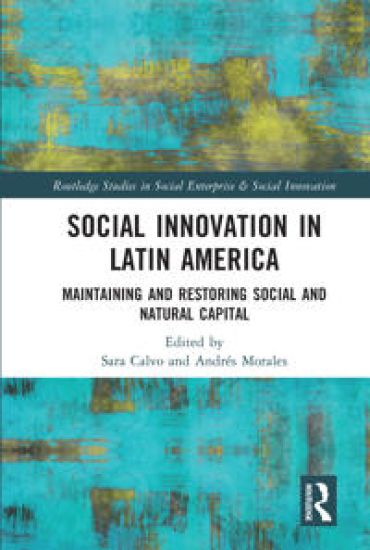
The Latin American continent contains an incredibly rich diversity from which humans derive a range of ecosystem services (e.g. material goods, cultural benefits, climate regulation, etc.) that contribute to livelihoods and well-being. It has become critical to reconcile social and environmental issues in the region to ensure that development is sustainable and aligned with the Sustainable Development Goals. To ensure the sustainable use and management of social and natural capital in the region, business, government, social enterprises and NGOs are engaging in different forms of social innovation that account for social, ecological and environmental values. This requires the integration of social and natural capital into decision-making at all levels. Latin America presents a useful scenario to explore social innovation in relation to social and environmental values and the management of local human and natural resources. This book presents social innovation initiatives that incorporate social and natural capital into decision-making processes in Latin America. This book aims to provide the reader with an insight into the relevance of social innovation for maintaining and restoring social and natural capital in Latin America. Using case studies from Ecuador, Colombia, Peru, Chile and Mexico, this book provides an insight into the interactions between social innovation and social and natural capital in Latin America and will be of interest to researchers, academics and students in the fields of social innovation, management studies, environmental economics and sustainability.


The Latin American continent contains an incredibly rich diversity from which humans derive a range of ecosystem services (e.g. material goods, cultural benefits, climate regulation, etc.) that contribute to livelihoods and well-being. It has become critical to reconcile social and environmental issues in the region to ensure that development is sustainable and aligned with the Sustainable Development Goals. To ensure the sustainable use and management of social and natural capital in the region, business, government, social enterprises and NGOs are engaging in different forms of social innovation that account for social, ecological and environmental values. This requires the integration of social and natural capital into decision-making at all levels. Latin America presents a useful scenario to explore social innovation in relation to social and environmental values and the management of local human and natural resources. This book presents social innovation initiatives that incorporate social and natural capital into decision-making processes in Latin America. This book aims to provide the reader with an insight into the relevance of social innovation for maintaining and restoring social and natural capital in Latin America. Using case studies from Ecuador, Colombia, Peru, Chile and Mexico, this book provides an insight into the interactions between social innovation and social and natural capital in Latin America and will be of interest to researchers, academics and students in the fields of social innovation, management studies, environmental economics and sustainability.


This book aims to provide the reader with an insight into the relevance of a section of the economy, which is often referred to as the ‘social and solidarity economy’ (SSE); and highlight some of the current issues in the field, how they are being addressed and some of their future implications. Using case studies from around the world, this book ‘Social and Solidarity Economy: The World’s Economy With a Social Face’ provides an up-to-date account of the strengths and weaknesses of these initiatives across four continents including issues that have not been researched sufficiently before (e.g. circular economy, social propaganda and its dangers, social enterprise as a panacea for NGOs in developing countries, and ‘new’ social movements). There is growing interest in SSE initiatives among policymakers, foundations, researchers and academic institutions around the world. Despite this interest, SSE related research remains scarce. There are concerned that SSE initiatives, which contribute significantly to their local communities’ development, need to be more widely disseminated amongst the general public. The Social and Solidarity Economy: The World’s Economy With a Social Face will help promote the ground-breaking work being done by organisations and individuals but which remain undocumented and help to raise awareness of such initiatives as well as contribute to academia with a critical approach to the sector covering issues that have not been covered much before, such as the circular economy and the dangers of social propaganda. Aimed at researchers, academics and policy makers in the fields of Social Enterprise, CSR, Tourism, International Economics as well as supporting disciplines ‘Social and Solidarity Economy: The World’s Economy With a Social Face’ looks to establish and help define the field.

This book aims to provide the reader with an insight into the relevance of a section of the economy, which is often referred to as the ‘social and solidarity economy’ (SSE); and highlight some of the current issues in the field, how they are being addressed and some of their future implications. Using case studies from around the world, this book ‘Social and Solidarity Economy: The World’s Economy With a Social Face’ provides an up-to-date account of the strengths and weaknesses of these initiatives across four continents including issues that have not been researched sufficiently before (e.g. circular economy, social propaganda and its dangers, social enterprise as a panacea for NGOs in developing countries, and ‘new’ social movements). There is growing interest in SSE initiatives among policymakers, foundations, researchers and academic institutions around the world. Despite this interest, SSE related research remains scarce. There are concerned that SSE initiatives, which contribute significantly to their local communities’ development, need to be more widely disseminated amongst the general public. The Social and Solidarity Economy: The World’s Economy With a Social Face will help promote the ground-breaking work being done by organisations and individuals but which remain undocumented and help to raise awareness of such initiatives as well as contribute to academia with a critical approach to the sector covering issues that have not been covered much before, such as the circular economy and the dangers of social propaganda. Aimed at researchers, academics and policy makers in the fields of Social Enterprise, CSR, Tourism, International Economics as well as supporting disciplines ‘Social and Solidarity Economy: The World’s Economy With a Social Face’ looks to establish and help define the field.