

Kirjailija
Andrew Ballantyne
Kirjat ja teokset yhdessä paikassa: 7 kirjaa, julkaisuja vuosilta 2002–2024, suosituimpiin kuuluu Paliochora on Kythera: Survey and Interpretation. Vertaile teosten hintoja ja tarkista saatavuus suomalaisista kirjakaupoista.
7 kirjaa
Kirjojen julkaisuvuodet: 2002–2024.
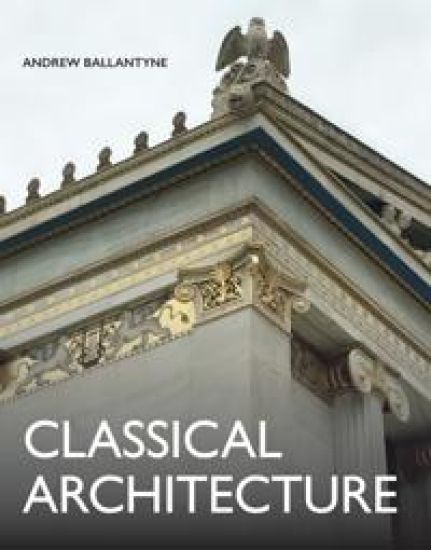
Classical Architecture
Andrew Ballantyne
THE CROWOOD PRESS LTD
2023
sidottu
Halvin toimitettuna 32,40 €
Lavishly illustrated and accessibly written, Classical Architecture takes the reader on a journey through the history of this iconic architectural genre, starting with an introduction to its origins in ancient Greece, through its resurgence across Europe during the Renaissance, to its influence on modern-day architectural design in locations as diverse as Shanghai and Washington DC. Written by Professor of Architecture and established author Andrew Ballantyne, and illustrated with over 100 photographs, this book will prove invaluable to anyone wanting to explore and understand this important and pervasive architectural style. Classical architecture has developed through many styles to become the backbone of western architecture. It was refined in ancient Greece mainly in sacred places. This architecture of finely modelled columns was taken up by the Romans and spread across their empire, changing on the way, so by the time the Roman empire collapsed it had become an architecture of arches and vaults. The monuments were impressive, even as ruins, and inspired imitation in later ages.

Paliochora on Kythera: Survey and Interpretation
Andrew Ballantyne; Gillian Ince
BAR Publishing
2007
nidottu
This report contains the results of a survey of the settlement of Paliochora on the island of Kythera, inhabited primarily in the later Middle Ages down to its effective destruction in 1537. The remains of the town's 73 houses, 22 churches and 2 defensive circuits did not have to be excavated to be surveyed. The pottery finds are also included in the report. The most remarkable feature of the settlement is the extreme poverty of most of the dwellings, which were used soley for sleeping, although the large number of churches is evidence of a more elite presence.
The work of Gilles Deleuze and Felix Guattari has been inspirational for architects and architectural theorists in recent years. It has influenced the design work of architects as diverse as Greg Lynn and David Chipperfield, and is regularly cited by avant-gardist architects and by students, but usually without being well understood. The first collaboration between Deleuze and Guattari was Anti-Oedipus: Capitalism and Schizophrenia, which was taken up as a manifesto for the post-structuralist life, and was associated with the spirit of the student revolts of 1968. Their ideas promote creativity and innovation, and their work is wide-ranging, complex and endlessly stimulating. They range across politics, psychoanalysis, physics, art and literature, changing preconceptions along the way. Deleuze & Guattari for Architects is a perfect introduction for students of architecture in design studio at all levels, students of architecture pursuing undergraduate and postgraduate courses in architectural theory, academics and interested architectural practitioners.
Deleuze & Guattari for Architects
Andrew Ballantyne
Routledge
2007
nidottu
Halvin toimitettuna 52,40 €
The work of Gilles Deleuze and Felix Guattari has been inspirational for architects and architectural theorists in recent years. It has influenced the design work of architects as diverse as Greg Lynn and David Chipperfield, and is regularly cited by avant-gardist architects and by students, but usually without being well understood. The first collaboration between Deleuze and Guattari was Anti-Oedipus: Capitalism and Schizophrenia, which was taken up as a manifesto for the post-structuralist life, and was associated with the spirit of the student revolts of 1968. Their ideas promote creativity and innovation, and their work is wide-ranging, complex and endlessly stimulating. They range across politics, psychoanalysis, physics, art and literature, changing preconceptions along the way. Deleuze & Guattari for Architects is a perfect introduction for students of architecture in design studio at all levels, students of architecture pursuing undergraduate and postgraduate courses in architectural theory, academics and interested architectural practitioners.
Architecture Theory
Andrew Ballantyne
Continuum International Publishing Group Ltd.
2005
nidottu
Halvin toimitettuna 94,70 €
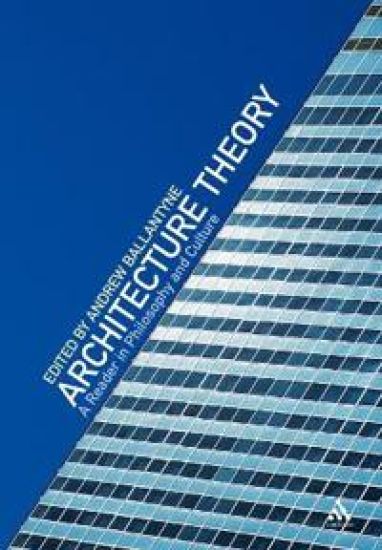
Architecture Theory is a comprehensive and groundbreaking one volume overview of, and introduction to, contemporary critical discourse in architecture. In bringing critical theory and Continental philosophy to bear upon architecture, it provides a solid framework for a fully up-to-date theory of architecture, one that reflects the latest developments and concerns. The book is divided into four sections-groundwork; constructing the "individual"; pluralities; instrumentality-each covering a core theme in contemporary architecture theory. In each section an introductory essay by Andrew Ballantyne provides valuable context, exposition, and analysis. This is followed by a selection of writings on architecture and other related cultural concerns from major contemporary thinkers, including Zvizvek, Irigaray, Lefebvre, Lyotard, Kristeva, Nancy, Virilio, Deleuze, and Negri.
A guide to architecture looks at the economic, political, and aesthetic significance of buildings throughout history.