Kirjojen hintavertailu – 12 859 824 kirjaa ja 27 kauppaa

Kirjailija

Andrew Bamford

Kirjat ja teokset yhdessä paikassa: 3 kirjaa, julkaisuja vuosilta 2013–2021, suosituimpiin kuuluu The Lilies & the Thistle. Vertaile teosten hintoja ja tarkista saatavuus suomalaisista kirjakaupoista.

3 kirjaa

Kirjojen julkaisuvuodet: 2013–2021.

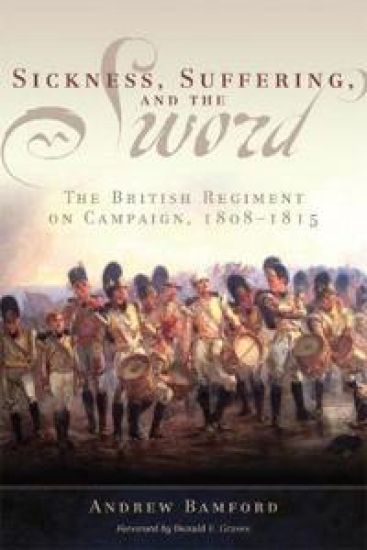
Sickness, Suffering, and the Sword

Sickness, Suffering, and the Sword

Andrew Bamford; Donald E. Graves

University of Oklahoma Press
2021
nidottu
Although an army’s success is often measured in battle outcomes, its victories depend on strengths that may be less obvious on the field. In Sickness, Suffering, and the Sword, military historian Andrew Bamford assesses the effectiveness of the British Army in sustained campaigning during the Napoleonic Wars. In the process, he offers a fresh and controversial look at Britain’s military system, showing that success or failure on campaign rested on the day-to-day experiences of regimental units rather than the army as a whole. Bamford draws his title from the words of Captain Moyle Sherer, who during the winter of 1816-1817 wrote an account of his service during the Peninsular War: “My regiment has never been very roughly handled in the field. . . But, alas! What between sickness, suffering, and the sword, few, very few of those men are now in existence.” Bamford argues that those daily scourges of such often-ignored factors as noncombat deaths and equine strength and losses determined outcomes on the battlefield. In the nineteenth century, the British Army was a collection of regiments rather than a single unified body, and the regimental system bore the responsibility of supplying manpower on that field. Between 1808 and 1815, when Britain was fighting a global conflict far greater than its military capabilities, the system nearly collapsed. Only a few advantages narrowly outweighed the army’s increasing inability to meet manpower requirements. This book examines those critical dynamics in Britain’s major early-nineteenth-century campaigns: the Peninsular War (1808-1814), the Walcheren Expedition (1809), the American War (1812-1815), and the growing commitments in northern Europe from 1813 on. Drawn from primary documents, Bamford’s statistical analysis compares the vast disparities between regiments and different theatres of war and complements recent studies of health and sickness in the British Army.

The Lilies & the Thistle

The Lilies & the Thistle

Andrew Bamford

Helion Company
2018
nidottu
The Jacobite Rising of 1745 could not have taken place without French support. French ships carried Charles Edward Stuart to Scotland, French gold financed his campaign, and French weapons equipped many of his troops. Yet the actual French military contribution to the campaign was small, and its role is frequently neglected. This book seeks to redress this balance by looking in detail at the French military contribution to the Jacobite ’45: the first detachment of troops to sail with the Prince – who instead of landing in Scotland found themselves caught up in an intense naval battle; the staff officers and professionals who helped Charles organise his army on modern European lines; and the Irish and Scots regulars who fought with distinction at Inverurie, Falkrik, and Culloden. As with many aspects of the ’45, myths and misconceptions aplenty have arisen about the nature and significance of the French contribution. New archival research enables a better picture to be obtained than ever before of the men who made up the rank and file of this contingent, and of the background and fates of those who led them. New analysis is offered, too, as to details of the uniforms worn by the detachments serving in Scotland, re-considering existing sources and also bringing out new information. Taken together, the result is to fill an important gap in our understanding of these dramatic events, one of the last occasions that foreign troops fought on British soil.
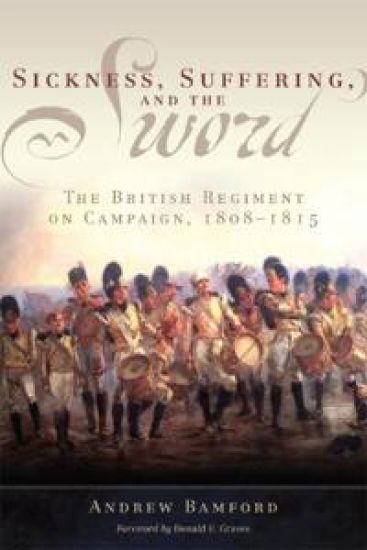
Sickness, Suffering, and the Sword

Sickness, Suffering, and the Sword

Andrew Bamford; Donald E. Graves

University of Oklahoma Press
2013
sidottu
Although an army's success is often measured in battle outcomes, its victories depend on strengths that may be less obvious on the field. In Sickness, Suffering, and the Sword, military historian Andrew Bamford assesses the effectiveness of the British Army in sustained campaigning during the Napoleonic Wars. In the process, he offers a fresh and controversial look at Britain's military system, showing that success or failure on campaign rested on the day-to-day experiences of regimental units rather than the army as a whole. Bamford draws his title from the words of Captain Moyle Sherer, who during the winter of 1816-1817 wrote an account of his service during the Peninsular War: ""My regiment has never been very roughly handled in the field. . . But, alas! What between sickness, suffering, and the sword, few, very few of those men are now in existence."" Bamford argues that those daily scourges of such often-ignored factors as noncombat deaths and equine strength and losses determined outcomes on the battlefield. In the nineteenth century, the British Army was a collection of regiments rather than a single unified body, and the regimental system bore the responsibility of supplying manpower on that field. Between 1808 and 1815, when Britain was fighting a global conflict far greater than its military capabilities, the system nearly collapsed. Only a few advantages narrowly outweighed the army's increasing inability to meet manpower requirements. This book examines those critical dynamics in Britain's major early-nineteenth-century campaigns: the Peninsular War (1808-1814), the Walcheren Expedition (1809), the American War (1812-1815), and the growing commitments in northern Europe from 1813 on. Drawn from primary documents, Bamford's statistical analysis compares the vast disparities between regiments and different theatres of war and complements recent studies of health and sickness in the British Army.