Kirjojen hintavertailu – 12 859 818 kirjaa ja 27 kauppaa

Kirjailija

Andrew Barron

Kirjat ja teokset yhdessä paikassa: 27 kirjaa, julkaisuja vuosilta 2017–2024, suosituimpiin kuuluu Using Hydrogen as an Energy Accessibility Solution for Sustainable Development in Africa. Vertaile teosten hintoja ja tarkista saatavuus suomalaisista kirjakaupoista.

27 kirjaa

Kirjojen julkaisuvuodet: 2017–2024.

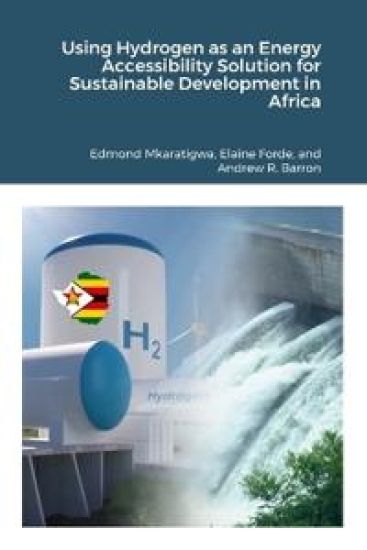
Using Hydrogen as an Energy Accessibility Solution for Sustainable Development in Africa

Using Hydrogen as an Energy Accessibility Solution for Sustainable Development in Africa

Edmond Mkaratigwa; Elaine Forde; Andrew Barron

Lulu Press Inc
2023
pokkari
The aim is to assess possibilities for the implementation of hydrogen as an energy innovation and accessibility solution for sustainable development in Africa. Hydrogen as a fuel presents opportunities for tackling climate change. Continuous refinement and advancement of existing inventions and materials for reducing greenhouse gas emissions towards carbon neutrality should therefore be guaranteed. Findings from the remote Mkaratigwa Village corroborated the observation that there existed intense depletion and disruption of forests and ecosystems, revealing the need to embrace green hydrogen energy technologies for reducing carbon footprint and prevailing energy poverty mostly already afflicting girls, women and children. Work has to continue to ensure hydrogen energy satisfies the Sustainable Development Goal 7 criteria that encompasses affordability, reliability, sustainability and accessibility. Much more work remains on reducing barriers and motivating opportunities and enablers for improved embraceability of the technology in Zimbabwe and developing countries across the world. Production of hydrogen has nevertheless been reduced due to public policy shifts amid intermittent power supply and acute outages. Cost of grid power supply was impacting negatively on hydrogen production and more-so on its greening. Worldwide, renewable cleaner energy technologies including for hydrogen, are proved to be largely concentrated in the global North. Ironically to the contrary, critical mineral resources and materials that constitute the bulk of feedstock for brands original equipment manufacturers and suppliers, originated from Africa.
Sustainability in the Hospitality Industry

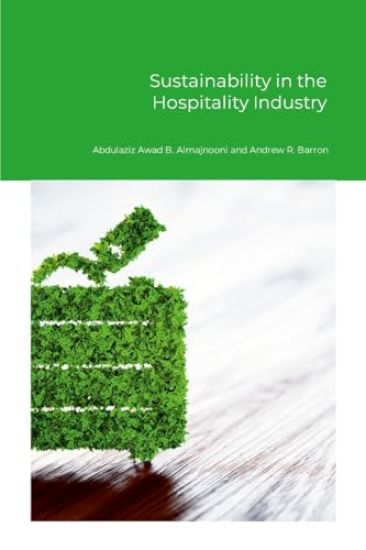
Sustainability in the Hospitality Industry

Abdulaziz Almajnooni; Andrew Barron

Lulu.com
2024
pokkari
This book is intended to provide an overview of sustainable practices within the hospitality business and provides context for the future development of Makkah hotel buildings. Evaluating the extent to which these establishments adhere to sustainable principles presents a nuanced challenge. Aspirations toward sustainable hotel buildings in Makkah might encounter a multitude of obstacles that warrant meticulous investigation. These challenges could encompass cultural and regulatory complexities, operational management and infrastructural limitations, economic considerations, and the balance between tradition and modern catering, as well as meeting the needs of both visitors and government plans, while adhering to sustainability principles.
Human Difference

Human Difference

Andrew Barron; Ephraim Radner

Cascade Books
2024
sidottu
Living in proximity to human disability, with a son who has Down Syndrome, Andrew Barron has come to understand that not only do we live in a world of human difference, but that God wants us to live in this kind of world, for our own flourishing. Human Difference is an extended meditation on that experience and a reflection on the nature of human care and hospitality. Barron seeks to understand and embrace the uncertainty that comes with living in proximity to difference and disability and reflects on how we might better cope with and ultimately be enriched by its ambiguity. He undertakes a new approach to difference: we must be ready to venture into uncomfortable territory, to "put out into the deep water" and to actively seek out an intimate and open closeness with difference and disability.
Human Difference

Human Difference

Andrew Barron; Ephraim Radner

Cascade Books
2024
pokkari
Living in proximity to human disability, with a son who has Down Syndrome, Andrew Barron has come to understand that not only do we live in a world of human difference, but that God wants us to live in this kind of world, for our own flourishing. Human Difference is an extended meditation on that experience and a reflection on the nature of human care and hospitality. Barron seeks to understand and embrace the uncertainty that comes with living in proximity to difference and disability and reflects on how we might better cope with and ultimately be enriched by its ambiguity. He undertakes a new approach to difference: we must be ready to venture into uncomfortable territory, to ""put out into the deep water"" and to actively seek out an intimate and open closeness with difference and disability.
An Experimental Assessment of the Use of Zinc Contaminated Dusts for Direct Reduced Iron (DRI) Production
Basic oxygen steelmaking (BOS) dust and blast furnace (BF) dust from former and currently operating steelmaking facilities in the United Kingdom have been characterized by MP-AES, SEM-EDX, particle size analysis, TGA-DSC, combustion analysis, and powder XRD. As part of a circular economy these materials are a potentially valuable raw material source for ironmaking, but their contamination with zinc precludes their recycling via the conventional sinter plant/BF route. X-ray diffraction suggested some of the zinc present in the material is in the form of sub-stoichiometric zinc ferrites, making hydrometallurgical separation less effective. BF dust contains 40 wt.% levels of fixed carbon indicating it could be useful as an alternative reductant in rotary hearth furnace processes such as FASTMET. The rotary hearth furnace appears to be the most suited separation technique available due to its lack of sensitivity to zinc present in zinc ferrite compounds, and reintegration of the recovered iron into the steelmaking process. Benchmarking of material from Port Talbot material processed in laboratory furnace trials under conditions mimicking the RHF showed that while volatile metal removal and iron reduction performance is adequate for recycling at realistic RHF temperatures and hold times, the high sulfur and gangue content mean the produced DRI would not be valuable enough to offset production costs.
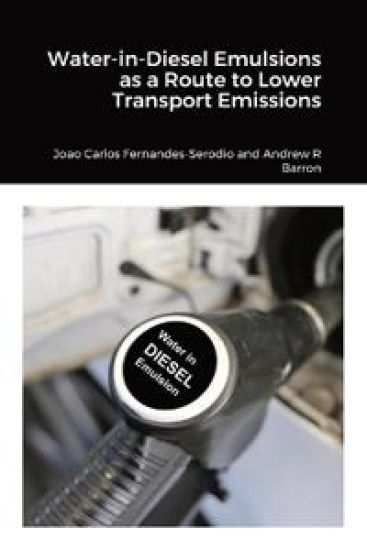
Water-in-Diesel Emulsions as a Route to Lower Transport Emissions

Water-in-Diesel Emulsions as a Route to Lower Transport Emissions

Joao Carlos Fernandes Serodio; Andrew Barron

Lulu Press Inc
2022
pokkari
Diesel engines have higher combustion efficiency, high efficiency, durability, and reliability together with their low-operating cost and emit lower carbon dioxide, carbon monoxide, and unburned hydrocarbons compared to gasoline engines; however, diesel engines are a major source of NOx and particulate matter emissions. The purpose of water-in-fuel emulsion is to enhance combustion efficiency, which improves fuel consumption rates and reduces exhaust gas emissions. Combustion efficiency is obtained by micro-explosion phenomenon, where the sub-droplet of water in the fuel spray droplet will expand and puff, breaking down the fuel spray droplet into smaller particles. The smaller the fuel spray droplet sizes are the easier the fuel will burn, improving fuel consumption rates which will reduce the reliance of hydrocarbons fuels, and reducing exhaust gas emissions, which will contribute to the reduction of greenhouse effect, without any me-chanical or electronic changes to the engine.
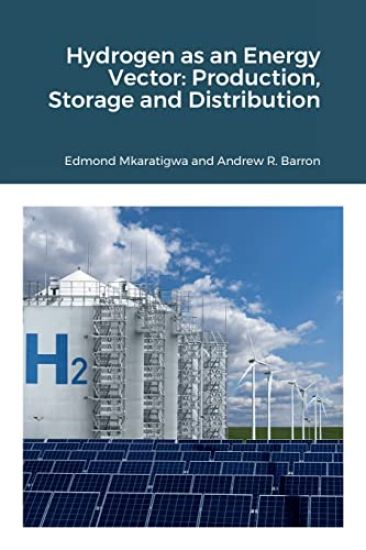
Hydrogen as an Energy Vector

Hydrogen as an Energy Vector

Edmond Mkaratigwa; Andrew Barron

Lulu.com
2022
pokkari
This book outlines the developments taking place in the energy sector. The main focus remains on hydrogen, but a discussion on the other en-ergy sources that exist provided a comparative analysis on the possibil-ity of use of hydrogen globally. There is adequate evidence that the trend is positive towards the use of hydrogen as energy in the industries and households because of the many advantages associated with it. The disadvantages are, to a larger extent, being worked on to ensure it is universally adopted for use. Threats of climate change to human surviv-al are the main drivers to innovation, as well as the distribution of the source of hydrogen, despite the location of the technologies in fewer parts of the globe. This book discusses the evolution of hydrogen, tech-nologies and methods being used in its manufacture, as well as existing challenges and breakthroughs.
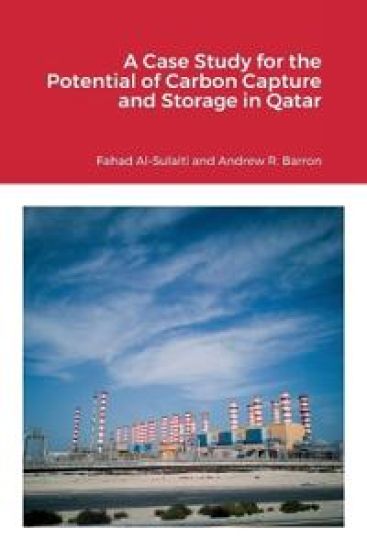
A Case Study for the Potential of Carbon Capture and Storage in Qatar
This book collates research data on the current global implementation of carbon capture, utilization and storage (CCUS), analyses the challenges of CO2 management in the long-term, as well as locates the opportunities of such technologies for the context of specific countries, in this case being Qatar. The different types of CO2 sequestration technology are defined, their global implementation discussed, and other key characteristics measured. The study primarily utilizes a systematic review methodology to identify the latest trends in CCUS, as well as analyzing current technological, socio-economic, and political conditions using publicly available sources. Findings highlighted from the literature review are compiled into a survey, which is aimed at specifically targeted specialist professionals in the CCUS industry who can provide input about the applicability of particular CCUS solutions to Qatar. A deeper analysis of this methodology combines desktop and survey information for an analysis of the topic, including the specific suitability of technologies for Qatar, current initiatives, as well as providing insight on how the identified systems can be integrated for an infrastructure level carbon sequestration system. As part of the Qatar-based discussion, analysis findings are critically examined in relation to their economic feasibility in comparison to current environmental socioeconomic drivers, i.e., the vital economic out-put of the country's dependence on the oil and gas sector, political threats from international relations and global climate change, as well as the lack of sustainable food and water sources in Qatar.
Micromodel Evaluation of Nanoparticles for Enhanced Oil Recovery

Micromodel Evaluation of Nanoparticles for Enhanced Oil Recovery

Wafaa Al-Shatty; Shirin Alexander; Andrew Barron

Lulu.com
2022
pokkari
Enhanced oil recovery (EOR) is a tertiary process whereby oil is extracted from an oil field that could not otherwise be extracted. As such EOR can extract 30%-60% of a reservoir's oil in place (OIP) compared to 20% to 40% using primary and secondary methods. While there is a clear economical advantage (depending on the current price of oil), there is also an environmental impact of EOR. On the positive side, EOR can be used in place of drilling additional wells, while on the other hand EOR results in large quantities of produced water which must be correctly disposed of or treated. One of the reasons that not all the reservoir oil is readily recovered without EOR is that there is significant surface tension between the oil and the reservoir rock. The injection of various chemicals, usually as dilute solutions, have been used to aid mobility through the reduction in surface tension and interfacial tension. Although dilute solutions of surfactants and polymers have been deployed commercially, there is a desire to develop both more efficient chemicals as well as those with reduced environmental impact. One such class of potential EOR additive are nanomaterials (sized between 1 and 100 nm), due to their high surface-to-volume ratio, wettability control, and interfacial tension reduction. The use of nanomaterials to EOR is a very attractive, yet challenging task, because prior to deployment in a reservoir it is necessary to gain an understanding of the relative performance of nanomaterials as compared to traditional methods. Although core flood methods offer a quantitative value for oil recovery, they do not provide detailed insight into mechanism. Micromodels have been used as a flexible method for determining the efficacy of nanomaterials as well as combinations of nanomaterials with surfactants and polymers. This book is aimed at providing an overview of methods whereby nanomaterials can be investigated with regard to EOR.
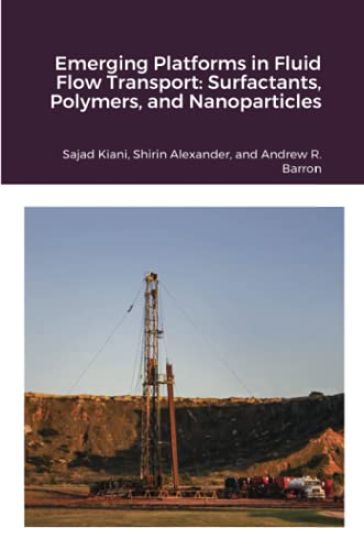
Emerging Platforms in Fluid Flow Transport

Emerging Platforms in Fluid Flow Transport

Sajad Kiani; Shirin Alexander; Andrew Barron

Midas Green Innovations, Ltd
2021
pokkari
Chemical flooding in the oil reservoirs began as far back as the early 1920s. From the early 1990s, chemical flooding has progressed considerably facilitating huge amounts of oil production. Attention has most recently been turned towards chemicals such as surfactants, polymers, and nanoparticles to enhance fluid flow by overcoming strong chemical bonding between rock-fluid and fluid-fluid interfaces. This book begins with the fundamentals aimed at those with basic knowledge of petroleum engineering. The author's objective is to deliv-er an uncomplicated introduction to the field of chemical flooding for oil recovery.
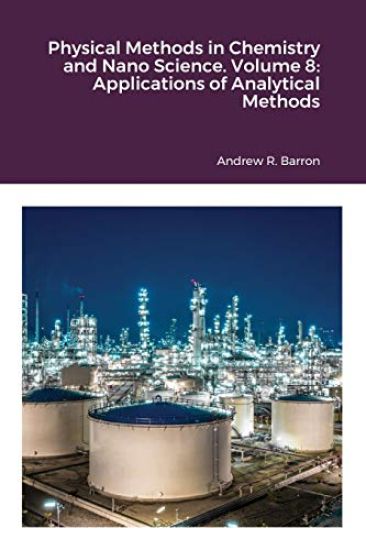
Physical Methods in Chemistry and Nano Science. Volume 8

Physical Methods in Chemistry and Nano Science. Volume 8

Andrew Barron; Adrish Anand

Midas Green Innovation, Ltd
2020
pokkari
This Series intended as a survey of research techniques used in modern chemistry, materials science, and nanoscience. The topics are grouped into volumes, not be method per se, but with regard to the type of information that can be obtained. Thus, the Volumes are ordered as follows: 1) Elemental composition; 2) Physical and thermal analysis; 3) Chromatography; 4) Chemical speciation; 5) Molecular and solid state structure; 6) Surface morphology and structure at the nanoscale; 7) Device performance; 8) Applications of analytical methods.
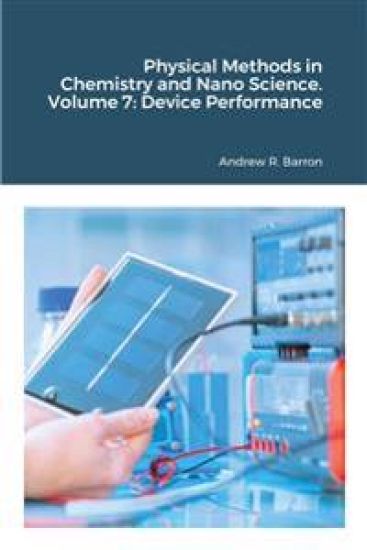
Physical Methods in Chemistry and Nano Science. Volume 7

Physical Methods in Chemistry and Nano Science. Volume 7

Andrew Barron; Kyle Chow

Midas Green Innovation, Ltd.
2020
pokkari
This Series intended as a survey of research techniques used in modern chemistry, materials science, and nanoscience. The topics are grouped into volumes, not be method per se, but with regard to the type of information that can be obtained. Thus, the Volumes are ordered as follows: 1) Elemental composition; 2) Physical and thermal analysis; 3) Chromatography; 4) Chemical speciation; 5) Molecular and solid state structure; 6) Surface morphology and structure at the nanoscale; 7) Device performance; 8) Applications of analytical methods.
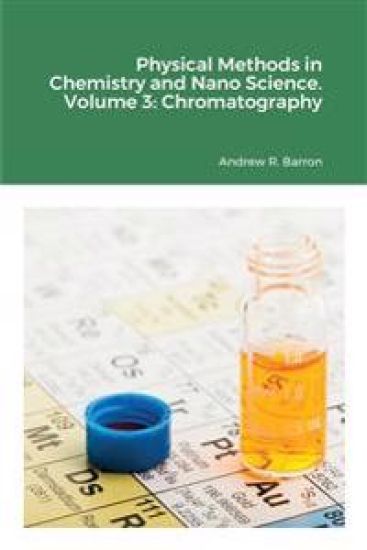
Physical Methods in Chemistry and Nano Science. Volume 3

Physical Methods in Chemistry and Nano Science. Volume 3

Andrew Barron; Alejandra Garcia Piantanida

Midas Green Innovations, Ltd.
2020
pokkari
This Series intended as a survey of research techniques used in modern chemistry, materials science, and nanoscience. The topics are grouped into volumes, not be method per se, but with regard to the type of information that can be obtained. Thus, the Volumes are ordered as follows: 1) Elemental composition; 2) Physical and thermal analysis; 3) Chromatography; 4) Chemical speciation; 5) Molecular and solid state structure; 6) Surface morphology and structure at the nanoscale; 7) Device performance; 8) Applications of analytical methods.
Physical Methods in Chemistry and Nano Science. Volume 6

Physical Methods in Chemistry and Nano Science. Volume 6

Andrew Barron; Amir Aliyan

Midas Green Innovation, Ltd.
2020
pokkari
This Series intended as a survey of research techniques used in modern chemistry, materials science, and nanoscience. The topics are grouped into volumes, not be method per se, but with regard to the type of information that can be obtained. Thus, the Volumes are ordered as follows: 1) Elemental composition; 2) Physical and thermal analysis; 3) Chromatography; 4) Chemical speciation; 5) Molecular and solid state structure; 6) Surface morphology and structure at the nanoscale; 7) Device performance; 8) Applications of analytical methods.
Physical Methods in Chemistry and Nano Science. Volume 5

Physical Methods in Chemistry and Nano Science. Volume 5

Andrew Barron; Aditya Agrawal

Midas Green Innovation, Ltd.
2020
pokkari
This Series intended as a survey of research techniques used in modern chemistry, materials science, and nanoscience. The topics are grouped into volumes, not be method per se, but with regard to the type of information that can be obtained. Thus, the Volumes are ordered as follows: 1) Elemental composition; 2) Physical and thermal analysis; 3) Chromatography; 4) Chemical speciation; 5) Molecular and solid state structure; 6) Surface morphology and structure at the nanoscale; 7) Device performance; 8) Applications of analytical methods.
Physical Methods in Chemistry and Nano Science. Volume 4

Physical Methods in Chemistry and Nano Science. Volume 4

Andrew Barron; Wala Algozeeb

Midas Green Innovations, Ltd
2020
pokkari
This Series intended as a survey of research techniques used in modern chemistry, materials science, and nanoscience. The topics are grouped into volumes, not be method per se, but with regard to the type of information that can be obtained. Thus, the Volumes are ordered as follows: 1) Elemental composition; 2) Physical and thermal analysis; 3) Chromatography; 4) Chemical speciation; 5) Molecular and solid state structure; 6) Surface morphology and structure at the nanoscale; 7) Device performance; 8) Applications of analytical methods.
Physical Methods in Chemistry and Nano Science. Volume 2

Physical Methods in Chemistry and Nano Science. Volume 2

Andrew Barron; Wala Algozeeb

Midas Green Innovations, Ltd
2020
pokkari
This Series intended as a survey of research techniques used in modern chemistry, materials science, and nanoscience. The topics are grouped into volumes, not be method per se, but with regard to the type of information that can be obtained. Thus, the Volumes are ordered as follows: 1) Elemental composition; 2) Physical and thermal analysis; 3) Chromatography; 4) Chemical speciation; 5) Molecular and solid state structure; 6) Surface morphology and structure at the nanoscale; 7) Device performance; 8) Applications of analytical methods.