Kirjojen hintavertailu – 12 903 724 kirjaa ja 27 kauppaa

Kirjailija

Andrew Beattie

Kirjat ja teokset yhdessä paikassa: 26 kirjaa, julkaisuja vuosilta 2004–2025, suosituimpiin kuuluu The Danube. Vertaile teosten hintoja ja tarkista saatavuus suomalaisista kirjakaupoista.

26 kirjaa

Kirjojen julkaisuvuodet: 2004–2025.

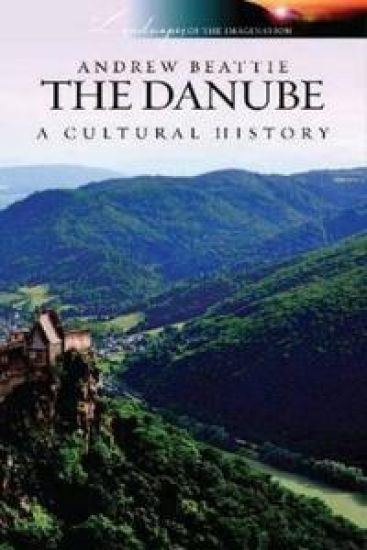
Danube a Cultural History

Danube a Cultural History

Andrew Beattie

Signal Books Ltd
2010
nidottu
The Danube is the longest river in western and central Europe. Rising amidst the beautiful wooded hills of Germany s Black Forest, it touches or winds its way through ten countries and four capital cities before emptying into the Black Sea through a vast delta whose silt-filled channels spread across eastern Romania. From earliest times the river has provided a route from Europe to Asia that was followed by armies and traders, while empires, from the Macedonian to the Habsburg, rose and fell along its length. Then, in the middle of the twentieth century, the Danube took on the role of a watery thread that unified a continent divided by the Iron Curtain. In the late 1980s the Iron Curtain lifted but the Danube valley soon became an arena for conflict during the violent break-up of the former Yugoslavia. Now, passing as it does through some of the world s youngest nations, including Slovakia, Croatia, Serbia, Moldova and Ukraine, the river is a tangible symbol of a new, peaceful and united Europe as well as a vital artery for commercial and leisure shipping. Andrew Beattie explores the turbulent past and vibrant present of the landscape through which the Danube flows, where the enduring legacies of historical regimes from the Romans to the Nazis have all left their mark. HISTORICAL FIGURES: From the Roman Emperor Marcus Aurelius to Richard the Lionheart, and from Alexander the Great to Napoleon, the position of the Danube at the heart of Europe has led to centuries of war and conflict. LANDSCAPE AND CITIES: From the imperial grandeur of Budapest to the charm of medieval Passau, from grim river ports in Romania to the austere fortress cities of Belgrade and Bratislava, and from the plains of Hungary to the dramatic scenery of the Iron Gates gorge, the Danube flows through a remarkable variety of cities and landscapes. WRITERS AND ARTISTS: From the anonymous author of the Song of the Nibelungs to Patrick Leigh Fermor, and from Albrecht Altdorfer to Johann Strauss the Younger, the beautiful scenery of the Danube valley has provided inspiration for writers, artists and composers through the centuries.

Playing Politics with History

Playing Politics with History

Andrew Beattie

Berghahn Books
2008
sidottu
After Germany's reunification in 1989-90, the country faced not only the history and consequences of the nation’s division during the Cold War but also the continuing burdensome legacy of the Nazi past and the Holocaust. This book explains why concerns that the Nazi past would be marginalized by the more recent Communist past proved to be misplaced. It examines the delicate East–West dynamics and the notion that the West sought to impose "victor's justice" (or history) on the East. More specifically, it examines, for the first time, the history and significance of two parliamentary commissions of inquiry created in the 1990s to investigate the divided past after 1945 and its effects on the reunified country. Not unlike "truth commissions" elsewhere, these inquiries provided an important forum for renegotiating contemporary Germany's relationship with multiple German pasts, including the Nazi period and the Holocaust. The ensuing debates and disagreements over the recent past, examined by the author, open up a window into the wider development of German memory, identity, and politics after the end of the Cold War.
The Alps

The Alps

Andrew Beattie

Signal Books Ltd
2006
nidottu
The Alps are Europe's highest mountain range; their broad arc stretches right across the centre of the continent, encompassing a wide range of traditions and cultures. In former times the mountains were feared as the realm of wild and dangerous beasts, and the few travellers who ventured over high passes such as the Simplon or the Great St. Bernard expected to encounter tempests and torments of hellish proportions. But over time the Alps became celebrated by writers for their beauty rather than their savagery. In the nineteenth century, inspired in part by the work of poets such as Byron and Shelley, tourists began flocking to the mountains, and with the development of winter sports a hundred years ago the fate of the Alps as one of the great tourist playgrounds of the world was sealed. Andrew Beattie explores the turbulent past and vibrant present of this landscape, where early pioneers of tourism, mountaineering and scientific research, along with the enduring legacies of historical regimes from the Romans to the Nazis, have all left their mark. Historical Figures: From Julius Caesar and Hannibal to Napoleon and William Tell, the position of the Alps at the heart of Europe has led to centuries of war and conflict. Folklore and Tradition: The wildness of the mountains has inspired a unique popular culture, from legendary tales of dragons flying among the peaks to performances of religious passion plays in valley towns. Writers, Artists and Film-Makers: From the Romantic poets to Charles Dickens and Mark Twain; from Turner and Ruskin to the film-maker Leni Riefenstahl; from James Bond to Heidi and The Sound of Music; the beautiful scenery of the Alps has provided the setting for dozens of books, poems, films and paintings through the centuries.
The Alps

The Alps

Andrew Beattie

Oxford University Press Inc
2006
sidottu
The Alps are Europe's highest mountain range: their broad arc stretches right across the center of the continent, encompassing a wide range of traditions and cultures. Andrew Beattie explores the turbulent past and vibrant present of this landscape, where early pioneers of tourism, mountaineering, and scientific research, along with the enduring legacies of historical regimes from the Romans to the Nazis, have all left their mark.
Cairo

Cairo

Andrew Beattie

Signal Books Ltd
2004
nidottu
Cairo is a city of extremes. On its chaotic streets BMWs driven by sharp-suited businessmen compete for road space with donkey carts laden with farm produce; in its mosques the wealthy and the destitute pray next to each other. The largest conurbation in Africa since the Middle Ages, it was in Ibn Battutah's words "the mother of cities". With a present-day population of around eighteen million, this sprawling metropolis is home to one thousand new migrants every day, drawn to the seething intensity of a modern, cosmopolitan capital that blends together the cultures of the Middle East and Europe. The fabled city on the banks of the River Nile, once home to pharaohs and emperors, now forms a focal point of the Islamic faith and of the Arab world. Andrew Beattie explores the turbulent past and vibrant present of this city where the enduring legacies of the ancient Egyptians, the early Coptic Church, British colonial rule and the modernist zeal of the post-independence era have all left their mark. THE CITY OF WRITERS, CONQUERORS AND REVOLUTIONARIES: From Mark Twain and Thackeray to Paul Theroux and Naguib Mahfouz, Alexander the Great to Napoleon, and Lawrence of Arabia to Colonel Nasser. THE CITY OF MONUMENTS AND SPECTACLE: From the Pyramids of Giza and Saqqara to the Mosque of Mohammed Ali, dominating the Cairo skyline; from the teeming bazaars of the muski to Coptic and Islamic festivals. THE CITY OF ANCIENT AND MODERN: Where ancient churches and mosques sit cheek-by-jowl with modern skyscrapers and busy highways; where prosperous suburbs lie close to areas of third world poverty and deprivation.