Kirjojen hintavertailu – 12 859 826 kirjaa ja 27 kauppaa

Kirjailija

Andrew Chesterman

Kirjat ja teokset yhdessä paikassa: 7 kirjaa, julkaisuja vuosilta 1991–2023, suosituimpiin kuuluu Canal Grande. Hannu Raittila.Translated by Andrew Chesterman. Vertaile teosten hintoja ja tarkista saatavuus suomalaisista kirjakaupoista.

7 kirjaa

Kirjojen julkaisuvuodet: 1991–2023.

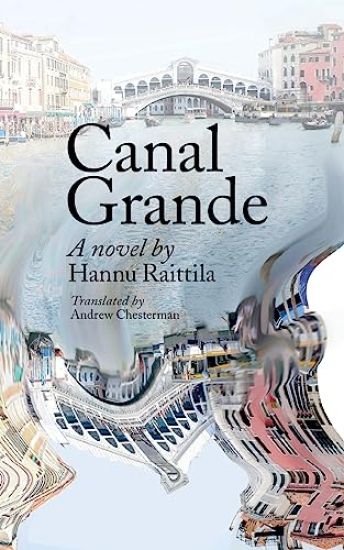
Canal Grande. Hannu Raittila.Translated by Andrew Chesterman
English translation of Canal Grande, a novel by the contemporary Finnish writer Hannu Raittila. The novel won the Finlandia Prize celebrating the best Finnish novel of the year when it was published in 2001. A team of Finnish experts is sent on a UNESCO mission to save Venice from sinking. A rich social comedy unfolds as northern cool meets Mediterranean carnival: two very different manifestations of modern European culture. But beneath the satire, a more serious moral critique develops, as darker sides of human behaviour are gradually revealed... The final pages are an emotional shock, as we realize how much the Finnish experts have not realized. The novel switches between the viewpoints of several contrasting voices, from different members of the team of experts. The main voice is that of Marrasjärvi, the team's resouceful and ever-rational hydro-engineer, a specialist in freezing, who will solve any technical problem and even save a donkey from drowning. Other team members are Saraspää, an ageing cultural hedonist who keeps a very personal diary, and Heikkilä, an academic historian who is fluent in Latin and ready to lecture on anything at any time. The last voice is that of Tuuli, the team's bilingual secretary, who lives in a different world and saves more than a donkey. Underpinning the often farcical culture clash there run deeper themes exploring the gap between rhetoric and reality, the limits of rationality, what might make a good life, and human tragedy.
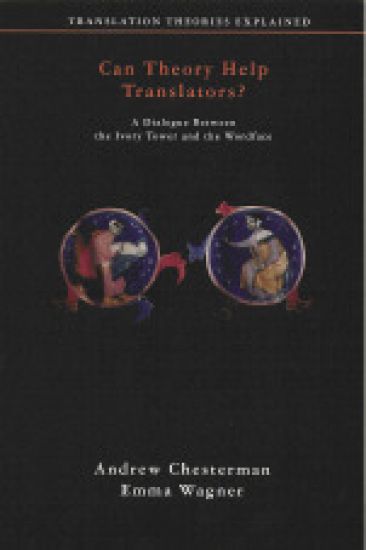
Can Theory Help Translators?

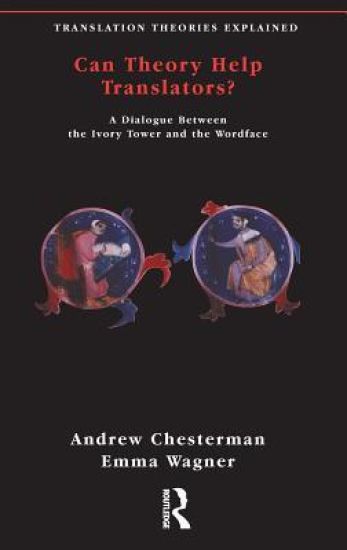
Can Theory Help Translators?

Andrew Chesterman; Emma Wagner

Routledge
2016
sidottu
Can Theory Help Translators? is a dialogue between a theoretical scholar and a professional translator, about the usefulness (if any) of translation theory. The authors argue about the problem of the translator's identity, the history of the translator's role, the translator's visibility, translation types and strategies, translation quality, ethics and translation aids.
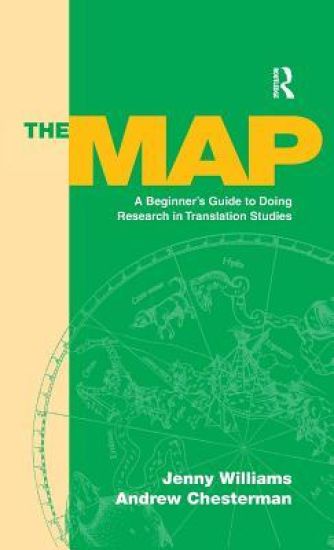
The Map

The Map

Jenny Williams; Andrew Chesterman

Routledge
2015
sidottu
The Map is a practical guidebook introducing the basics of research in translation studies for students doing their first major research project in the field. Depending on where they are studying, this may be at advanced undergraduate (BA) or at postgraduate (MA/PHD) level. The book consists of ten chapters. Chapter 1 offers an overview of 12 research areas in translation studies in order to help students identify a topic and establish some of the current research questions relating to it. Chapter 2 is designed to assist students in planning their research project and covers topics such as refining the initial idea, determining the scope of the project, checking out resources, reading critically, keeping complete bibliographic records, and working with a supervisor. Chapters 3 to 7 provide some of the conceptual and methodological tools needed in this area of research, with detailed discussion of such topics as theoretical models of translation, types of research, asking questions, making claims, formulating hypotheses, establishing relations between variables, and selecting and analyzing data. Chapters 8 and 9 are about presenting one's research, in writing as well as orally. Finally, chapter 10 deals with some of the criteria commonly used in research assessment, especially in the assessment of theses. The authors provide detailed guidance on further reading throughout. This is an essential reference work for research students and lecturers involved in supervising research projects and degrees.
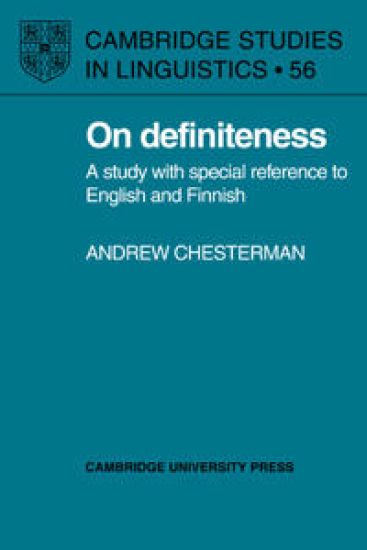
On Definiteness

On Definiteness

Andrew Chesterman

Cambridge University Press
2005
pokkari
This 1991 book proposes a theory of definiteness in language. It argues that definiteness should be viewed as a cover-term comprising three basic oppositions within the areas of familiarity (locatability), quantity (inclusiveness) and generality (extensivity). Further, the oppositions are not discrete but scalar, and lend themselves to characterization in terms of fuzzy theory. Dr Chesterman examines these themes, firstly by drawing on several traditions of research on the rich system of articles in English, and then by looking at how the concept of definiteness is realized in Finnish, a language which has no articles and typically leaves definiteness to be inferred by a variety of means. On Definiteness provides a thorough and sensitive discussion of an intricate semantic problem. It highlights two important theoretical points: the fuzziness of the linguistic concept of definiteness and the differences between languages in the way in which they draw the line between syntax, semantics and pragmatics.
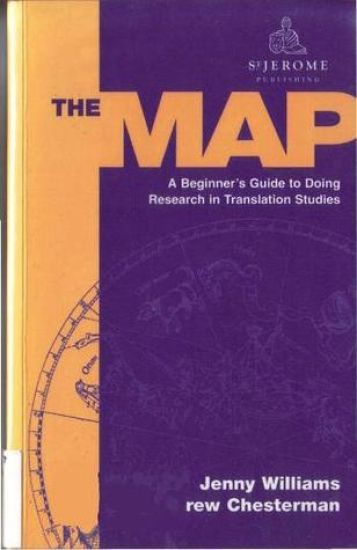
The Map

The Map

Jenny Williams; Andrew Chesterman

St Jerome Publishing
2002
nidottu

Halvin toimitettuna 40,40 €

The Map is a practical guidebook introducing the basics of research in translation studies for students doing their first major research project in the field. Depending on where they are studying, this may be at advanced undergraduate (BA) or at postgraduate (MA/PHD) level. The book consists of ten chapters. Chapter 1 offers an overview of 12 research areas in translation studies in order to help students identify a topic and establish some of the current research questions relating to it. Chapter 2 is designed to assist students in planning their research project and covers topics such as refining the initial idea, determining the scope of the project, checking out resources, reading critically, keeping complete bibliographic records, and working with a supervisor. Chapters 3 to 7 provide some of the conceptual and methodological tools needed in this area of research, with detailed discussion of such topics as theoretical models of translation, types of research, asking questions, making claims, formulating hypotheses, establishing relations between variables, and selecting and analyzing data. Chapters 8 and 9 are about presenting one's research, in writing as well as orally. Finally, chapter 10 deals with some of the criteria commonly used in research assessment, especially in the assessment of theses. The authors provide detailed guidance on further reading throughout. This is an essential reference work for research students and lecturers involved in supervising research projects and degrees.
Can Theory Help Translators?

Can Theory Help Translators?

Andrew Chesterman; Emma Wagner

St Jerome Publishing
2002
nidottu
Can Theory Help Translators? is a dialogue between a theoretical scholar and a professional translator, about the usefulness (if any) of translation theory. The authors argue about the problem of the translator's identity, the history of the translator's role, the translator's visibility, translation types and strategies, translation quality, ethics and translation aids.
On Definiteness

On Definiteness

Andrew Chesterman

Cambridge University Press
1991
sidottu
This 1991 book proposes a theory of definiteness in language. It argues that definiteness should be viewed as a cover-term comprising three basic oppositions within the areas of familiarity (locatability), quantity (inclusiveness) and generality (extensivity). Further, the oppositions are not discrete but scalar, and lend themselves to characterization in terms of fuzzy theory. Dr Chesterman examines these themes, firstly by drawing on several traditions of research on the rich system of articles in English, and then by looking at how the concept of definiteness is realized in Finnish, a language which has no articles and typically leaves definiteness to be inferred by a variety of means. On Definiteness provides a thorough and sensitive discussion of an intricate semantic problem. It highlights two important theoretical points: the fuzziness of the linguistic concept of definiteness and the differences between languages in the way in which they draw the line between syntax, semantics and pragmatics.