Kirjojen hintavertailu – 12 903 725 kirjaa ja 27 kauppaa

Kirjailija

Andrew Coburn

Kirjat ja teokset yhdessä paikassa: 6 kirjaa, julkaisuja vuosilta 1995–2018, suosituimpiin kuuluu The Babysitter. Vertaile teosten hintoja ja tarkista saatavuus suomalaisista kirjakaupoista.

6 kirjaa

Kirjojen julkaisuvuodet: 1995–2018.

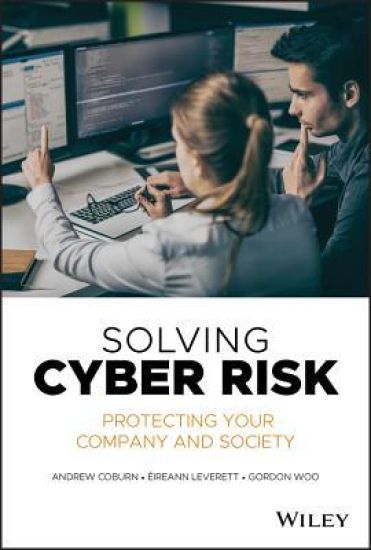
Solving Cyber Risk

Solving Cyber Risk

Andrew Coburn; Eireann Leverett; Gordon Woo

John Wiley Sons Inc
2018
sidottu
The non-technical handbook for cyber security risk management Solving Cyber Risk distills a decade of research into a practical framework for cyber security. Blending statistical data and cost information with research into the culture, psychology, and business models of the hacker community, this book provides business executives, policy-makers, and individuals with a deeper understanding of existing future threats, and an action plan for safeguarding their organizations. Key Risk Indicators reveal vulnerabilities based on organization type, IT infrastructure and existing security measures, while expert discussion from leading cyber risk specialists details practical, real-world methods of risk reduction and mitigation. By the nature of the business, your organization’s customer database is packed with highly sensitive information that is essentially hacker-bait, and even a minor flaw in security protocol could spell disaster. This book takes you deep into the cyber threat landscape to show you how to keep your data secure. Understand who is carrying out cyber-attacks, and whyIdentify your organization’s risk of attack and vulnerability to damageLearn the most cost-effective risk reduction measuresAdopt a new cyber risk assessment and quantification framework based on techniques used by the insurance industry By applying risk management principles to cyber security, non-technical leadership gains a greater understanding of the types of threat, level of threat, and level of investment needed to fortify the organization against attack. Just because you have not been hit does not mean your data is safe, and hackers rely on their targets’ complacence to help maximize their haul. Solving Cyber Risk gives you a concrete action plan for implementing top-notch preventative measures before you’re forced to implement damage control.

Earthquake Protection

Earthquake Protection

Andrew Coburn; Robin Spence

John Wiley Sons Inc
2002
nidottu
Since the publication of the successful first edition of Earthquake Protection there have been 110 lethal earthquakes, killing 130 000 people; there have also been significant developments in the field of earthquake risk management, particularly in the modelling and analysis of risk for insurance and financial services. Furthermore, major earthquake disasters, such as the 1994 Northridge earthquake in California, the 1995 Kobe earthquake in Japan and the 1999 Kocaeli earthquake in Turkey have occurred. The experience and knowledge gained through these events have improved our understanding of how to manage, mitigate and work towards the prevention of similar catastrophes. The 1990s were in fact the costliest decade on record in terms of disaster management due to such seismic events, placing unprecedented pressure on the insurance industry in particular, and changing its view of earthquake protection. Significantly revised and updated, this second edition continues to provide a comprehensive overview of how to reduce the impact of earthquakes on people and property, and implement best practice in managing the consequences of such disasters. It also includes significant coverage of the techniques of modelling earthquake catastrophe. Each chapter deals with a separate aspect of protection, and covers a wide range of economic and social conditions, drawing on the authors' considerable personal experience and with reference to real life examples. Key features include: * Recent event coverage * Modern developments in the theory and practice of planning and engineering loss estimation techniques, along with new engineering techniques such as microzonation and hazard-mapping * Historic buildings experience * An entirely new chapter on 'Earthquakes and Finance' This valuable book provides essential reading for earthquake and structural engineers and geoscientists, as well as insurers and loss prevention specialists, risk managers and assessors involved in managing earthquake risk, urban and regional planners, and emergency management agencies.
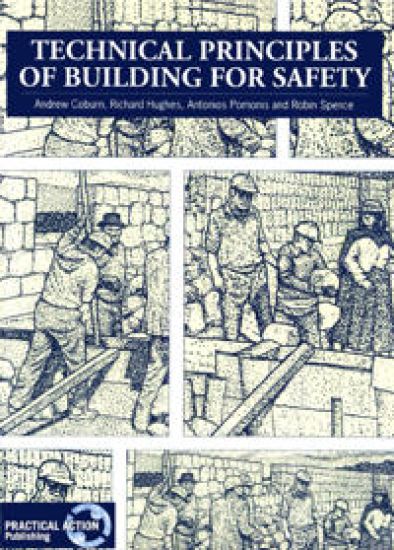
Technical Principles of Building for Safety

Technical Principles of Building for Safety

Andrew Coburn; Richard Hughes; Antonios Pomonis; Robin Spence

Practical Action Publishing
1995
nidottu
This book describes principles and construction techniques for builders, householders and communities who are building in hazard-prone areas. The principles are clearly and simply presented- and in a form which can be adapted for use in training or public information campaigns - with an emphasis on improving hazard-resistance at minimum cost; and the book concentrates on those principles which are universally applicable. It includes sections on site safety; building safely in brick and block; building safely in earth and stone; building safely in timber; building safely in reinforced concrete- and building a safe roof. This book is part of the Building for Safety Initiative of the Overseas Development Administration of the UK government, which aims to bring the knowledge of how to build safely to those who need that knowledge most. The project was devised and executed by Cambridge Architectural Research Limited and the Disaster Management Centre of Oxford Brookes University. This volume from Cambridge Architectural Research, is one of four which the Building for Safety team have produced for this initiative.