
Kirjailija
Andrew Crumey
Kirjat ja teokset yhdessä paikassa: 9 kirjaa, julkaisuja vuosilta 1994–2025, suosituimpiin kuuluu Rapture of the Deep. Vertaile teosten hintoja ja tarkista saatavuus suomalaisista kirjakaupoista.
9 kirjaa
Kirjojen julkaisuvuodet: 1994–2025.
'The overall effect is like a brilliantly well-informed 200-year history of philosophy, science, music and mysticism, touched with an edge of Da Vinci Code hocus pocus, in the sense of an alternative "sub rosa" world history never quite revealed. To say so, though, is to miss the sheer fun and narrative energy of Crumey's writing, the skill and insight with which he conjures up each of his narrators from the repellent to the poignant, and the huge ingenuity with which he interweaves their stories, including that of Adam Crouch, a failed writer and memorably seedy 21st century buffoon, who enters the story by accident, and becomes its final boozed-up witness to timeless tragedy. There's something profoundly post-modern about the dense cultural references, and the complex patchwork of fact and fiction, that make up Crumey's narrative; and in that sense it continues in a vein he has been mining for the last 25 years and more. The intensity with which the story questions the very nature of time, though - and follows its central voice, Robert Coyle, through the strange reality-shifting nightmare of the pandemic - seems entirely of this moment; as if Crumey were leading us into a terminal vortex of history and thought, music and culture, parallel universes and competing realities, where all things sparkle and implode with extraordinary vividness, on the edge of oblivion.' Joyce McMillan in The Scotsman
'The playful preoccupation with alternative realities that dominated Scots author Crumey s previous fiction (including Pfitz and D Alembert s Principle) also informs this richly amusing novel about the search for an 18th-century encyclopedia that supposedly disproves the existence of the universe. Crumey s wonderfully obsessive characters include the crotchety title figure (an elderly book collector), the lissome life-scientist who acquaints him with the world outside books, a perceptive college teacher of French literature, and a pair of bachelor copyists (and autodidacts who are dead ringers for Flaubert s ineffably pompous Bouvard and Pecuchet). Rattling back and forth between two centuries, this agreeably serpentine tale speaks volumes about the folly of scholarly preoccupation and the unreliability of received wisdom, while never neglecting to entertain the bedazzled reader. Borges and Calvino would have approved.' Starred Review in Kirkus 'Crumey tells his] tale with elegance and humor, and in rich detail. His immense talent reveals itself most potently in his ability to find remarkable connections in otherwise disparate intellectual concepts conceived over the course of several centuries, and then to turn those connections into a coherent and lively story. . . The many surprises and twists in this book] provide a rare and spectacular reading experience . . . Mr. Mee is a challenging book, but it's one to savour.' Andrew C. Ervin in The Washington Post Book World"
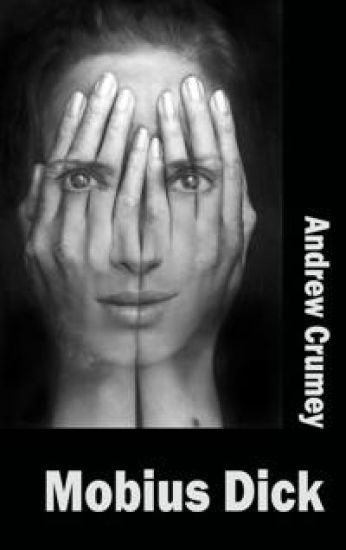
'In some ways this is an edgily modern book, with Dick's namesake, Philip K Dick, among its guiding spirits. Admirers of Flann O'Brien's fictions will be struck by the beguiling ways in which Crumey uses unreliable narrators and worlds within worlds. In another sense the novel reaches back to a Renaissance aesthetic, in which art and scholarship, if not quite the same thing, are mutually adoring twins or lovers in a fable. Refreshingly, this is a novel in which science is a central character rather than a metaphor for something else. That said, it isn't a boffin-fest but a glitteringly original piece of storytelling, unapologetically intelligent, driven by tightly focused narrative skill. It is also acerbically funny, peppered with digs, while an Orwellian irony makes clear that the questions implied are not about some imagined culture, but concern the one in which we wake up every day. There is a winning sense of spaciousness in the writing, a feeling that the words are pouring out spontaneously. This quality is all the more impressive because the ideas are complex: indeed, those of us who are a bit rusty on Heisenberg's interpretation of wave functions may sense we're missing out. And even readers who marvel at Crumey's expansive, frisky prose may feel the allusion to cultural titans becomes a little relentless: Melville, Thomas Mann, Foucault, Nietzsche and Lacan are all name- checked in the first few pages. ("Writing about writers is best avoided," comments Dick's therapist. This isn't advice Crumey would tolerate.) But while Mobius Dick is a work of sophisticated erudition, its playfulness and artistry make it a page-turner, too. It is perhaps the only novel about quantum mechanics you could imagine reading while lying on a beach.' Joseph O'Connor in The Guardian 'Ingenious' is far too pallid a term of praise for this cunningly contrived entertainment, which may sound ponderous in outline but is actually a breeze, by turns slyly comic and oddly melancholy. For most readers, the soundness of its science will be of small consequence; as fiction it is solid plutonium, and unflaggingly enjoyable.' Kevin Jackson in The Sunday Times"
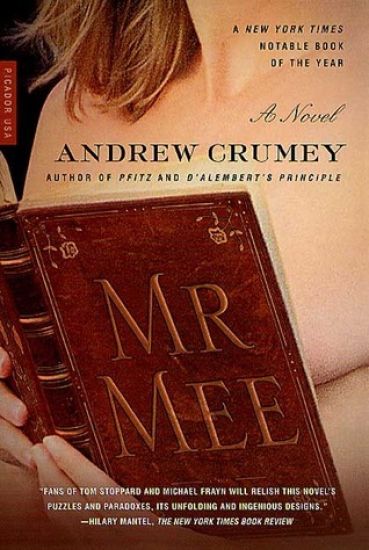
A New York Times Notable Book of the Year In this inventive novel, octogenarian book collector Mr. Mee discovers the Internet with life-changing results. Told from the points of view of the guileless Mr. Mee, two eighteenth century French philosophers, and a middle-aged university professor, Andrew Crumey's book concerns the creation and mysterious disappearance of Rosier's Encyclopedia, an explosive text written more than two hundred years ago that purportedly disproves the existence of the universe. At times funny, often thought-provoking, and completely engaging, Mr. Mee is Crumey's most rewarding novel to date.
"Crumey has written a fantastic novel about a fantasy. . . . Real and unreal merge, interact, and form a tale that is part quirky amusement and part sly satire." --The Atlantic Monthly An eighteenth-century prince, seeking his own immortality, devotes his entire wealth and the energy of his subjects to the creation of Rreinnstadt, a fantastic city that exists only on paper and in the minds of its creators. Among Rreinnstadt's fictional inhabitants is Pfitz, a count's loyal servant who mysteriously disappears on night from a tavern. Enamored of Pfitz's real-life biographer Estrella, one of the city's cartographers sets out on a quest to find Pfitz, hoping he will be rewarded by Estrella's love. Andrew Crumey's exploration of the rich territory between reality and imagination reveals a genuine affection for the character and the terrain of the human heart.
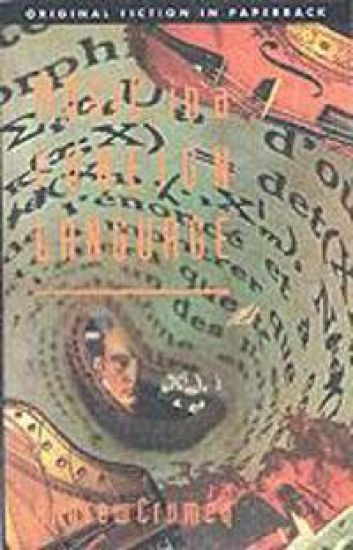
"Two people meet on a train: the young man is imagining a novel, and imagining the life of the young woman. A waiter rushes out to find a girl he fancied who hasn't paid her bill, only to find a diary in which their fictitious flirtation is anatomised. But the story actually begins with a man taking a leak after making love to his wife. He has the inklings of a novel, but thoughts will keep intruding, with all their seductive possibilities. The man on the train is living in an England that has decided, with characteristic diffidence and lack of fuss, that it no longer wants to live under a totalitarian regime which has lasted for 40 years. I say totalitarian, but think more of Brazil, a world of terribly genial tyranny, where officialdom tries so hard to be accommodating. And Duncan has another story, one prompted by the memory of his father's car crashing down a slope. As with all good postmodernist novels, the endless digressions are more soothing than jarring." Murrough O'Brien in The Independent on Sunday The strikingly inventive structure of this novel allows the author to explore the similarities between fictions and history. At any point, there are infinite possibilities for the way the story, a life, or the history of the world might progress. The whole work is enjoyably unpredictable, and poses profound questions about the issues of motivation, choice and morality." The Sunday Times"A writer more interested in inheriting the mantle of Perec and Kundera than Amis and Drabble. Like much of the most interesting British fiction around at the moment, Music, in a Foreign Language is being published in paperback by a small independent publishing house, giving hope that a tentative but long overdue counter-attack is being mounted on the indelible conservatism of the modern English novel. With this novel he has begun his own small stand against cultural mediocrity, and to set himself up, like his hero, as ' a refugee from drabness. From tinned peas, and rain.'"Jonathan Coe in The Guardian