Kirjojen hintavertailu – 12 859 818 kirjaa ja 27 kauppaa

Kirjailija

Andrew Currie

Kirjat ja teokset yhdessä paikassa: 5 kirjaa, julkaisuja vuosilta 2014–2026, suosituimpiin kuuluu Fantastic Four 1. Vertaile teosten hintoja ja tarkista saatavuus suomalaisista kirjakaupoista.

5 kirjaa

Kirjojen julkaisuvuodet: 2014–2026.

Fantastic Four 1

Fantastic Four 1

Jonathan Hickman; Sean Chen; Adi Granov; Neil Edwards; Andrew Currie; Paul Neary; Scott Hanna; Lorenzo Ruggiero

Forlaget Fahrenheit
2021
sidottu
Det er ikke let at være superfamilie med børn, når superskurkene byder op til dans. Bare spørg Fantastic Four! Mørket sænker sig over Marvel-universets mest berømte familie, Fantastic Four, da H. A. M. M. E. R.-agenter under ledelse af selveste Norman Osborn angriber Baxter-bygningen! Mens alt dette sker, har Reed Richards konstrueret en bro over til Multiverset for at lære at løse alt, men i stedet finder han mere, end han kunne forudse. Mens Fantastic Four kæmper mod en af deres ældste rivaler, Mole Man, og Wizard, dukker en bekendt fra fremtiden op med en mystisk besked. Dette sender de fantastiske fire ud på en rejs dybt under Jorden og helt til Månen, hvor de afslører overraskende hemmeligheder!

Atlas of Islamic History

Atlas of Islamic History

Peter Sluglett; Andrew Currie

Routledge
2015
sidottu
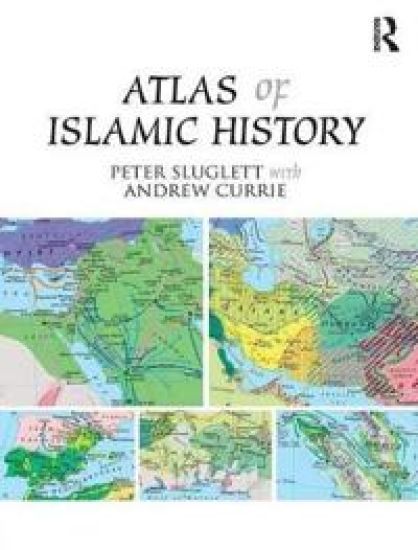
This Atlas provides the main outlines of Islamic history from the immediate pre-Islamic period until the end of 1920, that is, before most parts of the Muslim world became sovereign nation states. Each map is accompanied by a text that contextualises, explains, and expands upon the map, and are fully cross-referenced. All of the maps are in full colour: 18 of them are double-page spreads, and 25 are single page layouts. This is an atlas of Islamic, not simply Arab or Middle Eastern history; hence it covers the entire Muslim world, including Spain, North, West and East Africa, the Indian sub-continent, Central Asia and South-East Asia. The maps are not static, in that they show transitions within the historical period to which they refer: for instance, the stages of the three contemporaneous Umayyad, Fatimid and ‘Abbasid caliphates on Map 10, or the progress of the Mongol invasions and the formation of the various separate Mongol khanates between 1200 and 1300 on Map 21. Using the most up to date cartographic and innovative design techniques, the maps break new ground in illuminating the history of Islam. Brought right up to date with the addition of a Postscript detailing The Islamic World since c.1900, a Chronology from 500 BCE to 2014, and additional endpaper maps illustrating The Spread of Islam through the Ages and The Islamic World in the 21st Century, the Atlas of Islamic History is an essential reference work and an invaluable textbook for undergraduates studying Islamic history, as well as those with an interest in Asian History, Middle East History and World History more broadly.
Atlas of Islamic History

Atlas of Islamic History

Peter Sluglett; Andrew Currie

Routledge
2014
nidottu
This Atlas provides the main outlines of Islamic history from the immediate pre-Islamic period until the end of 1920, that is, before most parts of the Muslim world became sovereign nation states. Each map is accompanied by a text that contextualises, explains, and expands upon the map, and are fully cross-referenced. All of the maps are in full colour: 18 of them are double-page spreads, and 25 are single page layouts. This is an atlas of Islamic, not simply Arab or Middle Eastern history; hence it covers the entire Muslim world, including Spain, North, West and East Africa, the Indian sub-continent, Central Asia and South-East Asia. The maps are not static, in that they show transitions within the historical period to which they refer: for instance, the stages of the three contemporaneous Umayyad, Fatimid and ‘Abbasid caliphates on Map 10, or the progress of the Mongol invasions and the formation of the various separate Mongol khanates between 1200 and 1300 on Map 21. Using the most up to date cartographic and innovative design techniques, the maps break new ground in illuminating the history of Islam. Brought right up to date with the addition of a Postscript detailing The Islamic World since c.1900, a Chronology from 500 BCE to 2014, and additional endpaper maps illustrating The Spread of Islam through the Ages and The Islamic World in the 21st Century, the Atlas of Islamic History is an essential reference work and an invaluable textbook for undergraduates studying Islamic history, as well as those with an interest in Asian History, Middle East History and World History more broadly.