Kirjojen hintavertailu – 12 903 725 kirjaa ja 27 kauppaa

Kirjailija

Andrew Fiala

Kirjat ja teokset yhdessä paikassa: 25 kirjaa, julkaisuja vuosilta 2007–2025, suosituimpiin kuuluu Christian Nationalism and the Paradox of Secularism. Vertaile teosten hintoja ja tarkista saatavuus suomalaisista kirjakaupoista.

25 kirjaa

Kirjojen julkaisuvuodet: 2007–2025.

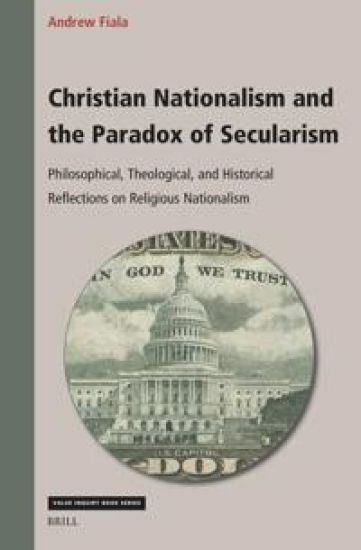
Christian Nationalism and the Paradox of Secularism
Christian nationalism is a backlash against the success of secularism and the growth of nonreligion. Its proponents go so far as to claim that secularism is diabolical. This rejection of secularism poses a significant challenge for secular systems, which aim to be inclusive of diverse religious ideas. This book explains the depth of this challenge while recounting the views of Christian nationalists, including Donald Trump. It shows how key figures in the American tradition—Adams, Jefferson, Madison, and others—promoted political secularism. It uses Christian theology and modern political philosophy to argue in defence of secularism and against Christian nationalism.
Tyranny from Plato to Trump

Tyranny from Plato to Trump

Andrew Fiala

BLOOMSBURY PUBLISHING PLC
2024
nidottu
Power grabs, partisan stand-offs, propaganda, and riots make for tantalizing fiction, but what do we do when that drama becomes a reality all around us? For a country founded as an escape from British tyranny, the United States seems to have devolved into a land where tyrants rise to power, sycophants blindly follow, and the entire nation suffers. As ancient Greek philosophers warned us, chaotic tragedy unfolds in the absence of reason, and the only cure is a return to wisdom and virtue. America’s founding fathers knew this lesson all too well and dreamed of an enlightened citizenry guided by better-than-ideological dictators. Using contemporary events to illuminate universal human weaknesses, Andrew Fiala charts the perennial history of tyrannical takeovers and the masses who support them and ultimately suffer under their rule. Ultimately, Fiala also points to a solution. Knowing the cyclical nature of tyranny, we can build safeguards against our worst inclinations and keep alive the freedoms our founding fathers envisioned for this nation.
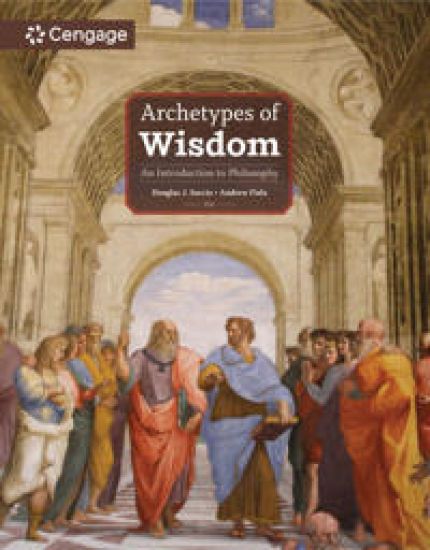
Archetypes of Wisdom

Archetypes of Wisdom

Douglas Soccio; Andrew Fiala

CENGAGE LEARNING, INC
2024
nidottu
Soccio/Fiala's ARCHETYPES OF WISDOM: AN INTRODUCTION TO PHILOSOPHY, 10th EDITION, uses a historical approach to bring introductory philosophy to life through lively narratives, engaging illustrations and a student-friendly writing style. Using its signature conversational prose, the textbook guides students through the lives and works of history’s greatest philosophers. This edition connects the history of philosophy to contemporary issues while encouraging students to think and evaluate ideas and figures.
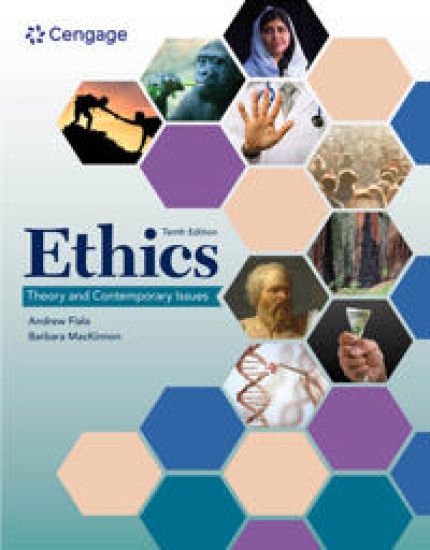
Ethics

Ethics

Andrew Fiala; Barbara MacKinnon

CENGAGE LEARNING, INC
2023
nidottu
Explore the major perspectives in ethical theory and contemporary moral debates using MacKinnon/Fiala's ETHICS: THEORY AND CONTEMPORARY ISSUES, 10th EDITION. Clear writing and organization make complex philosophical concepts reader-friendly. Comprehensive introductions to general and specific areas of ethical debate cover a broad range of theoretical issues and applied topics. Chapters include user-friendly opening vignettes like “What Do You Think?” discussion questions, mid-chapter “Check Your Understanding” quizzes, clear learning outcomes, chapter summaries, and charts and tables of key ideas. Students will be engaged by the way that real world examples and contemporary issues are woven into the text, including extensive treatment of race and gender. The text has a useful glossary and online learning resources.
Can War Be Justified?

Can War Be Justified?

Andrew Fiala; Jennifer Kling

TAYLOR FRANCIS LTD
2023
sidottu
Can war be justified? Pacifists answer that it cannot; they oppose war and advocate for nonviolent alternatives to war. But defenders of just war theory argue that in some circumstances, when the effectiveness of nonviolence is limited, wars can be justified. In this book, two philosophers debate this question, drawing on contemporary scholarship and new developments in thinking about pacifism and just war theory. Andrew Fiala defends the pacifist position, while Jennifer Kling defends just war traditions. Fiala argues that pacifism follows from the awful reality of war and the nonviolent goal of building a more just and peaceful world. Kling argues that war is sometimes justified when it is a last-ditch, necessary effort to defend people and their communities from utter destruction and death. Pulling from global traditions and histories, their debate will captivate anyone who has wondered or worried about the morality of political violence and military force. Topics discussed include ethical questions of self-defense and other-defense, the great analogy between individuals and states, evolving technologies and methods of warfighting, moral injury and post-traumatic stress disorder, broader political and communal issues, and the problem of regional security in a globalizing world. The authors consider cultural and religious issues as well as the fundamental question of moral obligation in a world saturated in military conflict. The book was written in the aftermath of the war on terrorism and includes reflection on lessons learned from the past decades of war, as well as hopes for the future in light of emerging threats in Europe and elsewhere. The book is organized in a user-friendly fashion. Each author presents a self-contained argument, which is followed by a series of responses, replies, and counter-arguments. Throughout, the authors model civil discourse by emphasizing points of agreement and remaining areas of disagreement. The book includes reader-friendly summaries, a glossary of key concepts, and suggestions for further study. All of this will help students and scholars follow the authors’ dialogue so they may develop their own answer to the question of whether war can be justified. Key FeaturesSummarizes the debate between pacifism and just war theoryConsiders historical and traditional sources as well as contemporary scholarship and applicationsModels philosophical dialogue and civil discourse, while seeking common groundDiscusses issues of concern in contemporary warfighting and peacemaking, while offering an analysis of the war on terrorism
Can War Be Justified?

Can War Be Justified?

Andrew Fiala; Jennifer Kling

TAYLOR FRANCIS LTD
2023
nidottu
Can war be justified? Pacifists answer that it cannot; they oppose war and advocate for nonviolent alternatives to war. But defenders of just war theory argue that in some circumstances, when the effectiveness of nonviolence is limited, wars can be justified. In this book, two philosophers debate this question, drawing on contemporary scholarship and new developments in thinking about pacifism and just war theory. Andrew Fiala defends the pacifist position, while Jennifer Kling defends just war traditions. Fiala argues that pacifism follows from the awful reality of war and the nonviolent goal of building a more just and peaceful world. Kling argues that war is sometimes justified when it is a last-ditch, necessary effort to defend people and their communities from utter destruction and death. Pulling from global traditions and histories, their debate will captivate anyone who has wondered or worried about the morality of political violence and military force. Topics discussed include ethical questions of self-defense and other-defense, the great analogy between individuals and states, evolving technologies and methods of warfighting, moral injury and post-traumatic stress disorder, broader political and communal issues, and the problem of regional security in a globalizing world. The authors consider cultural and religious issues as well as the fundamental question of moral obligation in a world saturated in military conflict. The book was written in the aftermath of the war on terrorism and includes reflection on lessons learned from the past decades of war, as well as hopes for the future in light of emerging threats in Europe and elsewhere. The book is organized in a user-friendly fashion. Each author presents a self-contained argument, which is followed by a series of responses, replies, and counter-arguments. Throughout, the authors model civil discourse by emphasizing points of agreement and remaining areas of disagreement. The book includes reader-friendly summaries, a glossary of key concepts, and suggestions for further study. All of this will help students and scholars follow the authors’ dialogue so they may develop their own answer to the question of whether war can be justified. Key FeaturesSummarizes the debate between pacifism and just war theoryConsiders historical and traditional sources as well as contemporary scholarship and applicationsModels philosophical dialogue and civil discourse, while seeking common groundDiscusses issues of concern in contemporary warfighting and peacemaking, while offering an analysis of the war on terrorism
Tyranny from Plato to Trump

Tyranny from Plato to Trump

Andrew Fiala

BLOOMSBURY PUBLISHING PLC
2022
sidottu
A greedy bully seizes his moment to make a grab for power. Bootlicking kiss-ups swarm around him. Mobs of partisans are seduced by lies, propaganda, and virulent ideology. Plagues and violence breakout. People die and the nation falters. This is a common, recurring tragedy: tyrants rise to power, sycophants suck up, the moronic masses cheer it on, against their interests. And things fall apart. This is a tale of the contemporary political landscape of the USA, but it is also a story as old as the Ancient Greeks. Plato and Sophocles described this trio of political characters; they warned that tragedy unfolds in the absence of reason, and proposed wisdom and virtue as the cure. This account was well-known to the Founders of the United States, who imagined the U. S. Constitution as a solution to tyranny. The dream of Enlightenment required educated citizens and leaders informed by philosophy, theology, and history. The Trump era prompts us to think about perennial themes in politics, philosophy and morality. The bad news is that there have always been morons, sycophants, and tyrants. The good news is that once we know this, we can prepare a response. At times, each of us can be tyrannical, moronic, and sycophantic. That is why we need reason and virtue, as well as a political system that restrains our worst inclinations. This book brings historical insight to bear on current affairs, the arc of the Trump phenomenon, and uses the contemporary moment to illuminate universal themes of human society.
Seeking Common Ground

Seeking Common Ground

Andrew Fiala; Peter Admirand; Jack Moline

Wipf Stock Publishers
2021
pokkari
Seeking Common Ground is a dialogue between an atheist philosopher and a Catholic theologian. It is about religion and nonreligion, as well as about dialogue itself. The book provides a framework for dialogue grounded in seven key values: Harmony, Courage, Humility, Curiosity, Honesty, Compassion, and Honor. Unlike typical ""debates"" about religion and atheism, Fiala and Admirand show that atheists and theists can work together on projects of mutual understanding. They explore the terrain of religion and nonreligion, discussing a range of sources, topics, issues, and concerns, including: adventures in interfaith dialogue, challenging ethical issues, problems interpreting biblical texts, the growth of secularism, and the importance of ritual and community. The authors show that it is possible to disagree about religion while also seeking common ground. The book includes a foreword by Rabbi Jack Moline, president of the U. S. Interfaith Alliance.
NO VIOLENCIA

NO VIOLENCIA

ANDREW FIALA

Tibidabo Ediciones
2021
nidottu
Este libro ofrece una visi n general sobre la no violencia. Responde las preguntas de qu es, c mo y por qu debe usarse y qui n debe emplearla. El libro analiza ejemplos de protestas sociales de xito, desde movimientos del siglo XX por los derechos civiles y la liberaci n colonial a las protestas de la Primavera rabe y el contempor neo Black Lives , teniendo en cuenta recientes trabajos de investigaci n que explican el poder de la no violencia. Tambi n explora las fuentes filos ficas y religiosas de la no violencia, tratando a figuras hist ricas clave como Le n Tolst i, Mohandas K. Gandhi, Martin Luther King, Desmond Tutu, el Dal i Lama y Malala Yousafzai. Este libro analiza la relaci n de la no violencia y la democracia y nos recuerda que la no violencia nos da el poder de construir un mundo mejor: m s justo, honesto e id lico. CR TICAAndrew Fiala escribe con la convicci n de que los movimientos no violentos han tenido consecuencias profundas y duraderas en el mundo y que siguen creciendo y siendo poderosos por su coherencia e integridad internas. Adem s de ofrecer opiniones bien informadas y presentadas de forma clara, la cualidad m s importante de este libro es el arraigamiento de la no violencia en los valores tradicionales universales de la verdad y la justicia, el respeto y el amor. Fiala insiste acertadamente en que la mayor preocupaci n detr s de nuestras decisiones sobre c mo vivir y c mo interactuar con los dem s debe ser la afirmaci n de la vida y la prosperidad humana. Predrag Cicovacki, profesor de filosof a en College of the Holy Cross (EE. UU.)No violencia. Una inmersi n r pida, de Andrew Fiala, es una introducci n maravillosamente l cida a la no violencia, siendo tanto sucinta como rigurosa. Consigue navegar a trav s de varios temas, debates y reflexiones importantes, a veces peliagudas, con explicaciones asombrosamente claras y con lenguaje accesible. En resumen, este libro es una introducci n espl ndida a la no violencia: rigurosa, matizada, clara e informativa. Lo recomiendo encarecidamente. Alexandre Christoyannopoulos, profesor de pol tica, historia y relaciones internacionales en Loughborough University (Reino Unido).
Nonviolence

Nonviolence

Andrew Fiala

Tibidabo Publishing, Inc.
2020
pokkari
SUMMARY This book provides an overview of nonviolence. It offers answers to the questions of what nonviolence is, how and why it ought to be used, and who ought to employ it. The book discusses examples of successful nonviolent social protest, from twentieth century movements for civil rights and colonial liberation to the Arab Spring and contemporary Black Lives Matter protests, and considers recent research that explains the power of nonviolence. It also explores philosophical and religious sources of nonviolence, while discussing key historical figures including Leo Tolstoy, Mohandas K. Gandhi, Martin Luther King Jr., Desmond Tutu, the Dalai Lama, and Malala Yousafzai. This book offers insight into the link between nonviolence and democracy. And it reminds us that nonviolence gives us the power to build a better -more just, truthful, and loving- world. ENDORSEMENTS Nonviolence A Quick Immersion, by Andrew Fiala, offers a passionate presentation and defense of nonviolence in its various aspects and manifestations. It covers the whole spectrum of nonviolent movements and approaches: from the most spiritually and religiously motivated, to those primarily moral and practical; from Buddha and Mahavira, Socrates and Jesus, Gandhi and King, Desmond Tutu and the Dalai Lama, to Gene Sharp and Malala. Fiala writes with the conviction that nonviolent movements have made profound and lasting impacts in the world, and that they continue to grow and be powerful because of their internal consistency and integrity. Besides offering well-informed and clearly presented views, the most important quality of this book is its insistence on the rootedness of nonviolence in the traditional and universal values of truth and justice, respect and love. Fiala rightly insists that the ultimate concerns behind our decisions how to live and interact with others must be the affirmation of life and human flourishing. Predrag Cicovacki, Professor of Philosophy at the College of the Holy Cross. Fiala's Nonviolence: A Quick Immersion is a superbly lucid introduction to nonviolence which is both succinct and rigorous. It manages to navigate through several important and sometimes thorny objections, debates and reflections with impressively clear explanations and accessible language. This brilliant book presents a nuanced overview of the range of things referred to as 'nonviolence', as well as a measured and informative discussion of what is 'violence'. It provides helpful explorations of the relation between nonviolence and democracy, the ideological proximity to pacifism and anarchism, and the conceptual proximity to love, truth, and justice. Also clarified are the differences between pragmatic and principled approaches, and of course, crucially, how and why nonviolence can be effective. The book also offers valuable reflections on 'structural violence' and on the transformative potential of nonviolence on both the individual and society. And it contains an informative history of nonviolence which demonstrates its various independent roots in diverse religions traditions as well as non-religious arguments. Plenty of examples from a wide range of contexts furthermore illustrate the range of methods available. In sum, this book is a splendid introduction to nonviolence - thorough, nuanced, clear and informative. Highly recommended. Alexandre Christoyannopoulos, professor of Politics, History and International Relations. Loughborough University (UK)

Transformative Pacifism

Transformative Pacifism

Andrew Fiala

Bloomsbury Academic
2020
nidottu
Defending pacifism against the charge that it is naïvely utopian, Transformative Pacifism offers a critical theory of the existing world order, and points in the direction of concrete ethical and political action. Pacifism is a transformative philosophy with wide ranging implications. It aims to transform political, social, and psychological structures. Its focus is deep and wide. It is similar to other transformative social theories: feminism, ecology, animal welfare, cosmopolitanism, human rights theory. Indeed, behind those theories is often the pacifist idea that violence, power, and domination are wrong. Pacifist theory raises consciousness about unjustifiable violence. This in turn leads to transformations in practical life. Many other books defend nonviolence and pacifism by focusing on failed justifications of war, as well as on the strategic value of nonviolence. This book begins by reviewing and accepting those sort of arguments. It then focuses on what a commitment to pacifism and nonviolence means in terms of a variety of practical issues. Pacifists reject the violent presuppositions of a society based upon power, strength, nationalism, and the system of militarized nation-states. Pacifism transforms psychological, social, political, and economic life. This book will be of interest to those who are disenchanted with ongoing violence, violent rhetoric, terrorism, wars, and the war industry. It gives anyone with pacifist sympathies reassurance: pacifists are not wrong to think that violence and war are immoral, irrational, and insane and that there is always an alternative.
Secular Cosmopolitanism, Hospitality, and Religious Pluralism
This book explores the idea of religious pluralism while defending the norms of secular cosmopolitanism, which include liberty, tolerance, civility, and hospitality. The secular cosmopolitan ideal requires us to be more tolerant and more hospitable toward religious believers and non-believers from diverse traditions in our religiously pluralistic world. Some have argued that the world’s religions can be united around a common core. This book argues that it is both impossible and inadvisable either to reduce religion to one thing or to deny religion. Instead, the book affirms non reductive pluralism and seeks to understand how we should live in a pluralistic world. Building on work in the sociology of religion and philosophy of religion, the book examines the grown of religious diversity (and the spread of nonreligion) in the contemporary world. It argues that religious toleration, hospitality, and compassion must be extended in a global direction. Secular cosmopolitanism recognizes that each person has a right to his or her deepest beliefs and that the diversity of the world’s religious and non-religious traditions cannot be reduced or eliminated.
Transformative Pacifism

Transformative Pacifism

Andrew Fiala

Bloomsbury Academic
2018
sidottu
Defending pacifism against the charge that it is naïvely utopian, Transformative Pacifism offers a critical theory of the existing world order, and points in the direction of concrete ethical and political action. Pacifism is a transformative philosophy with wide ranging implications. It aims to transform political, social, and psychological structures. Its focus is deep and wide. It is similar to other transformative social theories: feminism, ecology, animal welfare, cosmopolitanism, human rights theory. Indeed, behind those theories is often the pacifist idea that violence, power, and domination are wrong. Pacifist theory raises consciousness about unjustifiable violence. This in turn leads to transformations in practical life. Many other books defend nonviolence and pacifism by focusing on failed justifications of war, as well as on the strategic value of nonviolence. This book begins by reviewing and accepting those sort of arguments. It then focuses on what a commitment to pacifism and nonviolence means in terms of a variety of practical issues. Pacifists reject the violent presuppositions of a society based upon power, strength, nationalism, and the system of militarized nation-states. Pacifism transforms psychological, social, political, and economic life. This book will be of interest to those who are disenchanted with ongoing violence, violent rhetoric, terrorism, wars, and the war industry. It gives anyone with pacifist sympathies reassurance: pacifists are not wrong to think that violence and war are immoral, irrational, and insane and that there is always an alternative.
Ethics

Ethics

Barbara MacKinnon; Andrew Fiala

Wadsworth Publishing Co Inc
2017
nidottu
Explore the major perspectives in ethical theory and contemporary moral debates using ETHICS: THEORY AND CONTEMPORARY ISSUES, 9th Edition. Overviews and a selection of readings from traditional and contemporary sources make complex philosophical concepts reader-friendly. Comprehensive introductions to general and specific areas of ethical debate cover such influential ethical theories as religion and global ethics, utilitarianism and deontology, natural law ethics, and feminist and care ethics. Contemporary moral issues include euthanasia, sexual morality, economic justice, war, violence, globalization, structural racism, and same-sex marriage. MindTap offers assessments along with animated ethics simulations that allow you to engage with the philosophical issues and concepts discussed in the text.
Secular Cosmopolitanism, Hospitality, and Religious Pluralism
This book explores the idea of religious pluralism while defending the norms of secular cosmopolitanism, which include liberty, tolerance, civility, and hospitality. The secular cosmopolitan ideal requires us to be more tolerant and more hospitable toward religious believers and non-believers from diverse traditions in our religiously pluralistic world. Some have argued that the world’s religions can be united around a common core. This book argues that it is both impossible and inadvisable either to reduce religion to one thing or to deny religion. Instead, the book affirms non reductive pluralism and seeks to understand how we should live in a pluralistic world. Building on work in the sociology of religion and philosophy of religion, the book examines the grown of religious diversity (and the spread of nonreligion) in the contemporary world. It argues that religious toleration, hospitality, and compassion must be extended in a global direction. Secular cosmopolitanism recognizes that each person has a right to his or her deepest beliefs and that the diversity of the world’s religious and non-religious traditions cannot be reduced or eliminated.
Ethics

Ethics

Barbara MacKinnon; Andrew Fiala

Wadsworth Publishing Co Inc
2015
nidottu
ETHICS: THEORY AND CONTEMPORARY ISSUES, 8E CONCISE presents the major areas of ethical theory through an engaging collection of contemporary moral debates. First, readers are introduced to such ethical subjects as religion and global ethics, utilitarianism and deontology, natural law ethics, virtue ethics, non-Western paradigms, feminist ethics, and care ethics. Then, these and other ethical concepts provide the framework for in-depth discussions on moral dilemmas such as euthanasia, sexual morality, economic justice, animal ethics, war, violence, and globalization. Plus, this edition brings the debate up-to-date with detailed discussions of timely moral topics such as same-sex marriage, structural racism, factory farming, pacifism, and global distributive justice.
Against Religion, Wars, and States

Against Religion, Wars, and States

Andrew Fiala

Rowman Littlefield
2013
sidottu
In Against Religion, Wars, and States: The Case for Enlightenment Atheism, Just War Pacifism, and Liberal-Democratic Anarchism, Andrew Fiala argues that, societally, we must radically redefine our goals. A renewed focus on global justice, a heightened criticism of religion and a fuller embrace of enlightened humanism and the sciences are just some of the ways in which we can begin to address some of the problems endemic to our society, and ultimately bring about more lasting peace. Fiala argues both theoretically and empirically, moving from analyses of theology, ethics and political philosophy to case studies and data mined from these respective disciplines, and from the fallout of recent world events involving all three. Fiala attempts to wean us off of our deferral to the oppressive forces that spark movements like Occupy, and the Arab Spring, forces that manifest themselves in the brutal drug wars along our borders, and in the currently fractious and bigoted rhetoric of some of our most powerful political and religious leaders. Against Religion, Wars, and States provides a provocative, unified, and revolutionary critical theory for all who are skeptical of the religious, political, and military powers that be, and points the way towards a more peaceful, just and reasoned future.
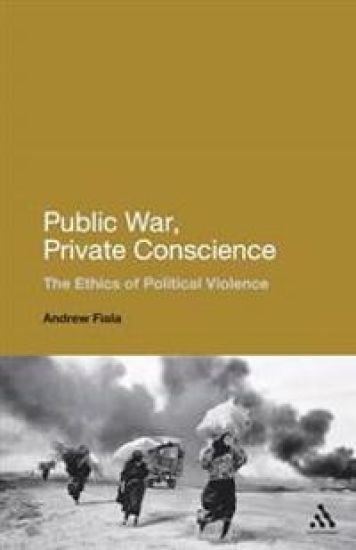
Public War, Private Conscience

Public War, Private Conscience

Andrew Fiala

Continuum Publishing Corporation
2010
nidottu
A philosophical exploration of such subjects as terrorism, just war and pacifism, Andrew Fiala's book reflects on the moral demands that conflict makes on us. "Public War, Private Conscience" offers a philosophical reflection on the moral demands made upon us by war, providing a clear and accessible overview of the different ways of thinking about war. Engaging both with contemporary examples and historical ideas about war, the book offers unique analysis of issues relating to terrorism, conscience objection, just war theory and pacifism. Andrew Fiala examines the conflict between utilitarian and deontological points of view. On the one hand, wars are part of the project of public welfare, subject to utilitarian evaluation. On the other hand, war is also subject to deontological judgment that takes seriously the importance of private conscience and human rights. This book argues that the conflict between these divergent approaches is unavoidable. We are continually caught in the tragic conflict between these two values: public happiness and private morality. And it is in war that we find the conflict at its most obvious and most disturbing.