Kirjojen hintavertailu – 12 903 724 kirjaa ja 27 kauppaa

Kirjailija

Andrew Gamble

Kirjat ja teokset yhdessä paikassa: 33 kirjaa, julkaisuja vuosilta 1981–2022, suosituimpiin kuuluu The Free Economy and the Strong State. Vertaile teosten hintoja ja tarkista saatavuus suomalaisista kirjakaupoista.

33 kirjaa

Kirjojen julkaisuvuodet: 1981–2022.

Kompaktkurs Physik

Kompaktkurs Physik

Andrew Gamble

Vieweg+teubner Verlag
2004
sidottu
In diesem Hochschullehrbuch wird das Gesamtgebiet der Physik anschaulich und mathematisch fundiert in einem Band dargestellt: Mechanik, Wärme, Elektrizität, Optik, Struktur der Materie. Beigefügt ist eine CD-ROM, die rund 150 virtuelle Experimente enthält, welche dem Leser interaktives Experimentieren ermöglichen. Diese großartige Möglichkeit erlaubt das spielerische Begreifen physikalischer Sachverhalte. Neben dem Lehrbuchtext und den Experimenten enthält die CD-ROM zusätzlich noch vollständig gelöste Übungsaufgaben zu jedem Kapitel, die bestens zur Vorbereitung auf Klausuren und Prüfungen geeignet sind.
Politics and Fate

Politics and Fate

Andrew Gamble

JOHN WILEY AND SONS LTD
2000
nidottu
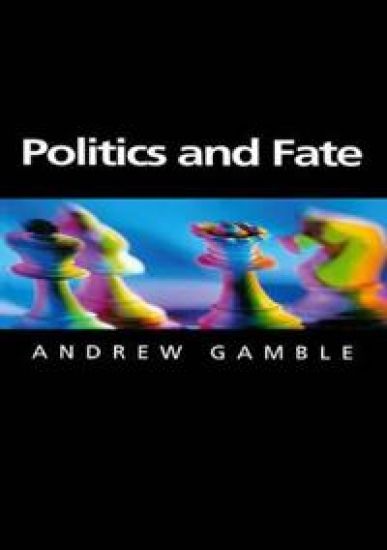
Politics was once regarded as an activity which could give human societies control over their fate. However, there is now a deep pessimism about the ability of human beings to control anything very much, least of all through politics. This new fatalism about the human condition claims that we are living in the iron cages erected by vast impersonal forces arising from globalization and technology: a society that is both anti-political and unpolitical, a society without hope or the means either to imagine or promote an alternative future. It reflects the disillusion of political hopes in liberal and socialist utopias in the twentieth century and a widespread disenchantment with the grand narratives of the Enlightenment about reason and progress, and with modernity itself. The most characteristic expression of this disenchantment is the endless discourses on endism - the end of history, the end of ideology, the end of the nation-state, the end of authority, the end of government, the end of the public realm, the end of politics itself - all have been proclaimed in recent years. Andrew Gamble's new book argues against the fatalism implicit in so many of these discourses, as well as against the fatalism that has always been present in many of the central discourses of modernity. It sets out a defence of politics and the political, explains why we cannot do without politics, and probes the complex relationship between politics and fate, and the continuing and necessary tension between them. This book will be essential reading for students and scholars of politics, public affairs and political thought.

Politics and Fate

Politics and Fate

Andrew Gamble

Polity Press
2000
sidottu
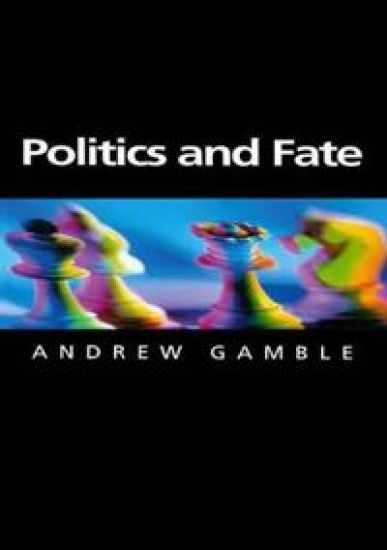
Politics was once regarded as an activity which could give human societies control over their fate. However, there is now a deep pessimism about the ability of human beings to control anything very much, least of all through politics. This new fatalism about the human condition claims that we are living in the iron cages erected by vast impersonal forces arising from globalization and technology: a society that is both anti-political and unpolitical, a society without hope or the means either to imagine or promote an alternative future. It reflects the disillusion of political hopes in liberal and socialist utopias in the twentieth century and a widespread disenchantment with the grand narratives of the Enlightenment about reason and progress, and with modernity itself. The most characteristic expression of this disenchantment is the endless discourses on endism - the end of history, the end of ideology, the end of the nation-state, the end of authority, the end of government, the end of the public realm, the end of politics itself - all have been proclaimed in recent years. Andrew Gamble's new book argues against the fatalism implicit in so many of these discourses, as well as against the fatalism that has always been present in many of the central discourses of modernity. It sets out a defence of politics and the political, explains why we cannot do without politics, and probes the complex relationship between politics and fate, and the continuing and necessary tension between them. This book will be essential reading for students and scholars of politics, public affairs and political thought.

Regionalism and World Order

Regionalism and World Order

Andrew Gamble; Anthony Payne

Red Globe Press
1996
nidottu
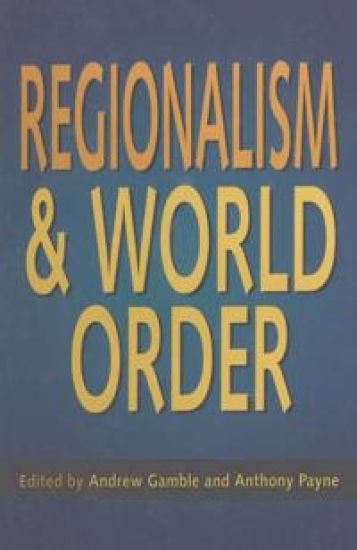
Regionalism and World Order assesses the origins, significance and likely evolution of the trend towards regionalism within the world order. It analyses how states have been responding to the end of US hegemony and assesses the extent to which new regional blocs are emerging and their nature. These questions are analysed through detailed case studies of the three most advanced regions of the world economy - the Americas, the European Union, and East Asia - firstly from the standpoint of the 'core' state or states, and secondly from that of the 'peripheral' states.
Regionalism and World Order

Regionalism and World Order

Andrew Gamble; Anthony Payne

Red Globe Press
1996
sidottu
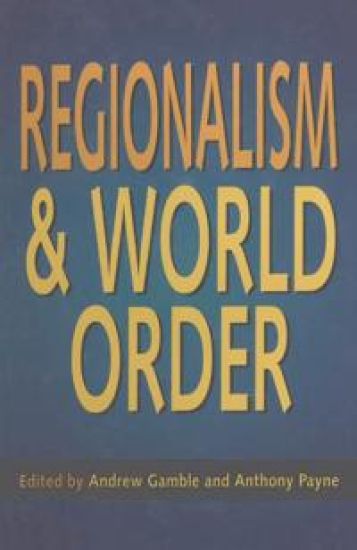
Regionalism and World Order assesses the origins, significance and likely evolution of the trend towards regionalism within the world order. It analyses how states have been responding to the end of US hegemony and assesses the extent to which new regional blocs are emerging and their nature. These questions are analysed through detailed case studies of the three most advanced regions of the world economy - the Americas, the European Union, and East Asia - firstly from the standpoint of the 'core' state or states, and secondly from that of the 'peripheral' states.
Hayek

Hayek

Andrew Gamble

Polity Press
1996
nidottu
Hayek has been one of the key liberal thinkers of the twentieth century. He has also been much misunderstood. His work has crossed disciplines - economics, philosophy and political science - and national boundaries. He was an early critic of Keynes, and became famous in the 1940s for his warnings that the advance of collectivism in western democracies was the road to serfdom. He was a key figure in the post-war revival of free market liberalism and achieved renewed notoriety and some political influence in the 1970s and 1980s as one of the chief intellectual inspirations for the New Right in Britain and the United States. This book traces Hayek's intellectual formation in Austrian economics and English liberalism. It analyzes the main themes of his thought such as the idea of a market order, the nature of knowledge, the limits of government, and his critiques of socialism and conservatism, and assesses the originality and internal coherence of his account of liberalism and modernity as well as his interventions in policy debates. It argues that Hayek the social scientist has to be disentangled from Hayek the ideologue in order to appreciate the importance and implications of some of his insights into the nature of modern societies. As a critical guide to one of the most influential thinkers of our times, this book is an indispensable source. It will be of interest to students in politics, economics and philosophy, as well as to all those interested in a comprehensive introduction to one of the most controversial thinkers of the twentieth century.
Women, Identity and Private Life in Britain, 1900–50

Women, Identity and Private Life in Britain, 1900–50

Andrew Gamble; Gillian Peele

Palgrave Macmillan
1995
sidottu
Women, Identity and Private Life in Britain, 1900-50, explores the meanings and experience of home and private life for women who grew up in England before 1950. It considers the extent to which class, suburbanisation and historical moment as well as gender constructed women's understanding of domesticity, and discusses the part played by conceptions of home and private life in the shaping of identities. Oral narratives, fiction, autobiography and diaries are used in conjunction with psychoanalytic, linguistic and historical explanations of women's lives to map a psychological as well as a social history of women's relationship to the home in the early part of this century.
Britain in Decline

Britain in Decline

Andrew Gamble

Red Globe Press
1994
nidottu

Halvin toimitettuna 68,60 €

For a hundred years, Britain's decline as a great power has gone hand in hand with the relative decline of the British economy. Andrew Gamble's much acclaimed book provides a historical account of Britain's rise and fall and a succinct introduction to the main explanations of decline and political strategies for reversing it. The fourth edition has been updated throughout and a new concluding chapter assesses the state of debate and of the British economy after the Thatcher decade.
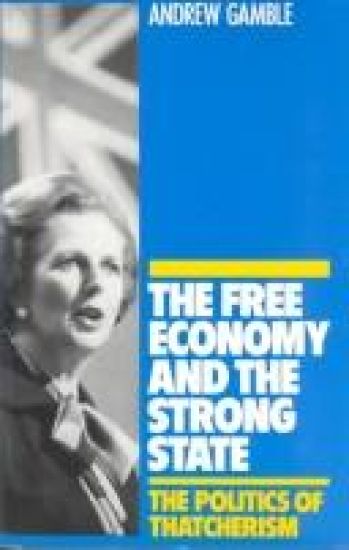
The Free Economy and the Strong State: The Politics of Thatcherism
By the time Margeret Thatcher resigned as Prime Minister in 1990, she has tranformed the fortunes of her Conservative Party. Under her leadership the Conservatives won three general election victories in a row over a divided opposition and enjoyed a degree of political and ideological dominance that led many to speak of the end of the socialist era and the emergence of a new consensus. What Reagan had done in the United States, Margaret Thatcher had done in Britain. A new word--Thatcherism--had entered the political lexicon. Thatcherism came to signify a wide-ranging and distinctive political project aimed at promoting economic recovery and restoring the authority of the state. This second, revised and updated edition of The Free Economy and the Strong State explores the political and ideological roots of Thatcherism and its relationship to the Conservative tradition and to the economic liberal ideology of the New Right, as well as to the new political agenda which emerged from the advent of recession and the crisis of the world order in the 1970's. Andrew Gamble provides a clear and thorough account of the genesis of Thatcherism in opposition, its record in government and of the way it has been analyzed by the left and right. His book makes a major contribution to separating rhetoric from reality and understanding both the impact and the limits of Thatcherism in its bid to establish a new political hegemony and tackle Britain's economic decline.
Monetary Policy and Financial Innovations in Five IndustrialCountries
The objective of this present volume is to analyse the response to the developments and the consequences for the conduct of monetary policy in five industrial countries. Also considered is the stability of hitherto established relationships between economic variables on which the reliability of monetary policy measures depends. The volume further covers some of the international aspects involved and the important implications of the emerging dominant and persistent flows of long-term capital across the exchanges.
The Free Economy and the Strong State

The Free Economy and the Strong State

Andrew Gamble

Duke University Press
1988
pokkari
A new politics emerged in the 1970s in response to the world recession, the exhaustion of Fordism (the theory, traced to Henry Ford, that well-paid industrial workers fuel continuous capitalist growth), and the breakdown of American hegemony. Thatcherism, one expression of this new politics, acquired its distinctive characteristics through the exceptional and deep-seated crisis of state authority that developed in Britain in the mid-1970s. By 1987, the Conservatives under Thatcher's leadership had won their third successive election victory over a divided opposition and enjoyed a degree of political and ideological dominance that led many commentators to speak of the end of the socialist era and the emergence of a new consensus in Britain. A new word-Thatcherism-had entered the political lexicon. It has come to signify a broad-ranging and distinctive program aimed at promoting economic recovery through the privatization of public enterprise and restoring the authority of the state. The Free Economy and the Strong State explores the roots of Thatcherism and its relationship to the Conservative tradition, to the economic liberal ideology of the New Right, and to the "new politics" which emerged from the recession and crisis of the world order in the mid 1970s.