Kirjojen hintavertailu – 12 859 818 kirjaa ja 27 kauppaa

Kirjailija

Andrew K. Frank

Kirjat ja teokset yhdessä paikassa: 8 kirjaa, julkaisuja vuosilta 2005–2023, suosituimpiin kuuluu This Day in Florida History. Vertaile teosten hintoja ja tarkista saatavuus suomalaisista kirjakaupoista.

8 kirjaa

Kirjojen julkaisuvuodet: 2005–2023.

This Day in Florida History

This Day in Florida History

Andrew K. Frank; J. Hendry Miller; Tarah Luke

University Press of Florida
2020
pokkari
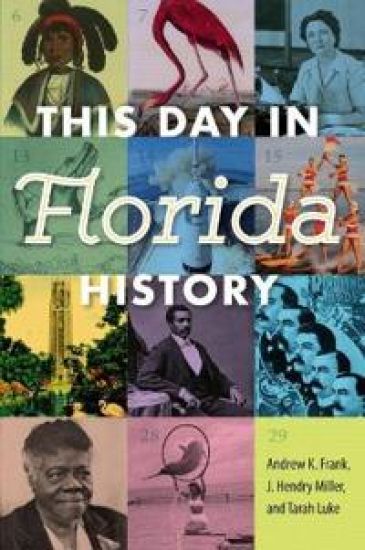
On January 22, 1912, Henry Flagler rode on the first passenger train from South Florida to Key West. On April 2, 1513, Juan Ponce de León claimed Florida for Spain. On December 6, 1947, Everglades National Park held its opening ceremony. Featuring one entry per day of the year, this book is a fun and enlightening collection of moments from Florida history. Good and bad, famous and little-known, historical and contemporary, these events reveal the depth and complexity of the state's past. They cover everything from revolts by Apalachee Indians to crashes at the Daytona 500, the establishment of Fort Mosé, and the recurrence of hurricanes. They involve cultural leaders like Stetson Kennedy and Zora Neale Hurston, iconic institutions like Disney and NASA, and important eras like Prohibition and the civil rights movement. Each entry includes a short description and is paired with a suggested reading for learning more about the event or topic of the day. This Day in Florida History is the perfect starting point for discovering the diversity of stories and themes that make up the Sunshine State.
Aggression and Sufferings

Aggression and Sufferings

F Evan Nooe; Andrew K. Frank; Angela Pulley Hudson; Kristofer Ray

THE UNIVERSITY OF ALABAMA PRESS
2023
sidottu
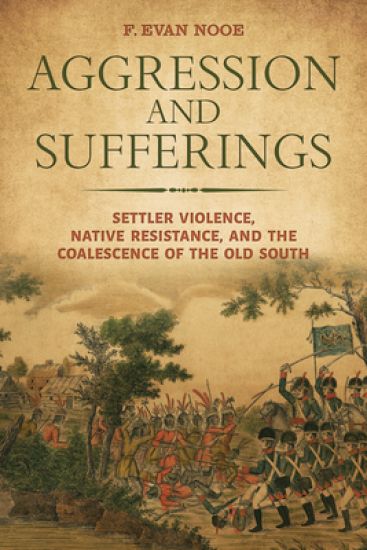
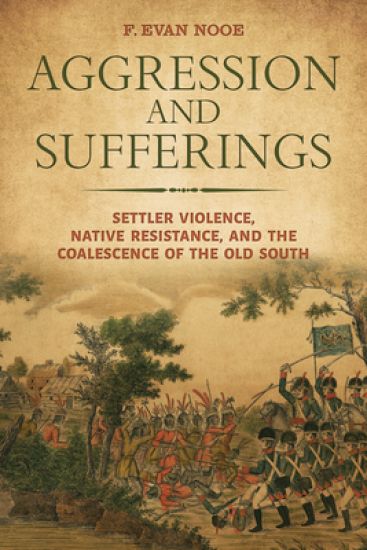
A bold reconceptualization of how settler expansion and narratives of victimhood, honor, and revenge drove the conquest and erasure of the Native South and fed the emergence of a distinct white southern identity In 1823, Tennessee historian John Haywood encapsulated a foundational sentiment among the white citizenry of Tennessee when he wrote of a “long continued course of aggression and sufferings” between whites and Native Americans. According to F. Evan Nooe, “aggression” and “sufferings” are broad categories that can be used to represent the framework of factors contributing to the coalescence of the white South. Traditionally, the concept of coalescence is an anthropological model used to examine the transformation of Indigenous communities in the Eastern Woodlands from chieftaincies to Native tribes, confederacies, and nations in response to colonialism. Applying this concept to white southerners, Nooe argues that through the experiences and selective memory of settlers in the antebellum South, white southerners incorporated their aggression against and suffering at the hands of the Indigenous peoples of the Southeast in the coalescence of a regional identity built upon the violent dispossession of the Native South. This, in turn, formed a precursor to Confederate identity and its later iterations in the long nineteenth century. Geographically, Aggression and Sufferings prioritizes events in South Carolina, Florida, Tennessee, Georgia, and Alabama. Nooe considers how divergent systems of violence and justice between Native Americans and white settlers (such as blood revenge and concepts of honor) functioned in the region and examines the involved societies’ conflicting standards on how to equitably resolve interpersonal violence. Finally, Nooe explores how white southerners constructed, propagated, and perpetuated harrowing tales of colonizers as both victims and heroes in the violent expulsion of the region’s Native peoples from their homelands. This constructed sense of regional history and identity continued to flower into the antebellum period, during western expansion, and well through the twentieth century.
Aggression and Sufferings

Aggression and Sufferings

F Evan Nooe; Andrew K. Frank; Angela Pulley Hudson; Kristofer Ray

THE UNIVERSITY OF ALABAMA PRESS
2023
nidottu
A bold reconceptualization of how settler expansion and narratives of victimhood, honor, and revenge drove the conquest and erasure of the Native South and fed the emergence of a distinct white southern identity In 1823, Tennessee historian John Haywood encapsulated a foundational sentiment among the white citizenry of Tennessee when he wrote of a “long continued course of aggression and sufferings” between whites and Native Americans. According to F. Evan Nooe, “aggression” and “sufferings” are broad categories that can be used to represent the framework of factors contributing to the coalescence of the white South. Traditionally, the concept of coalescence is an anthropological model used to examine the transformation of Indigenous communities in the Eastern Woodlands from chieftaincies to Native tribes, confederacies, and nations in response to colonialism. Applying this concept to white southerners, Nooe argues that through the experiences and selective memory of settlers in the antebellum South, white southerners incorporated their aggression against and suffering at the hands of the Indigenous peoples of the Southeast in the coalescence of a regional identity built upon the violent dispossession of the Native South. This, in turn, formed a precursor to Confederate identity and its later iterations in the long nineteenth century. Geographically, Aggression and Sufferings prioritizes events in South Carolina, Florida, Tennessee, Georgia, and Alabama. Nooe considers how divergent systems of violence and justice between Native Americans and white settlers (such as blood revenge and concepts of honor) functioned in the region and examines the involved societies’ conflicting standards on how to equitably resolve interpersonal violence. Finally, Nooe explores how white southerners constructed, propagated, and perpetuated harrowing tales of colonizers as both victims and heroes in the violent expulsion of the region’s Native peoples from their homelands. This constructed sense of regional history and identity continued to flower into the antebellum period, during western expansion, and well through the twentieth century.
Before the Pioneers

Before the Pioneers

Andrew K. Frank

University Press of Florida
2018
sidottu
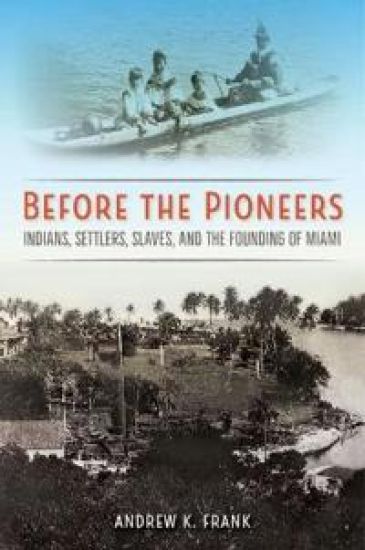
Formed seemingly out of steel, glass, and concrete, with millions of residents from around the globe, Miami has ancient roots that can be hard to imagine today. Before the Pioneers takes readers back through forgotten eras to the stories of the people who shaped the land along the Miami River long before most modern histories of the city begin. Andrew Frank begins the chronicle of the Magic City’s long history 4,000 years ago when Tequesta Indians settled at the mouth of the river, erecting burial mounds, ceremonial centers, and villages. They created a network of constructed and natural waterways through the Everglades and trade routes to the distant Calusa on the west coast. Centuries later, the area became a stopover for Spanish colonists on their way to Havana, a haven where they could shelter from storms and obtain freshwater, lumber, and other supplies. Frank brings to life the vibrant colonies of fugitives and seafarers that formed on the shores of Biscayne Bay in the eighteenth century. He tells of the emergence of the tropical fruit plantations and the accompanying enslaved communities, as well as the military occupation during the Seminole Wars. Eventually, the small seaport town flourished with the coming of “pioneers” like Julia Tuttle and Henry Flagler who promoted the city as a place of luxury and brought new waves of residents from the North. Frank pieces together the material culture and the historical record of the Miami River to re-create the fascinating past of one of the world’s most influential cities.
Before the Pioneers

Before the Pioneers

Andrew K. Frank

University Press of Florida
2017
sidottu
Formed seemingly out of steel, glass, and concrete, with millions of residents from around the globe, Miami has ancient roots that can be hard to imagine today. Before the Pioneers takes readers back through forgotten eras to the stories of the people who shaped the land along the Miami River long before most modern histories of the city begin. Andrew Frank begins the chronicle of the Magic City’s long history 4,000 years ago when Tequesta Indians settled at the mouth of the river, erecting burial mounds, ceremonial centers, and villages. They created a network of constructed and natural waterways through the Everglades and trade routes to the distant Calusa on the west coast. Centuries later, the area became a stopover for Spanish colonists on their way to Havana, a haven where they could shelter from storms and obtain freshwater, lumber, and other supplies. Frank brings to life the vibrant colonies of fugitives and seafarers that formed on the shores of Biscayne Bay in the eighteenth century. He tells of the emergence of the tropical fruit plantations and the accompanying enslaved communities, as well as the military occupation during the Seminole Wars. Eventually, the small seaport town flourished with the coming of “pioneers” like Julia Tuttle and Henry Flagler who promoted the city as a place of luxury and brought new waves of residents from the North. Frank pieces together the material culture and the historical record of the Miami River to re-create the fascinating past of one of the world’s most influential cities.
Creeks and Southerners

Creeks and Southerners

Andrew K. Frank

University of Nebraska Press
2015
pokkari
Creeks and Southerners examines the families created by the hundreds of intermarriages between Creek Indian women and European American men in the southeastern United States during the eighteenth and early nineteenth centuries. Called "Indian countrymen" at the time, these intermarried white men moved into their wives' villages in what is now Florida, Georgia, and Alabama. By doing so, they obtained new homes, familial obligations, occupations, and identities. At the same time, however, they maintained many of their ties to white American society and as a result entered the historical record in large numbers. Creeks and Southerners studies the ways in which many children of these relationships lived both as Creek Indians and white Southerners. By carefully altering their physical appearances, choosing appropriate clothing, learning multiple languages, embracing maternal and paternal kinsmen and kinswomen, and balancing their loyalties, the children of intermarriages found ways to bridge what seemed to be an unbridgeable divide. Many became prominent Creek political leaders and warriors, played central roles in the lucrative deerskin trade, built inns and taverns to cater to the needs of European American travelers, frequently moved between colonial American and Native communities, and served both European American and Creek officials as interpreters, assistants, and travel escorts. The fortunes of these bicultural children reflect the changing nature of Creek-white relations, which became less flexible and increasingly contentious throughout the nineteenth century as both Creeks and Americans accepted a more rigid biological concept of race, forcing their bicultural children to choose between identities.
Selling War in a Media Age

Selling War in a Media Age

Kenneth Osgood; Andrew K. Frank; David Halberstam

University Press of Florida
2011
nidottu
George W. Bush’s “Mission Accomplished” banner in 2003 and the misleading linkages of Saddam Hussein to the 9/11 terrorist attacks awoke many Americans to the techniques used by the White House to put the country on a war footing. Yet Bush was simply following in the footsteps of his predecessors, as the essays in this standout volume reveal in illuminating detail. Written in a lively and accessible style, Selling War in a Media Age is a fascinating, thought-provoking, must-read volume that reveals the often-brutal ways that the goal of influencing public opinion has shaped how American presidents have approached the most momentous duty of their office: waging war.
Creeks and Southerners

Creeks and Southerners

Andrew K. Frank

University of Nebraska Press
2005
sidottu
Creeks and Southerners examines the families created by the hundreds of intermarriages between Creek Indian women and European American men in the southeastern United States during the eighteenth and early nineteenth centuries. Called "Indian countrymen" at the time, these intermarried white men moved into their wives' villages in what is now Florida, Georgia, and Alabama. By doing so, they obtained new homes, familial obligations, occupations, and identities. At the same time, however, they maintained many of their ties to white American society and as a result entered the historical record in large numbers. Creeks and Southerners studies the ways in which many children of these relationships lived both as Creek Indians and white Southerners. By carefully altering their physical appearances, choosing appropriate clothing, learning multiple languages, embracing maternal and paternal kinsmen and kinswomen, and balancing their loyalties, the children of intermarriages found ways to bridge what seemed to be an unbridgeable divide. Many became prominent Creek political leaders and warriors, played central roles in the lucrative deerskin trade, built inns and taverns to cater to the needs of European American travelers, frequently moved between colonial American and Native communities, and served both European American and Creek officials as interpreters, assistants, and travel escorts. The fortunes of these bicultural children reflect the changing nature of Creek-white relations, which became less flexible and increasingly contentious throughout the nineteenth century as both Creeks and Americans accepted a more rigid biological concept of race, forcing their bicultural children to choose between identities.