
Kirjailija
Andrew Lang
Kirjat ja teokset yhdessä paikassa: 2 049 kirjaa, julkaisuja vuosilta 1905–2026, suosituimpiin kuuluu Sylvie. Vertaile teosten hintoja ja tarkista saatavuus suomalaisista kirjakaupoista.
2 049 kirjaa
Kirjojen julkaisuvuodet: 1905–2026.

Andrew Lang's Fairy Books or Andrew Lang's "Coloured" Fairy Books constitute a twelve-book series of fairy tale collections. Although Andrew Lang did not collect the stories himself from the oral tradition, the extent of his sources, who had collected them originally (with the notable exception of Madame d'Aulnoy), made them an immensely influential collection, especially as he used foreign-language sources, giving many of these tales their first appearance in English. As acknowledged in the prefaces, although Lang himself made most of the selections, his wife and other translators did a large portion of the translating and telling of the actual stories.

Andrew Lang's Fairy Books are a series of 25 collections of true and fictional stories for children published between 1889 and 1913. The best known books of the series are the 12 collections of fairy tales known as Andrew Lang's "Coloured" Fairy Books or Andrew Lang's Fairy Books of Many Colors. In all, the volumes feature 798 stories, besides the 153 poems in The Blue Poetry Book. Andrew Lang (1844-1912) was a Scots poet, novelist, and literary critic. He made most of the selections, while his wife and other translators did a large portion of the translating and retelling of the actual stories, as acknowledged in the prefaces. Four of the volumes from 1908 to 1912 were published by "Mrs. Lang."
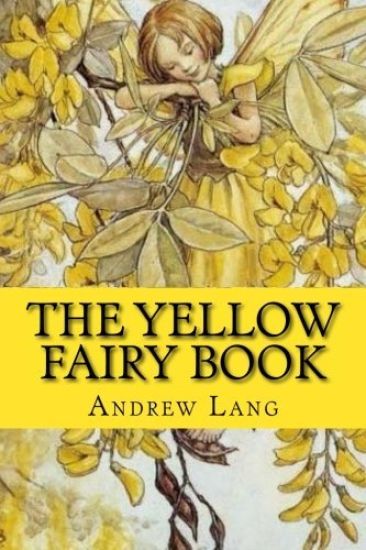
The Yellow Fairy Book
Patricia Marquez; Andrew Lang
Createspace Independent Publishing Platform
2017
nidottu
The Editor thinks that children will readily forgive him for publishing another Fairy Book. We have had the Blue, the Red, the Green, and here is the Yellow. If children are pleased, and they are so kind as to say that they are pleased, the Editor does not care very much for what other people may say.

In 1895 I published Homer and the Epic (pp. 424), containing a criticism of Wolf's theory, if theory it can be called, which is the mother of modern Homeric criticism. I analysed, book by book, the Iliad and the Odyssey, observing on the modern ideas of interpolation and the modern objections to many scores of passages which, as a rule, I defended from charges of "lateness" and inconsistency. I added chapters on the Lost Epics of Greece, on Archeology, and on the early Epic poetry of other ages and peoples which offers analogies, more or less imperfect, with Homer. On the whole my conclusions were identical with those of Signor Comparetti, in his preface to his learned book on the Finnish Kalewala. He says: "The anatomical and conjectural analysis which has been applied so often and so long ... to the Homeric poems and other national epics, proceeds from an universal abstract principle, which is correct, and from a concrete application of that principle, which is imaginary and groundless."
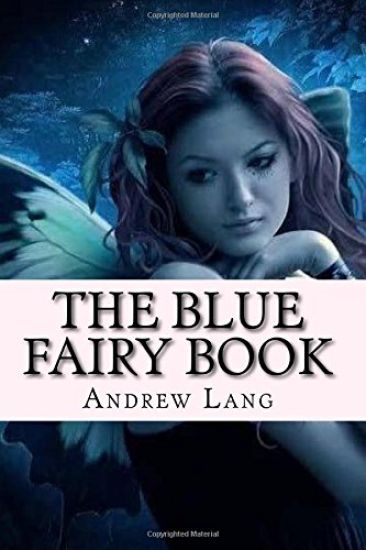
The Blue Fairy Book
Patricia Marquez; Andrew Lang
Createspace Independent Publishing Platform
2017
nidottu
Andrew Lang's Fairy Books or Andrew Lang's "Coloured" Fairy Books constitute a twelve-book series of fairy tale collections. Although Andrew Lang did not collect the stories himself from the oral tradition, the extent of his sources, who had collected them originally (with the notable exception of Madame d'Aulnoy), made them an immensely influential collection, especially as he used foreign-language sources, giving many of these tales their first appearance in English. As acknowledged in the prefaces, although Lang himself made most of the selections, his wife and other translators did a large portion of the translating and telling of the actual stories.
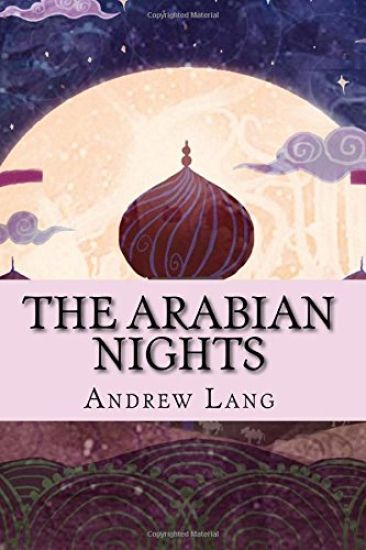
One Thousand and One Nights is a collection of stories collected over many centuries by various authors, translators and scholars in various countries across the Middle East and South Asia. These collections of tales trace their roots back to ancient Arabia and Yemen, ancient Indian literature and Persian literature, ancient Egyptian literature and Mesopotamian mythology, ancient Syria and Asia Minor, and medieval Arabic folk stories from the Caliphate era. Though the oldest Arabic manuscript dates from the fourteenth century, scholarship generally dates the collection's genesis to somewhere between AD 800-900.
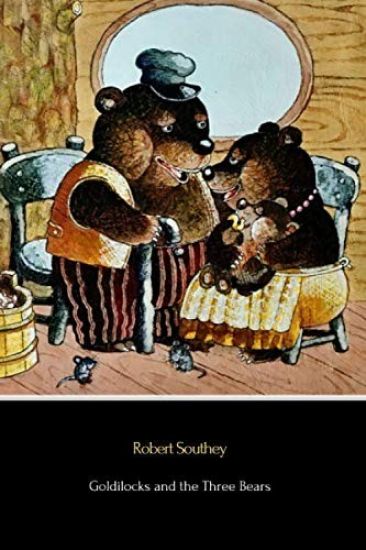
Goldilocks and the Three Bears (Illustrated): Seven Different Versions
John Batten; Joseph Cundall; Andrew Lang
Independently Published
2017
nidottu
Every significant version of Goldilocks and the Three Bears with short introductions and classic illustrations: The Eleanor Mure pamphlet, The Robert Southey version, Scrapefoot, Silver-hair and the Three Bears, The Three Bears and The Story of the Three Bears. This special edition of Goldilocks and the Three Bears traces the evolution of the tale and includes the very first original Goldilocks and the Three Bears story and six subsequent adaptations.

Andrew Lang's Fairy Books or Andrew Lang's "Coloured" Fairy Books constitute a twelve-book series of fairy tale collections. Although Andrew Lang did not collect the stories himself from the oral tradition, the extent of his sources, who had collected them originally (with the notable exception of Madame d'Aulnoy), made them an immensely influential collection, especially as he used foreign-language sources, giving many of these tales their first appearance in English.


Andrew Lang's Fairy Books or Andrew Lang's "Coloured" Fairy Books constitute a twelve-book series of fairy tale collections. Although Andrew Lang did not collect the stories himself from the oral tradition, the extent of his sources, who had collected them originally (with the notable exception of Madame d'Aulnoy), made them an immensely influential collection, especially as he used foreign-language sources, giving many of these tales their first appearance in English. As acknowledged in the prefaces, although Lang himself made most of the selections, his wife and other translators did a large portion of the translating and telling of the actual stories. The Blue Fairy Book assembled a wide range of tales, with seven from the Brothers Grimm, five from Madame d'Aulnoy, three from the Arabian Nights, and four Norse stories, among other sources.


The tales in the Grey Fairy Book are derived from many countries-Lithuania, various parts of Africa, Germany, France, Greece, and other regions of the world.



Andrew Lang's Fairy Books or Andrew Lang's "Coloured" Fairy Books constitute a twelve-book series of fairy tale collections. Although Andrew Lang did not collect the stories himself from the oral tradition, the extent of his sources, who had collected them originally (with the notable exception of Madame d'Aulnoy), made them an immensely influential collection, especially as he used foreign-language sources, giving many of these tales their first appearance in English. As acknowledged in the prefaces, although Lang himself made most of the selections, his wife and other translators did a large portion of the translating and telling of the actual stories. The Blue Fairy Book assembled a wide range of tales, with seven from the Brothers Grimm, five from Madame d'Aulnoy, three from the Arabian Nights, and four Norse stories, among other sources.