Kirjojen hintavertailu – 12 903 727 kirjaa ja 27 kauppaa

Kirjailija

Andrew Leach

Kirjat ja teokset yhdessä paikassa: 9 kirjaa, julkaisuja vuosilta 2008–2023, suosituimpiin kuuluu Gold Coast. Vertaile teosten hintoja ja tarkista saatavuus suomalaisista kirjakaupoista.

9 kirjaa

Kirjojen julkaisuvuodet: 2008–2023.

Between Doom & Denial

Between Doom & Denial

Andrew Leach

The Sutherland House Inc.
2023
pokkari
Climate change is the environmental, political, and societal challenge of our time. Yet some of us throw up our hands and say Canada is a cold country that only produces 2% of global emissions and we need our oil-and-gas industry--nothing can or should be done. Others argue just as vehemently that we are doomed unless we radically reduce emissions by keeping our resources in the ground and turning our backs on economic growth. Meanwhile our governments talk about the need for an energy transition and achieve little. The truth is that we do have a climate problem, we do need fossil fuels (for the foreseeable future), and we do have to make changes. The good news, argues Andrew Leach in the first inaugural McGill/Max Bell Lecture, is that we have the tools and the power to make a real difference. The question is: are we up to the challenge?
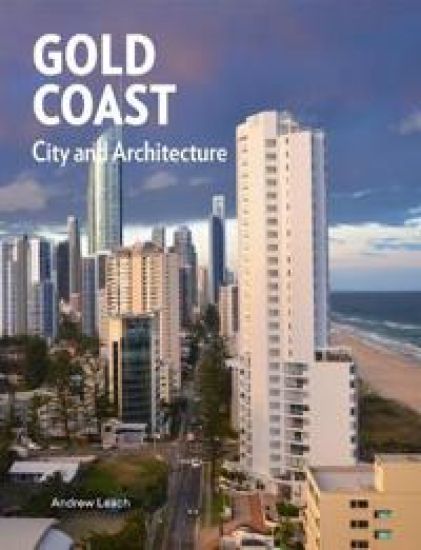
Gold Coast

Gold Coast

Andrew Leach

Lund Humphries Publishers Ltd
2018
sidottu
The Gold Coast is Australia’s most rapidly changing city – regularly compared to Miami and Las Vegas for its embrace of bad taste and the good life; and with Dubai for its sudden moments of high-rise assuredness and seeming lack of restraint in either the ambitions of building or their manifestations. Beautifully illustrated throughout, this book offers the first comprehensive history of the city and its architecture, documenting its rise from a series of seaside villages in the late nineteenth and early twentieth centuries to the present-day city, set to host the 2018 Commonwealth Games. Considering city plans, architectural works, landscape formations and modes of inhabitation over the time in which the Gold Coast has been peopled, it considers the role of architecture in carrying the city forward. Its main focus is on the contemporary city and the conditions that have given rise to its character - high rise, bad taste and skewed towards the beach edge.
The Baroque in Architectural Culture, 1880-1980

The Baroque in Architectural Culture, 1880-1980

Andrew Leach; John MacArthur

Routledge
2017
nidottu
In his landmark volume Space, Time and Architecture, Sigfried Giedion paired images of two iconic spirals: Tatlin’s Monument to the Third International and Borromini’s dome for Sant’Ivo alla Sapienza. The values shared between the baroque age and the modern were thus encapsulated on a single page spread. As Giedion put it, writing of Sant’Ivo, Borromini accomplished 'the movement of the whole pattern [...] from the ground to the lantern, without entirely ending even there.' And yet he merely 'groped' towards that which could 'be completely effected' in modern architecture-achieving 'the transition between inner and outer space.' The intellectual debt of modern architecture to modernist historians who were ostensibly preoccupied with the art and architecture of earlier epochs is now widely acknowledged. This volume extends this work by contributing to the dual projects of the intellectual history of modern architecture and the history of architectural historiography. It considers the varied ways that historians of art and architecture have historicized modern architecture through its interaction with the baroque: a term of contested historical and conceptual significance that has often seemed to shadow a greater contest over the historicity of modernism. Presenting research by an international community of scholars, this book explores through a series of cross sections the traffic of ideas between practice and history that has shaped modern architecture and the academic discipline of architectural history across the long twentieth century. The editors use the historiography of the baroque as a lens through which to follow the path of modern ideas that draw authority from history. In doing so, the volume defines a role for the baroque in the history of architectural historiography and in the history of modern architectural culture.
Rome

Rome

Andrew Leach

Polity Press
2016
sidottu
Andrew Leach’s Rome is the first book in Polity’s exciting new ‘Cities in World History’ series, which aims to provide the general reader and traveller with historically informed companions to the world’s greatest cities. Most city guides are good on practical details but very thin when it comes to recounting the histories of cities and contextualizing the buildings and sites for which they are famous. These new books from Polity bridge the gulf between guide and history by offering concise and accessible accounts written by some of the world’s leading historians. Rome has a history unmatched in richness by any city on the globe. It looms large in the word’s cultural imagination, and for millennia it has been a meeting point of great cultures, a place where myth mixes freely with history, leaving neither unscathed. In this compact history, Leach demonstrates what most visitors to the Eternal City will instinctively understand: that the buildings, streets, monuments and gardens of this ancient city give the visitor moments of direct communion with its past. He reveals the long, twisting history of Rome through its ruins, art works and monuments, its metro stations and modern apartment blocks. Each chapter takes the reader on a physical journey invoking Rome in different moments of its life. Engaging historical narrative is supplemented with maps and photos, making Rome an indispensable companion for those who want to dig below the city’s surface.
Rome

Rome

Andrew Leach

Polity Press
2016
nidottu
Andrew Leach’s Rome is the first book in Polity’s exciting new ‘Cities in World History’ series, which aims to provide the general reader and traveller with historically informed companions to the world’s greatest cities. Most city guides are good on practical details but very thin when it comes to recounting the histories of cities and contextualizing the buildings and sites for which they are famous. These new books from Polity bridge the gulf between guide and history by offering concise and accessible accounts written by some of the world’s leading historians. Rome has a history unmatched in richness by any city on the globe. It looms large in the word’s cultural imagination, and for millennia it has been a meeting point of great cultures, a place where myth mixes freely with history, leaving neither unscathed. In this compact history, Leach demonstrates what most visitors to the Eternal City will instinctively understand: that the buildings, streets, monuments and gardens of this ancient city give the visitor moments of direct communion with its past. He reveals the long, twisting history of Rome through its ruins, art works and monuments, its metro stations and modern apartment blocks. Each chapter takes the reader on a physical journey invoking Rome in different moments of its life. Engaging historical narrative is supplemented with maps and photos, making Rome an indispensable companion for those who want to dig below the city’s surface.
The Baroque in Architectural Culture, 1880-1980

The Baroque in Architectural Culture, 1880-1980

Andrew Leach; John Macarthur

Routledge
2015
sidottu
In his landmark volume Space, Time and Architecture, Sigfried Giedion paired images of two iconic spirals: Tatlin’s Monument to the Third International and Borromini’s dome for Sant’Ivo alla Sapienza. The values shared between the baroque age and the modern were thus encapsulated on a single page spread. As Giedion put it, writing of Sant’Ivo, Borromini accomplished 'the movement of the whole pattern [...] from the ground to the lantern, without entirely ending even there.' And yet he merely 'groped' towards that which could 'be completely effected' in modern architecture-achieving 'the transition between inner and outer space.' The intellectual debt of modern architecture to modernist historians who were ostensibly preoccupied with the art and architecture of earlier epochs is now widely acknowledged. This volume extends this work by contributing to the dual projects of the intellectual history of modern architecture and the history of architectural historiography. It considers the varied ways that historians of art and architecture have historicized modern architecture through its interaction with the baroque: a term of contested historical and conceptual significance that has often seemed to shadow a greater contest over the historicity of modernism. Presenting research by an international community of scholars, this book explores through a series of cross sections the traffic of ideas between practice and history that has shaped modern architecture and the academic discipline of architectural history across the long twentieth century. The editors use the historiography of the baroque as a lens through which to follow the path of modern ideas that draw authority from history. In doing so, the volume defines a role for the baroque in the history of architectural historiography and in the history of modern architectural culture.
What is Architectural History?

What is Architectural History?

Andrew Leach

Polity Press
2010
nidottu
What is Architectural History? considers the questions and problems posed by architectural historians since the rise of the discipline in the late nineteenth century. How do historians of architecture organise past time and relate it to the present? How does historical evidence translate into historical narrative? Should architectural history be useful for practicing architects? If so, how? Leach treats the disciplinarity of architectural history as an open question, moving between three key approaches to historical knowledge of architecture: within art history, as an historical specialisation and, most prominently, within architecture. He suggests that the confusions around this question have been productive, ensuring a rich variety of approaches to the project of exploring architecture historically. Read alongside introductory surveys of western and global architectural history, this book will open up questions of perspective, frame, and intent for students of architecture, art history, and history. Graduate students and established architectural historians will find much in this book to fuel discussions over the current state of the field in which they work.
What is Architectural History?

What is Architectural History?

Andrew Leach

Polity Press
2010
sidottu
What is Architectural History? considers the questions and problems posed by architectural historians since the rise of the discipline in the late nineteenth century. How do historians of architecture organise past time and relate it to the present? How does historical evidence translate into historical narrative? Should architectural history be useful for practicing architects? If so, how? Leach treats the disciplinarity of architectural history as an open question, moving between three key approaches to historical knowledge of architecture: within art history, as an historical specialisation and, most prominently, within architecture. He suggests that the confusions around this question have been productive, ensuring a rich variety of approaches to the project of exploring architecture historically. Read alongside introductory surveys of western and global architectural history, this book will open up questions of perspective, frame, and intent for students of architecture, art history, and history. Graduate students and established architectural historians will find much in this book to fuel discussions over the current state of the field in which they work.
Shifting Views: Selected Essays on the Architectural History of

Shifting Views: Selected Essays on the Architectural History of

Andrew Leach; Antony Moulis

University of Queensland Press
2008
pokkari
A selection of the best essays on Australian and New Zealand architectural history. From an initial meeting of a small group of architects in 1984, the Society of Architectural Historians, Australia and New Zealand (SAHANZ) conference has become one of the key architectural history conferences internationally. Shifting Views draws together a selection of the most outstanding writing from this conference, with essays from such diverse thinkers as Judith Brine, Joan Kerr, Miles Lewis, Sarah Treadwell, Philip Goad, Julie Willis and Mike Austin. Shifting Views shows us how architectural history has been made and revised, giving us a glimpse of the means by which our past becomes our history. These essays capture some of the most illuminating debates of our time.