Kirjojen hintavertailu – 12 859 829 kirjaa ja 27 kauppaa

Kirjailija

Andrew Lees

Kirjat ja teokset yhdessä paikassa: 8 kirjaa, julkaisuja vuosilta 2002–2016, suosituimpiin kuuluu Cities and the Making of Modern Europe, 1750–1914. Vertaile teosten hintoja ja tarkista saatavuus suomalaisista kirjakaupoista.

8 kirjaa

Kirjojen julkaisuvuodet: 2002–2016.

Geotechnical Finite Element Analysis

Geotechnical Finite Element Analysis

Andrew Lees

ICE Publishing
2016
sidottu
Geotechnical Finite Element Analysis provides the latest practical guidance and comprehensive explanations of applying finite element analysis (FEA) in geotechnical design – from planning an analysis, determining how the FEA relates to the design process and explaining the decisions that need to be made at each stage through to validation of results and reporting. This highly illustrated guide expands on the practical benefits of FEA, such as the analysis of complex problems, overall increased productivity and revenue, and explains the complex theory behind the decisions that need to be made at each stage of a project. Geotechnical Finite Element Analysis: features as the first practical and internationally applicable guidebook in this subject areaincludes detailed guidance on using FEA together with international design codesclarifies the factors to consider when selecting from the various constitutive modelsattests as a training aid, facilitated by complete worked examplescovers 160 competence statements from the COGAN Competency Tracker maintained by NAFEMS Geotechnical Finite Element Analysis aims to combine essential learning material in one place. As a practical guide, textbook, reference and training tool, it is aimed at practising civil, structural and geotechnical engineers, and those undergoing training in geotechnical FEA and performing geotechnical FEA in design.
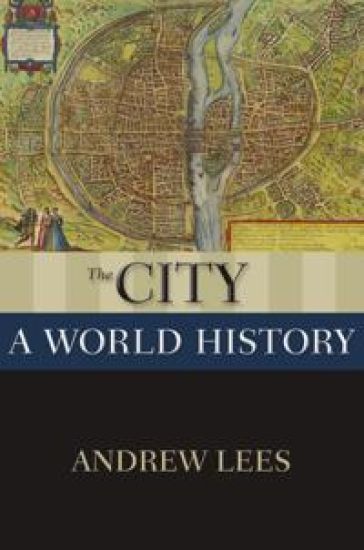
The City

The City

Andrew Lees

Oxford University Press Inc
2015
sidottu
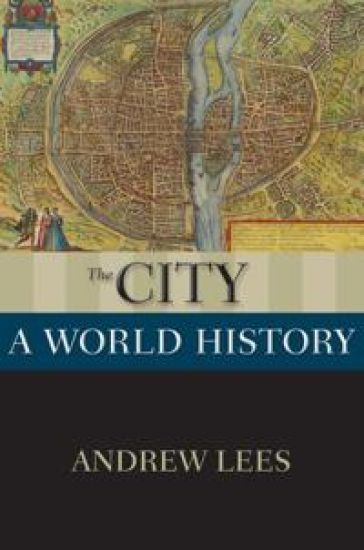
The City: A World History tells the story of the rise and development of urban centers from ancient times to the twenty-first century. It begins with the establishment of the first cities in the Near East in the fourth millennium BCE, and goes on to examine urban growth in the Indus River Valley in India, as well as Egypt and areas that bordered the Mediterranean Sea. Athens, Alexandria, and Rome stand out both politically and culturally. With the fall of the Roman Empire in the West, European cities entered into a long period of waning and deterioration. But elsewhere, great cities-among them, Constantinople, Baghdad, Chang'an, and Tenochtitlán-thrived. In the late Middle Ages and the Early Modern period, urban growth resumed in Europe, giving rise to cities like Florence, Paris, and London. This urban growth also accelerated in parts of the world that came under European control, such as Philadelphia in the nascent United States. As the Industrial Revolution swept through in the nineteenth century, cities grew rapidly. Their expansion resulted in a slew of social problems and political disruptions, but it was accompanied by impressive measures designed to improve urban life. Meanwhile, colonial cities bore the imprint of European imperialism. Finally, the book turns to the years since 1914, guided by a few themes: the impact of war and revolution; urban reconstruction after 1945; migration out of many cities in the United States into growing suburbs; and the explosive growth of "megacities" in the developing world.
The City

The City

Andrew Lees

Oxford University Press Inc
2015
nidottu
The City: A World History tells the story of the rise and development of urban centers from ancient times to the twenty-first century. It begins with the establishment of the first cities in the Near East in the fourth millennium BCE, and goes on to examine urban growth in the Indus River Valley in India, as well as Egypt and areas that bordered the Mediterranean Sea. Athens, Alexandria, and Rome stand out both politically and culturally. With the fall of the Roman Empire in the West, European cities entered into a long period of waning and deterioration. But elsewhere, great cities-among them, Constantinople, Baghdad, Chang'an, and Tenochtitlán-thrived. In the late Middle Ages and the Early Modern period, urban growth resumed in Europe, giving rise to cities like Florence, Paris, and London. This urban growth also accelerated in parts of the world that came under European control, such as Philadelphia in the nascent United States. As the Industrial Revolution swept through in the nineteenth century, cities grew rapidly. Their expansion resulted in a slew of social problems and political disruptions, but it was accompanied by impressive measures designed to improve urban life. Meanwhile, colonial cities bore the imprint of European imperialism. Finally, the book turns to the years since 1914, guided by a few themes: the impact of war and revolution; urban reconstruction after 1945; migration out of many cities in the United States into growing suburbs; and the explosive growth of "megacities" in the developing world.
William Richard Gowers 1845-1915

William Richard Gowers 1845-1915

Ann Scott; Mervyn Eadie; Andrew Lees

Oxford University Press
2012
sidottu
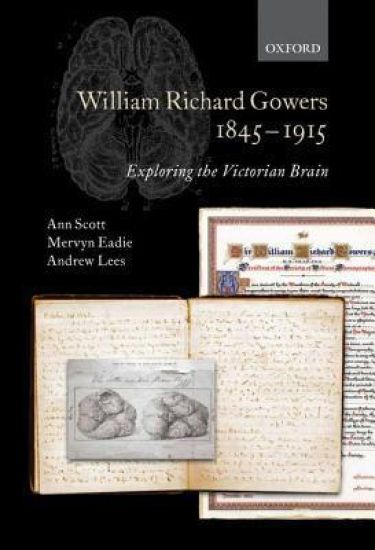
Sir William Richard Gowers was one of the pre-eminent clinical neurologists of the nineteenth century. He is best remembered for his discovery of the eponymous 'Gowers' sign', for his invention of the patella hammer, and for authoring the classic two-volume neurology textbook Manual of Diseases of the Nervous System. To date Dr Gowers has been the subject of only one published biography, while some aspects of Gowers' work have been chronicled in historical works regarding the history of neurology. This book goes into greater detail than ever, presenting the life story behind a great Victorian brain. Generously illustrated throughout with family photographs and original sketches, the authors cover Gowers' early years, his clinical work at Queen Square, his accolades, and friendships with explorers and famous authors. Co-authored by an academic with special access to the Gowers family archives and two leading neurologists, this book is the first definitive reference work on the life of William Richard Gowers, and will be of great interest to neurologists, neuroscientists, medical historians, and laypersons with an interest in neurology and mental illness.
Imaging of Movement Disorders, An Issue of Neuroimaging Clinics

Imaging of Movement Disorders, An Issue of Neuroimaging Clinics

Tarek Yousry; Andrew Lees

W B Saunders Co Ltd
2010
sidottu
Articles include: Anatomy of Basal Ganglia; Classification of Movement disorders; MR techniques in the diagnosis of Parkinsonian syndromes; PET/SPECT in the diagnosis of Parkinsonian syndromes; The role of imaging in the diagnosis of Vascular PD; Role of neuroimaging in the diagnosis of secondary dystonia; Role of neuroimaging in the evaluation of Tremor; Spot neuroradiological diagnosis in movement disorders; Role of transcranial ultrasound in the diagnosis of movement disorders; Role of imaging in surgical treatment of movement disorders (DBS, lesioning, STN+GPI+PPN, post-op, safety); Current Role of fMRI in diagnosis of movement disorders.
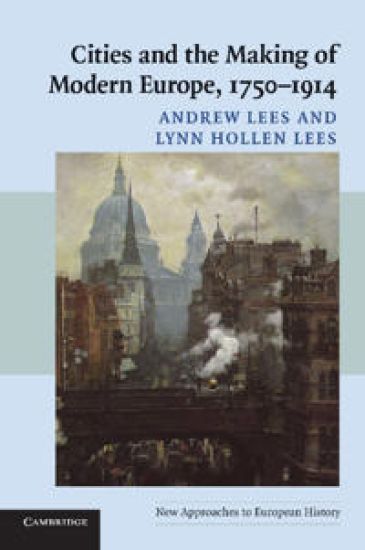
Cities and the Making of Modern Europe, 1750–1914

Cities and the Making of Modern Europe, 1750–1914

Andrew Lees; Lynn Hollen Lees

Cambridge University Press
2007
sidottu
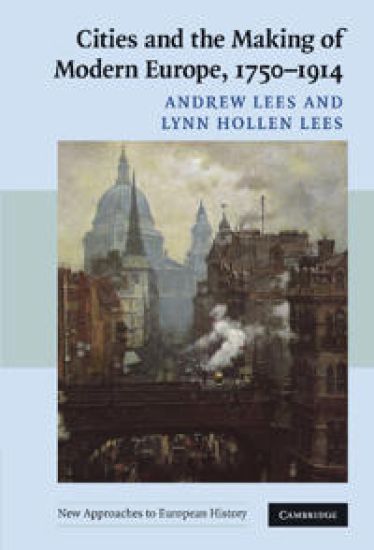
This book is a major survey of urbanization and the making of modern Europe from the mid-eighteenth century to the First World War. During these years Europe experienced startling rates of urbanization, with the populations of numerous cities growing by 1000 percent or more. This book explores the causes, course and consequences of this urban explosion. The authors link urban growth to industrialization, migration, and the growth of colonial empires. They show how the social, political, and intellectual challenges cities posed were met by urban reformers; how cities enriched cultural life; and how European cities influenced and were influenced by colonial cities. No other book in English situates the story of cities within the overall framework of European and imperial history during the long nineteenth century. Cities and the Making of Modern Europe will be essential reading for students of both modern European history and urban history.
Cities and the Making of Modern Europe, 1750–1914

Cities and the Making of Modern Europe, 1750–1914

Andrew Lees; Lynn Hollen Lees

Cambridge University Press
2007
pokkari
This book is a major survey of urbanization and the making of modern Europe from the mid-eighteenth century to the First World War. During these years Europe experienced startling rates of urbanization, with the populations of numerous cities growing by 1000 percent or more. This book explores the causes, course and consequences of this urban explosion. The authors link urban growth to industrialization, migration, and the growth of colonial empires. They show how the social, political, and intellectual challenges cities posed were met by urban reformers; how cities enriched cultural life; and how European cities influenced and were influenced by colonial cities. No other book in English situates the story of cities within the overall framework of European and imperial history during the long nineteenth century. Cities and the Making of Modern Europe will be essential reading for students of both modern European history and urban history.
Cities, Sin, and Social Reform in Imperial Germany

Cities, Sin, and Social Reform in Imperial Germany

Andrew Lees

The University of Michigan Press
2002
sidottu
Cities, Sin, and Social Reform in Imperial Germany breaks new ground in the history of social thought and action in Imperial Germany, focusing on socially liberal efforts to counteract perceived problems in the area of moral behavior. Thematically and methodologically wide-ranging and innovative, this volume considers a broad spectrum of responses not only to the supposed breakdown of social cohesion but also to specific forms of deviant behavior. It draws on large numbers of writings from the period by clergymen, jurists, medical doctors, educators, social workers, and others. This literature illuminates the histories not only of urbanization and cities but also of sexuality and Christianity, crime and criminology, leisure and education, youth and women, charity and social work, and the welfare state as well as local government. Focusing on positive instead of escapist responses to the challenges that inhered in urban society, this work can be read as part of an ongoing reassessment of the German Empire that points away from the idea that Germans were traveling an antimodernist Sonderweg, or special path, that led inevitably to National Socialism and the Third Reich. Although intended primarily for scholars and students of modern Germany, this book should speak to a variety of readers, among them anyone who cares about the history of cities, deviant behavior, or social reform. Andrew Lees is Professor of History, Rutgers University.