Kirjojen hintavertailu – 12 859 818 kirjaa ja 27 kauppaa
Kirjailija
Andrew Miller
Kirjat ja teokset yhdessä paikassa: 66 kirjaa, julkaisuja vuosilta 1998–2026, suosituimpiin kuuluu Friedhof der Unschuldigen. Vertaile teosten hintoja ja tarkista saatavuus suomalaisista kirjakaupoista.
Mad scientist or brilliant artist? Dr. Manny Loewe makes history by creating, Eve, the world's first ever living humanoid with real DNA. His joy in creating her is matched only by her voluptuous physical beauty and her enormous capacity for love. Yet it is these very features that ultimately bring her to the edge of ruin, and him to a shocking resolution. There was always much more at stake than she could ever have imagined.
The 1980s saw the rapid growth of work-experience programmes in schools and colleges. This development was in response to central government initiatives, such as TVEI, as well as developments in courses with a compulsory work-experience element. Many of the improvements in the quality of work-experience schemes in local education authorities and schools were the product of local initiatives and the imagination and enthusiasm of individual teachers. Originally published in 1991, Rethinking Work Experience was the first attempt to document these developments in order to provide a comprehensive picture of work experience in Britain at the time. The title of the book is based upon the idea that the introduction of the National Curriculum and the overhaul of education and training 16–19 requires a rethinking of the place of work experience in the curriculum. The book uses a new conceptual framework to describe and analyse developments and dimensions of work-experience programmes. This formulation of ten aims and five curricular frames for work experience had already been widely adopted in schools. Rethinking Work Experience begins with an overview of the historical development of work experience focusing upon policy development during the period since it was first mentioned in the 1963 Newson Report. This is followed by an examination of the concept of work experience, and a comparative study of work experience in Europe and beyond. An extended discussion of the history of work provides the backdrop to an analysis of the current trends in work-places in Britain at the time. The organisational aspects of work experience discussed include a review of alternative models of school-based and LEA-based organisation. Employers’ perspectives, and work experience and the law, are fully examined. Rethinking Work Experience has a major emphasis upon the curricular aspects of work experience. The chapters on integration and progression contain many case-study examples of good practice, in addition to providing a framework to help schools improve these elements of their programme. Questions of equal opportunities are discussed in the chapter on matching students to placements, which again introduces a number of new approaches to this issue. The National Curriculum and 16–19 change highlight the importance of assessment, and the discussion not only describes current practice, but also offers an analytical framework for developing work-experience assessment. Finally, the issue of evaluation is explored in some detail, while the text as a whole provides a framework for evaluating LEA and school work-experience schemes.
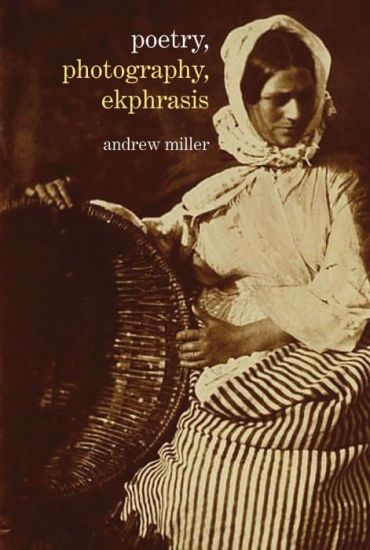
Poetry, Photography, Ekphrasis is a detailed study of the ekphrasis of photography in poetry since the 19th century. Unlike other critical studies of ekphrasis, Miller’s study concentrates solely on the lyrical ekphrasis of photographs, setting out to define how the photographic image provides a unique form of poetic ekphrasis. Moving between the disciplines of semiotics, visual studies, psychology, classical rhetoric, philosophy and literary criticism, Miller outlines what he defines as the chronotope of the photograph. Employing M. M. Bakhtin’s notion of the literary chronotope, Miller argues that the ekphrasis of photographs manifests itself in a series of chronotopic narratives. Each chapter of the book is dedicated to delineating one of these narratives. In this work, Miller engages in a literary history that follows the timeline of photography from its origins in the 19th century to its contemporary digital manifestations in the 21st. The study engages in close-readings of the works of such poets as Walt Whitman, Lewis Carroll, Thomas Hardy, Seamus Heaney, Marianne Moore and Philip Larkin. In addition, the book does the work of a comparative study, and it goes beyond the limits of Anglophone literature to include the works of such poets and writers as Walter Benjamin, Charles Baudelaire, Bertolt Brecht, Ernesto Cardenal and Zbigniew Herbert.
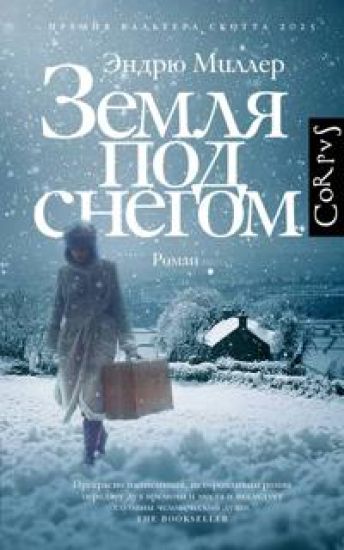
? Winner of the Walter Scott Prize for Historical Fiction 2025? Winner of the Winston Graham Historical Prize 2025 A best book of the year for the Independent, Guardian, i Newspaper and Good Housekeeping'Tender, elegant, soulful and perfect. A novel that hits your cells and can be felt there, without your brain really knowing what's happened to it. Superb'SAMANTHA HARVEY, Booker Prize-winning author of Orbital'Delicate and devastating'INDEPENDENT, The 20 best books of the year'Miller may have written his best book yet . . . brilliance that is not to be missed'GUARDIAN, The best fiction of 2024'Incredibly satisfying'FINANCIAL TIMES'A novel of dazzling humanity and captivating, crystalline prose'MAIL ON SUNDAYDECEMBER 1962, THE WEST COUNTRY. In the darkness of an old asylum, a young man unscrews the lid from a bottle of sleeping pills. In the nearby village, two couples begin their day. Local doctor, Eric Parry, mulling secrets, sets out on his rounds, while his pregnant wife sleeps on in the warmth of their cottage. Across the field, in a farmhouse impossible to heat, funny, troubled Rita Simmons is also asleep, her head full of images of a past life her husband prefers to ignore. He's been up for hours, tending to the needs of the small dairy farm he bought, a place where he hoped to create a new version of himself, a project that's already faltering. There is affection - if not always love - in both homes: these are marriages that still hold some promise. But when the ordinary cold of an English December gives way to violent blizzards - a true winter, the harshest in living memory - the two couples find their lives beginning to unravel. Where do you hide when you can't leave home? And where, in a frozen world, can you run to?'I loved The Land in Winter . . . There were moments I thought of Penelope Fitzgerald - that moment I have always loved in The Beginning of Spring when the birch trees seem to grow hands - those liminal moments that are kind of beyond words, or explanation, but Miller finds them anyway. It's a thing of rare beauty'RACHEL JOYCE, author of The Unlikely Pilgrimage of Harold Fry'An exquisite achievement, luminously written, full of wonder at the diversity and strangeness of human experience.'FRANCIS SPUFFORD, author of Golden Hill'Disruptive and graceful beyond anything I've read'SARAH HALL, author of HelmPRAISE FOR ANDREW MILLER'Andrew Miller's writing is a source of wonder and delight'HILARY MANTEL'One of our most skilful chroniclers of the human heart and mind'SUNDAY TIMES'A writer of very rare and outstanding gifts'INDEPENDENT ON SUNDAY'A highly intelligent writer, both exciting and contemplative'THE TIMES'A wonderful storyteller'SPECTATOR
1962 god, selskaja Anglija. Doktor Erik Parri, chelovek, umejuschij derzhat svoi tajny pri sebe, otpravljaetsja po vyzovam, a ego beremennaja zhena esche spit v ikh teplom, ujutnom kottedzhe. Na ferme nepodaleku, v domike, kotoryj nevozmozhno protopit, spit esche odna beremennaja zhenschina - Rita Simmons, no i vo sne ee presledujut vospominanija o proshloj zhizni. Ee muzh na nogakh s samogo utra - vozitsja v korovnike. Otnoshenija v obeikh parakh dostatochno rovnye - privjazannost tochno prisutstvuet, a mozhet, i ljubov. No dekabr prinosit meteli, nastupaet nebyvalo surovaja zima. I nashikh geroev zhdut ispytanija ne tolko pogodoj. Perevodchik: Motylev Leonid Julevich
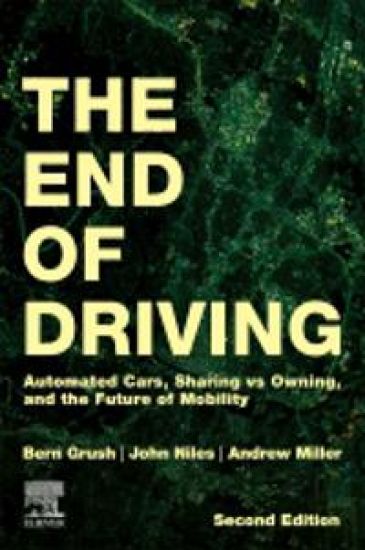
The End of Driving: Automated Cars, Sharing vs Owning, and the Future of Mobility, Second Edition explores both the potential of vehicle automation technology and the barriers it faces when considering coherent urban deployment. The book evaluates the case for deliberate development of automated public transportation and mobility-as-a-service as paths towards sustainable mobility, describing critical approaches to the planning and management of vehicle automation technology. It serves as a reference for understanding the full life cycle of the multi-year transportation systems planning processes, including novel regulation, planning, and acquisition tools for regional transportation. Application-oriented, research-based, and solution-oriented, this book concludes with a detailed discussion of the systems design needed for accomplishing this shift. This thoroughly updated second edition covers the future technology application milestones that will mark the rate of progress in the years ahead, including some that may not come to pass. More importantly, reasons for the existing lack of consensus on environmental impacts of vehicle automation will be tied to the visible milestones.
The book investigates a riveting, richly documented conflict from thirteenth-century England over church property and ecclesiastical patronage. Oliver Sutton, the bishop of Lincoln, and John St. John, a royal household knight, both used coveted papal provisions to bestow the valuable church of Thame to a familial clerical candidate (a nephew and son, respectively). Between 1292 and 1294 three people died over the right to possess this church benefice and countless others were attacked or publicly scorned during the conflict. More broadly, religious services were paralyzed, prized animals were mutilated, and property was destroyed. Ultimately, the king personally brokered a settlement because he needed his knight for combat. Employing a microhistorical approach, this book uses abundant episcopal, royal, and judicial records to reconstruct this complex story that exposes in vivid detail the nature and limits of episcopal and royal power and the significance and practical business of ecclesiastical benefaction. This volume will appeal to undergraduate and graduate students alike, particularly students in historical methods courses, medieval surveys, upper-division undergraduate courses, and graduate seminars. It would also appeal to admirers of microhistories and people interested in issues pertaining to gender, masculinity, and identity in the Middle Ages.
? Winner of the Walter Scott Prize for Historical Fiction 2025? Winner of the Winston Graham Historical Prize 2025 A best book of the year for the Independent, Guardian, i Newspaper and Good Housekeeping'Tender, elegant, soulful and perfect. A novel that hits your cells and can be felt there, without your brain really knowing what's happened to it. Superb'SAMANTHA HARVEY, Booker Prize-winning author of Orbital'Delicate and devastating'INDEPENDENT, The 20 best books of the year'Miller may have written his best book yet . . . brilliance that is not to be missed'GUARDIAN, The best fiction of 2024'Incredibly satisfying'FINANCIAL TIMES'A novel of dazzling humanity and captivating, crystalline prose'MAIL ON SUNDAYDECEMBER 1962, THE WEST COUNTRY. In the darkness of an old asylum, a young man unscrews the lid from a bottle of sleeping pills. In the nearby village, two couples begin their day. Local doctor, Eric Parry, mulling secrets, sets out on his rounds, while his pregnant wife sleeps on in the warmth of their cottage. Across the field, in a farmhouse impossible to heat, funny, troubled Rita Simmons is also asleep, her head full of images of a past life her husband prefers to ignore. He's been up for hours, tending to the needs of the small dairy farm he bought, a place where he hoped to create a new version of himself, a project that's already faltering. There is affection - if not always love - in both homes: these are marriages that still hold some promise. But when the ordinary cold of an English December gives way to violent blizzards - a true winter, the harshest in living memory - the two couples find their lives beginning to unravel. Where do you hide when you can't leave home? And where, in a frozen world, can you run to?'I loved The Land in Winter . . . There were moments I thought of Penelope Fitzgerald - that moment I have always loved in The Beginning of Spring when the birch trees seem to grow hands - those liminal moments that are kind of beyond words, or explanation, but Miller finds them anyway. It's a thing of rare beauty'RACHEL JOYCE, author of The Unlikely Pilgrimage of Harold Fry'An exquisite achievement, luminously written, full of wonder at the diversity and strangeness of human experience.'FRANCIS SPUFFORD, author of Golden Hill'Disruptive and graceful beyond anything I've read'SARAH HALL, author of HelmPRAISE FOR ANDREW MILLER'Andrew Miller's writing is a source of wonder and delight'HILARY MANTEL'One of our most skilful chroniclers of the human heart and mind'SUNDAY TIMES'A writer of very rare and outstanding gifts'INDEPENDENT ON SUNDAY'A highly intelligent writer, both exciting and contemplative'THE TIMES'A wonderful storyteller'SPECTATOR
The book investigates a riveting, richly documented conflict from thirteenth-century England over church property and ecclesiastical patronage. Oliver Sutton, the bishop of Lincoln, and John St. John, a royal household knight, both used coveted papal provisions to bestow the valuable church of Thame to a familial clerical candidate (a nephew and son, respectively). Between 1292 and 1294 three people died over the right to possess this church benefice and countless others were attacked or publicly scorned during the conflict. More broadly, religious services were paralyzed, prized animals were mutilated, and property was destroyed. Ultimately, the king personally brokered a settlement because he needed his knight for combat. Employing a microhistorical approach, this book uses abundant episcopal, royal, and judicial records to reconstruct this complex story that exposes in vivid detail the nature and limits of episcopal and royal power and the significance and practical business of ecclesiastical benefaction. This volume will appeal to undergraduate and graduate students alike, particularly students in historical methods courses, medieval surveys, upper-division undergraduate courses, and graduate seminars. It would also appeal to admirers of microhistories and people interested in issues pertaining to gender, masculinity, and identity in the Middle Ages.
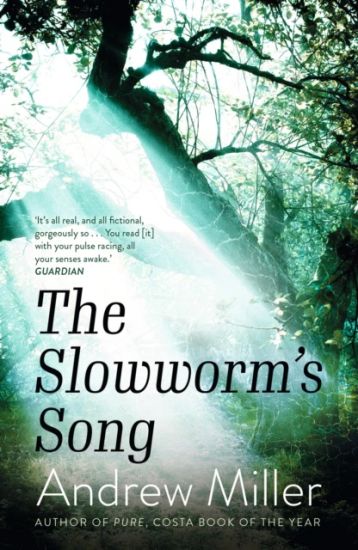
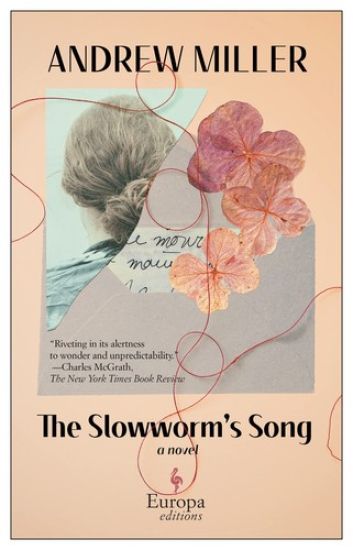
A NEW YORKER BEST BOOK OF 2022From Costa Award-winning and Booker Prize-shortlisted author Andrew Miller comes a tender tale of guilt, trust, and a father's yearning to atone. A harmless-looking letter drops onto the doormat in Stephen Rose's Somerset home like an unexploded bomb. It is a summons to an inquiry in Belfast, asking him to give testimony about his participation in a disastrous event during the Troubles-one he has long worked to forget. An ailing ex-soldier and recovering alcoholic, Stephen has just begun to build a fragile bond with Maggie, the adult daughter he barely knows. For two years, he has worked hard to earn her trust, but the tragedy of what occurred back in the summer of 1982 has the power to destroy their new relationship. To buy time, he decides to write her an account of his life. Part explanation, part confession, it is also a love letter to Maggie. When the moment comes that he must face what happened in Belfast that summer, the consequences are devastating--but ultimately liberating. Giving voice to those little heard in the literature of the Irish Troubles, The Slowworm's Song is an unforgettable story about a man who learns that the only way back from the underworld is up.