Kirjojen hintavertailu – 12 859 818 kirjaa ja 27 kauppaa

Kirjailija

Andrew Moore

Kirjat ja teokset yhdessä paikassa: 20 kirjaa, julkaisuja vuosilta 2003–2026, suosituimpiin kuuluu Dirt Meridian. Vertaile teosten hintoja ja tarkista saatavuus suomalaisista kirjakaupoista.

20 kirjaa

Kirjojen julkaisuvuodet: 2003–2026.

The Beasts of the East: The Fall and Rise of America's Eastern Wilderness
A celebration of the extraordinary lost natural wonder of the eastern U. S.--once the center of American wildness before its despoliation--and a lively tour through recent efforts to return elk, bison, wolves, and other creatures to their verdant native landscapes. Before skyscrapers and smokestacks rose across the eastern U. S., elk, bison, wolves, and cougars roamed. Typically imagined as icons of the West, these large mammals are in fact native to what was once a kind of Eden--towering forests in the Northeast, rolling prairies in the Midwest, and cypress swamps in the Deep South. But, in mere decades, industrialization and unregulated hunting brought these emblems of the East to the precipice of extinction; by the 1950s, squirrels were one of the few wild mammals an easterner was likely to encounter. Now, even as the climate and biodiversity crises loom, eastern wildlife are staging an unlikely comeback. Herds of bison graze on Illinois prairies, red wolves lurk in North Carolina's coastal marshes, and abandoned coal mines in Kentucky are now home to thousands of elk. Such rewilding promises to restore balance to eastern ecosystems and return one of the most biodiverse regions in the world to its former luster--but not without controversy. In Beasts in the East, we follow environmental writer and James Beard Award finalist Andrew Moore as he meets conservationists, hunters, biologists, and nature lovers as they confront herculean challenges: How can we enable wildlife migration in the midst of suburban sprawl? Are these success stories viable in the long-term? When humans and wildlife come in close contact, how do we define wilderness?

The Decarbonization Delusion

The Decarbonization Delusion

Andrew Moore

OXFORD UNIVERSITY PRESS INC
2024
sidottu
Could the race to de-carbonize our energy systems be leading us closer to environmental disaster? Why did biology choose carbon, in a variety of compounds, as its energy carrier and storage substance? From the smallest life forms, through multicellular organisms, and up to whole ecosystems, this economy of carbon compounds is fundamentally sustainable. Yet today, many are working to expunge carbon-based energy carriers from human economies, replacing them with solutions based on other elements and minerals. In The Decarbonization Delusion, independent scientist and writer Andrew Moore shows that the race to decarbonize is leading us further down the road to environmental degradation. Instead of banishing carbon, Moore argues that we should look to life on Earth, which has used carbon in highly sustainable ways for 3.5 billion years, as a model for how humans can use carbon sustainably. The Decarbonization Delusion begins by discussing carbon's role in the inception of the universe and its critical importance in biology. Moore identifies many intriguing features of biology's use of carbon that are crucial to creating sustainable human economies on Earth. Throughout, Moore draws on extensive research and original calculations to disprove common fallacies about carbon-based energy carriers and their alternatives. For example, he shows that the widely perceived superiority of battery technology over carbon-based fuels is, in most regards, a serious misconception that, if not corrected, could have grave environmental consequences. Politicians, industrial leaders, and even some scientists have contributed to the widespread belief that carbon should have no place in our energy economies. In The Decarbonization Delusion, Moore argues against this idea, asking us to re-think our assumptions and approach sustainable energy development in a more scientific and dispassionate fashion.
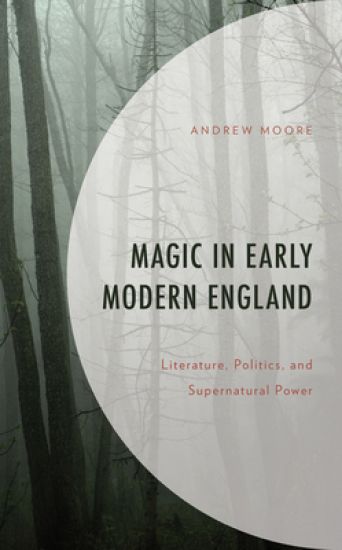
Magic in Early Modern England

Magic in Early Modern England

Andrew Moore

BLOOMSBURY PUBLISHING PLC
2023
sidottu
This book reconsiders the place of magic at the foundations of modernity. Through careful close reading of plays, spell books, philosophical treatises, and witch trial narratives, Andrew Moore shows us that magic was ubiquitous in early modern England. Rather than a “decline of magic,” this study traces a broad cultural fascination with supernatural power. In the sixteenth and seventeenth centuries, poets, philosophers, jurists, and monarchs debated the reality and the morality of magic, and, by extension, the limits of human power. In this way, early modern English writing about magic was closely related to the scientific and political philosophical writing from the period, which was likewise reimagining humanity’s relationship to nature. Moore reads Thomas Hobbes’s Leviathan alongside contemporary writing by the notorious witch hunters Matthew Hopkins and John Stearne. He reminds us that Francis Bacon’s scientific works were addressed to King James I, whose own Dæmonologie insists on the reality of witchcraft. The fantastical science fiction of Margaret Cavendish, he argues, must be understood within a tradition that includes works like Christopher Marlowe’s Doctor Faustus and the peculiar autobiography of criminal astrologer Simon Forman. By considering these disparate works together Moore reveals the centrality of magic to the early modern project.
On Your First Holy Communion

On Your First Holy Communion

Andrew Moore

AUGSBURG BOOKS
2020
nidottu
In Holy Communion, children are introduced to a richer relationship with Jesus who offers himself as spiritual nourishment. On Your First Holy Communion provides passages and prayers that will highlight the importance of communion. This is the perfect gift book marking an important sacremental moment in a unique and personal journey of faith.
Andrew Moore: Blue Alabama

Andrew Moore: Blue Alabama

Andrew Moore

Damiani
2019
sidottu
Andrew Moore’s new book, Blue Alabama, focuses on the American South, depicts the economic, social and cultural divisions that characterize the South and the love of history, tradition and land that binds its citizens. Following upon in-depth explorations of the economically ravaged city of Detroit (2007 – 2009) and the mythic high plains region along the 100th Meridian (2011 – 2014), Blue Alabama continues the artist’s investigation of “the inner empire” of the United States.
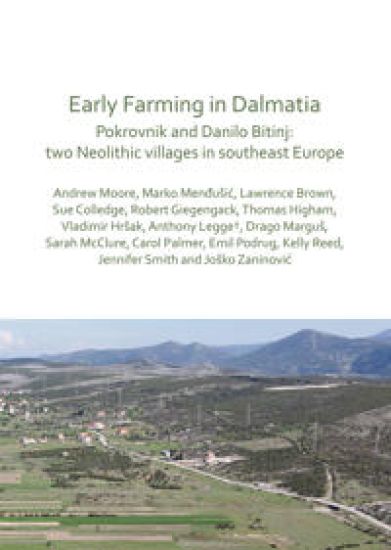
Early Farming in Dalmatia

Early Farming in Dalmatia

Andrew Moore; Marko Mendusic

Archaeopress
2019
nidottu
Contributions by Lawrence Brown, Sue Colledge, Robert Giegengack, Thomas Higham, Vladimir Hrsak, Anthony Legge†, Drago Margus, Sarah McClure, Carol Palmer, Emil Podrug, Kelly Reed, Jennifer Smith, and Josko Zaninovic. The origins and spread of farming are vital subjects of research, notably because agriculture makes possible our modern world. The Early Farming in Dalmatia Project is investigating the expansion of farming from its centre of origin in western Asia through the Mediterranean into southern Europe. This multidisciplinary ecological project combines comprehensive recovery of archaeological materials through excavation with landscape studies. It addresses several key questions, including when and how farming reached Dalmatia, what was the nature of this new economy, and what was its impact on the local environment. Excavations at Danilo Bitinj and Pokrovnik have demonstrated that their inhabitants were full-time farmers. The two sites were among the largest known Neolithic villages in the eastern Adriatic. A comprehensive program of AMS dating indicates that together they were occupied from c. 8,000 to 6,800 cal BP. Our research has begun to illuminate the details of their farming system, as well as the changes that took place in their way of life through the Neolithic. Their economy was derived from western Asia and it is likely that their ancestors came from there also. It was these people who brought agriculture and village life to the Adriatic and to the rest of the central and western Mediterranean. Once in place, this farming economy persisted in much the same form from the Neolithic down to the present.
Shakespeare between Machiavelli and Hobbes
Shakespeare between Machiavelli and Hobbes explores Shakespeare’s political outlook by comparing some of the playwright’s best-known works to the works of Italian political theorist Niccolò Machiavelli and English social contract theorist Thomas Hobbes. By situating Shakespeare ‘between’ these two thinkers, the distinctly modern trajectory of the playwright’s work becomes visible. Throughout his career, Shakespeare interrogates the divine right of kings, absolute monarchy, and the metaphor of the body politic. Simultaneously he helps to lay the groundwork for modern politics through his dramatic explorations of consent, liberty, and political violence. We can thus understand Shakespeare’s corpus as a kind of eulogy: a funeral speech dedicated to outmoded and deficient theories of politics. We can also understand him as a revolutionary political thinker who, along with Machiavelli and Hobbes, reimagined the origins and ends of government. All three thinkers understood politics primarily as a response to our mortality. They depict politics as the art of managing and organizing human bodies—caring for their needs, making space for the satisfaction of desires, and protecting them from the threat of violent death. This book features new readings of Shakespeare’s plays that illuminate the playwright’s major political preoccupations and his investment in materialist politics.
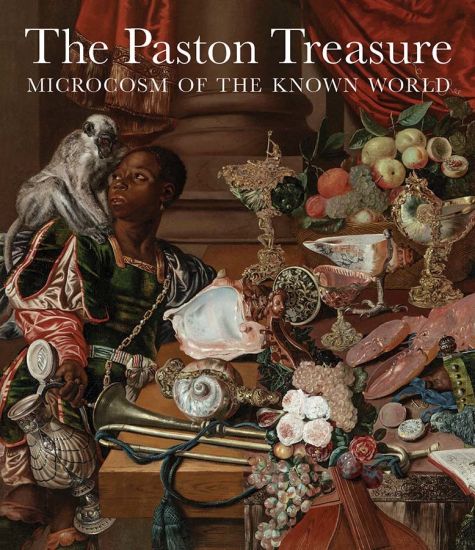
The Paston Treasure

The Paston Treasure

Andrew Moore; Nathan Flis; Francesca Vanke

Yale University Press
2018
sidottu
The Paston Treasure, a spectacular painting from the 1660s now held at Norwich Castle Museum, depicts a wealth of objects from the collection of a local landed family. This deeply researched volume uses the painting as a portal to the history of the collection, exploring the objects, their context, and the wider world they occupied. Drawing on an impressive range of fields, including history of art and collections, technical art history, musicology, history of science, and the social and cultural history of the 17th century, the book weaves together narratives of the family and their possessions, as well as the institutions that eventually acquired them. Essays, vignettes, and catalogue entries comprise this multidisciplinary exposition, uniting objects depicted in the painting for the first time in nearly 300 years. Published in association with the Yale Center for British ArtExhibition Schedule:Yale Center for British Art (02/15/18–05/27/18)Norwich Castle Museum & Art Gallery (06/23/18–09/23/18)
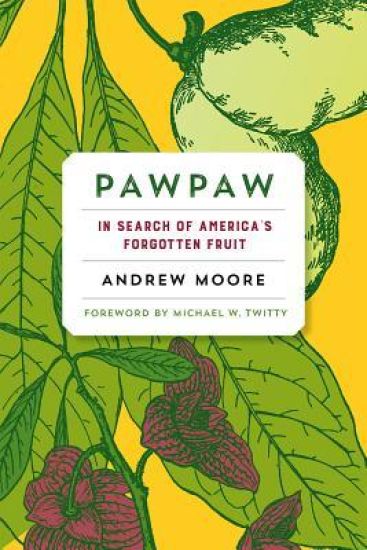
Pawpaw

Pawpaw

Andrew Moore

Chelsea Green Publishing Co
2017
nidottu

Halvin toimitettuna 26,30 €

The largest edible fruit native to the United States tastes like a cross between a banana and a mango. It grows wild in twenty-six states, gracing Eastern forests each fall with sweet-smelling, tropical-flavored abundance. Historically, it fed and sustained Native Americans and European explorers, presidents, and enslaved African Americans, inspiring folk songs, poetry, and scores of place names from Georgia to Illinois. Its trees are an organic grower's dream, requiring no pesticides or herbicides to thrive, and containing compounds that are among the most potent anticancer agents yet discovered. So why have so few people heard of the pawpaw, much less tasted one? In Pawpaw-a 2016 James Beard Foundation Award nominee in the Writing & Literature category-author Andrew Moore explores the past, present, and future of this unique fruit, traveling from the Ozarks to Monticello; canoeing the lower Mississippi in search of wild fruit; drinking pawpaw beer in Durham, North Carolina; tracking down lost cultivars in Appalachian hollers; and helping out during harvest season in a Maryland orchard. Along the way, he gathers pawpaw lore and knowledge not only from the plant breeders and horticulturists working to bring pawpaws into the mainstream (including Neal Peterson, known in pawpaw circles as the fruit's own "Johnny Pawpawseed"), but also regular folks who remember eating them in the woods as kids, but haven't had one in over fifty years. As much as Pawpaw is a compendium of pawpaw knowledge, it also plumbs deeper questions about American foodways-how economic, biologic, and cultural forces combine, leading us to eat what we eat, and sometimes to ignore the incredible, delicious food growing all around us. If you haven't yet eaten a pawpaw, this book won't let you rest until you do.
Shakespeare between Machiavelli and Hobbes
Shakespeare between Machiavelli and Hobbes explores Shakespeare’s political outlook by comparing some of the playwright’s best-known works to the works of Italian political theorist Niccolò Machiavelli and English social contract theorist Thomas Hobbes. By situating Shakespeare ‘between’ these two thinkers, the distinctly modern trajectory of the playwright’s work becomes visible. Throughout his career, Shakespeare interrogates the divine right of kings, absolute monarchy, and the metaphor of the body politic. Simultaneously he helps to lay the groundwork for modern politics through his dramatic explorations of consent, liberty, and political violence. We can thus understand Shakespeare’s corpus as a kind of eulogy: a funeral speech dedicated to outmoded and deficient theories of politics. We can also understand him as a revolutionary political thinker who, along with Machiavelli and Hobbes, reimagined the origins and ends of government. All three thinkers understood politics primarily as a response to our mortality. They depict politics as the art of managing and organizing human bodies—caring for their needs, making space for the satisfaction of desires, and protecting them from the threat of violent death. This book features new readings of Shakespeare’s plays that illuminate the playwright’s major political preoccupations and his investment in materialist politics.
Dirt Meridian

Dirt Meridian

Andrew Moore

Damiani
2016
Sidottu
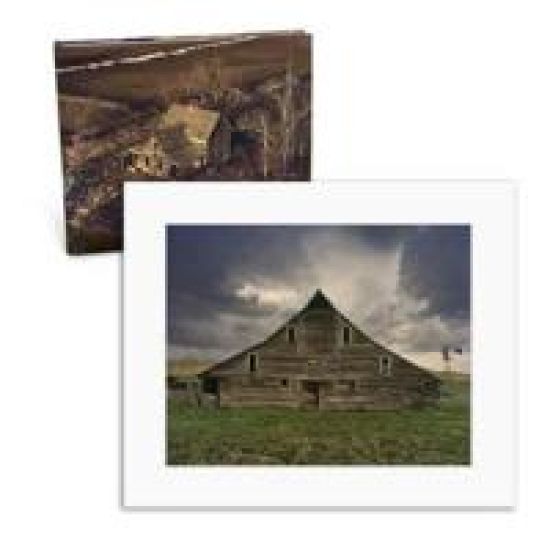
This Collector's Edition includes the book Dirt Meridian and this print is signed and numbered by Andrew Moore: Cash Meier Barn, 2012, Archival inkjet print, 25.5 x 27.7 cm. The photograph has been printed in 2016 in a limited edition of 25 copies plus 3 Artist Proofs. In this book by the acclaimed photographer of Detroit Disassembled, Andrew Moore takes to the air to create an intimate vision of the High Plains. The "Meridian" of the title refers to the 100th meridian, the longitude that neatly bisects the country and has long been considered the dividing line between the fertile green East and dry brown West of the United States. Much of the meridian traverses America's "flyover country", those remote and sparsely populated landscapes with a long history of repeated drought and failed dreams. Yet other parts of the meridian overlap bustling and contentious zones, such as the heavily fracked Bakken formation in North Dakota. Dirt Meridian interweaves both these stories together: the enduring myths and rich history of a place where so little meets the eye, alongside a portrayal of those who continue to live amidst its vast and severe magnificence. Many photographs in this book were made using a specially modified camera in a low flying plane; the resulting pictures, with their literal bird eye's view, offer the viewer a unique perspective of this quintessential "American" landscape of no conspicuous markers or limits. Moore was also assisted by a wideranging group of ranchers, farmers, crop dusters, game wardens, writers, and historians during his ten years of work on this project. The book includes a preface by the late noted author Kent Haruf, a story by the writer Inara Verzemnieks, an essay by noted curator of Western Art, Toby Jurovics, as well as extensive set of endnotes about the images themselves.
God, Mind and Knowledge

God, Mind and Knowledge

Andrew Moore

Ashgate Publishing Limited
2014
sidottu
The themes of God, Mind and Knowledge are central to the philosophy of religion but they are now being taken up by professional philosophers who have not previously contributed to the field. This book is a collection of original essays by eminent and rising philosophers and it explores the boundaries between philosophy of religion, philosophy of mind, metaphysics, and epistemology. Its introduction will make it accessible to newcomers to the field, especially those approaching it from theology. Many of the book’s topics lie at the focal point of debates - instigated in part by the so-called New Atheists - in contemporary culture about whether it is rational to have religious beliefs, and the role these beliefs can or should play in the life of individuals and of society.
God, Mind and Knowledge

God, Mind and Knowledge

Andrew Moore

Ashgate Publishing Limited
2014
nidottu
The themes of God, Mind and Knowledge are central to the philosophy of religion but they are now being taken up by professional philosophers who have not previously contributed to the field. This book is a collection of original essays by eminent and rising philosophers and it explores the boundaries between philosophy of religion, philosophy of mind, metaphysics, and epistemology. Its introduction will make it accessible to newcomers to the field, especially those approaching it from theology. Many of the book’s topics lie at the focal point of debates - instigated in part by the so-called New Atheists - in contemporary culture about whether it is rational to have religious beliefs, and the role these beliefs can or should play in the life of individuals and of society.
The CERT Guide to Insider Threats

The CERT Guide to Insider Threats

Dawn Cappelli; Andrew Moore; Randall Trzeciak

Addison-Wesley Educational Publishers Inc
2012
sidottu
Since 2001, the CERT® Insider Threat Center at Carnegie Mellon University’s Software Engineering Institute (SEI) has collected and analyzed information about more than seven hundred insider cyber crimes, ranging from national security espionage to theft of trade secrets. The CERT® Guide to Insider Threats describes CERT’s findings in practical terms, offering specific guidance and countermeasures that can be immediately applied by executives, managers, security officers, and operational staff within any private, government, or military organization. The authors systematically address attacks by all types of malicious insiders, including current and former employees, contractors, business partners, outsourcers, and even cloud-computing vendors. They cover all major types of insider cyber crime: IT sabotage, intellectual property theft, and fraud. For each, they present a crime profile describing how the crime tends to evolve over time, as well as motivations, attack methods, organizational issues, and precursor warnings that could have helped the organization prevent the incident or detect it earlier. Beyond identifying crucial patterns of suspicious behavior, the authors present concrete defensive measures for protecting both systems and data. This book also conveys the big picture of the insider threat problem over time: the complex interactions and unintended consequences of existing policies, practices, technology, insider mindsets, and organizational culture. Most important, it offers actionable recommendations for the entire organization, from executive management and board members to IT, data owners, HR, and legal departments. With this book, you will find out how to Identify hidden signs of insider IT sabotage, theft of sensitive information, and fraud Recognize insider threats throughout the software development life cycle Use advanced threat controls to resist attacks by both technical and nontechnical insiders Increase the effectiveness of existing technical security tools by enhancing rules, configurations, and associated business processes Prepare for unusual insider attacks, including attacks linked to organized crime or the Internet underground By implementing this book’s security practices, you will be incorporating protection mechanisms designed to resist the vast majority of malicious insider attacks.
Realism and Christian Faith

Realism and Christian Faith

Andrew Moore

Cambridge University Press
2003
pokkari
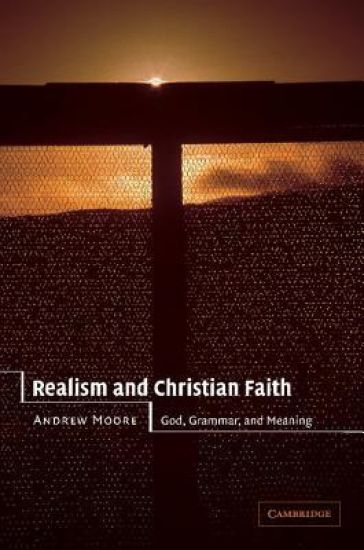
The question of realism - that is, whether God exists independently of human beings - is central to much contemporary theology and church life. It is also an important topic in the philosophy of religion. This book discusses the relationship between realism and Christian faith in a thorough and systematic way and uses the resources of both philosophy and theology to argue for a Christocentric narrative realism. Many previous defences of realism have attempted to model Christian belief on scientific theory but Moore argues that this comparison is misleading and inadequate on both theological and philosophical grounds. In dialogue with speech act theory and critiques of realism by both non-realists and Wittgensteinians, a new account of the meaningfulness of Christian language is proposed. Moore uses this to develop a regulative conception of realism according to which God's independent reality is shown principally in Christ and then through Christian practices and the lives of Christians.
Realism and Christian Faith

Realism and Christian Faith

Andrew Moore

Cambridge University Press
2003
sidottu
The question of realism - that is, whether God exists independently of human beings - is central to much contemporary theology and church life. It is also an important topic in the philosophy of religion. This book discusses the relationship between realism and Christian faith in a thorough and systematic way and uses the resources of both philosophy and theology to argue for a Christocentric narrative realism. Many previous defences of realism have attempted to model Christian belief on scientific theory but Moore argues that this comparison is misleading and inadequate on both theological and philosophical grounds. In dialogue with speech act theory and critiques of realism by both non-realists and Wittgensteinians, a new account of the meaningfulness of Christian language is proposed. Moore uses this to develop a regulative conception of realism according to which God's independent reality is shown principally in Christ and then through Christian practices and the lives of Christians.