Kirjojen hintavertailu – 12 859 827 kirjaa ja 27 kauppaa

Kirjailija

Andrew Nicholson

Kirjat ja teokset yhdessä paikassa: 5 kirjaa, julkaisuja vuosilta 2010–2024, suosituimpiin kuuluu Essential Reads for the Modern Lawyer. Vertaile teosten hintoja ja tarkista saatavuus suomalaisista kirjakaupoista.

5 kirjaa

Kirjojen julkaisuvuodet: 2010–2024.

Essential Reads for the Modern Lawyer

Essential Reads for the Modern Lawyer

Alison Nolan; Peter Alfandary; Christopher Bockmann; Edward Walker; Sophie Cameron; Eimear McCann; Bendita Cynthia Malakia; Morgan Reams; Claire-Elaine Arthurs; Janet Taylor-Hall; Lucie Allen; Jonathan Bourne; Andrea Kennedy; David Freeman; Joanna Gaudoin; Michelle Elstein; Brian Dunlop; Jaap Bosman; Richard Brzakala; Nathan Cemenska; Stephanie Corey; Jelena Schidzig; Rebecca Harding; Andrew Nicholson; Uwais Iqbal; Joanne Brook; Clare Harman Clark; Helen Foord

Globe Law and Business Ltd
2024
nidottu
Globe Law and Business' journal Modern Lawyer is known for helping professionals navigate the changing legal services landscape, featuring insights from in-house counsel, legal tech specialists, law companies, law firms, and business leaders, who all bring a fresh perspective to legal services delivery. Essential Reads for the Modern Lawyer draws on the journal’s wealth of opinion pieces, interviews and thought leadership, which together comprise an invaluable and wide-ranging analysis of the topics that really matter to those working throughout the legal ecosystem. The book is divided into six key areas: Business development. Finance. Culture. Leadership. Talent. Technology. Bringing together the journal’s most popular and impactful articles, this collection is essential for any professional working in legal services looking to develop their career.
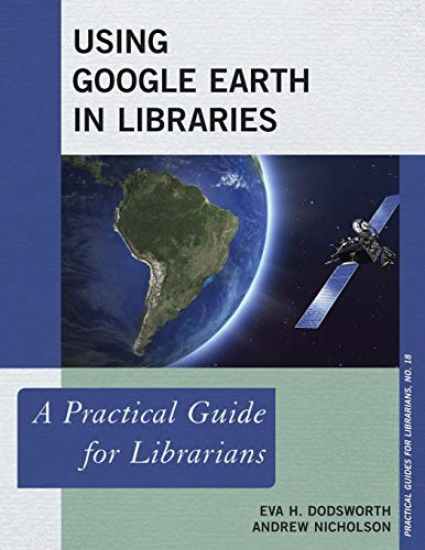
Using Google Earth in Libraries

Using Google Earth in Libraries

Eva H. Dodsworth; Andrew Nicholson

Rowman Littlefield
2015
nidottu
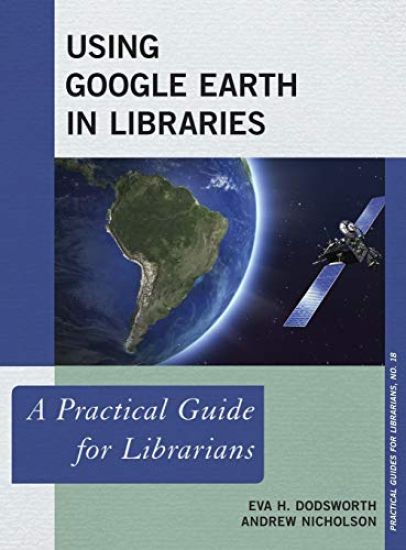
Google Earth is a research, mapping, and cultural exploration tool that puts the whole world in your hands, then hands over the tools to let you build your own world. The uses of Google Earth in academia, in libraries, and across disciplines are endless and each year more innovate research projects are being released. Since its launch, Google Earth has had an enormous impact on the way people think, learn, and work with geographic information. With easy access to spatial and cultural information, and with customizable map features and dynamic presentation tools, Google Earth is an attractive option for anyone wishing to host projects and to share research findings through a common online interface. This easy-to-read, practical guide: ·Demonstrates how Google Earth has been used as a resource for research ·Showcases library path finders, discovery tools, and collections built with Google Earth ·Discusses how Google Earth can be embedded into various library services ·Highlights effectives uses of Google Earth in specific-discipline education, and provide step-by-step sample classroom activities ·Introduces Google Earth features, data, and map making capabilities ·Describes Google Earth-related online resources After reading this guide, librarians will be able to easily integrate Google Earth’s many facets into their services and help teachers integrate it into their classrooms. Because so many librarians are educators and subject specialists, they can customize the learning outcomes for students based on the subject being studied. This book presents a cross-disciplinary overview of how Google Earth can be used in research, in teaching and learning, and in other library services like promotion, outreach, reference and very importantly collection and resource exploration and discovery. This comprehensive guide to using Google Earth is for public, school, academic, and special libraries serving from the elementary level through adult levels. Although articles have been written about specific subjects and specific library projects, this is the first published that offer a one-stop-shop for utilizing this online product for library-related purposes. Librarians reading this book will gain the Google Earth skills required to be able to not only use it themselves, but also teach others in how to use this online technology.
Using Google Earth in Libraries

Using Google Earth in Libraries

Eva H. Dodsworth; Andrew Nicholson

Rowman Littlefield
2015
sidottu
Google Earth is a research, mapping, and cultural exploration tool that puts the whole world in your hands, then hands over the tools to let you build your own world. The uses of Google Earth in academia, in libraries, and across disciplines are endless and each year more innovate research projects are being released. Since its launch, Google Earth has had an enormous impact on the way people think, learn, and work with geographic information. With easy access to spatial and cultural information, and with customizable map features and dynamic presentation tools, Google Earth is an attractive option for anyone wishing to host projects and to share research findings through a common online interface. This easy-to-read, practical guide: ·Demonstrates how Google Earth has been used as a resource for research ·Showcases library path finders, discovery tools, and collections built with Google Earth ·Discusses how Google Earth can be embedded into various library services ·Highlights effectives uses of Google Earth in specific-discipline education, and provide step-by-step sample classroom activities ·Introduces Google Earth features, data, and map making capabilities ·Describes Google Earth-related online resources After reading this guide, librarians will be able to easily integrate Google Earth’s many facets into their services and help teachers integrate it into their classrooms. Because so many librarians are educators and subject specialists, they can customize the learning outcomes for students based on the subject being studied. This book presents a cross-disciplinary overview of how Google Earth can be used in research, in teaching and learning, and in other library services like promotion, outreach, reference and very importantly collection and resource exploration and discovery. This comprehensive guide to using Google Earth is for public, school, academic, and special libraries serving from the elementary level through adult levels. Although articles have been written about specific subjects and specific library projects, this is the first published that offer a one-stop-shop for utilizing this online product for library-related purposes. Librarians reading this book will gain the Google Earth skills required to be able to not only use it themselves, but also teach others in how to use this online technology.
Unifying Hinduism

Unifying Hinduism

Andrew Nicholson

Columbia University Press
2013
pokkari

Halvin toimitettuna 45,20 €

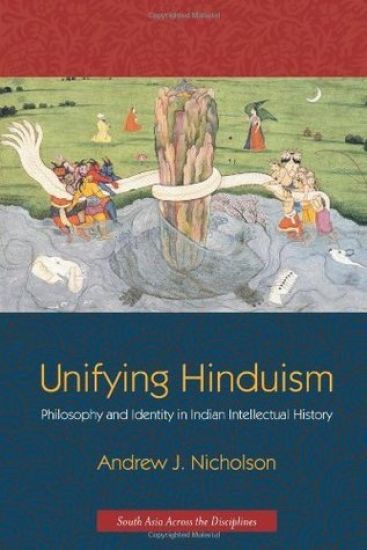
Some postcolonial theorists argue that the idea of a single system of belief known as "Hinduism" is a creation of nineteenth-century British imperialists. Andrew J. Nicholson introduces another perspective: although a unified Hindu identity is not as ancient as some Hindus claim, it has its roots in innovations within South Asian philosophy from the fourteenth to seventeenth centuries. During this time, thinkers treated the philosophies of Vedanta, Samkhya, and Yoga, along with the worshippers of Visnu, Siva, and Sakti, as belonging to a single system of belief and practice. Instead of seeing such groups as separate and contradictory, they re-envisioned them as separate rivers leading to the ocean of Brahman, the ultimate reality. Drawing on the writings of philosophers from late medieval and early modern traditions, including Vijnanabhiksu, Madhava, and Madhusudana Sarasvati, Nicholson shows how influential thinkers portrayed Vedanta philosophy as the ultimate unifier of diverse belief systems. This project paved the way for the work of later Hindu reformers, such as Vivekananda, Radhakrishnan, and Gandhi, whose teachings promoted the notion that all world religions belong to a single spiritual unity. In his study, Nicholson also critiques the way in which Eurocentric concepts--like monism and dualism, idealism and realism, theism and atheism, and orthodoxy and heterodoxy--have come to dominate modern discourses on Indian philosophy.
Unifying Hinduism

Unifying Hinduism

Andrew Nicholson

Columbia University Press
2010
sidottu
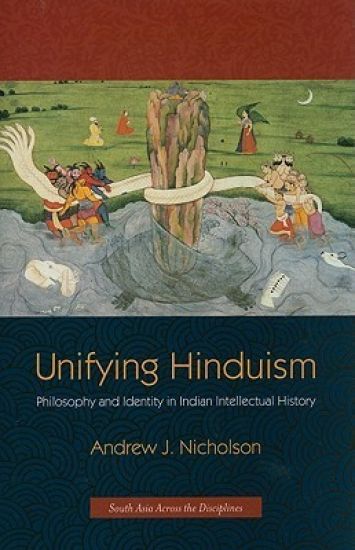
Some postcolonial theorists argue that the idea of a single system of belief known as "Hinduism" is a creation of nineteenth-century British imperialists. Andrew J. Nicholson introduces another perspective: although a unified Hindu identity is not as ancient as some Hindus claim, it has its roots in innovations within South Asian philosophy from the fourteenth to seventeenth centuries. During this time, thinkers treated the philosophies of Vedanta, Samkhya, and Yoga, along with the worshippers of Visnu, Siva, and Sakti, as belonging to a single system of belief and practice. Instead of seeing such groups as separate and contradictory, they re-envisioned them as separate rivers leading to the ocean of Brahman, the ultimate reality. Drawing on the writings of philosophers from late medieval and early modern traditions, including Vijnanabhiksu, Madhava, and Madhusudana Sarasvati, Nicholson shows how influential thinkers portrayed Vedanta philosophy as the ultimate unifier of diverse belief systems. This project paved the way for the work of later Hindu reformers, such as Vivekananda, Radhakrishnan, and Gandhi, whose teachings promoted the notion that all world religions belong to a single spiritual unity. In his study, Nicholson also critiques the way in which Eurocentric concepts--like monism and dualism, idealism and realism, theism and atheism, and orthodoxy and heterodoxy--have come to dominate modern discourses on Indian philosophy.