Kirjojen hintavertailu – 12 903 725 kirjaa ja 27 kauppaa

Kirjailija

Andrew Norris

Kirjat ja teokset yhdessä paikassa: 7 kirjaa, julkaisuja vuosilta 1998–2019, suosituimpiin kuuluu Becoming Who We Are. Vertaile teosten hintoja ja tarkista saatavuus suomalaisista kirjakaupoista.

7 kirjaa

Kirjojen julkaisuvuodet: 1998–2019.

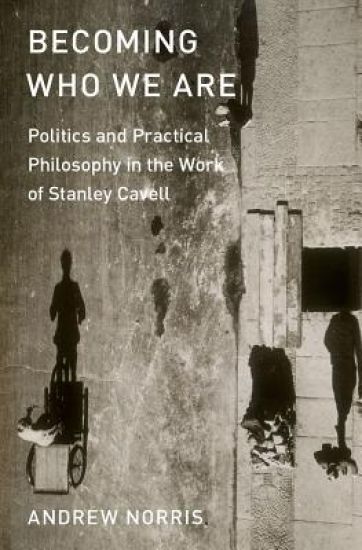
Becoming Who We Are

Becoming Who We Are

Andrew Norris

Oxford University Press Inc
2017
sidottu
While much literature exists on the work of Stanley Cavell, this is the first monograph on his contribution to politics and practical philosophy. As Andrew Norris demonstrates, though skepticism is Cavell's central topic, Cavell understands it not as an epistemological problem or position, but as an existential one. The central question is not what we know or fail to know, but to what extent we have made our lives our own, or failed to do so. Accordingly, Cavell's reception of Austin and Wittgenstein highlights, as other readings of these figures do not, the uncanny nature of the ordinary, the extent to which we ordinarily fail to mean what we say and be who we are. Becoming Who We Are charts Cavell's debts to Heidegger and Thompson Clarke, even as it allows for a deeper appreciation of the extent to which Cavell's Emersonian Perfectionism is a rewriting of Rousseau's and Kant's theories of autonomy. This in turn opens up a way of understanding citizenship and political discourse that develops points made more elliptically in the work of Hannah Arendt, and that contrasts in important ways with the positions of liberal thinkers like John Rawls and Jürgen Habermas on the one hand, and radical democrats like Ernesto Laclau and Chantal Mouffe on the other.
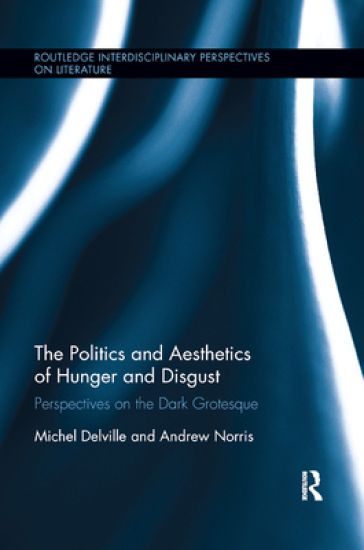
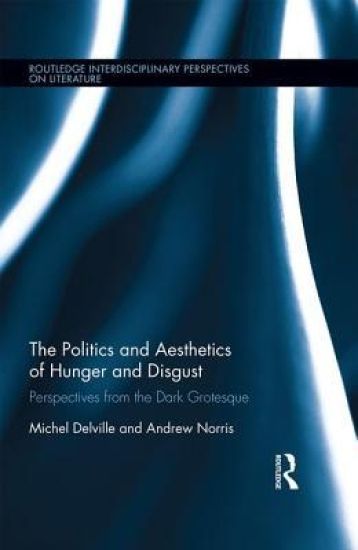
The Politics and Aesthetics of Hunger and Disgust

The Politics and Aesthetics of Hunger and Disgust

Michel Delville; Andrew Norris

Routledge
2019
nidottu
This study examines how hunger narratives and performances contribute to a reconsideration of neglected or prohibited domains of thinking which only a full confrontation with the body’s heterogeneity and plasticity can reveal. From literary motif or psychosomatic symptom to revolutionary gesture or existential malady, the double crux of hunger and disgust is a powerful force which can define the experience of embodiment. Kafka’s fable of the "Hunger Artist" offers a matrix for the fast, while its surprising last-page revelation introduces disgust as a correlative of abstinence, conscious or otherwise. Grounded in Kristeva’s theory of abjection, the figure of the fraught body lurking at the heart of the negative grotesque gathers precision throughout this study, where it is employed in a widening series of contexts: suicide through overeating, starvation as self-performance or political resistance, the teratological versus the totalitarian, the anorexic harboring of death. In the process, writers and artists as diverse as Herman Melville, Percy Bysshe Shelley, Christina Rossetti, George Orwell, Knut Hamsun, J. M. Coetzee, Cindy Sherman, Pieter Breughel, Marina Abramovic, David Nebreda, Paul McCarthy, and others are brought into the discussion. By looking at the different acts of visceral, affective, and ideological resistance performed by the starving body, this book intensifies the relationship between hunger and disgust studies while offering insight into the modalities of the "dark grotesque" which inform the aesthetics and politics of hunger. It will be of value to anyone interested in the culture, politics, and subjectivity of embodiment, and scholars working within the fields of disgust studies, food studies, literary studies, cultural theory, and media studies.
The Politics and Aesthetics of Hunger and Disgust

The Politics and Aesthetics of Hunger and Disgust

Michel Delville; Andrew Norris

Routledge
2017
sidottu
This study examines how hunger narratives and performances contribute to a reconsideration of neglected or prohibited domains of thinking which only a full confrontation with the body’s heterogeneity and plasticity can reveal. From literary motif or psychosomatic symptom to revolutionary gesture or existential malady, the double crux of hunger and disgust is a powerful force which can define the experience of embodiment. Kafka’s fable of the "Hunger Artist" offers a matrix for the fast, while its surprising last-page revelation introduces disgust as a correlative of abstinence, conscious or otherwise. Grounded in Kristeva’s theory of abjection, the figure of the fraught body lurking at the heart of the negative grotesque gathers precision throughout this study, where it is employed in a widening series of contexts: suicide through overeating, starvation as self-performance or political resistance, the teratological versus the totalitarian, the anorexic harboring of death. In the process, writers and artists as diverse as Herman Melville, Percy Bysshe Shelley, Christina Rossetti, George Orwell, Knut Hamsun, J. M. Coetzee, Cindy Sherman, Pieter Breughel, Marina Abramovic, David Nebreda, Paul McCarthy, and others are brought into the discussion. By looking at the different acts of visceral, affective, and ideological resistance performed by the starving body, this book intensifies the relationship between hunger and disgust studies while offering insight into the modalities of the "dark grotesque" which inform the aesthetics and politics of hunger. It will be of value to anyone interested in the culture, politics, and subjectivity of embodiment, and scholars working within the fields of disgust studies, food studies, literary studies, cultural theory, and media studies.
A Practical Guide to Trade Mark Law

A Practical Guide to Trade Mark Law

Amanda Michaels; Andrew Norris

Oxford University Press
2014
nidottu
The new edition of a well-established text, A Practical Guide to Trade Mark Law provides a comprehensive, digestible and approachable introduction to trade mark law, explaining the technicalities of the law in plain, accessible language. While the focus of the book is primarily on UK law, it also deals with the acquisition and protection of EUTrade Marks, and procedure at OHIM, drawing comparisons between trade marks in the UK, and EU Trade Marks where appropriate. The book remains highly practical throughout, comprising discussion on topics such as the absolute and relative tests for registrability, registration practice and procedure, revocation, assignment and licensing, as well as complete coverage of the law on infringement, passing off and remedies.
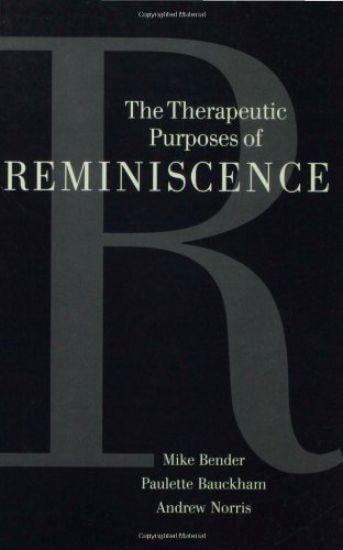
The Therapeutic Purposes of Reminiscence

The Therapeutic Purposes of Reminiscence

Michael P Bender; Paulette Bauckham; Andrew Norris

SAGE Publications Ltd
1998
sidottu
`I was impressed with the accessibility of the book, offering a guided tour through the history, context and purposes of reminiscence therapy, the range of applications from promoting social and emotional stimulation to reminiscence as psychotherapy. It also provides a brief overview of its theoretical underpinnings... As a book for health professionals interested in reminiscence work, it is a must for the shelf... most importantly it emphasizes the need for adequate training and supervision for those undertaking this type of work... the authors [also] provide a very good working guide to the assessment process' - Aging and Health In this practical and accessible book, leading exponents of reminiscence work describe the purposes and techniques of reminiscence and set out detailed guidelines on how to implement and conduct a wide range of reminiscence activities with different types of client. Highlighting its tremendous diversity and potential - and its special ability to allow people of all ages and abilities to communicate deeply about their lives - the authors separate out the different aims of reminiscence, which include intellectual or social stimulation, allowing people to leave behind them a cultural legacy, or a means of intergenerational communication. They show clearly how each can be directly beneficial either to clients or their carers, or for improving the culture of the arena in which the activity is being carried out.
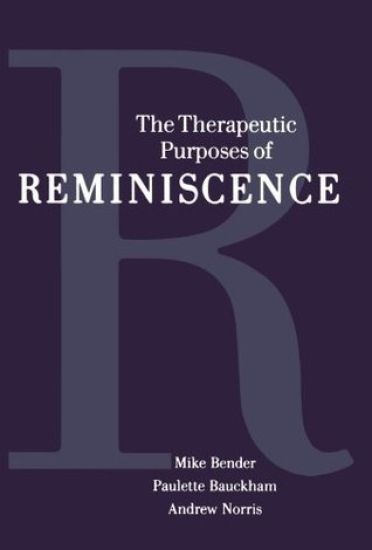
The Therapeutic Purposes of Reminiscence

The Therapeutic Purposes of Reminiscence

Michael P Bender; Paulette Bauckham; Andrew Norris

SAGE Publications Ltd
1998
nidottu
`I was impressed with the accessibility of the book, offering a guided tour through the history, context and purposes of reminiscence therapy, the range of applications from promoting social and emotional stimulation to reminiscence as psychotherapy. It also provides a brief overview of its theoretical underpinnings... As a book for health professionals interested in reminiscence work, it is a must for the shelf... most importantly it emphasizes the need for adequate training and supervision for those undertaking this type of work... the authors [also] provide a very good working guide to the assessment process' - Aging and Health In this practical and accessible book, leading exponents of reminiscence work describe the purposes and techniques of reminiscence and set out detailed guidelines on how to implement and conduct a wide range of reminiscence activities with different types of client. Highlighting its tremendous diversity and potential - and its special ability to allow people of all ages and abilities to communicate deeply about their lives - the authors separate out the different aims of reminiscence, which include intellectual or social stimulation, allowing people to leave behind them a cultural legacy, or a means of intergenerational communication. They show clearly how each can be directly beneficial either to clients or their carers, or for improving the culture of the arena in which the activity is being carried out.