Kirjojen hintavertailu – 12 875 457 kirjaa ja 26 kauppaa

Kirjailija

Andrew Pettegree

Kirjat ja teokset yhdessä paikassa: 25 kirjaa, julkaisuja vuosilta 1986–2026, suosituimpiin kuuluu The French Book and the European Book World. Vertaile teosten hintoja ja tarkista saatavuus suomalaisista kirjakaupoista.

25 kirjaa

Kirjojen julkaisuvuodet: 1986–2026.

The Bookshop: A History of Bookselling from the Dawn of Print to the Twenty-First Century
The global history of the rise and transformation of bookstores, from medieval book merchants to today's neighborhood indies Whether it's a local indie bookshop, an online megaretailer, or a chain bookstore, the place we buy books is an essential part of our reading lives. Bookstores connect books to potential buyers and convert idle browsers into committed readers. Yet, as historian Andrew Pettegree reveals, it took more than five centuries after Gutenberg for bookstores as we know them to emerge. The Bookshop tells a sweeping history of the bookstore. It celebrates the ingenuity of booksellers, from the smugglers who carried contraband books across borders, to the innovators who created the global distribution networks that define books and bookselling today. Even though few bookshops lasted more than a few years during the best of times, booksellers relentlessly sought new ways to get books to readers. Innovators like the squabbling dealers who invented the secondhand bookstore, or Victorian capitalists like W. H. Smith, who built an empire of railroad station book stalls to serve idle passengers, made bookselling what it is today. The Bookshop is the story of how the bookstore became the indispensable meeting place for book makers and book lovers around the world.

The Bookshop

The Bookshop

Andrew Pettegree

Profile Books Ltd
2026
sidottu
Bookshops are a comforting sight on our high streets, warm and welcoming spaces in which to browse, meet friends and occasionally buy books. They may feel timeless, yet their history is a restless and turbulent one, filled with as many entrepreneurial street hawkers and illicit trades as with beloved institutions. The Bookshop, from the celebrated author of The Library and The Book at War, explores the evolution of bookselling from the cramped collectors' shops frequented by Samuel Pepys to the radical feminist bookshops of the 70s, the rise of monolithic chains and the new world of online selling. Connecting stories and lives that span centuries, countries and continents, The Bookshop brings us into beloved bookshops of today and looks forward to the possible experience of booksellers of tomorrow.
Kniga na vijni. Biblioteki j chitachi vojennogo chasu
Mao Tszedun buv bibliotekarem, Stalin - poetom i vidav virshi, Vinston Cherchill vikoristovuvav putivnik dlja planuvannja vtorgnennja u Norvegiju, Ivlin Artur Sent-Dzhon Vo sluzhiv u morskij pikhoti j otrimav zvannja kapitana do togo, jak pishov u vidstavku, schob napisati "Povernennja v Brajdsged". Samotni sim'ji jshli do bibliotek, doki jikhni ridni vojuvali v okopakh, a pid chas Kholodnoji vijni obidvi storoni vikoristovuvali knizhki, schob poshirjuvati vlasne bachennja togo, jak slid keruvati svitom. Zazvichaj ne govorjat pro knigi i vijnu v odnomu konteksti - pershi nalezhat do najvidatnishikh vinakhodiv ljudstva, a drugi - do najstrashnishikh. Ale tsi dvi temi tisno perepleteni mizh soboju i knizhki nadto chasto opinjajutsja na peredovij. Osoblivo gostro tse vidchuvajetsja v epokhu suchasnikh vijn. Profesor suchasnoji istoriji Endrju Pettigri vidkrivaje divovizhni shljakhi, jakimi pisemna kultura - vid putivnikiv i naukovikh prats do Bigglza j Anni Frank - formujetsja pid vplivom masshtabnikh zbrojnikh konfliktiv. Knizhki, jikh avtori j chitachi vojuvali ranishe i prodovzhujut vojuvati zaraz - vid Gromadjanskoji vijni v SSHA do povnomasshtabnogo vtorgnennja rosiji v Ukrajinu. Voni - smertonosna zbroja i najperekonlivishij argument dlja peremogi. PerekladachKaterina Kornijenko
The Book at War: How Reading Shaped Conflict and Conflict Shaped Reading
A "magisterial" (Sunday Times) history of how books were used in war across the twentieth century--both as weapons and as agents for peace We tend not to talk about books and war in the same breath--one ranks among humanity's greatest inventions, the other among its most terrible. But as esteemed literary historian Andrew Pettegree demonstrates, the two are deeply intertwined. The Book at War explores the various roles that books have played in conflicts throughout the globe. Winston Churchill used a travel guide to plan the invasion of Norway, lonely families turned to libraries while their loved ones were fighting in the trenches, and during the Cold War both sides used books to spread their visions of how the world should be run. As solace or instruction manual, as critique or propaganda, books have shaped modern military history--for both good and ill. With precise historical analysis and sparkling prose, The Book at War accounts for the power--and the ambivalence--of words at war.
The Library: A Fragile History

The Library: A Fragile History

Andrew Pettegree; Arthur Der Weduwen

BASIC BOOKS
2023
nidottu

Halvin toimitettuna 23,60 €

The "engaging" and "ambitious" (Washington Post) history of libraries and the people who built them, from the ancient world to the digital age. The history of the library is rich, varied, and stuffed full of incident. In The Library, historians Andrew Pettegree and Arthur der Weduwen introduce us to the antiquarians and philanthropists who shaped the world's great collections, trace the rise and fall of literary tastes, and reveal the high crimes and misdemeanors committed in pursuit of rare manuscripts. In doing so, they reveal that while collections themselves are fragile, often falling into ruin within a few decades, the idea of the library has been remarkably resilient as each generation makes--and remakes--the institution anew. "The Library proves that truth is more intriguing than fiction... Full of charismatic individuals and astonishing facts." ―The Times (London)
Library

Library

Arthur der Weduwen; Andrew Pettegree

Profile Books Ltd
2022
pokkari

Halvin toimitettuna 21,20 €

Princes, collectors, bookworms and thieves: the extraordinary story of the library, from Alexandria to the age of Google.
Izobretenie novostej. Kak mir uznal o samom sebe
Kniga professora sovremennoj istorii v Universitete Sent-Endrjusa, priznannogo pisatelja, spetsializirujuschegosja na epokhe Renessansa Endrju Pettigri vpervye vyshla v 2015 godu i byla vostorzhenno vstrechena kritikami i amerikanskimi SMI. Zhurnal New Yorker nazval ee "razoblachitelnoj istoriej", a literaturnyj kritik Adam Kirsh otmetil, chto kniga javljaetsja "vydajuschimsja predisloviem k proshlomu, kotoroe pomogaet ponjat nashe buduschee". Avtor okhvatyvaet period pochti v chetyre veka? ot dopechatnoj ery do 1800 goda, ot kontsa Srednevekovja do Frantsuzskoj revoljutsii, detalno issleduja instinkt ljudej k poisku novostej i stremlenie byt informirovannymi. Pered chitatelem otkryvaetsja uvlekatelnejshaja panorama stoletij s poistine mulmedijnym obmenom, vobravshim v sebja vse dostupnye sredstva rasprostranenija novostej -? razgovory i slukhi, grazhdanskie tseremonii i torzhestva, tserkovnye propovedi i proklamatsii na ploschadjakh, a s nastupleniem pechatnoj ery?- pamflety, ballady, gazety i listovki.
The Library: A Fragile History

The Library: A Fragile History

Andrew Pettegree; Arthur Der Weduwen

BASIC BOOKS
2021
sidottu
Perfect for book lovers, this is a fascinating exploration of the history of libraries and the people who built them, from the ancient world to the digital age. Famed across the known world, jealously guarded by private collectors, built up over centuries, destroyed in a single day, ornamented with gold leaf and frescoes, or filled with bean bags and children's drawings--the history of the library is rich, varied, and stuffed full of incident. In The Library, historians Andrew Pettegree and Arthur der Weduwen introduce us to the antiquarians and philanthropists who shaped the world's great collections, trace the rise and fall of literary tastes, and reveal the high crimes and misdemeanors committed in pursuit of rare manuscripts. In doing so, they reveal that while collections themselves are fragile, often falling into ruin within a few decades, the idea of the library has been remarkably resilient as each generation makes--and remakes--the institution anew. Beautifully written and deeply researched, The Library is essential reading for booklovers, collectors, and anyone who has ever gotten blissfully lost in the stacks.
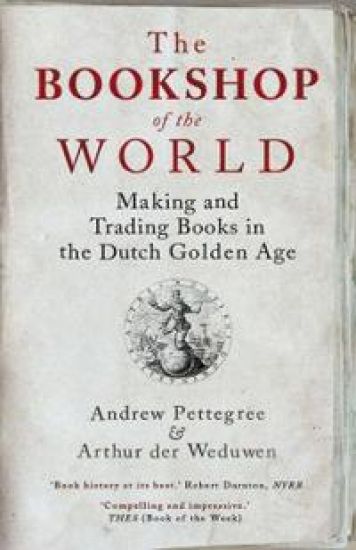
The Bookshop of the World

The Bookshop of the World

Andrew Pettegree; Arthur der Weduwen

Yale University Press
2020
pokkari
The untold story of how the Dutch conquered the European book market and became the world's greatest bibliophiles—“an instant classic on Dutch book history” (BMGN - Low Countries Historical Review)"[An] excellent contribution to book history."—Robert Darnton, New York Review of Books The Dutch Golden Age has long been seen as the age of Rembrandt and Vermeer, whose paintings captured the public imagination and came to represent the marvel that was the Dutch Republic. Yet there is another, largely overlooked marvel in the Dutch world of the seventeenth century: books. In this fascinating account, Andrew Pettegree and Arthur der Weduwen show how the Dutch produced many more books than pictures and bought and owned more books per capita than any other part of Europe. Key innovations in marketing, book auctions, and newspaper advertising brought stability to a market where elsewhere publishers faced bankruptcy, and created a population uniquely well-informed and politically engaged. This book tells for the first time the remarkable story of the Dutch conquest of the European book world and shows the true extent to which these pious, prosperous, quarrelsome, and generous people were shaped by what they read.
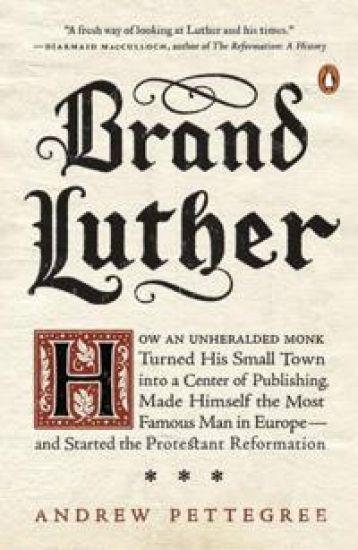
Brand Luther

Brand Luther

Andrew Pettegree

Penguin Putnam Inc
2016
nidottu

Halvin toimitettuna 30,20 €

A revolutionary look at Martin Luther, the Reformation, and the birth of publishing, on the eve of the Reformation's 500th anniversary When Martin Luther posted his "theses" on the door of the Wittenberg church in 1517, protesting corrupt practices, he was virtually unknown. Within months, his ideas spread across Germany, then all of Europe; within years, their author was not just famous, but infamous, responsible for catalyzing the violent wave of religious reform that would come to be known as the Protestant Reformation and engulfing Europe in decades of bloody war. Luther came of age with the printing press, and the path to glory of neither one was obvious to the casual observer of the time. Printing was, and is, a risky business--the questions were how to know how much to print and how to get there before the competition. Pettegree illustrates Luther's great gifts not simply as a theologian, but as a communicator, indeed, as the world's first mass-media figure, its first brand. He recognized in printing the power of pamphlets, written in the colloquial German of everyday people, to win the battle of ideas. But that wasn't enough--not just words, but the medium itself was the message. Fatefully, Luther had a partner in the form of artist and businessman Lucas Cranach, who together with Wittenberg's printers created the distinctive look of Luther's pamphlets. Together, Luther and Cranach created a product that spread like wildfire--it was both incredibly successful and widely imitated. Soon Germany was overwhelmed by a blizzard of pamphlets, with Wittenberg at its heart; the Reformation itself would blaze on for more than a hundred years. Publishing in advance of the Reformation's 500th anniversary, Brand Luther fuses the history of religion, of printing, and of capitalism--the literal marketplace of ideas--into one enthralling story, revolutionizing our understanding of one of the pivotal figures and eras in human history. From the Hardcover edition.
The Invention of News

The Invention of News

Andrew Pettegree

Yale University Press
2015
pokkari

Halvin toimitettuna 28,30 €

The extraordinary history of news and its dissemination, from medieval pilgrim tales to the birth of the newspaper Long before the invention of printing, let alone the availability of a daily newspaper, people desired to be informed. In the pre-industrial era news was gathered and shared through conversation and gossip, civic ceremony, celebration, sermons, and proclamations. The age of print brought pamphlets, edicts, ballads, journals, and the first news-sheets, expanding the news community from local to worldwide. This groundbreaking book tracks the history of news in ten countries over the course of four centuries. It evaluates the unexpected variety of ways in which information was transmitted in the premodern world as well as the impact of expanding news media on contemporary events and the lives of an ever-more-informed public. Andrew Pettegree investigates who controlled the news and who reported it; the use of news as a tool of political protest and religious reform; issues of privacy and titillation; the persistent need for news to be current and journalists trustworthy; and people’s changed sense of themselves as they experienced newly opened windows on the world. By the close of the eighteenth century, Pettegree concludes, transmission of news had become so efficient and widespread that European citizens—now aware of wars, revolutions, crime, disasters, scandals, and other events—were poised to emerge as actors in the great events unfolding around them.
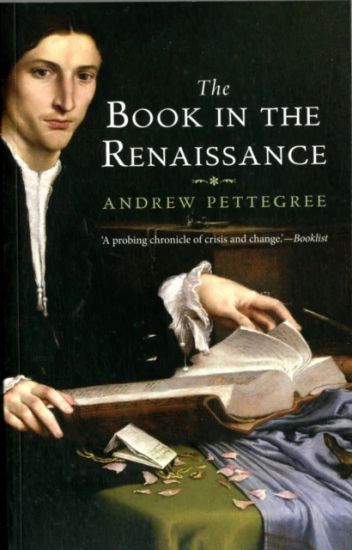
The Book in the Renaissance

The Book in the Renaissance

Andrew Pettegree

Yale University Press
2011
pokkari
A groundbreaking study of the fascinating yet largely unknown world of books in the first great age of print, 1450–1600 Selected by New York Times Book Review as a Best Book Since 2000 The dawn of print was a major turning point in the early modern world. It rescued ancient learning from obscurity, transformed knowledge of the natural and physical world, and brought the thrill of book ownership to the masses. But, as Andrew Pettegree reveals in this work of great historical merit, the story of the post-Gutenberg world was rather more complicated than we have often come to believe. The Book in the Renaissance reconstructs the first 150 years of the world of print, exploring the complex web of religious, economic, and cultural concerns surrounding the printed word. From its very beginnings, the printed book had to straddle financial and religious imperatives, as well as the very different requirements and constraints of the many countries who embraced it, and, as Pettegree argues, the process was far from a runaway success. More than ideas, the success or failure of books depended upon patrons and markets, precarious strategies and the thwarting of piracy, and the ebb and flow of popular demand. Owing to his state-of-the-art and highly detailed research, Pettegree crafts an authoritative, lucid, and truly pioneering work of cultural history about a major development in the evolution of European society.
The French Book and the European Book World
This work offers a series of linked studies of European print culture in the sixteenth century, focusing particularly on France and the regional, provincial experience of print. France, in the sixteenth century, was one of the great centres of the European publishing industry. But in the second half of the century the established dominance of Paris and Lyon was increasingly challenged by other new printing centres, stimulated in part by the religious and political crisis of the French Wars of Religion. Drawing on the data collected by the St Andrews French book project, the author reconstructs the enigmatic history of a number of previously unstudied printers. The focus throughout is on popular print, and the growth of mass market for news, entertainment and religious instruction. Customers interested in this title may also be interested in French Vernacular Books, edited by Andrew Pettegree, Malcolm Walsby and Alexander Wilkinson.
Reformation and the Culture of Persuasion

Reformation and the Culture of Persuasion

Andrew Pettegree

Cambridge University Press
2005
sidottu
Why did people choose the Reformation? What was it in the evangelical teaching that excited, moved or persuaded them? Andrew Pettegree here tackles these questions directly by re-examining the reasons that moved millions to this decisive and traumatic break with a shared Christian past. He charts the separation from family, friends, and workmates that adherence to the new faith often entailed and the new solidarities that emerged in their place. He explores the different media of conversion through which the Reformation message was communicated and imbibed - the role of drama, sermons, song and the book - and argues that the potency of print can only be understood as working in harmony with more traditional modes of communication. His findings offer a persuasive new answer to the critical question of how the Reformation could succeed as a mass movement in an age before mass literacy.
Reformation and the Culture of Persuasion

Reformation and the Culture of Persuasion

Andrew Pettegree

Cambridge University Press
2005
pokkari
Why did people choose the Reformation? What was it in the evangelical teaching that excited, moved or persuaded them? Andrew Pettegree here tackles these questions directly by re-examining the reasons that moved millions to this decisive and traumatic break with a shared Christian past. He charts the separation from family, friends, and workmates that adherence to the new faith often entailed and the new solidarities that emerged in their place. He explores the different media of conversion through which the Reformation message was communicated and imbibed - the role of drama, sermons, song and the book - and argues that the potency of print can only be understood as working in harmony with more traditional modes of communication. His findings offer a persuasive new answer to the critical question of how the Reformation could succeed as a mass movement in an age before mass literacy.
The Sixteenth-Century French Religious Book

The Sixteenth-Century French Religious Book

Andrew Pettegree; Paul Nelles

Ashgate Publishing Limited
2001
sidottu
This study comprises the proceedings of a conference held in St Andrews in 1999 which gathered some of the most distinguished historians of the French book. It presents the 16th-century book in a new context and provides the first comprehensive view of this absorbing field. Four major themes are reflected here: the relationship between the manuscript tradition and the printed book; an exploration of the variety of genres that emerged in the 16th century and how they were used; a look at publishing and book-selling strategies and networks, and the ways in which the authorities tried to control these; and a discussion of the way in which confessional literature diverged and converged. The range of specialist knowledge embedded in this study will ensure its appeal to specialists in French history, scholars of the book and of 16th-century French literature, and historians of religion.