Kirjailija
Andrew Ross
Kirjat ja teokset yhdessä paikassa: 49 kirjaa, julkaisuja vuosilta 1989–2025, suosituimpiin kuuluu Dear Andrew. Vertaile teosten hintoja ja tarkista saatavuus suomalaisista kirjakaupoista.
49 kirjaa
Kirjojen julkaisuvuodet: 1989–2025.
From acclaimed public scholar Andrew Ross, groundbreaking reporting on climate change and the horizons of a just future from Palestine, UAE, Arizona, and China. Between the summers of 2023 and 2024, temperatures rose. Coastal areas flooded while droughts and fires raged inland. Unprecedented tornadoes, hurricanes, and typhoons of astonishing force revealed the disturbances roiling the air and the oceans. And in the midst of all of this, more species than ever before disappeared from the planet in what scientists are calling Earth's Sixth Great Extinction. Maybe reports from the front lines of the climate crisis have always been grim, but this past year was worse than any other, measurably more catastrophic in more ways for more animals and more people. In his travels during this tumultuous year, public intellectual and noted scholar Andrew Ross criss-crossed the world, visiting Ramallah (Palestine), Dubai (UAE), Phoenix (USA), and Shanghai (China)--some of the landscapes most disturbed by human activity, whether through active warfare or massive development projects. But rather than offering another eco-polemic or recalling for us the dread prognostications of Malthus in the 19th century or Erlich in the 20th, The Weather Report is a clear-eyed and essentially optimistic book that proposes a pragmatic, just, and urgent new common ground and reestablishes scalable projects of mutual aid and care as a new, essential center for our economic, ecological, and social well-being.
Abolition Labor chronicles the national movement to end forced labor, much of it unpaid, in American prisons. It draws on interviews with formerly incarcerated persons in Alabama, Texas, Georgia and New York to give a more holistic picture of these work conditions, and it covers the new prisoner rights movement that began with system-wide work strikes involving more than 50,000 people in the 2010s. Incarcerated people work for penny wages (15 cents an hour is not unusual), and, in several states, for nothing at all, as cooks, dishwashers, janitors, groundskeepers, barbers, painters, or plumbers; in laundries, kitchens, factories, and hospitals. They provide vital public services such as repairing roads, fighting wildfires, or clearing debris after hurricanes. They manufacture products like office furniture, mattresses, license plates, dentures, glasses, traffic signs, garbage cans, athletic equipment, and uniforms. And they harvest crops, work as welders and carpenters, and labor in meat and poultry processing plants. Abolition Labor provides a wealth of insights into what has become a vast underground economy. It draws connections between the risky trade forced on prisoners who hustle to survive on the inside and the precarious economy on the outside. And it argues that, far from being quarantined off from society, prisons and their forced work regime have a sizable impact on the economic and social lives of millions of American households.
The Microscope, has been considered important throughout human history. In an effort to ensure that this work is never lost, we have taken steps to secure its preservation by republishing this book in a modern format for both current and future generations. This complete book has been retyped, redesigned, and reformatted. Since these books are not scans of the authors' original publications, the text is readable and clear.
“Racism is like a Cadillac, they bring out a new model every year.”— Malcolm X (a former auto worker) Written in a lively, accessible fashion and drawing extensively on interviews with people who were formerly incarcerated, Cars and Jails examines how the costs of car ownership and use are deeply enmeshed with the U. S. prison system. American consumer lore has long held the automobile to be a “freedom machine,” consecrating the mobility of a free people. Yet, paradoxically, the car also functions at the cross-roads of two great systems of entrapment and immobility– the American debt economy and the carceral state. Cars and Jails investigates this paradox, showing how auto debt, traffic fines, over-policing, and automated surveillance systems work in tandem to entrap and criminalize poor people. The authors describe how racialization and poverty take their toll on populations with no alternative, in a country poorly served by public transport, to taking out loans for cars and exposing themselves to predatory and often racist policing. Looking skeptically at the frothy promises of the “mobility revolution,” Livingston and Ross close with thought-provoking ideas for a radical overhaul of transportation.
"The Microscope" is a seminal paintings authored by Andrew Ross, a outstanding English optician and microscope maker of the 19th century. This comprehensive e-book is a sizable contribution to the sphere of microscopy and clinical instrumentation. In this pioneering paintings, Ross delves into the principles, production, and realistic packages of microscopes. He offers distinctive insights into the design and mechanics of microscopes, in conjunction with instructions on how to use them successfully for clinical statement and research. "The Microscope" not handiest serves as a treasured guide for the ones inquisitive about microscopy but also highlights the essential role of microscopes in advancing medical understanding. Ross's meticulous descriptions and illustrations of microscope components and techniques made microscopy greater handy to a broader audience, inclusive of scientists, naturalists, and students. Moreover, Ross's work reflects the enthusiasm and curiosity of the generation's clinical network, as microscopes were instrumental in coming across previously unseen worlds and phenomena. His book contributed to the popularization of microscopy and the speedy advancements in organic and medical research throughout the nineteenth century. "The Microscope" via Andrew Ross stays a undying aid for anybody inquisitive about the history and realistic applications of microscopes.
An eye-opening investigation of America's rural and suburban housing crisis, told through a searing portrait of precarious living in Disney World's backyard. Today, a minimum-wage earner can afford a one-bedroom apartment in only 145 out of 3,143 counties in America. One of the very worst places in the United States to look for affordable housing is Osceola County, Florida. Once the main approach to Disney World, where vacationers found lodging on their way to the Magic Kingdom, the fifteen-mile Route 192 corridor in Osceola has become a site of shocking contrasts. At one end, global investors snatch up foreclosed properties and park their capital in extravagant vacation homes for affluent visitors, eliminating the county's affordable housing in the process. At the other, underpaid tourist industry workers, displaced families, and disabled and elderly people subsisting on government checks cram themselves into dilapidated, roach-infested motels, or move into tent camps in the woods. Through visceral, frontline reporting from the motels and encampments dotting central Florida, renowned social analyst Andrew Ross exposes the overlooked housing crisis sweeping America's suburbs and rural areas, where residents suffer ongoing trauma, poverty, and nihilism. As millions of renters face down evictions and foreclosures in the midst of the COVID-19 recession, Andrew Ross reveals how ineffective government planning, property market speculation, and poverty wages have combined to create this catastrophe. Urgent and incisive, Sunbelt Blues offers original insight into what is quickly becoming a full-blown national emergency.
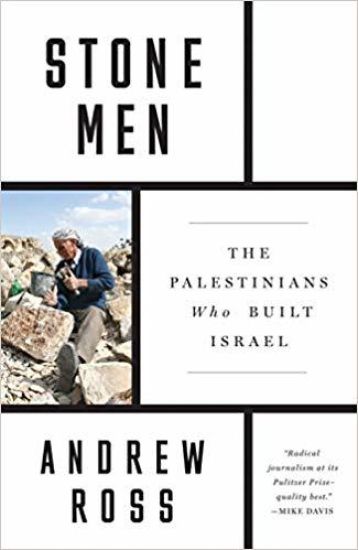
"They demolish our houses while we build theirs." This is how a Palestinian stonemason, in line at a checkpoint outside a Jerusalem suburb, described his life to Andrew Ross. Palestinian "stone men", utilizing some of the best quality dolomitic limestone deposits in the world and drawing on generations of artisanal knowledge, have built almost every state in the Middle East except their own. Today the business of quarrying, cutting, fabrication, and dressing is Palestine's largest employer and generator of revenue, supplying the construction industry in Israel, along with other Middle East countries and even more overseas. Drawing on hundreds of interviews in Palestine and Israel, Ross's engrossing, surprising, and gracefully written story of this fascinating, ancient trade shows how the stones of Palestine, and Palestinian labor, have been used to build out the state of Israel-in the process, constructing "facts on the ground"--even while the industry is central to Palestinians' own efforts to erect bulwarks against the Occupation. For decades, the hands that built Israel's houses, schools, offices, bridges, and even its separation barriers have been Palestinian. Looking at the Palestine-Israel conflict in a new light, this book asks how this record of achievement and labor can be recognized.
Andrew Ross’s reflections on his experience of combining activism with writing offer guidance about how to meet political obligations and seize opportunities when presented with events of historical significance. We don’t get to choose the time we live in, nor the conditions which determine our agency.
"They demolish our houses while we build theirs." This is how a Palestinian stonemason, in line at a checkpoint outside a Jerusalem suburb, described his life to Andrew Ross. Palestinian "stone men", utilizing some of the best quality dolomitic limestone deposits in the world and drawing on generations of artisanal knowledge, have built almost every state in the Middle East except their own. Today the business of quarrying, cutting, fabrication, and dressing is Palestine's largest employer and generator of revenue, supplying the construction industry in Israel, along with other Middle East countries and even more overseas. Drawing on hundreds of interviews in Palestine and Israel, Ross's engrossing, surprising, and gracefully written story of this fascinating, ancient trade shows how the stones of Palestine, and Palestinian labor, have been used to build out the state of Israel-in the process, constructing "facts on the ground"--even while the industry is central to Palestinians' own efforts to erect bulwarks against the Occupation. For decades, the hands that built Israel's houses, schools, offices, bridges, and even its separation barriers have been Palestinian. Looking at the Palestine-Israel conflict in a new light, this book asks how this record of achievement and labor can be recognized.
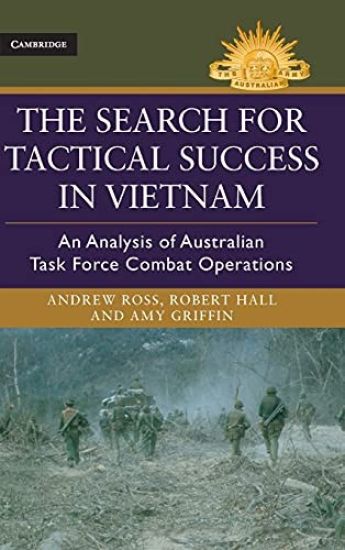
The Search for Tactical Success in Vietnam
Andrew Ross; Robert Hall; Amy Griffin
Cambridge University Press
2015
sidottu
From 1966 to 1971 the First Australian Task Force was part of the counterinsurgency campaign in South Vietnam. Though considered a small component of the Free World effort in the war, these troops from Australia and New Zealand were in fact the best trained and prepared for counterinsurgency warfare. However, until now, their achievements have been largely overlooked by military historians. The Search for Tactical Success in Vietnam sheds new light on this campaign by examining the thousands of small-scale battles that the First Australian Task Force was engaged in. The book draws on statistical, spatial and temporal analysis, as well as primary data, to present a unique study of the tactics and achievements of the First Australian Task Force in Phuoc Tuy Province, South Vietnam. Further, original maps throughout the text help to illustrate how the Task Force's tactics were employed.