
Kirjojen hintavertailu – 12 903 725 kirjaa ja 27 kauppaa

Kirjailija

Andrew S. Henderson

Kirjat ja teokset yhdessä paikassa: 2 kirjaa, julkaisuja vuosilta 2011–2013, suosituimpiin kuuluu Atlas of Benthic Foraminifera. Vertaile teosten hintoja ja tarkista saatavuus suomalaisista kirjakaupoista.

2 kirjaa

Kirjojen julkaisuvuodet: 2011–2013.

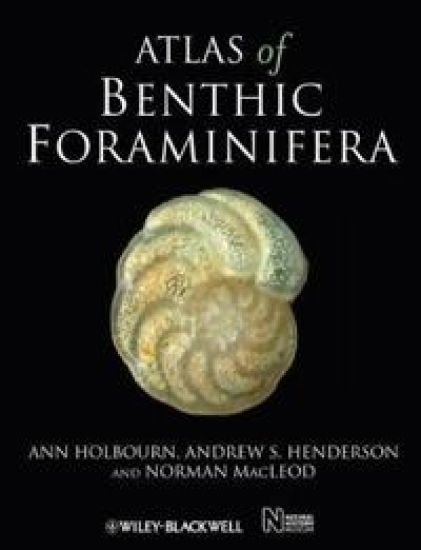
Atlas of Benthic Foraminifera

Atlas of Benthic Foraminifera

Ann Holbourn; Andrew S. Henderson; Norman Macleod

John Wiley Sons Inc
2013
sidottu
An up-to-date atlas of an important fossil and living group, with the Natural History Museum. Deep-sea benthic foraminifera have played a central role in biostratigraphic, paleoecological, and paleoceanographical research for over a century. These single–celled marine protists are important because of their geographic ubiquity, distinction morphologies and rapid evolutionary rates, their abundance and diversity deep–sea sediments, and because of their utility as indicators of environmental conditions both at and below the sediment–water interface. In addition, stable isotopic data obtained from deep–sea benthic foraminiferal tests provide paleoceanographers with environmental information that is proving to be of major significance in studies of global climatic change. This work collects together, for the first time, new morphological descriptions, taxonomic placements, stratigraphic occurrence data, geographical distribution summaries, and palaeoecological information, along with state-of-the-art colour photomicrographs (most taken in reflected light, just as you would see them using light microscopy), of 300 common deep-sea benthic foraminifera species spanning the interval from Jurassic - Recent. This volume is intended as a reference and research resource for post-graduate students in micropalaeontology, geological professionals (stratigraphers, paleontologists, paleoecologists, palaeoceanographers), taxonomists, and evolutionary (paleo)biologists.
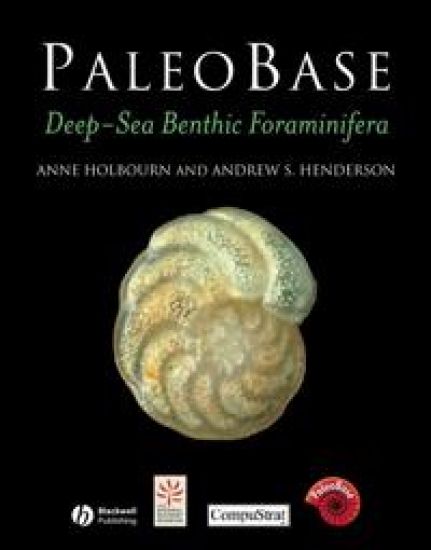
PaleoBase: Deep Sea Benthic Foraminifera

PaleoBase: Deep Sea Benthic Foraminifera

Ann Holbourn; N. Macleod; Andrew S. Henderson

Wiley-Blackwell (an imprint of John Wiley Sons Ltd)
2011
muu
Benthic foraminifera have played a central role in deep-sea biostratigraphic, paleoecological, and paleoceanographical research over the last thirty years. These single-celled marine protists are important because of their geographic ubiquity, their abundance and diversity in Cretaceous to Recent deep-sea sediments, because of the relationship between occurrence of many modern species and particular water masses, and because of their utility as indicators of environmental conditions both at and below the sediment-water interface. In addition, stable isotopes obtained from deep-sea benthic foraminiferal tests provide paleoceanographers with environmental information that is proving to be of major significance in studies of global climatic change. PaleoBase: Deep-Sea Benthic Foraminifera presents the latest taxonomic revision for 300 species in the form of an illustrated, state-of-the-art relational database. Relying primarily on material collected by the Deep-Sea Drilling Project (DSDP) and Ocean Drilling Programme (ODP) for examples of characteristic deep-sea species, and containing over 1,000 colour, digital composite illustrations of unprecendented accuracy, this database represents a significant step forward in the presentation of systematic information in general, and microfossil systematics in particular. For this first time, consistent and reliable information for each species morphology, taxonomy, synonymy, bathymetery, paleoecology, chronostratigraphy, biostratigraphy is summarized in one place and in a searchable format. In addition, the database contains a morphological key for each species and citations to over 350 references from the primary scientific literature. PaleoBase: Deep-Sea Benthic Foraminifera provides earth scientists effectively instant access to all the information necessary to make accurate biostratigraphic, palaeoceanographical and palaeoecological interpretations based on benthic foraminiferal data in a structured, easy-to-use manner. The database will be invaluable to professional micropaleontologists, researchers, and students of micropalaeontology. * Approximately 350 foram genera. *1000 stunning high resolution images, including SEMs. * Fully searchable data on ecology, range, synonomy, biogeography etc. * Full references.