Kirjojen hintavertailu – 12 877 527 kirjaa ja 26 kauppaa

Kirjailija

Andrew Schelling

Kirjat ja teokset yhdessä paikassa: 7 kirjaa, julkaisuja vuosilta 1999–2020, suosituimpiin kuuluu The Cane Groves of Narmada River. Vertaile teosten hintoja ja tarkista saatavuus suomalaisista kirjakaupoista.

7 kirjaa

Kirjojen julkaisuvuodet: 1999–2020.

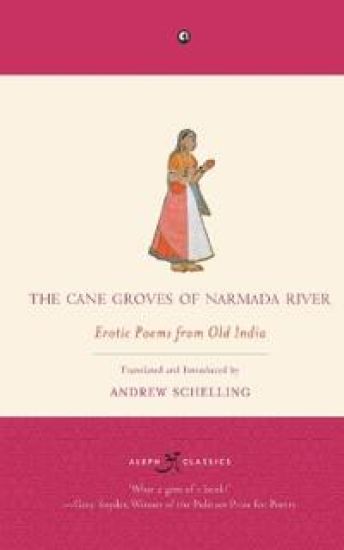
The Cane Groves of Narmada River

The Cane Groves of Narmada River

Andrew Schelling

Aleph Book Company
2017
nidottu
An exceptional selection of erotic poetry from ancient India, The Cane Groves of Narmada River features poems composed from the second century CE to the sixteenth century. Starting with several poems from the Prakrit anthology attributed to King Hala, the Sattasai, the book then takes in its sweep some of the most famous and enduring erotic poems composed in Sanskrit (and related vernacular traditions) by poets like Amaru, Bhavabhuti, Bhartrihari, Hemachandra and Vidya among others. Uninhibited, poignant and filled with tenderness and longing, these poems are a glorious celebration of love, sex and beauty. Through the whole night we slowly made love, body pressed against body, cheek against cheek. We spoke every thought that came into mind. Lost in each other's arms lost in words, we never noticed dawn had come the night flown.
Songs of the Sons and Daughters of Buddha

Songs of the Sons and Daughters of Buddha

Andrew Schelling; Anne Waldman

Shambhala Publications Inc
2020
nidottu
A lyrical translation of an inspired selection of verses from the earliest Buddhist monks and nuns. More than two thousand years ago, the earliest disciples of the Buddha put into verse their experiences on the spiritual journey--from their daily struggles to their spiritual realizations. Over time the verses were collected to form the Theragatha and Therigatha, the "Verses of Elder Monks" and "Verses of Elder Nuns" respectively. In Songs of the Sons and Daughters of the Buddha, renowned poets Andrew Schelling and Anne Waldman have translated the most poignant poems in these collections, bringing forth the visceral, immediate qualities that are often lost in more scholarly renditions. These selections reveal the fears, loves, mishaps, expectations, and joys of the early monks and nuns, when, struck by wild insight, they cried out the anguish or solace they knew in their lives.
Erotic Love Poems from India

Erotic Love Poems from India

Andrew Schelling

Shambhala Publications Inc
2019
nidottu
The poets of classical India regarded love as the first and deepest of passions. Translator and scholar Andrew Schelling perfectly encapsulates the history and passion of eighth-century India in this collection. "A single stanza of the poet Amaru," declared a ninth-century poetry critic, "may provide the taste of love equal to what's found in whole volumes." Graceful and yet remarkably playful, intensely passionate, and at times hinting of divine transcendence, the poems translated here offer poignant glimpses into the many faces of erotic love. This collection, known in Sanskrit as the Amarushataka ("One Hundred Poems of Amaru"), was compiled in the eighth century and remains to this day one of India's finest collections of love poetry. Legend connects the poetry's authorship to King Amaru of Kashmir, while present-day scholars generally consider it an anthology of the verses of many poets.
Tracks Along The Left Coast

Tracks Along The Left Coast

Andrew Schelling

Counterpoint
2018
nidottu
"Schelling's biography of Jaime de Angulo--'cattle puncher, medical doctor, bohemian, buckeroo, ' among other things--presents a fascinating, full-bodied portrait of a man and an era, as well as delving deep into California's Native history. De Angulo's isn't a household name, but in Schelling's work the man called by Ezra Pound the 'American Ovid' comes blazing to life in all his singular brilliance." --Lithub California, with its scores of native languages, contains a wealth of old-time stories--a bedrock of the literature of North America. Jaime de Angulo's linguistic and ethnographic work, his writings, as well as the legends that cloak the Old Coyote himself, vividly reflect the particulars of the Pacific Coast. In each retelling, through each storyteller, stories are continually revivified, and that is precisely what Andrew Schelling has done in Tracks Along the Left Coast, weaving together the story of de Angulo's life with the story of the land and the people, languages, and cultures with whom it is so closely tied. Born in Paris of Spanish descent, de Angulo came to America to become a cowboy, and he did--as well as a doctor, a linguist, an ethnomusicologist, and a writer. His poetry and prose uniquely represented the bohemian sensibility of the 1920s, 1930s, and 1940s, and he was known for his reworkings of coyote tales and shamanic mysticism. So vivid was his writing that Ezra Pound called him "the American Ovid," and William Carlos Williams claimed that de Angulo was "one of the most outstanding writers he had] have ever encountered." Praise for Tracks Along the Left Coast "Jaime de Angulo If you could corral into one volume all the legends he inspired, you would already have given us a book worth reading, but poet Andrew Schelling has been able, in this magnificent, long-awaited biography, to reshape the myth into a human being. In a larger frame, Tracks Along the Left Coast illustrates something of the troubling ease with which Modernism, hand in hand with the new science of anthropology, fixed and adapted what it imagined as 'the Primitive.'" --Kevin Killian, author of Poet Be Like God and Impossible Princess

Tracks Along The Left Coast

Tracks Along The Left Coast

Andrew Schelling

Counterpoint
2017
sidottu
California, with its scores of native languages, contains a wealth of old time stories a bedrock literature of North America. Jaime de Angulo's linguistic and ethnographic work, his writings, as well as the legends that cloak the Old Coyote himself, vividly reflect the particulars of the Pacific coast. Born in Paris of Spanish descent, he came to America to become a cowboy, and he did as well as a doctor, a linguist, ethnomusicologist, and writer. His poetry and prose uniquely represented the bohemian sensibility of the twenties, thirties and forties, and he was known for his reworkings of coyote tales and shamanic mysticism. So vivid was his writing that Ezra Pound called him  the American Ovid," and William Carlos Williams claimed that de Angulo was  one of the most outstanding writers I have ever encountered." Jamie de Angulo arrived in San Francisco on the eve of the 1906 earthquake, and soon after he began medical school, almost on a whim. But the practical application of medicine did not interest him, and he set off on a life long career as a non-conformist cowboy-academic and keen ethnographer of the hundreds of Native Californian tribes that still lived along the Pacific coast. De Angulo spent nearly three decades in a focused effort to understand the California languages that were rapidly disappearing, carrying on their lives beneath the overlay of Spanish and English. He visited Native Americans on their lands from sagebrush flats to redwood groves and collected what could be salvaged of their languages, believing that to reach an understanding of a single ordinary sentence might disclose a whole method of knowing the world, a metaphysic different than an English speaker's and equally subtle. De Angulo found the phonetic scripts used by linguists too esoteric, and the odd or specialized symbols meant that standard printing houses lacked the ability to reproduce them. His whole life he argued for a script that could be done on a regular typewriter, one that an ordinary publishing house could typeset. Using his fonetik script so much led him to cast a wry look at English too, with its obsolete spellings he considered pointless and burdensome. His letters to colleagues and friends among them Carl Jung, D. H. Lawrence, and Ezra Pound began to discard unpronounced letters in words: thoroly and wud. At the end of his life, broadcasting from Pacifica Radio the world's first listener-supported station de Angulo brought together much of what he had gathered in his ethnographic travels and recorded roughly100 programs of Old Time Stories. He recited Native Californian stories, sang songs, and transmitted a way of looking at life that was based on medicine power and myth putting it all into a great, singular work. A work that is very hard to come by, and even hard to define. In each retelling, through each storyteller, stories are continually revivified, and that is precisely what Andrew Schelling has done in Tracks Along the Left Coast, weaving together the story of a life with the story of the land and the people, languages, and cultures with whom it is so closely tied.
Love and the Turning Seasons

Love and the Turning Seasons

Andrew Schelling

Rupa Publications
2017
nidottu
For thousands of years, the Indian subcontinent has proved a fertile ground for the world's most captivating erotic love poetry, and the genius of its devotional writing harnesses great energy and mystical insight. It is in fact often hard to tell whether the poets are offering poems of spiritual longing using the garments of love poetry or writing erotic pieces in the guise of devotion. Perhaps, in a land where erotic sculptures routinely ornament its many temples and gods are known for their explosive sexuality, this question has little meaning to these remarkable writers. In their devotional traditions, eroticism and mysticism seem inseparable. This collection spans 2,500 years and includes work originally sung or recited by well-known bards: Kabir, Mirabai, Lal Ded, Vidyapati and Tagore. There are also poems from the Upanishads, ancient Sanskrit poetry and Punjabi folk lyrics. The poets have largely emerged from the ranks of the dispossessed: leather workers, refuse collectors, maidservants, women and orphans. Their vision is of a democratic society in which all voices count. Often they faced persecution for speaking candidly, or daring to speak of spiritual matters at all. The notes include profiles of these legendary lives. Several of these poets simply vanished, absorbed into a deity, or disappeared in a flash of purple lightning. A few produced miracles-most of them are surrounded by clouds of mystery. Andrew Schelling has drawn on the work of twenty-four translators, including A. K. Ramanujan, Arun Kolatkar, Arvind Krishna Mehrotra, Ananda Coomaraswamy, Deben Bhattacharya, Dilip Chitre, Gieve Patel, Ezra Pound and Robert Bly to build the finest anthology of India's erotic and spiritual poetry ever assembled for the general reader.
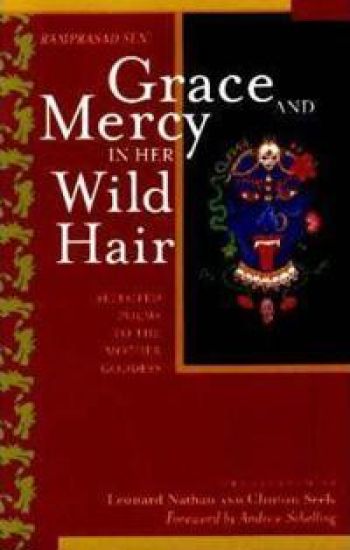
Grace and Mercy in Her Wild Hair

Grace and Mercy in Her Wild Hair

Ramprasad Sen; Andrew Schelling

Hohm Press,U.S.
1999
nidottu
These poems written in the eighteenth-century in Bengal, express his passionate devotion for the praise of the Great Mother Goddess -- primarily in her manifestation as Kali, the dark goddess, guardian of the cycles of birth and death. His work emerges from s bhakti-or devotional-tradition, which revolted against the Brahman -- dominated Hindu orthodoxy of the time. These poems traverse a spectrum of moods -- from the wild despair of an abandoned child to the intoxicated hilarity of a man drunk with the Goddess's love.