Kirjojen hintavertailu – 12 859 819 kirjaa ja 27 kauppaa

Kirjailija

Andrew Schumann

Kirjat ja teokset yhdessä paikassa: 8 kirjaa, julkaisuja vuosilta 2018–2026, suosituimpiin kuuluu Lexicon of Polish Logicians 1900-1939. Vertaile teosten hintoja ja tarkista saatavuus suomalaisista kirjakaupoista.

8 kirjaa

Kirjojen julkaisuvuodet: 2018–2026.

Philosophical Logic: A Phenomenological Approach

Philosophical Logic: A Phenomenological Approach

Andrew Schumann

WORLD SCIENTIFIC PUBLISHING CO PTE LTD
2026
sidottu
This book is an accessible introduction to philosophical logic's phenomenological approach, elucidating its principles and demonstrating its utility in uncovering the origins and development of logic. The analytical approach to philosophical logic which dominated early discourse posited that logic serves as a universal tool capable of articulating any consistent thought, representative of an era where formalism and rigor were prized as the ultimate pathways to clarity and precision. In recent times, however, the landscape of foundational mathematics has shifted with the emergence of univalent foundations. They, unlike symbolic logic and set theory, embrace the uncountable, infinite diversity of mathematical objects, something that was inconceivable within the confines of logical positivism. The phenomenological approach dispenses with the need for comprehensive logical calculi, focusing instead on smaller, modular units of logic referred to as logemes. The implications of this approach extend beyond historical analysis, holding significant potential for applications in artificial intelligence, machine learning, and more. By offering an expansive arsenal of homotopic tools, the phenomenological approach equips researchers and practitioners with innovative techniques for tackling complex problems in all fields.
Archaeology of Logic

Archaeology of Logic

Andrew Schumann

TAYLOR FRANCIS LTD
2024
nidottu
The question arises whether logic was given to us by God or whether it is the result of human evolution. I believe that at least the modus ponens rule ( A and if A then B implies B) is inherent in humans, but probably many other modern systems (e.g., resource logic, non - monotonic logic etc.) are the result of humans adapating to the environment. It is therefore of interest to study and compare the way logic is used in ancient cultures as well as the way logic is going to be used in our 21st century. This welcome book studies and compares the way formation of logic in three cultures: Ancient Greek (4th century B. C.), Judaic (1st century B. C. – 1st century A. D.) and Indo-Buddhist (2nd century A. D.) The book notes that logic became especially popular during the period of late antiquity in countries covered by the international trade of the Silk Road. This study makes a valuable contribution to the history of logic and to the very understanding of the origions and nature of logical thinking. -Prof. Dov Gabbay, King's College London, UKAndrew Schumann in his book demonsrates that logic step-by-step arose in different places and cultural circles. He argues that if we apply a structural-genealogical method, as well as turn to various sources, particularly, religious, philosophical, linguistic, etc., then we can obtain a more general and more adequate picture of emengence and development of logic. This book is a new and very valuable contribution to the history of logic as a manifestation of the human mind. - Prof. Jan Wolenski, Jagiellonian University, Poland The author of the Archaeology of Logic defends the claim, calling it "logic is aftter all", which sees logical competence as a practical skill that people began to learn in antiquity, as soom as they realized that avoiding cognitive biases in their reasoning would make their daily activities more successful. The in-depth reading of the book with its diving into the comparative quotations in the long dead or hardly known to most of us languages like Sumerian-Akkadian, Aramatic, Hebrew and etc, will be rewarded by the response that the logical competence is diverse and it can be trained, despite the inevitabilitiy of the reasoning fallacies; and that critical discussions and agaonal character of the social lide are the necessary tools for that. - Prof. Elena Lisanyuk

Archaeology of Logic

Archaeology of Logic

Andrew Schumann

TAYLOR FRANCIS LTD
2023
sidottu
The question arises whether logic was given to us by God or whether it is the result of human evolution. I believe that at least the modus ponens rule ( A and if A then B implies B) is inherent in humans, but probably many other modern systems (e.g., resource logic, non - monotonic logic etc.) are the result of humans adapating to the environment. It is therefore of interest to study and compare the way logic is used in ancient cultures as well as the way logic is going to be used in our 21st century. This welcome book studies and compares the way formation of logic in three cultures: Ancient Greek (4th century B. C.), Judaic (1st century B. C. – 1st century A. D.) and Indo-Buddhist (2nd century A. D.) The book notes that logic became especially popular during the period of late antiquity in countries covered by the international trade of the Silk Road. This study makes a valuable contribution to the history of logic and to the very understanding of the origions and nature of logical thinking. -Prof. Dov Gabbay, King's College London, UKAndrew Schumann in his book demonsrates that logic step-by-step arose in different places and cultural circles. He argues that if we apply a structural-genealogical method, as well as turn to various sources, particularly, religious, philosophical, linguistic, etc., then we can obtain a more general and more adequate picture of emengence and development of logic. This book is a new and very valuable contribution to the history of logic as a manifestation of the human mind. - Prof. Jan Wolenski, Jagiellonian University, Poland The author of the Archaeology of Logic defends the claim, calling it "logic is aftter all", which sees logical competence as a practical skill that people began to learn in antiquity, as soom as they realized that avoiding cognitive biases in their reasoning would make their daily activities more successful. The in-depth reading of the book with its diving into the comparative quotations in the long dead or hardly known to most of us languages like Sumerian-Akkadian, Aramatic, Hebrew and etc, will be rewarded by the response that the logical competence is diverse and it can be trained, despite the inevitabilitiy of the reasoning fallacies; and that critical discussions and agaonal character of the social lide are the necessary tools for that. - Prof. Elena Lisanyuk
Behaviourism in Studying Swarms: Logical Models of Sensing and Motoring
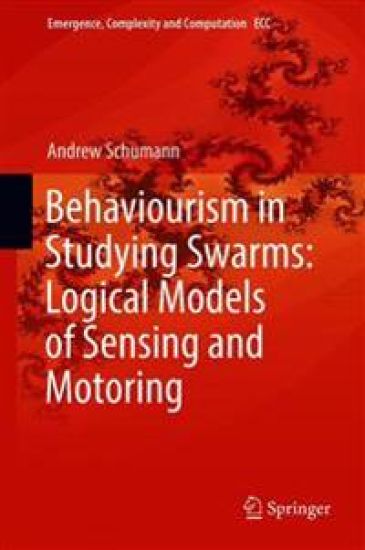
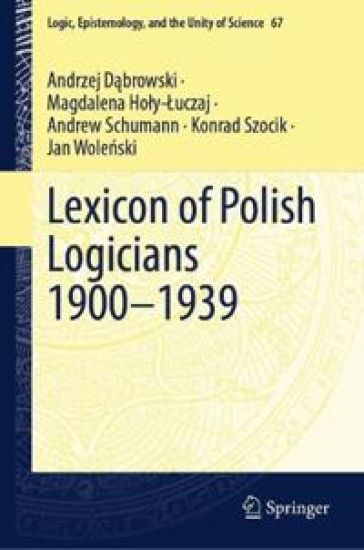
This book presents fundamental theoretical results for designing object-oriented programming languages for controlling swarms. It studies the logics of swarm behaviours. According to behaviourism, all behaviours can be controlled or even managed by stimuli in the environment: attractants (motivational reinforcement) and repellents (motivational punishment). At the same time, there are two main stages in reactions to stimuli: sensing (perceiving signals) and motoring (appropriate direct reactions to signals). This book examines the strict limits of behaviourism from the point of view of symbolic logic and algebraic mathematics: how far can animal behaviours be controlled by the topology of stimuli? On the one hand, we can try to design reversible logic gates in which the number of inputs is the same as the number of outputs. In this case, the behaviouristic stimuli are inputs in swarm computing and appropriate reactions at the motoring stage are its outputs. On the other hand, the problem is that even at the sensing stage each unicellular organism can be regarded as a logic gate in which the number of outputs (means of perceiving signals) greatly exceeds the number of inputs (signals).
High-Level Models of Unconventional Computations

High-Level Models of Unconventional Computations

Andrew Schumann; Krzysztof Pancerz

Springer Nature Switzerland AG
2018
nidottu
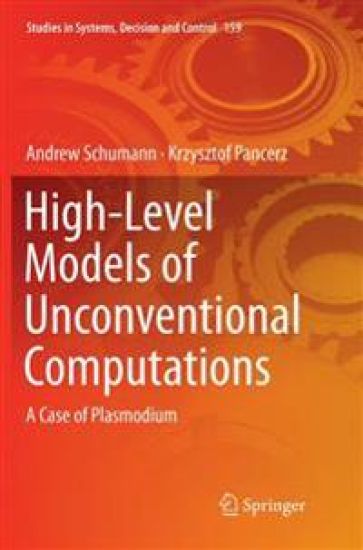
This book shows that the plasmodium of Physarum polycephalum can be considered a natural labelled transition system, and based on this, it proposes high-level programming models for controlling the plasmodium behaviour. The presented programming is a form of pure behaviourism: the authors consider the possibility of simulating all basic stimulus–reaction relations. As plasmodium is a good experimental medium for behaviouristic models, the book applies the programming tools for modelling plasmodia as unconventional computers in different behavioural sciences based on studying the stimulus–reaction relations. The authors examine these relations within the framework of a bio-inspired game theory on plasmodia they have developed i.e. within an experimental game theory, where, on the one hand, all basic definitions are verified in experiments with Physarum polycephalum and Badhamia utricularis and, on the other hand, all basic algorithms are implemented in the object-oriented language for simulations of plasmodia. The results allow the authors to propose that the plasmodium can be a model for concurrent games and context-based games.
Behaviourism in Studying Swarms: Logical Models of Sensing and Motoring

Behaviourism in Studying Swarms: Logical Models of Sensing and Motoring

Andrew Schumann

Springer International Publishing AG
2018
sidottu
This book presents fundamental theoretical results for designing object-oriented programming languages for controlling swarms. It studies the logics of swarm behaviours. According to behaviourism, all behaviours can be controlled or even managed by stimuli in the environment: attractants (motivational reinforcement) and repellents (motivational punishment). At the same time, there are two main stages in reactions to stimuli: sensing (perceiving signals) and motoring (appropriate direct reactions to signals). This book examines the strict limits of behaviourism from the point of view of symbolic logic and algebraic mathematics: how far can animal behaviours be controlled by the topology of stimuli? On the one hand, we can try to design reversible logic gates in which the number of inputs is the same as the number of outputs. In this case, the behaviouristic stimuli are inputs in swarm computing and appropriate reactions at the motoring stage are its outputs. On the other hand, the problem is that even at the sensing stage each unicellular organism can be regarded as a logic gate in which the number of outputs (means of perceiving signals) greatly exceeds the number of inputs (signals).
High-Level Models of Unconventional Computations

High-Level Models of Unconventional Computations

Andrew Schumann; Krzysztof Pancerz

Springer International Publishing AG
2018
sidottu
This book shows that the plasmodium of Physarum polycephalum can be considered a natural labelled transition system, and based on this, it proposes high-level programming models for controlling the plasmodium behaviour. The presented programming is a form of pure behaviourism: the authors consider the possibility of simulating all basic stimulus–reaction relations. As plasmodium is a good experimental medium for behaviouristic models, the book applies the programming tools for modelling plasmodia as unconventional computers in different behavioural sciences based on studying the stimulus–reaction relations. The authors examine these relations within the framework of a bio-inspired game theory on plasmodia they have developed i.e. within an experimental game theory, where, on the one hand, all basic definitions are verified in experiments with Physarum polycephalum and Badhamia utricularis and, on the other hand, all basic algorithms are implemented in the object-oriented language for simulations of plasmodia. The results allow the authors to propose that the plasmodium can be a model for concurrent games and context-based games.