Kirjojen hintavertailu – 12 859 828 kirjaa ja 27 kauppaa
Kirjailija
Andrew Scott
Kirjat ja teokset yhdessä paikassa: 67 kirjaa, julkaisuja vuosilta 1990–2024, suosituimpiin kuuluu Introducing Guitar - Supplementary Songbook A. Vertaile teosten hintoja ja tarkista saatavuus suomalaisista kirjakaupoista.
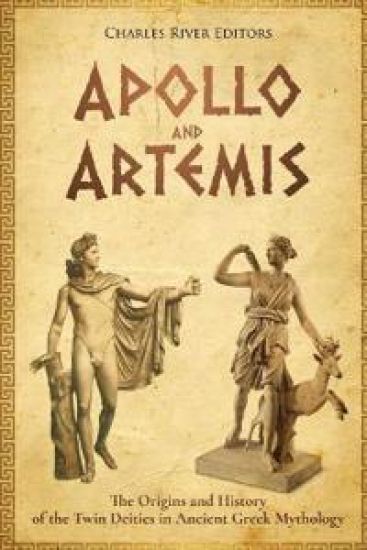
*Includes pictures *Includes ancient accounts *Includes online resources and a bibliography for further reading "Apollo's history is a confusing one," said the renowned poet and mythologist Robert Graves. This notion is also illustrated in the above quote from the 6th century BCE Homeric Hymn to Apollo, which gives the reader a brief glimpse into the confusion surrounding Apollo's multi-faceted nature. The quote comes from the end of an episode in which Apollo is traversing the known world, looking for a place to build a temple to himself. Once he lands upon a place of his liking, however, he realizes that he needs to populate it with priests who would 'guard' and care for its ceremonies. Rather than depend upon those 'glorious tribes' to supply his temple with sycophants, Apollo has no patience for chance, and flies down to a Cretan merchant ship, landing on it in the form of a timber-shaking dolphin. After terrifying the merchants, he tells them that their lives in the sea trade are over, and they are to be priests at his temple from then on. Cautioning the merchants to eschew piracy and 'keep righteousness' in their hearts, while simultaneously confronting and sequestering them captures the youthful god's capricious character quite well. Of course, the rest of the ancient Greek gods were certainly not above hypocrisy - the adultery of Zeus alone demonstrates that - but Apollo was a brash contrarian in the face of all divine order. Unlike many of the other Olympian gods, Apollo's nature changed dramatically at the closing of his adolescence. His twin sister Artemis, in direct comparison with Apollo, immediately leapt to her mother's aide as midwife to her brother after she was born. Artemis would continue to be a goddess of midwives, while Apollo's "role" would continue to evolve over centuries. Ultimately, any 21st century study of a mythological being must gather together as many strands of learning as possible in order to formulate a useful hypothesis. In the case of Apollo, these strands are expansive, permeative, and international, and at first blush, they can seem very confusing indeed. An important thing to bear in mind when approaching Apollo is that his role in the ancient Greek pantheon was eclectic, even by contemporary standards, and the expansion of Greek culture to other parts of the Mediterranean only served to compound his identity even further. The story of Apollo is an excellent example of how stories and characters can change when they're beloved across centuries, and it is for this reason that reading about the god is so enjoyable. Artemis had one of the most widespread cults in the Greek world, perhaps due to her connection to nature, which can be a ubiquitous antagonist or boon-giver. Her association with nature may also explain why she was one of the oldest deities in the Greek pantheon, although her appearance in the Mycenaean Linear B script (the earliest form of Greek that has been deciphered, dating to as early as 1450 BCE) is still contested. Etymology often gives modern readers a better idea of the earliest form of a deity, but Artemis's is confusing. Of course, that didn't stop many writers, both ancient and modern, from making attempts at it, either associating her with mythic qualities (such as "maidenhood" and "purity") and/or giving her non-Greek origins. The latter is as unsurprising as the former, since Artemis had a large following throughout Greece and across Asia Minor, where her most famous temple-one of the Seven Wonders of the World-resided. It was in the Near East that Artemis embraced some of the wilder and more formidable characteristics many of the later Greek mythographers only hinted at. To many modern readers, what is most surprising about Artemis is not her "foreignness," but that she was not the carefree maiden prancing through woods and glades to give succor to animals in need.
*Includes pictures *Includes ancient accounts *Includes online resources and a bibliography for further reading There are few mythological characters that require less of an introduction than Hercules. His "labours" are known and have been reimagined by cultures far beyond their Greek beginnings, and he continues to influence modern culture in more ways than any other ancient Greek hero. What is curious about Hercules's character is that, despite his fame even in the ancient world, there was no authoritative source for his biography. The Library of Myths, commonly though falsely attributed to Apollodorus, is frequently used to illustrate the key episodes of Hercules's life. Despite being written at some time during the 2nd century CE, the Library encapsulates much of the "conglomerate of popular tales" that has become Hercules's vulgate biography. Ultimately, though these tales are well known, their true beauty lies in the social and religious influence of their telling and the historical memories that remain, to this day, as shadows in their lines. The story of Jason and his crew of Argonauts is one of the best-known and most beloved myths of all time. Blockbuster movies have been made about it, and legendary explorer and historian Tim Severin even constructed a replica of the Argo in 1984 and succeeded in sailing it to Colchis (modern-day Georgia). In the ancient world too, this myth was told and retold time and again. The best source of the myth available to the modern reader (generally considered to be Apollonius Rhodius's Argonautica) comes from the Hellenistic Period (ca. 323-31 BCE), which is very late in terms of most sources available for Greek myth. This means that the story written at that time had already been exposed to centuries of influences and additions. However, mythology is not the study of a story's beginnings alone, and very often, it is the changes and adaptations that provide the story with its most fascinating characteristics. The vague geography of the Argo's story will become apparent, but it's also important, because there are numerous theories as to why the ancient writers may have charted the journey as they did. The Argo's journey was as revelatory to Jason as it was to the late ancient Greek readers/listeners, since it incorporated many of the mythical, political, and cultural themes that pervaded myths throughout the Mediterranean. These themes accumulated with every revision and retelling of the story until it became a central motif in the Greek mindset, with strands linking it to myth, peoples, and places. It is this story of multitudes that contains the most fascinating curios of Jason and the Argonauts. Hercules & Jason and the Argonauts: The Legendary Stories of Ancient Greece's Most Famous Heroes looks at the famous myths. Along with pictures depicting important people, places, and events, you will learn about Hercules and Jason and the Argonauts like never before.
*Includes pictures *Includes ancient accounts *Includes online resources and a bibliography for further reading "Apollo's history is a confusing one," said the renowned poet and mythologist Robert Graves. This notion is also illustrated in the above quote from the 6th century BCE Homeric Hymn to Apollo, which gives the reader a brief glimpse into the confusion surrounding Apollo's multi-faceted nature. The quote comes from the end of an episode in which Apollo is traversing the known world, looking for a place to build a temple to himself. Once he lands upon a place of his liking, however, he realizes that he needs to populate it with priests who would 'guard' and care for its ceremonies. Rather than depend upon those 'glorious tribes' to supply his temple with sycophants, Apollo has no patience for chance, and flies down to a Cretan merchant ship, landing on it in the form of a timber-shaking dolphin. After terrifying the merchants, he tells them that their lives in the sea trade are over, and they are to be priests at his temple from then on. Cautioning the merchants to eschew piracy and 'keep righteousness' in their hearts, while simultaneously confronting and sequestering them captures the youthful god's capricious character quite well. Of course, the rest of the ancient Greek gods were certainly not above hypocrisy - the adultery of Zeus alone demonstrates that - but Apollo was a brash contrarian in the face of all divine order. Unlike many of the other Olympian gods, Apollo's nature changed dramatically at the closing of his adolescence. His twin sister Artemis, in direct comparison with Apollo, immediately leapt to her mother's aide as midwife to her brother after she was born. Artemis would continue to be a goddess of midwives, while Apollo's "role" would continue to evolve over centuries. Ultimately, any 21st century study of a mythological being must gather together as many strands of learning as possible in order to formulate a useful hypothesis. In the case of Apollo, these strands are expansive, permeative, and international, and at first blush, they can seem very confusing indeed. An important thing to bear in mind when approaching Apollo is that his role in the ancient Greek pantheon was eclectic, even by contemporary standards, and the expansion of Greek culture to other parts of the Mediterranean only served to compound his identity even further. The story of Apollo is an excellent example of how stories and characters can change when they're beloved across centuries, and it is for this reason that reading about the god is so enjoyable. Artemis had one of the most widespread cults in the Greek world, perhaps due to her connection to nature, which can be a ubiquitous antagonist or boon-giver. Her association with nature may also explain why she was one of the oldest deities in the Greek pantheon, although her appearance in the Mycenaean Linear B script (the earliest form of Greek that has been deciphered, dating to as early as 1450 BCE) is still contested. Etymology often gives modern readers a better idea of the earliest form of a deity, but Artemis's is confusing. Of course, that didn't stop many writers, both ancient and modern, from making attempts at it, either associating her with mythic qualities (such as "maidenhood" and "purity") and/or giving her non-Greek origins. The latter is as unsurprising as the former, since Artemis had a large following throughout Greece and across Asia Minor, where her most famous temple-one of the Seven Wonders of the World-resided. It was in the Near East that Artemis embraced some of the wilder and more formidable characteristics many of the later Greek mythographers only hinted at. To many modern readers, what is most surprising about Artemis is not her "foreignness," but that she was not the carefree maiden prancing through woods and glades to give succor to animals in need.
*Includes pictures *Includes medieval accounts of Loki *Includes online resources and a bibliography for further reading Much of what is known of the Norse myths comes from the 10th century onwards. Until this time and, indeed, for centuries afterwards, Norse culture (particularly that of Iceland, where the myths were eventually transcribed) was an oral culture. In fact, in all Scandinavian countries well into the thirteenth century laws were memorized by officials known as "Lawspeakers" who recited them at the "Thing." The Thing was the legislative assembly in Scandinavia "held for judicial purposes." One of the most famous of these Lawspeakers was the Icelander Snorri Sturluson, a masterful writer who wrote the Prose Edda in the thirteenth century. There are other sources for the Norse myths, namely the later "Poetic Edda," a collection of poems and prose work, and other sagas but the Snorri's Prose Edda is the most complete work whose attribution is known to modern scholars. It is believed that Snorri, a Christian, recorded these pagan beliefs so as to preserve and explain the stylistic poetry of Iceland, particularly the popular descriptive devices known as kennings. A kenning is made up of a base word and a modifying word that is used to describe a separate object. For example, "Gold" had a great many kennings, one of which was "Sif's Hair." If, however, the memory of Loki cutting off Sif's hair and replacing it with gold were lost, then this kenning would make no sense to later readers. There are many of these allusions to the myths and it is thanks to them that the myths have survived. The Norse Myths also appear to follow a chronological narrative, which the historian John Lindow describes as having a "Mythical Past, Present and Future." Loki features in each of these literary "epochs" and it helps to understand the complexity of his character, as well as the belief system, to view the myths in this way. While not as well-known as Thor or Odin, Loki's name is immediately recognizable to many, and his history is as enigmatic as his characters. Fittingly, as historian Rudolph Simek put it, his "sources are just as varied as his interpretations." He first appears in j lfr r Hv ni s 9th century poem Haustl ng, recorded in the Sk ldskaparm l, but the etymology of his name has still not been solved. Rudolph Simek has made a tentative assertion that Loki was related to the Old Norse "luka" (meaning to "close") and has surmised that there could be a connection between this and his role in the "closing" of the world during the apocalyptic event Ragnar k. Whatever the original meaning of his name, the surviving image of Loki is multifaceted but mostly negative. "Father of the Gods" enemies' Loki has been interpreted as a fool, a trickster and a devil, the latter being connected with his being a harbinger for the Norse "end of days" and the subsequent revival of peace and godliness that had clear echoes in the Christian Apocalypse. There is no evidence of cult activity for Loki, and despite many attempts at defining one, there appears to be no obvious religious "function" to his character. Nevertheless, he permeates many of the key moments in Norse mythology - for good and bad - beginning and ending with his role as "father of monsters." Loki: The Origins and History of the Famous Norse Trickster God looks at the story and the legendary Norse deity. Along with pictures depicting important people, places, and events, you will learn about Loki like never before.
The West has long attracted visionaries and schemers from around the world. And no other region in North America can outstrip British Columbia for the number of utopian or intentional settlement attempts in the past 150 years. Andrew Scott delves into the dramatic stories of these fascinating, but often doomed, communities. From Doukhobor farmers to Finnish coal miners, Quakers and hippies, many groups have struggled to build idealistic colonies in BC's inspiring landscape. While most discovered hardship, disillusionment and failure, new groups sprang up--and continue to spring up--to take their place. Meet the quick-tempered, slave-driving Madame Zee (partner of the infamous Brother XII), who reportedly beat followers with a riding crop. Hear from Richard "The Troll" Schaller, who founded the Legal Front Commune, General Store and Funny Food Farm on the Sunshine Coast, setting off a storm of hostility from locals. Congregate with Jerry LeBourdais and fellow members of the Ochiltree Organic Commune, who rebelled from hippie communes by embracing meat eating and coffee drinking. With careful research and engaging first-person accounts, Scott sifts through the wreckage of the utopia-seekers' dreams and delves into the practices and philosophies of contemporary intentional communities. This book is a compendium of astounding misadventures as well as an intriguing analysis of what moves people to search for paradise.
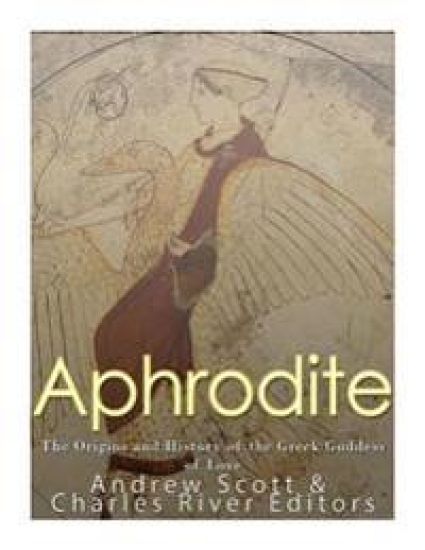
*Includes pictures *Includes ancient descriptions of the goddess and myths *Includes online resources and a bibliography for further reading "However impious the apotheosis of sexuality may seem in the light of the Christian tradition, modern sensibility can nevertheless also appreciate how in the experience of love the loved one and indeed the whole world appears transfigured and joyously intensified, making all else seem insignificant, a tremendous power is revealed, a great duty." Attempting to cover all the forms the "Goddess of Love" encapsulates is no small affair. The roles she played in romance, marriage, procreation, and all of the other desires of humanity were myriad, but the aim of this book is to paint a slightly different, perhaps more esoteric version of Aphrodite from the usual image of her in mythology books. The fact is that Aphrodite, as an ancient Greek goddess, was not the anthropomorphic personage modern aficionados see painted on canvas and hewn out of stone. In addition to that, she was also so much more, which can be a difficult concept for the modern reader to discern. In fact, it was difficult for certain ancient readers to discern too; the 5th century BCE philosopher Plato expressed disgust at the idea that his gods would debase themselves in the adulterous, murderous, and mischievous ways they were said to have in their myths. However, it is important to remember that Plato represented a very small proportion of ancient Athenian society, and the rest of the populace didn't seem to have much of a problem including the "personal" anthropomorphic aspect of the gods into their more "elemental" and "essential" beings. As the scholar Leopold Schmidt put it, "For anyone born a Greek and thinking like a Greek, the idea of a clean antithesis between unity and plurality is put aside where the supernatural beings are concerned. He has no difficult in conceiving unity of action divorced from any unity of person." This is a very important point to remember when considering any of the ancient Greek gods, which can help the modern reader realize the depth of "character" that Aphrodite embodied for the ancient Greeks. Hers was more than the wooing gifts, more than the marriage bed, and more than the "propriety of women". She was an elemental force and not one to be underestimated. Aphrodite: The Origins and History of the Greek Goddess of Love looks at the story of the legendary deity and the various roles she played in Greek mythology. Along with pictures depicting important people, places, and events, you will learn about Aphrodite like never before.
*Includes pictures *Includes ancient accounts of Poseidon *Includes online resources and a bibliography for further reading "I begin to sing about Poseidon, the great god, mover of the earth and fruitless sea, god of the deep who is also lord of Helicon and wide Aegae. A two-fold office the gods allotted you, O Shaker of the Earth, to be a tamer of horses and a savior of ships Hail, Poseidon, Holder of the Earth, dark-haired lord O blessed one, be kindly in heart and help those who voyage in ships " = Homeric Hymn to Poseidon Poseidon is one of the most easily recognizable characters in all of ancient Greek mythology. His signature trident is iconic; one sight of it invariably floods the modern mind with images of aquatic chariots and daunting typhoons. But there is so much more to the character of Poseidon than maritime denizens and disasters, which shouldn't really come as a surprise. Poseidon was one of the most revered gods of the ancient Mediterranean for centuries - if not millennia - and that kind of reverence brings with it the layering of myths, rituals, and history like the strata of sediments on a river bed. The idea of a god like Poseidon being only the god of the sea is too minimalistic and too reductionist to come anywhere near the truth of how an ancient worshipper may have pictured him in her prayers. In Aristophanes's comedy The Birds, Poseidon is depicted as a haughty, stern character with little changeability or volatility. He is the typical "pillar" of the Pantheon of Olympian gods that Poseidon came to represent to later audiences. However, it is vital to remember that The Birds was performed nearly two centuries after the opening quote of this book, and the evolution of Poseidon's character is a stark one. A "Shaker of the Earth" and a "savior of ships" can hardly be expected to be mundane. Acclaimed historian Robert Parker put it best when he said, "Poseidon was a god of the old-fashioned, ambiguous type who had the power to quell storms because he also had power to raise them." Notice "old-fashioned" has nothing to do with "reliability" or "dependability". If anything, very early religion in ancient Greece was more fluid and volatile. Gods could be dismissed or assimilated by other gods and cults could "invade" territories and overthrow or adopt the local gods as facets of their own personalities. In Archaic Greece, the cult idol was often an amorphous block of wood called a Xoanon, which people would worship as an aniconic symbol of a numinous power with a name. This ambiguity of character granted Poseidon and the other gods the ability to gradually adopt the characteristics of their personalities and cults over time. Their personas evolved thanks to a series of catastrophic and logical events visible in both the literary and archaeological record and continued to do so until they became the calcified, easily understandable stock characters of modern-day mythology books. With just a cursory look into the evolution of his character, however, Poseidon becomes as mercurial and turbulent and fascinating as the sea itself. Poseidon: The Origins and History of the Greek God of the Sea looks at the story of the Sea God and the various roles he played in Greek mythology. Along with pictures depicting important people, places, and events, you will learn about Poseidon like never before.