Kirjojen hintavertailu – 12 903 725 kirjaa ja 27 kauppaa

Kirjailija

Andrew Scull

Kirjat ja teokset yhdessä paikassa: 24 kirjaa, julkaisuja vuosilta 2001–2027, suosituimpiin kuuluu Liberties Journal of Culture and Politics. Vertaile teosten hintoja ja tarkista saatavuus suomalaisista kirjakaupoista.

24 kirjaa

Kirjojen julkaisuvuodet: 2001–2027.

Liberties Journal of Culture and Politics

Liberties Journal of Culture and Politics

Michael Ignatieff; Mary Gaitskill; Sergei Lebedev; Antonia Bouis; Karen Solie; Michael Walzer; David A. Bell; Justin E.H. Smith; Michael C. Kimmage; Andrew Scull; Robert Alter; Steven B. Smith; Benjamin Moser; Helen Vendler; John Hodgen; Adam Zagajewski

Liberties Journal Foundation
2023
pokkari
Liberties, a Journal of Culture and Politics, is essential reading for those engaged in the cultural and political issues of our time. In this issue of Liberties: Michael Ignatieff - The Mind’s Emancipation; Mary Gaitskill - The Trials of the Young; Sergei Lebedev - Putin’s Philosopher: A Memoir; Michael Walzer - Moral Concern; Justin E. H. Smith – The Happiness Industrial Complex; Andrew Scull – The Fashions in Trauma; David A. Bell – The Triumph of Anti-Politics in America; Michael Kimmage – A Defense of Delight in a Dark Time; Robert Alter – Proust and the Mystification of the Jews; Steven B. Smith – What is a Statesman?; Benjamin Moser – Rembrandt’s shadows; Helen Vendler – The Poetry of Charm; Celeste Marcus – Priorism, or the Joshua Katz Affair; Leon Wieseltier – Problems and Struggles; and, new poems by Karen Solie, Adam Zagajewski, and John Hodgen. Published quarterly, Liberties, is a collection of the most significant writers today as well as launching the voices of tomorrow. Liberties features serious, independent, stylish, and controversial essays by significant writers and introduces the next generation of writers and poets to inspire and impact the intellectual and creative lifeblood of today’s culture and politics. Nobel Prize winners, leading op-ed writers, well-known non-fiction writers, rising talents, and poets from around the world are part of the Liberties series. There’s a reason why engaged citizens, cultural warriors, political leaders, opinion makers, and activists from across the cultural and political spectrum read and cherish Liberties.
Unhinged

Unhinged

Patrick Allegaert; Bart Marius; Andrew Scull; Yoon Hee Lamot

Cannibal/Hannibal Publishers
2019
sidottu

Halvin toimitettuna 31,60 €

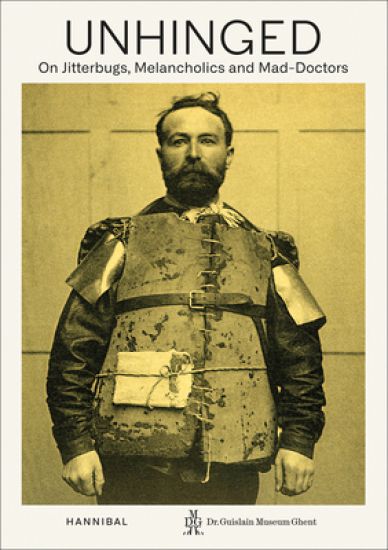
Madness deranges, throws us off balance, and makes us lose our footing. Yet some writers claim that madness is an enlargement of normality. But how can that which we cannot control belong to 'normality'? And what is normality? For more than 30 years, the permanent display on psychiatry has been the very heart of the Museum Dr. Guislain in Ghent. The history of psychiatry is the inspiration for new thematic exhibitions every year, in which the museum seeks to dislodge entrenched views and deep-rooted stigmas and reframe them in the context of today. In October 2019, this permanent display received a make-over and has been presented under the title 'Unhinged', in which the Museum Dr. Guislain offers a fresh look at its own history as a museum. The richly illustrated publication explores the boundaries of the traditional and goes in search of the sane in the insane. It provides an overview of psychiatry on the basis of five contemporary themes that enter into dialogue with each other: 'power and powerlessness', 'body and mind', 'architecture', 'classification' and 'imagination'. Historical documents are also put side by side with contemporary art, creating a dynamic interpretation. This new approach reflects today's 'crazy' society, in which, happily, increasing attention is being paid to psychological vulnerability, but in which mental health care is also facing new challenges more than ever.
Desperate Remedies: Psychiatry's Turbulent Quest to Cure Mental Illness
A Telegraph Book of the YearA Washington Post Notable WorkA Times Book of the YearA Hughes Award Finalist "An indisputable masterpiece...comprehensive, fascinating, and persuasive."--Wall Street Journal "Brimming with wisdom and brio, this masterful work spans the history of psychiatry. Exceedingly well-researched, wide-ranging, provocative in its conclusions, and magically compact, it is riveting from start to finish. Mark my words, Desperate Remedies will soon be a classic."--Susannah Cahalan, author of Brain on Fire "Compulsively readable... Scull has joined his wide-ranging reporting and research with a humane perspective on matters that many of us continue to look away from."--Daphne Merkin, The Atlantic "Scull's fascinating and enraging book is the story of the quacks and opportunists who have claimed to offer cures for mental illness... Madness remains the most fascinating--arguably the defining--aspect of Homo sapiens." --Sebastian Faulks, Sunday Times "I would recommend this fascinating, alarming, and alerting book to anybody. For anyone referred to a psychiatrist it is surely essential."--The Spectator For more than two hundred years disturbances of the mind have been studied and treated by the medical profession. Mental illness, some insist, is a disease like any other, from which one can be cured. But is this true? From the birth of the asylum to the latest drug trials, Desperate Remedies brings together a galaxy of mind doctors working in and out of institutional settings: psychologists and psychoanalysts, neuroscientists and cognitive behavioral therapists, as well as patients and their families desperate for relief. Surprising, disturbing, and compelling, this passionate account of America's long battle with mental illness challenges us to revisit some of our deepest assumptions and to confront the epidemic of mental illness so visible all around us.
Desperate Remedies

Desperate Remedies

Andrew Scull

PENGUIN BOOKS LTD
2023
pokkari

Halvin toimitettuna 20,30 €

CHOSEN AS A BOOK OF THE YEAR BY THE TIMES AND DAILY TELEGRAPHSHORTLISTED FOR THE HUGHES PRIZE'A riveting chronicle of faulty science, false promises, arrogance, greed, and shocking disregard for the wellbeing of patients suffering from mental disorders. An eloquent, meticulously documented, clear-eyed call for change' Dirk WittenbornIn this masterful work, Andrew Scull, one of the most provocative thinkers writing about psychiatry, sheds light on its troubled historyFor more than two hundred years, disturbances of reason, cognition and emotion - the sort of things that were once called 'madness' - have been described and treated by the medical profession. Mental illness, it is said, is an illness like any other - a disorder that can treated by doctors, whose suffering can be eased, and from which patients can return. And yet serious mental illness remains a profound mystery that is in some ways no closer to being solved than it was at the start of the twentieth century. In this clear-sighted and provocative exploration of psychiatry, acclaimed sociologist Andrew Scull traces the history of its attempts to understand and mitigate mental illness: from the age of the asylum and surgical and chemical interventions, through the rise and fall of Freud and the talking cure, and on to our own time of drug companies and antidepressants. Through it all, Scull argues, the often vain and rash attempts to come to terms with the enigma of mental disorder have frequently resulted in dire consequences for the patient. Deeply researched and lucidly conveyed, Desperate Remedies masterfully illustrates the assumptions and theory behind the therapy, providing a definitive new account of psychiatry's and society's battle with mental illness.
Desperate Remedies: Psychiatry's Turbulent Quest to Cure Mental Illness
A Washington Post Notable Work of NonfictionA Telegraph Book of the Year A sweeping history of American psychiatry--from the mental hospital to the brain lab--that reveals the devastating treatments doctors have inflicted on their patients (especially women) in the name of science and questions our massive reliance on meds. For more than two hundred years, disturbances of the mind--the sorts of things that were once called "madness"--have been studied and treated by the medical profession. Mental illness, some insist, is a disease like any other, whose origins can be identified and from which one can be cured. But is this true? In this masterful account of America's quest to understand and treat everything from anxiety to psychosis, one of the most provocative thinkers writing about psychiatry today sheds light on its tumultuous past. Desperate Remedies brings together a galaxy of mind doctors working in and out of institutional settings: psychologists and psychoanalysts, neuroscientists, and cognitive behavioral therapists, social reformers and advocates of mental hygiene, as well as patients and their families desperate for relief. Andrew Scull begins with the birth of the asylum in the reformist zeal of the 1830s and carries us through to the latest drug trials and genetic studies. He carefully reconstructs the rise and fall of state-run mental hospitals to explain why so many of the mentally ill are now on the street and why so many of those whose bodies were experimented on were women. In his compelling closing chapters, he reveals how drug companies expanded their reach to treat a growing catalog of ills, leading to an epidemic of over-prescribing while deliberately concealing debilitating side effects. Carefully researched and compulsively readable, Desperate Remedies is a definitive account of America's long battle with mental illness that challenges us to rethink our deepest assumptions about who we are and how we think and feel.
Psychiatry and Its Discontents

Psychiatry and Its Discontents

Andrew Scull

University of California Press
2021
pokkari
Written by one of the world’s most distinguished historians of psychiatry, Psychiatry and Its Discontents provides a wide-ranging and critical perspective on the profession that dominates the treatment of mental illness. Andrew Scull traces the rise of the field, the midcentury hegemony of psychoanalytic methods, and the paradigm’s decline with the ascendance of biological and pharmaceutical approaches to mental illness. The book’s historical sweep is broad, ranging from the age of the asylum to the rise of psychopharmacology and the dubious triumphs of “community care.” The essays in Psychiatry and Its Discontents provide a vivid and compelling portrait of the recurring crises of legitimacy experienced by “mad-doctors,” as psychiatrists were once called, and illustrates the impact of psychiatry’s ideas and interventions on the lives of those afflicted with mental illness.
Social Order/Mental Disorder

Social Order/Mental Disorder

Andrew Scull

Routledge
2020
nidottu
Social Order/Mental Disorder represents a provocative and exciting exploration of social response to madness in England and the United States from the eighteenth through the twentieth centuries. Scull, who is well-known for his previous work in this area, examines a range of issues, including the changing social meanings of madness, the emergence and consolidation of the psychiatric profession, the often troubled relationship between psychiatry and the law, the linkages between sex and madness, and the constitution, character, and collapse of the asylum as our standard response to the problems posed by mental disorder. This book is emphatically not part of the venerable tradition of hagiography that has celebrated psychiatric history as a long struggle in which the steady application of rational-scientific principles has produced irregular but unmistakable evidence of progress toward humane treatments for the mentally ill. In fact, Scull contends that traditional mental hospitals, for much of their existence, resembled cemeteries for the still breathing, medical hubris having at times served to license dangerous, mutilating, even life-threatening experiments on the dead souls confined therein. He argues that only the sociologically blind would deny that psychiatrists are deeply involved in the definition and identification of what constitutes madness in our world – hence, claims that mental illness is a purely naturalistic category, somehow devoid of contamination by the social, are taken to be patently absurd. Scull points out, however, that the commitment to examine psychiatry and its ministrations with a critical eye by no means entails the romantic idea that the problems it deals with are purely the invention of the professional mind, or the Manichean notion that all psychiatric interventions are malevolent and ill-conceived. It is the task of unromantic criticism that is attempted in this book.
Psychiatry and Its Discontents

Psychiatry and Its Discontents

Andrew Scull

University of California Press
2019
sidottu

Halvin toimitettuna 38,40 €

Written by one of the world’s most distinguished historians of psychiatry, Psychiatry and Its Discontents provides a wide-ranging and critical perspective on the profession that dominates the treatment of mental illness. Andrew Scull traces the rise of the field, the midcentury hegemony of psychoanalytic methods, and the paradigm's decline with the ascendance of biological and pharmaceutical approaches to mental illness. The book's historical sweep is broad, ranging from the age of the asylum to the rise of psychopharmacology and the dubious triumphs of "community care." The essays in Psychiatry and Its Discontents provide a vivid and compelling portrait of the recurring crises of legitimacy experienced by "mad-doctors," as psychiatrists were once called, and illustrates the impact of psychiatry’s ideas and interventions on the lives of those afflicted with mental illness.
Social Order/Mental Disorder

Social Order/Mental Disorder

Andrew Scull

Routledge
2018
sidottu
Social Order/Mental Disorder represents a provocative and exciting exploration of social response to madness in England and the United States from the eighteenth through the twentieth centuries. Scull, who is well-known for his previous work in this area, examines a range of issues, including the changing social meanings of madness, the emergence and consolidation of the psychiatric profession, the often troubled relationship between psychiatry and the law, the linkages between sex and madness, and the constitution, character, and collapse of the asylum as our standard response to the problems posed by mental disorder. This book is emphatically not part of the venerable tradition of hagiography that has celebrated psychiatric history as a long struggle in which the steady application of rational-scientific principles has produced irregular but unmistakable evidence of progress toward humane treatments for the mentally ill. In fact, Scull contends that traditional mental hospitals, for much of their existence, resembled cemeteries for the still breathing, medical hubris having at times served to license dangerous, mutilating, even life-threatening experiments on the dead souls confined therein. He argues that only the sociologically blind would deny that psychiatrists are deeply involved in the definition and identification of what constitutes madness in our world – hence, claims that mental illness is a purely naturalistic category, somehow devoid of contamination by the social, are taken to be patently absurd. Scull points out, however, that the commitment to examine psychiatry and its ministrations with a critical eye by no means entails the romantic idea that the problems it deals with are purely the invention of the professional mind, or the Manichean notion that all psychiatric interventions are malevolent and ill-conceived. It is the task of unromantic criticism that is attempted in this book.
Madness in Civilization

Madness in Civilization

Andrew Scull

Princeton University Press
2016
pokkari

Halvin toimitettuna 31,80 €

The loss of reason, a sense of alienation from the commonsense world we all like to imagine we inhabit, the shattering emotional turmoil that seizes hold and won't let go-these are some of the traits we associate with madness. Today, mental disturbance is most commonly viewed through a medical lens, but societies have also sought to make sense of it through religion or the supernatural, or by constructing psychological or social explanations in an effort to tame the demons of unreason. Madness in Civilization traces the long and complex history of this affliction and our attempts to treat it. Beautifully illustrated throughout, Madness in Civilization takes readers from antiquity to today, painting a vivid and often harrowing portrait of the different ways that cultures around the world have interpreted and responded to the seemingly irrational, psychotic, and insane. From the Bible to Sigmund Freud, from exorcism to mesmerism, from Bedlam to Victorian asylums, from the theory of humors to modern pharmacology, the book explores the manifestations and meanings of madness, its challenges and consequences, and our varied responses to it. It also looks at how insanity has haunted the imaginations of artists and writers and describes the profound influence it has had on the arts, from drama, opera, and the novel to drawing, painting, and sculpture. Written by one of the world's preeminent historians of psychiatry, Madness in Civilization is a panoramic history of the human encounter with unreason.
Masters of Bedlam

Masters of Bedlam

Andrew Scull; Charlotte MacKenzie; Nicholas Hervey

Princeton University Press
2016
sidottu
Through an examination of the fascinating lives and careers of a series of nineteenth-century "mad-doctors," Masters of Bedlam provides a unique perspective on the creation of the modern profession of psychiatry, taking us from the secret and shady practices of the trade in lunacy, through the utopian expectations that were aroused by the lunacy reform movement, to the dismal realities of the barracks-asylums--those Victorian museums of madness within which most nineteenth-century alienists found themselves compelled to practice. Across a century that spans the period from an unreformed Bedlam to the construction of a post-Darwinian bio-psychiatry centered on the new Maudsley Hospital, from a therapeutics of bleeding, purging, and close confinement through the era of moral treatment and nonrestraint to a fin-de-siecle degenerationism and despair, men claiming expertise in the treatment of mental disorder sought to construct a collective identity as trustworthy and scientifically qualified professionals. This fascinating series of biographies answers the question: How successful were they in creating such a new identity?. Drawing on an extensive array of sources, the authors vividly re-create the often colorful and always eventful lives of these seven "masters of bedlam." Sensitive to the idiosyncrasies and peculiarities of each man's personal biography, the authors replace hagiographical ac-counts of the great men who founded modern psychiatry with fully rounded portraits of their struggles and successes, their achievements and limitations. In the process Masters of Bedlam provides an extremely subtle and nuanced portrait of the efforts of successive generations of alienists to carve out a popular and scientific respect for their specialty, and reminds us repeatedly of the complexities of nineteenth-century developments in the field of psychiatry. Originally published in 1996. The Princeton Legacy Library uses the latest print-on-demand technology to again make available previously out-of-print books from the distinguished backlist of Princeton University Press. These editions preserve the original texts of these important books while presenting them in durable paperback and hardcover editions. The goal of the Princeton Legacy Library is to vastly increase access to the rich scholarly heritage found in the thousands of books published by Princeton University Press since its founding in 1905.
Masters of Bedlam

Masters of Bedlam

Andrew Scull; Charlotte MacKenzie; Nicholas Hervey

Princeton University Press
2014
pokkari
Through an examination of the fascinating lives and careers of a series of nineteenth-century "mad-doctors," Masters of Bedlam provides a unique perspective on the creation of the modern profession of psychiatry, taking us from the secret and shady practices of the trade in lunacy, through the utopian expectations that were aroused by the lunacy reform movement, to the dismal realities of the barracks-asylums--those Victorian museums of madness within which most nineteenth-century alienists found themselves compelled to practice. Across a century that spans the period from an unreformed Bedlam to the construction of a post-Darwinian bio-psychiatry centered on the new Maudsley Hospital, from a therapeutics of bleeding, purging, and close confinement through the era of moral treatment and nonrestraint to a fin-de-siecle degenerationism and despair, men claiming expertise in the treatment of mental disorder sought to construct a collective identity as trustworthy and scientifically qualified professionals. This fascinating series of biographies answers the question: How successful were they in creating such a new identity?. Drawing on an extensive array of sources, the authors vividly re-create the often colorful and always eventful lives of these seven "masters of bedlam." Sensitive to the idiosyncrasies and peculiarities of each man's personal biography, the authors replace hagiographical ac-counts of the great men who founded modern psychiatry with fully rounded portraits of their struggles and successes, their achievements and limitations. In the process Masters of Bedlam provides an extremely subtle and nuanced portrait of the efforts of successive generations of alienists to carve out a popular and scientific respect for their specialty, and reminds us repeatedly of the complexities of nineteenth-century developments in the field of psychiatry. Originally published in 1996. The Princeton Legacy Library uses the latest print-on-demand technology to again make available previously out-of-print books from the distinguished backlist of Princeton University Press. These editions preserve the original texts of these important books while presenting them in durable paperback and hardcover editions. The goal of the Princeton Legacy Library is to vastly increase access to the rich scholarly heritage found in the thousands of books published by Princeton University Press since its founding in 1905.
The Insanity of Place / The Place of Insanity
This compelling book brings together many of the major papers published by Andrew Scull in the history of psychiatry over the past decade and a half. Examining some of the major substantive debates in the field from the eighteenth century to the present, the historiographic essays provide a critical perspective on such major figures as Michel Foucault, Roy Porter and Edward Shorter. Chapters on psychiatric therapeutics and on the shifting social responses to madness over a period of almost three centuries add to a comprehensive assessment of Anglo-American confrontations with madness in this period, and make the book invaluable for those concerned to understand the psychiatric enterprise. The Insanity of Place/The Place of Insanity will be of interest to students and professionals of the history of medicine and of psychiatry, as well as sociologists concerned with deviance and social control, the sociology of mental illness and the sociology of the professions.
Durkheim and the Law

Durkheim and the Law

Steven Lukes; Andrew Scull

Red Globe Press
2013
nidottu
The law was central to Durkheim's sociological theory and to his efforts to establish sociology as a distinctive discipline. This revised and updated second edition of Durkheim and the Law brings together key texts which demonstrate the development of Durkheim's thinking on the sociology of law, several of them newly translated here. The editors, both world-renowned Durkheim scholars, provide a comprehensive analysis of the intellectual significance and distinctiveness of Durkheim's work on the subject. They show how his ideas evolved over time; how they contributed to the development of a distinctively Durkheimian vision of a science of society; and they provide a comprehensive assessment of the strengths and weaknesses of his theorizing about law, as well as its continuing relevance for contemporary sociology. Enriched with a new introduction and useful learning features, this book remains a major reference for students of socio-legal theory.
Durkheim and the Law

Durkheim and the Law

Steven Lukes; Andrew Scull

Red Globe Press
2013
sidottu
The law was central to Durkheim's sociological theory and to his efforts to establish sociology as a distinctive discipline. This revised and updated second edition of Durkheim and the Law brings together key texts which demonstrate the development of Durkheim's thinking on the sociology of law, several of them newly translated here. The editors, both world-renowned Durkheim scholars, provide a comprehensive analysis of the intellectual significance and distinctiveness of Durkheim's work on the subject. They show how his ideas evolved over time; how they contributed to the development of a distinctively Durkheimian vision of a science of society; and they provide a comprehensive assessment of the strengths and weaknesses of his theorizing about law, as well as its continuing relevance for contemporary sociology. Enriched with a new introduction and useful learning features, this book remains a major reference for students of socio-legal theory.
Madness

Madness

Andrew Scull

Oxford University Press
2011
nidottu

Halvin toimitettuna 18,90 €

Madness is something that frightens and fascinates us all. It is a word with which we are universally familiar, and a condition that haunts the human imagination. Through the centuries, in poetry and in prose, in drama and in the visual arts, its depredations are on display for all to see. A whole industry has grown up, devoted to its management and suppression. Madness profoundly disturbs our common sense assumptions; threatens the social order, both symbolically and practically; creates almost unbearable disruptions in the texture of daily living; and turns our experience and our expectations upside down. Lunacy, insanity, psychosis, mental illness - whatever term we prefer, its referents are disturbances of reason, the passions, and human action that frighten, create chaos, and yet sometimes amuse; that mark a gulf between the common sense reality most of us embrace, and the discordant version some humans appear to experience. Social responses to madness, our interpretations of what madness is, and our notions of what is to be done about it have varied remarkably over the centuries. In this Very Short Introduction, Andrew Scull provides a provocative and entertaining examination of the social, cultural, medical, and artistic responses to mental disturbance across more than two millennia, concluding with some observations on the contemporary accounts of mental illness. ABOUT THE SERIES: The Very Short Introductions series from Oxford University Press contains hundreds of titles in almost every subject area. These pocket-sized books are the perfect way to get ahead in a new subject quickly. Our expert authors combine facts, analysis, perspective, new ideas, and enthusiasm to make interesting and challenging topics highly readable.
Madhouse

Madhouse

Andrew Scull

Yale University Press
2007
pokkari
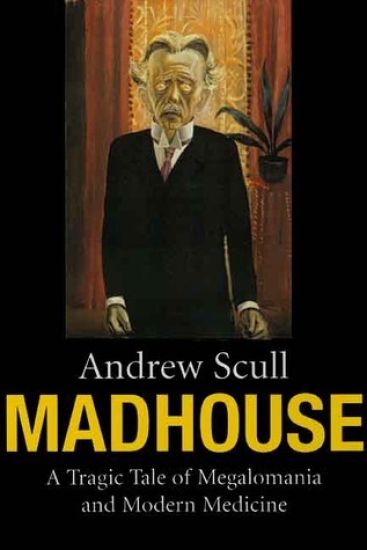
“Reads as much like a novel as it does a work of medical scholarship.”—Patrick McGrath, New York Times Book Review Madhouse revealsa long-suppressed medical scandal, shocking in its brutality and sobering in its implications. It shows how a leading American psychiatrist of the early twentieth century came to believe that mental illnesses were the product of chronic infections that poisoned the brain. Convinced that he had uncovered the single source of psychosis, Henry Cotton, superintendent of the Trenton State Hospital, New Jersey, launched a ruthless campaign to “eliminate the perils of pus infection.” Teeth were pulled, tonsils excised, and stomachs, spleens, colons, and uteruses were all sacrificed in the assault on “focal sepsis.” Many patients did not survive Cotton’s surgeries; thousands more were left mangled and maimed. Cotton’s work was controversial, yet none of his colleagues questioned his experimental practices. Subsequent historians and psychiatrists too have ignored the events that cast doubt on their favorite narratives of scientific and humanitarian progress. In a remarkable feat of historical detective work, Andrew Scull exposes the full, frightening story of madness among the mad-doctors. Drawing on a wealth of documents and interviews, he reconstructs in vivid detail a nightmarish, cautionary chapter in modern psychiatry when professionals failed to police themselves.