

Kirjailija
Andrew Simms
Kirjat ja teokset yhdessä paikassa: 14 kirjaa, julkaisuja vuosilta 2007–2026, suosituimpiin kuuluu Vaccine Verse. Vertaile teosten hintoja ja tarkista saatavuus suomalaisista kirjakaupoista.
14 kirjaa
Kirjojen julkaisuvuodet: 2007–2026.
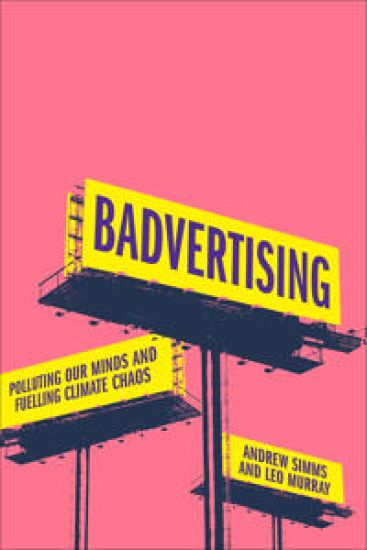
**An Independent Book of the Month** 'Funny and readable, [it] will make us all see the world in a very different way' - Dr Chris van Tulleken, author of Ultra-Processed People 'Brilliant ... if you thought your brain was being gently warmed by the advertising industry, read this book and you'll realise it's being fried' - Jeremy Vine, BBC Radio 2 Advertising is selling us a dream, a lifestyle. It promises us fulfilment and tells us where to buy it - from international flights to a vast array of goods we consume like there is no tomorrow. The truth is, if advertising succeeds in keeping us on our current trajectory, there may not be a tomorrow. In Badvertising, Andrew Simms and Leo Murray raise the alarm about an industry that is making us both unhealthy and unhappy, and that is driving the planet to the precipice of environmental collapse in the process. What is the psychological impact of being barraged by thousands of prompts to buy things every day? How does the commercialisation of our public spaces weaken our sense of belonging? How are car manufacturers, airlines and oil companies lobbying to weaken climate action? Examining the devastating impact of advertising on our minds and the planet, Badvertising also crucially explores what we can do to change things for the better.
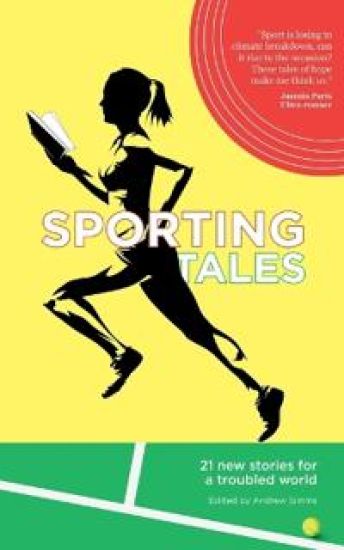
Sporting tales for troubled times... Sporting Tales is about finding more imaginative ways to engage with the unprecedented challenges our times, and brings together a huge range of insight and imagination from elite athletes, academic experts, poets, artists and activists. The current moment seems more precarious than ever, standing on the edge of potentially irreversible ecological decline and in the grip of toxic social divisions. Athletes engaged in outdoor physical exertion find themselves especially exposed, with their health and lives under threat from the climate extremes of a heating planet, as well as the air pollution from the burning of fossil fuels. But sport has an extraordinary ability and opportunity to mobilise its mass audience and appeal for change. Sporting Tales is part of a bigger project, and the fifth volume of essays and stories curated by the New Weather Institute following: There was a Knock at the Door, Knock Twice, Knock Three Times, and Contagious Tales. It includes contributions from several members of the Cool Down - sport for climate action network ISee the whole series). ""Sport is losing to climate breakdown and climate criminals, but has always been a coliseum of social and political change. Can sport rise to the occasion? These tales of hope make me think so." Jasmin Paris, champion ultrarunner and the first woman to complete the infamous Barkley Marathons "Sport has many stories to tell; good and bad. Sporting Tales is a stadium full of better stories about surviving and thriving in a troubled world." Melissa Wilson, Team GB rower and co-founder of Athletes for the World "An uplifting and important collection of tales that epitomise the "think global, act local" approach to tackling systemic societal and environmental challenges through the lens of sport. A must read." Claire Poole, founder, the Sport Positive Summit "Story is about the very patterns of life. We recognise the narrative arcs of daring tales, the reticence to change habits at first, the heroic journey when prompted, the hope that follows action, the evil antagonist, the path back home But sport is a bit different, the losses are inevitable, even for the good. And they happen a lot. Sport is central to modern culture, and these Sporting Tales are a fine, wise and fabulous insight into how sport can change the world, and how it too mirrors those very economic and social structures in their best and worst ways." Jules Pretty, Professor of Environment and Society at the University of Essex and author of The Low-Carbon Good Life "We all know that sport is sometimes thought of as a battlefield. Orwell once likened it to 'mimic warfare'. But increasingly the struggle is for the soul and purpose of sport: torn between regenerating communities, building health and social relationships as opposed to providing a propaganda vehicle for undemocratic regimes and major polluters. This beautifully written collection shows that new stories and narratives of how the spirit of sport is being reclaimed can yet save everything we love about sport from those whose values threaten our very existence." Professor Peter Newell, Sussex University.
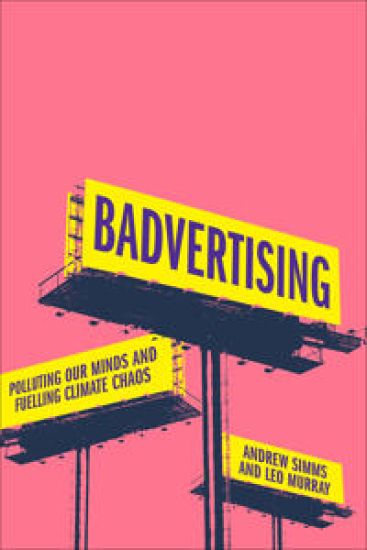
**An Independent Book of the Month** 'Funny and readable, [it] will make us all see the world in a very different way' - Dr Chris van Tulleken, author of Ultra-Processed People 'Brilliant ... if you thought your brain was being gently warmed by the advertising industry, read this book and you'll realise it's being fried' - Jeremy Vine, BBC Radio 2 Advertising is selling us a dream, a lifestyle. It promises us fulfilment and tells us where to buy it - from international flights to a vast array of goods we consume like there is no tomorrow. The truth is, if advertising succeeds in keeping us on our current trajectory, there may not be a tomorrow. In Badvertising, Andrew Simms and Leo Murray raise the alarm about an industry that is making us both unhealthy and unhappy, and that is driving the planet to the precipice of environmental collapse in the process. What is the psychological impact of being barraged by thousands of prompts to buy things every day? How does the commercialisation of our public spaces weaken our sense of belonging? How are car manufacturers, airlines and oil companies lobbying to weaken climate action? Examining the devastating impact of advertising on our minds and the planet, Badvertising also crucially explores what we can do to change things for the better.

Imagine, two hundred years ago, saying you wanted to live in a country where all children could go to school and not work in factories, where slavery was abolished, women had the vote, where there was a health service for everyone and you got the weekend off. They would have called you crazy. It has been said by great modern minds that it is easier to envision the end of the world than it is the end of the current economic system. But what if we've been overlooking the saplings of a better system already growing up around us? Why don't we aim for the best society we can, no matter how far-fetched it might currently seem? In the five-hundredth anniversary of Thomas More's Utopia, Andrew Simms examines the evidence of the best that the world has had to offer society so far, and imagines a place in which these better ways have become the norm.

Knock Twice: 25 modern folk tales for troubling times
Andrew Simms
Createspace Independent Publishing Platform
2017
nidottu
Bewildered by the modern world? Folk tales throughout history explore the extremes of human experience and help us make sense of them. With dazzling and original twists this new collection of modern folk tales explores everything from mobile phones to the refugee crisis, celebrity, climate change and the banks. Uniquely, the contributors are not just story tellers, but leading, independent authorities on the earth sciences, the environment, finance, economics, inequality, social policy and more. From tales of deeply questionable corporations, to mysterious phone apps and a natural world fighting back, Knock twice unleashes creative minds to run riot over problems that seem unsolvable in the impoverished arena of daily politics. These are modern folk tales for troubling times because we're unlikely to get a better world without using our imaginations. Knock twice, open the covers and see what happens..." Stories are one of the most ancient and most effective ways of making sense of the world... When we try to live a good life in a world we seem to be simultaneously destroying, there is nothing more valuable or worth encouraging." Philip Pullman, on the first collection in this series, There was a knock at the door
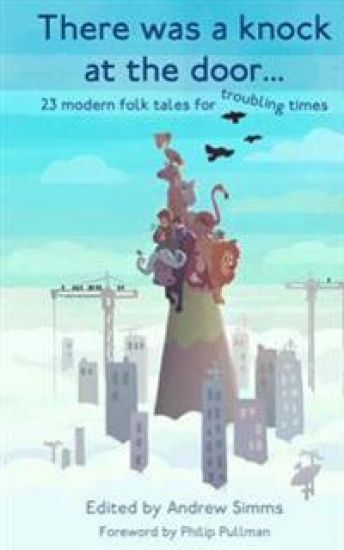
There was a knock at the door: 23 modern folk tales for troubling times
Andrew Simms
New Weather Institute
2016
nidottu
Economics sometimes seems to be stacked against social, environmental and individual well-being. But it doesn't have to be like this. A new approach to economics - deriving as much from Ruskin and Schumacher as from Keynes or Smith - has begun to emerge. Skeptical about money as a measure of success, this new economics turns our assumptions about wealth and poverty upside down. It shows us that real wealth can be measured by increased well-being and environmental sustainability rather than just having and consuming more things. This book is the first accessible and straightforward guide to the new economics. It describes the problems and bizarre contradictions in conventional economics as well as the principles of the emerging new economics, and it tells the real-world stories of how new economics is being successfully put into practice around the world. An essential guide to understanding new economics for all those who care about making economics work for people and planet.
Ever get the feeling that things are falling apart? You're not alone. From bad banks to global warming it can all look hopeless, but what if everything could turn out, well, even better than before? What if the only thing holding us back is a lack of imagination and a surplus of old orthodoxies? In fascinating and iconoclastic detail - on everything from the cash in your pocket to the food on your plate and the shape of our working lives - Cancel the Apocalypse describes how the relentless race for economic growth is not always one worth winning, how excessive materialism has come at a terrible cost to our environment, and hasn't even made us any happier in the process. Simms believes passionately in the human capacity for change, and shows how the good life remains in our grasp. While global warming and financial meltdown might feel like modern day horsemen of the apocalypse, Simms shows how such end of the world scenarios offer us the chance for a new beginning.
How much do you know about the big-name brands we live by? Virgin, BP, Land Rover, Barclays, Cadbury's, BBC and M&S. In our times the PLCs have been seen as giants, the backbone of commerce and society. Yet seen through a historical perspective they are vulnerable creatures, flowering only briefly. In fact, on the Fortune 500 - a roll-call of power if ever there was one - there's just one company, General Electric, which was on the list half a century ago. The rest have gone: broken, bankrupt, merged, raided for their parts. More like mayflies than megacorps. And getting more fragile all the time. The great corporations that now dominate our lives are treated by the law courts as if they were people. They have the same rights, but unlike us they have no emotions, morals or life histories. The only corporate biographies you find are celebratory, promotional portraits with the warts left out. So, we don't really know where most great brands came from or where they are going. This book spills the beans by telling the real life stories of some of the biggest corporate names, and finds them as dramatic, flawed and revealing as any human biography.
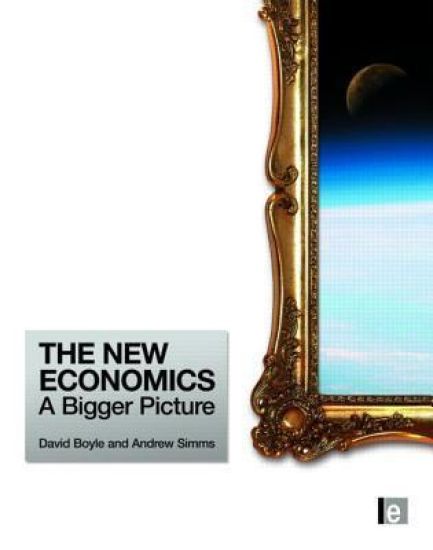
Economics sometimes seems to be stacked against social, environmental and individual well-being. But it doesn't have to be like this. A new approach to economics - deriving as much from Ruskin and Schumacher as from Keynes or Smith - has begun to emerge. Skeptical about money as a measure of success, this new economics turns our assumptions about wealth and poverty upside down. It shows us that real wealth can be measured by increased well-being and environmental sustainability rather than just having and consuming more things. This book is the first accessible and straightforward guide to the new economics. It describes the problems and bizarre contradictions in conventional economics as well as the principles of the emerging new economics, and it tells the real-world stories of how new economics is being successfully put into practice around the world. An essential guide to understanding new economics for all those who care about making economics work for people and planet.
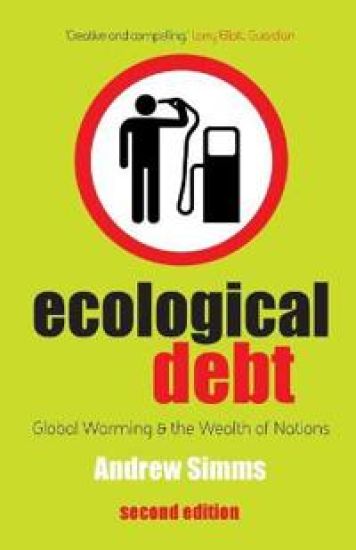
Millions of people in the West are running up huge ecological debts: from the amount of oil and coal that we burn to heat our houses and run our cars, to what we consume and the waste that we create, the impact of our lifestyles is felt worldwide. Whilst these debts go unpaid, millions more living in poverty in the majority world suffer the burden of paying dubious foreign financial debts. Ecological Debt explores this great paradox of our age. Highlighting how and why this has happened, it also shows what can be done differently in the future. Now updated throughout, this is a passionate account of the steps we can take to stop pushing the planet to the point of environmental bankruptcy.
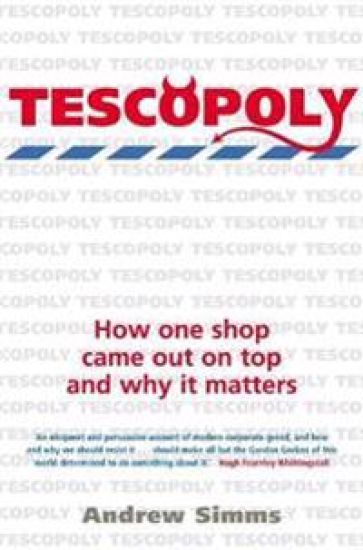
You can shop anywhere you like -- as long as it's Tesco The inexorable rise of supermarkets is big news but have we really taken on board what this means for our daily lives, and those of our children? In this searing analysis Andrew Simms, director of the acclaimed think-and-do-tank the New Economics Foundation and the person responsible for introducing 'Clone Towns' into our vernacular, tackles a subject none of us can afford to ignore. The book shows how the supermarkets -- and Tesco in particular -- have brought: " Banality -- homogenized high streets full of clone stores " Ghost towns -- superstores have drained the life from our town centres and communities " A Supermarket State -- this new commercial nanny state that knows more about you than you think " Profits from poverty -- shelves full of global plunder, produced for a pittance " Global food domination -- as the superstores expand overseas But there's change afoot, with evidence of the tide turning and consumer campaigns gaining ground. Simms ends with suggestions for change and coporate reformation to safeguard our communities and environment -- all over the world. This book has been written and published independently from the Tescopoly Alliance and is not endorsed by them.