Kirjojen hintavertailu – 12 903 725 kirjaa ja 27 kauppaa

Kirjailija

Andrew Sneddon

Kirjat ja teokset yhdessä paikassa: 18 kirjaa, julkaisuja vuosilta 2005–2026, suosituimpiin kuuluu A Is for Atheist. Vertaile teosten hintoja ja tarkista saatavuus suomalaisista kirjakaupoista.

18 kirjaa

Kirjojen julkaisuvuodet: 2005–2026.

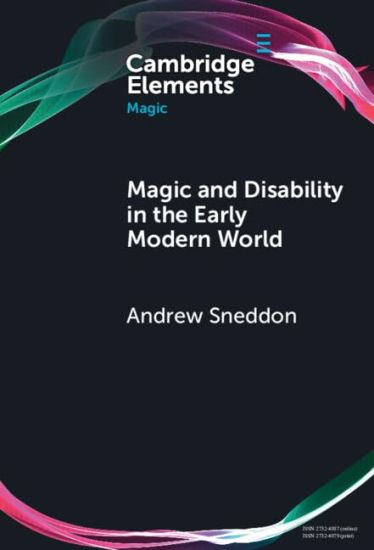
Magic and Disability in the Early Modern World

Magic and Disability in the Early Modern World

Andrew Sneddon

Cambridge University Press
2026
Sidottu
This Element argues that early modern witchcraft (discourse, visual imagery and trials) in Scotland, England, Ireland and America demonised, devalued and disqualified non-normative bodies and minds. Using interpretative frameworks of monstrosity and deformity, while working within wider religious and medical understandings of disability, physical, cognitive, and sensory difference was read as inner corruption, sin or divine punishment or medicalised and pathologized as something to be fixed. The witch's body became monstrous through association with demonic creatures and physical transformation, while visible physical difference offered sought-after physical evidence of witchcraft. Intersecting with social status, reputation, and gender, disability then explains why some individuals were accused of witchcraft. Disability could also hamper a suspects' ability to defend themselves during interrogation and trial. Their victims, the bewitched, however, used witchcraft accusations to navigate discriminatory narratives and treatment of disabling conditions and to find ways to cure or mitigate them.
Magic and Disability in the Early Modern World

Magic and Disability in the Early Modern World

Andrew Sneddon

Cambridge University Press
2026
Nidottu
This Element argues that early modern witchcraft (discourse, visual imagery and trials) in Scotland, England, Ireland and America demonised, devalued and disqualified non-normative bodies and minds. Using interpretative frameworks of monstrosity and deformity, while working within wider religious and medical understandings of disability, physical, cognitive, and sensory difference was read as inner corruption, sin or divine punishment or medicalised and pathologized as something to be fixed. The witch's body became monstrous through association with demonic creatures and physical transformation, while visible physical difference offered sought-after physical evidence of witchcraft. Intersecting with social status, reputation, and gender, disability then explains why some individuals were accused of witchcraft. Disability could also hamper a suspects' ability to defend themselves during interrogation and trial. Their victims, the bewitched, however, used witchcraft accusations to navigate discriminatory narratives and treatment of disabling conditions and to find ways to cure or mitigate them.
Taking Moral Theorising Seriously

Taking Moral Theorising Seriously

Andrew Sneddon

TAYLOR FRANCIS LTD
2025
sidottu
This book develops a plausible and novel account of methodology for moral philosophy. It focuses on the structural features of moral theories, specifically what is taken as input and the process of theorizing itself. Philosophers have long neglected the difficulties of identifying and using good input for moral theorizing. The first part of the book argues that we should use “contrastively successful” judgments as input. A moral judgment about a case must be shown to be interpersonally superior to alternatives to qualify as input for moral theorizing. The next part of the book follows recent work on theoretical virtues in science to develop an account of virtues of moral theories. It argues that moral theorists should seek defeasibly parallel maximization of the virtues of moral theories. It then applies this overall account of a method for moral philosophy to the topic of agent-relativity and agent-neutrality. Taking Moral Theory Seriously will appeal to researchers and graduate students interested in moral philosophy and philosophical methodology.
Possessed By the Devil

Possessed By the Devil

Andrew Sneddon

THE HISTORY PRESS LTD
2024
nidottu
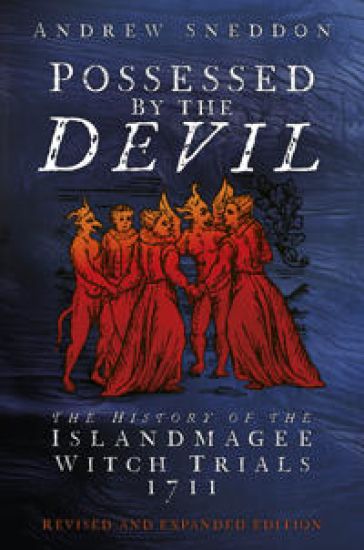
County Antrim, Ireland, 1711: Eight women were put on trial accused of bewitching and demonically possessing young Mary Dunbar, amid an attack by evil spirits on the local community and after the supernatural murder of a clergyman’s wife. Mary Dunbar was the star witness in this trial, and the women were, by the standards of the time, believable witches – they dabbled in magic, they smoked, they drank, they had disabilities. A second trial targeted a final male ‘witch’ and head of the Sellor ‘witch family’. With echoes of the Salem witch-hunt, this is a story of murder, of a community in crisis and of how the witchhunts that claimed over 50,000 lives in Europe played out on Irish shores. It plunges the reader into a world where magic was real and the power of the Devil felt, with disastrous consequences.
The Witches of Islandmagee

The Witches of Islandmagee

Victoria McCollum; Andrew Sneddon; David Campbell

Lulu.com
2023
pokkari
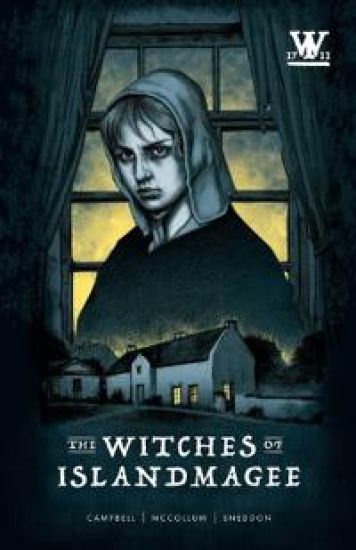
A brand new supernatural graphic novel that is absolutely loaded with haunting visuals set in a misty isolated town off the coast of County Antrim. It's 1711, a woman with demons of her own - has begun a quest to root the evil out of her village. The stakes are real. The Devil is real. This is a spine-tingling feminist folktale of fear and faith set in Northern Ireland. Based on the successful history of Islandmagee witches by A. Sneddon, 'Possessed By the Devil: The Islandmagee Witches And Ireland's Only Mass Witchcraft Trial' (Dublin 2013).
Offense and Offensiveness

Offense and Offensiveness

Andrew Sneddon

TAYLOR FRANCIS LTD
2022
nidottu
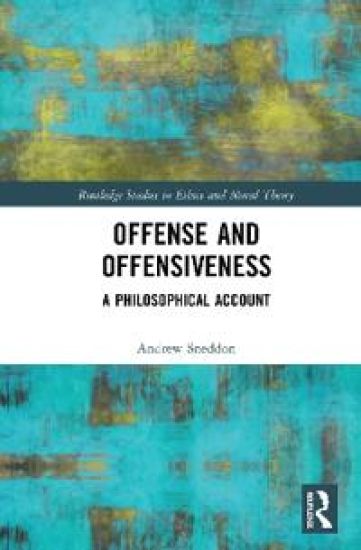
This book offers a comprehensive study of the nature and significance of offense and offensiveness. It incorporates insights from moral philosophy and moral psychology to rationally reconstruct our ordinary ideas and assumptions about these notions. When someone claims that something is offensive, others are supposed to listen. Why? What is it for something to be offensive? Likewise, it’s supposed to matter if someone claims to have been offended. Is this correct? In this book, Andrew Sneddon argues that we should think of offense as a moralized bad feeling. He explains offensiveness in terms of symbolic value. We tend to give claims of both offense and offensiveness more credence than they deserve. While it is in principle possible for there to be genuine moral problems of offense and offensiveness, we should expect such problems to be rare. Offense and Offensiveness: A Philosophical Account will be of interest to scholars and students working in moral philosophy and moral psychology.
Representing Magic in Modern Ireland

Representing Magic in Modern Ireland

Andrew Sneddon

Cambridge University Press
2022
pokkari
This Element argues that Ireland did not experience a disenchanted modernity, nor a decline in magic. It suggests that beliefs, practices and traditions concerning witchcraft and magic developed and adapted to modernity to retain cultural currency until the end of the twentieth century. This analysis provides the backdrop for the first systematic exploration of how historic Irish trials of witches and cunning-folk were represented by historians, antiquarians, journalists, dramatists, poets, and novelists in Ireland between the late eighteenth and late twentieth century. It is demonstrated that this work created an accepted narrative of Irish witchcraft and magic which glossed over, ignored, or obscured the depth of belief in witchcraft, both in the past and in contemporary society. Collectively, their work gendered Irish witchcraft, created a myth of a disenchanted, modern Ireland, and reinforced competing views of Irishness and Irish identity. These long-held stereotypes were only challenged in the late twentieth-century.
Offense and Offensiveness

Offense and Offensiveness

Andrew Sneddon

Routledge
2020
sidottu
This book offers a comprehensive study of the nature and significance of offense and offensiveness. It incorporates insights from moral philosophy and moral psychology to rationally reconstruct our ordinary ideas and assumptions about these notions. When someone claims that something is offensive, others are supposed to listen. Why? What is it for something to be offensive? Likewise, it’s supposed to matter if someone claims to have been offended. Is this correct? In this book, Andrew Sneddon argues that we should think of offense as a moralized bad feeling. He explains offensiveness in terms of symbolic value. We tend to give claims of both offense and offensiveness more credence than they deserve. While it is in principle possible for there to be genuine moral problems of offense and offensiveness, we should expect such problems to be rare. Offense and Offensiveness: A Philosophical Account will be of interest to scholars and students working in moral philosophy and moral psychology.
A Is for Atheist

A Is for Atheist

Andrew Sneddon

Pitchstone Publishing
2016
Nidottu
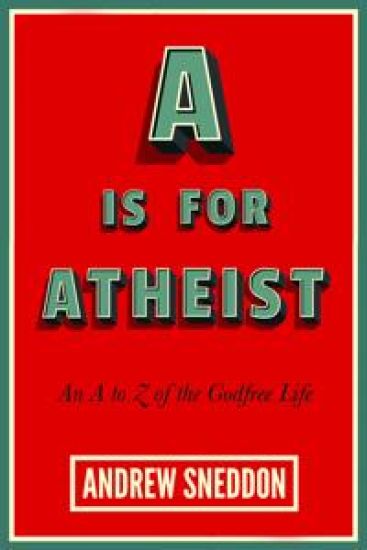
Atheists may be among the fastest growing “religious” demographics in the world, but they are also perhaps the most misunderstood. To begin, atheists have no identifying marks, no defining habits, no obvious symbols, for all that unites them, essentially, is an absence of belief. As a result, many religious believers may not even realize they know atheists, whether as neighbors, friends, or coworkers. In addition, most major religions warn against the faithless and preach distrust of nonbelievers. This creates not only ignorance about what it’s like to be an atheist, but also fear about the very idea of atheism. Organized like an encyclopedia, this book aims to rectify this widespread distrust and suspicion with basic understanding. Each entry, written in clear, concise language, covers a specific topic or question related to being an atheist, making this the perfect primer for anyone curious about or interested in atheism—whether to learn more about why someone might become an atheist, how someone creates meaning and purpose as an atheist, and what life is like as an atheist.
Witchcraft and Magic in Ireland

Witchcraft and Magic in Ireland

Andrew Sneddon

PALGRAVE MACMILLAN
2016
nidottu
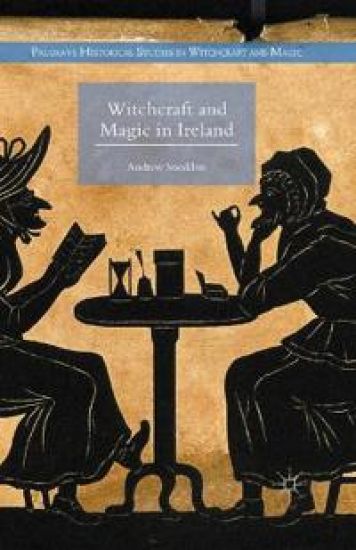
This is the first academic overview of witchcraft and popular magic in Ireland and spans the medieval to the modern period. Based on a wide range of un-used and under-used primary source material, and taking account of denominational difference between Catholic and Protestant, it provides a detailed account of witchcraft trials and accusation.
Witchcraft and Magic in Ireland

Witchcraft and Magic in Ireland

Andrew Sneddon

Palgrave Macmillan
2015
sidottu
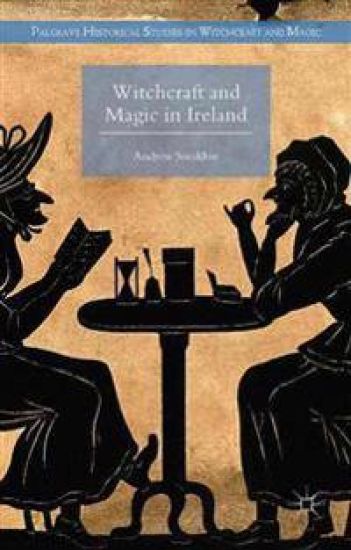
This is the first academic overview of witchcraft and popular magic in Ireland and spans the medieval to the modern period. Based on a wide range of un-used and under-used primary source material, and taking account of denominational difference between Catholic and Protestant, it provides a detailed account of witchcraft trials and accusation.
Witchcraft and Whigs

Witchcraft and Whigs

Andrew Sneddon

Manchester University Press
2014
nidottu
This ground-breaking biography of Bishop Francis Hutchinson (1669–1739) provides a detailed and rare portrait of an early eighteenth century Irish bishop and witchcraft theorist. Drawing upon a wealth of printed primary source material, the book aims to increase our understanding of the eighteenth-century established clergy, both in England and Ireland. It illustrates how one of the main sceptical texts of the seventeenth and eighteenth centuries, the Historical essay concerning witchcraft (1718), was constructed and how it fitted into the wider intellectual and literary context of the time, examining Hutchinson’s views on contemporary debates concerning modern prophecy and miracles, demonic and Satanic intervention, the nature of Angels and hell, and astrology. This book will be of particular interest to academics and students of history of witchcraft, and the religious, political and social history of Britain and Ireland in the late seventeenth and early eighteenth centuries.
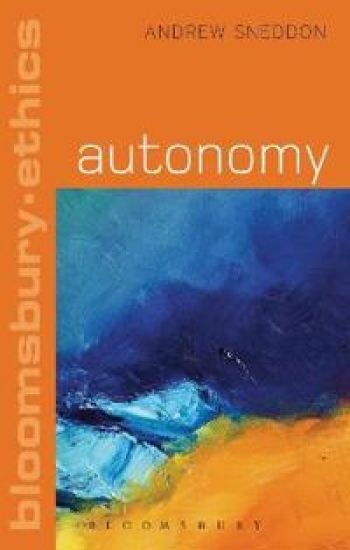
Autonomy

Autonomy

Andrew Sneddon

Bloomsbury Academic USA
2013
nidottu
Philosophers have various reasons to be interested in individual autonomy. Individual self-rule is widely recognized to be important. But what, exactly, is autonomy? In what ways is it important? And just how important is it? This book introduces contemporary philosophical thought about the nature and significance of individual self-rule. Andrew Sneddon divides self-rule into autonomy of choice and autonomy of persons. Unlike most philosophical treatments of autonomy, Sneddon addresses empirical study of the psychology of action. The significance of autonomy is displayed in connection with such issues as paternalism, political liberalism, advertising and physician-assisted suicide. Sneddon both introduces the themes of contemporary autonomy studies and defends a novel account of its nature and significance. Autonomy is an ideal introduction for advanced-level undergraduate and postgraduate students to the issues and debates surrounding individual self-rule.
Autonomy

Autonomy

Andrew Sneddon

Bloomsbury Academic USA
2013
sidottu
Philosophers have various reasons to be interested in individual autonomy. Individual self-rule is widely recognized to be important. But what, exactly, is autonomy? In what ways is it important? And just how important is it? This book introduces contemporary philosophical thought about the nature and significance of individual self-rule. Andrew Sneddon divides self-rule into autonomy of choice and autonomy of persons. Unlike most philosophical treatments of autonomy, Sneddon addresses empirical study of the psychology of action. The significance of autonomy is displayed in connection with such issues as paternalism, political liberalism, advertising and physician-assisted suicide. Sneddon both introduces the themes of contemporary autonomy studies and defends a novel account of its nature and significance. Autonomy is an ideal introduction for advanced-level undergraduate and postgraduate students to the issues and debates surrounding individual self-rule.
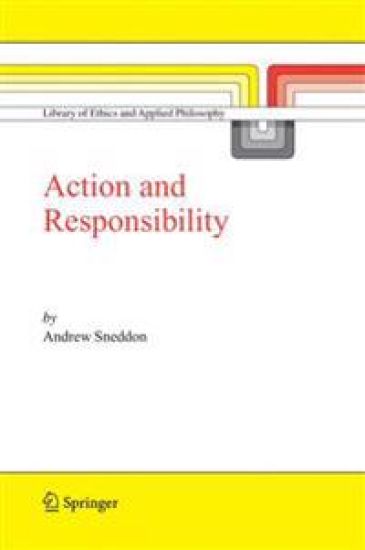
Action and Responsibility

Action and Responsibility

Andrew Sneddon

Springer
2010
nidottu
This book is an exploration of what it takes for an event to count as an action. I first became interested in this topic nearly a decade ago while working on a different topic. I kept coming across philosophers making claims about the nature of action that seemed false or at least dubious to me. As a consequence I turned to the philosophy of action directly, to get to the heart of the matter. I have wrestled with this territory ever since. I hope that, with this book, I have finally earned the intuitions that put me at odds with the philosophers I was originally reading. This book develops ideas in Part Two of my doctoral dissertation, which I wrote at Queen’s University in Kingston, Ontario, Canada. I loved being at Queen’s, for both professional and personal reasons. My thanks go to the Social Sciences and Humanities Research Council of Canada for financial support as a doctoral candidate. Steve Leighton and Ronald de Sousa were readers for my dissertation. They provided some early and invaluable challenges to the ideas developed here. My deepest debt of gratitude is owed to David Bakhurst, my supervisor. I learned a lot from David; this book would not be the same without his help.
Action and Responsibility

Action and Responsibility

Andrew Sneddon

Springer-Verlag New York Inc.
2005
sidottu
This book is an exploration of what it takes for an event to count as an action. I first became interested in this topic nearly a decade ago while working on a different topic. I kept coming across philosophers making claims about the nature of action that seemed false or at least dubious to me. As a consequence I turned to the philosophy of action directly, to get to the heart of the matter. I have wrestled with this territory ever since. I hope that, with this book, I have finally earned the intuitions that put me at odds with the philosophers I was originally reading. This book develops ideas in Part Two of my doctoral dissertation, which I wrote at Queen’s University in Kingston, Ontario, Canada. I loved being at Queen’s, for both professional and personal reasons. My thanks go to the Social Sciences and Humanities Research Council of Canada for financial support as a doctoral candidate. Steve Leighton and Ronald de Sousa were readers for my dissertation. They provided some early and invaluable challenges to the ideas developed here. My deepest debt of gratitude is owed to David Bakhurst, my supervisor. I learned a lot from David; this book would not be the same without his help.