Kirjojen hintavertailu – 12 859 824 kirjaa ja 27 kauppaa

Kirjailija

Andrew Stewart

Kirjat ja teokset yhdessä paikassa: 39 kirjaa, julkaisuja vuosilta 1994–2025, suosituimpiin kuuluu The Little Giant of New York. Vertaile teosten hintoja ja tarkista saatavuus suomalaisista kirjakaupoista.

39 kirjaa

Kirjojen julkaisuvuodet: 1994–2025.

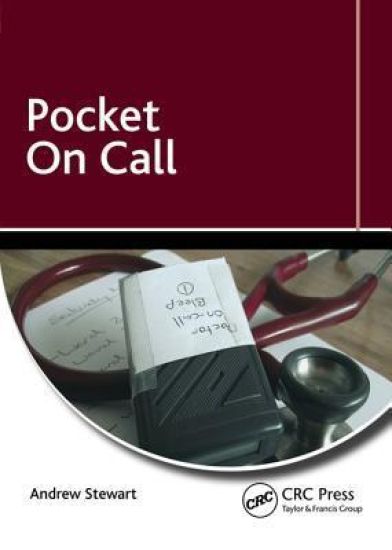
Pocket On Call

Pocket On Call

Andrew Stewart

Routledge
2015
nidottu
This genuinely pocket-sized guide to being on call is ideal for medical students and newly qualified junior doctors seeking a convenient and concise handbook to refer to in busy clinical settings. Clear, concise and systematic, Pocket on Call contains exactly what you need to make rapid and appropriate decisions without overwhelming or extraneous information. With this book in your pocket, you’ll be equipped to tackle being on call appropriately and with confidence. Answering the questions that are not always addressed in the lecture theatre, with this book as an indispensable companion the inexperienced doctor will be equipped to tackle being on call appropriately and with confidence.
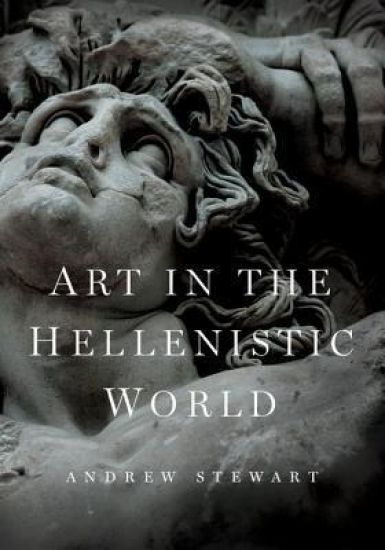
Art in the Hellenistic World

Art in the Hellenistic World

Andrew Stewart

Cambridge University Press
2014
pokkari

Halvin toimitettuna 48,80 €

What was Hellenistic art, and what were its contexts, aims, achievements, and impact? This textbook introduces students to these questions and offers a series of answers to them. Its twelve chapters and two 'focus' sections examine Hellenistic sculpture, painting, luxury arts, and architecture. Thematically organized, spanning the three centuries from Alexander to Augustus, and ranging geographically from Italy to India and the Black Sea to Nubia, the book examines key monuments of Hellenistic art in relation to the great political, social, cultural, and intellectual issues of the time. It is illustrated with 170 photographs (mostly in color, and many never before published) and contextualized through excerpts from Hellenistic literature and inscriptions. Helpful ancillary features include maps, appendices with background on Hellenistic artists and translations of key documents, a full glossary, a timeline, brief biographies of key figures, suggestions for further reading, and bibliographical references.
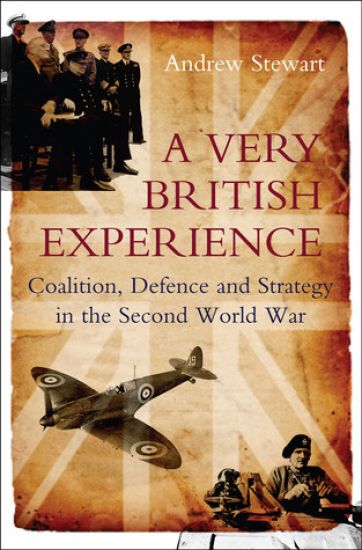
A Very British Experience

A Very British Experience

Andrew Stewart

Sussex Academic Press
2012
sidottu
In terms of the Second World War and Britain's wartime strategy three elements deserve close scrutiny: the paramount importance of defending the British mainland and its population; the challenges of building and maintaining coalitions and alliances; and the central role the African continent assumed in all British strategic planning. A concluding essay reflects upon the degree to which in the face of an often uncertain and unconvincing approach these critical themes underpinned the British experience of the conflict. Topics addressed include 1940 and the Defence of Britain; relations with the United States; the British Empire Air Training Plan; General (Boy) Browning and Operation Market Garden; the recall of General Alan Cunningham from Libya in 1941; plans for defending the Royal Family; Exercise Genesis, which turned west London into a battleground for a day in May 1942; and the role of the Eastern Fleet off Africa. Andrew Stewart provides a compelling chapter on the loss of the Tobruk garrison in June 1942 -- one of the worst military disasters suffered by the British Empire during the Second World War. The essay on Tobruk demonstrates how all three defining elements of wartime experience converged: the loss of public confidence about how the war was being conducted; its impact on the relationship with the Union of South Africa, a key partner in the Dominion wartime coalition; and the absolute necessity that existed for deep strategic planning on the African continent -- subsequently to be realised at the final battle at El Alamein.
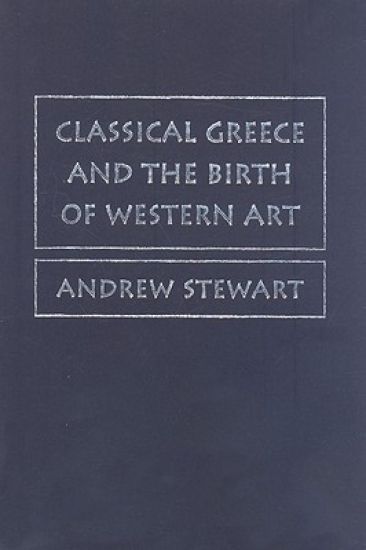
Classical Greece and the Birth of Western Art

Classical Greece and the Birth of Western Art

Andrew Stewart

Cambridge University Press
2008
sidottu
What was the 'Classical Revolution' in Greek art? What were its contexts, aims, achievements, and impact? This book introduces students to these questions and guides them towards the answers. Andrew Stewart examines Greek architecture, painting, and sculpture of the fifth and fourth centuries BC in relation to the great political, social, cultural, and intellectual issues of the period.
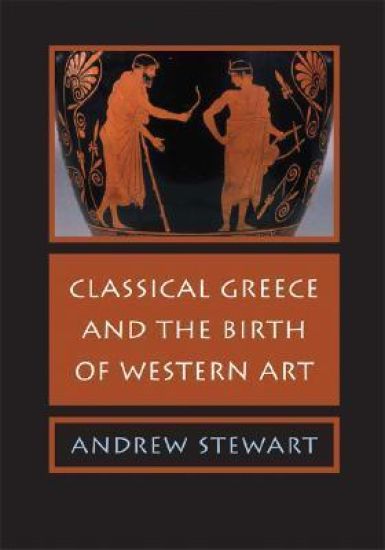
Classical Greece and the Birth of Western Art

Classical Greece and the Birth of Western Art

Andrew Stewart

Cambridge University Press
2008
pokkari
What was the 'Classical Revolution' in Greek art? What were its contexts, aims, achievements, and impact? This book introduces students to these questions and guides them towards the answers. Andrew Stewart examines Greek architecture, painting, and sculpture of the fifth and fourth centuries BC in relation to the great political, social, cultural, and intellectual issues of the period.
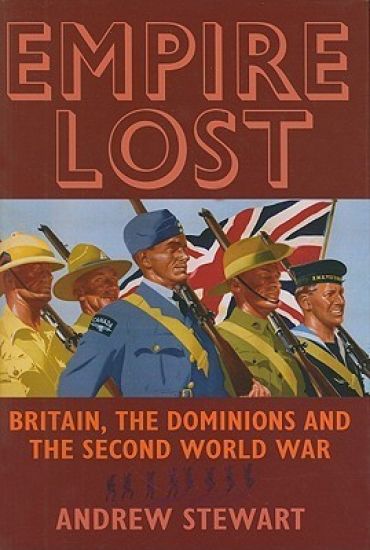
Empire Lost

Empire Lost

Andrew Stewart

Hambledon Continuum
2008
sidottu
This fascinating book explores British imperial unity at the outbreak of the Second World War and how this ultimately led to its own dissolution in post-war years. In September 1939, four of the five dominions took the decision to support Neville Chamberlain's London-based government and declare war on Nazi Germany. This was to be the last great outpouring of British imperial unity. Entering the fray as 'self-autonomous' they finished it as fledgling states whose long-held political, military, economic and cultural ties with the Mother Country were now uncertain. The Second World War brought military triumphs and catastrophes for the Imperial Coalition. More importantly, it also brought political awareness and a weakening of central power. The war that defeated the Nazi Reich also helped destroy the historically accepted unity of the British Empire. Using government records, private letters and diaries and contemporary media sources, this book examines the key themes affecting the relationship between Britain and the Dominions during the Second World War, the Empire's last great conflict. It asks why this political and military coalition was ultimately successful in overcoming the challenge of the Axis powers but, in the process, proved unable to preserve itself. Although these changes were inevitable the manner of the evolution was sometimes painful, as Britain's wartime economic decline left its political position exposed in a changing post-war international system.
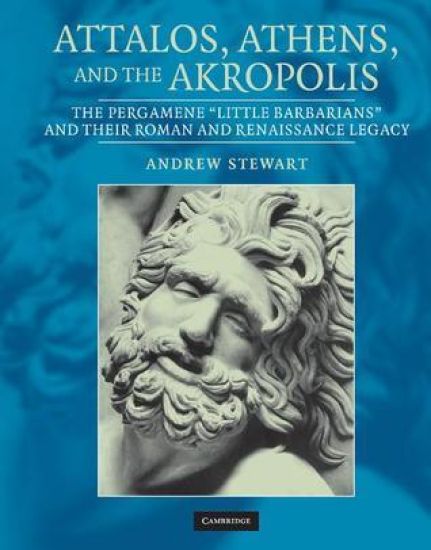
Attalos, Athens, and the Akropolis

Attalos, Athens, and the Akropolis

Andrew Stewart

Cambridge University Press
2004
sidottu
This volume examines the ‘little barbarians’, ten highly expressive Roman marble figures of Giants, Amazons, Persians, and Gauls that were found in Rome in 1514 and are now recognized as copies of the Small (or Lesser) Attalid Dedication on the Athenian Akropolis. Manolis Korres’ recent discovery of the monument’s pedestals, fully published in this volume, has led Andrew Stewart to a complete reconsideration of the statues’ form, date, and significance. He demonstrates that this is the only Hellenistic royal donation of sculpture whose donor, location, and form are all known; the only one securely identified in copy; and the only one whose life can be glimpsed from beginning to end, a period ranging over 2200 years. Illustrated with new photographs of all ten Barbarians, and 26 new drawings by Manolis Korres, it systematically traces the Barbarians’ impact upon Roman and Renaissance art, and the intellectual history of art and archaeology.
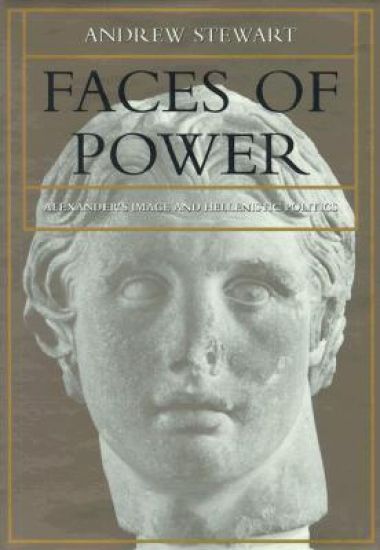
Faces of Power

Faces of Power

Andrew Stewart

University of California Press
1994
sidottu
Alexander the Great changed the face of the ancient world. During his life and after his death, his image in works of art exerted an unprecedented influence-on marbles, bronzes, ivories, frescoes, mosaics, coins, medals, even painted pottery and reliefware. Alexander's physiognomy became the most famous in history. But can we really know what meaning lies behind these images? Andrew Stewart demonstrates that these portraits--wildly divergent in character, quality, type, provenance, date, and purpose--actually transmit not so much a likeness of Alexander as a set of carefully crafted cliches that mobilize the notion "Alexander" for diverse ends and diverse audiences. Stewart discusses the portraits as studies in power and his original interpretation of them gives unprecedented fullness and shape to the idea and image called "Alexander."