Kirjojen hintavertailu – 12 903 725 kirjaa ja 27 kauppaa

Kirjailija

Andrew Szasz

Kirjat ja teokset yhdessä paikassa: 3 kirjaa, julkaisuja vuosilta 1994–2009, suosituimpiin kuuluu Ecology and the World-System. Vertaile teosten hintoja ja tarkista saatavuus suomalaisista kirjakaupoista.

3 kirjaa

Kirjojen julkaisuvuodet: 1994–2009.

Shopping Our Way to Safety

Shopping Our Way to Safety

Andrew Szasz

University of Minnesota Press
2009
nidottu
What could be wrong with bottled water and sunscreen? Many Americans today rightly fear that they are constantly exposed to dangerous toxins in their immediate environment: tap water is contaminated with chemicals; foods contain pesticide residues, hormones, and antibiotics; even the air we breathe, outside and indoors, carries invisible poisons. Yet we have responded not by pushing for governmental regulation, but instead by shopping. What accounts for this swift and dramatic response? And what are its unintended consequences? Andrew Szasz examines this phenomenon in Shopping Our Way to Safety. Within a couple of decades, he reveals, bottled water and water filters, organic food, “green” household cleaners and personal hygiene products, and “natural” bedding and clothing have gone from being marginal, niche commodities to becoming mass consumer items. Szasz sees these fatalistic, individual responses to collective environmental threats as an inverted form of quarantine, aiming to shut the healthy individual in and the threatening world out. Sharply critiquing these products’ effectiveness as well as the unforeseen political consequences of relying on them to keep us safe from harm, Szasz argues that when consumers believe that they are indeed buying a defense from environmental hazards, they feel less urgency to actually do something to fix them. To achieve real protection, real security, he concludes, we must give up the illusion of individual solutions and together seek substantive reform.

Ecology and the World-System

Ecology and the World-System

Walter L. Goldfrank; David Goodman; Andrew Szasz

Praeger Publishers Inc
1999
sidottu
Integrating environmental and world-systems analyses in chapters ranging from the ancient to the contemporary, from the global to the local, from West to East, and from North to South, this book is the first collection to analyze environmental issues from the world-systems perspective. The introduction provides Immanuel Wallerstein's fullest explication of the role of ecological constraints in the world-system. Early chapters diagnose the increasing environmental threats to global sustainability and suggest ways to arrive at an integrated theoretical understanding of those threats. The work then shows the historical and geographical range necessary to do justice to ecological considerations in chapters considering ancient civilizations, capitalism, the circumpolar North, the dam-builders of Asia, and the polluters of East Central Europe. The final chapters analyze the successes and limits of environmental movements in the United States, South Africa, and South Korea.
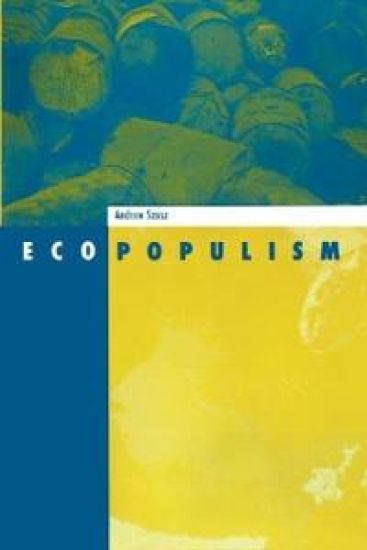
Ecopopulism

Ecopopulism

Andrew Szasz

University of Minnesota Press
1994
nidottu
Moment by moment the evidence mounts that unchecked modern industry is bringing us ever closer to environmental disaster. How can we move away from the brink of extinction, toward a human society the earth can bear? In the thriving popular politics of hazardous waste, Andrew Szasz finds an answer, a scenario for taking the most pressing environmental issues out of the academy and the boardroom and turning them into everyone's business. This book reconstructs the growth of a powerful movement around the question of toxic waste. Szasz follows the issue as it moves from the world of "official" policymaking in Washington, onto the nation's television screens and into popular consciousness, and then into America's neighborhoods, spurring the formation of thousands of local, community-based groups. He shows how, in less than a decade, a rich infrastructure of more permanent social organizations emerged from this movement, expanding its focus to include issues like municipal waste, military toxics, and pesticides. In the growth of this movement, we witness the birth of a radical environmental populism. Here Szasz identifies the force that pushed environmental policy away from the traditional approach, pollution removal, toward the superior logic of pollution prevention. He discusses the conflicting official responses to the movement's evolution, revealing that, despite initial resistance, lawmakers eventually sought to appease popular discontent by strengthening toxic waste laws. In its success, Szasz suggests, this movement may even prove to be the vehicle for reinvigorating progressive politics in the United States.