Kirjailija
Andrew Thomson
Kirjat ja teokset yhdessä paikassa: 68 kirjaa, julkaisuja vuosilta 1996–2026, suosituimpiin kuuluu The Feldman Method. Vertaile teosten hintoja ja tarkista saatavuus suomalaisista kirjakaupoista.
68 kirjaa
Kirjojen julkaisuvuodet: 1996–2026.
This book examines the life and times of John Bolton, a Cambridge graduate who graduated as a Baker Scholar from Harvard Business School, and returned to Britain to quickly chair Solartron, one of the outstanding of the early British electronics companies in the 1950s. John Bolton also enjoyed a career of public service and private good works. He led the founding of the Foundation for Management Education, which had an extremely influential role in the development of management education in Britain, and chaired the 1968-71 Committee of Inquiry on Small Firms, resulting in what is now generally called the Bolton Report. The Bolton Report became and continues to be the starting point for analysis of the sector at a time when small business is again being seen as a major contributor to the British economy and has revolutionized attitudes and policy towards the small business sector at all levels. Bolton’s career covered a range of different dimensions of mid to late twentieth century industrial and public life in Britain, and the history is as much about these as it is of the man himself. The intention of this book is to illuminate the institutions in which Bolton worked as well as to paint a picture of his own role.

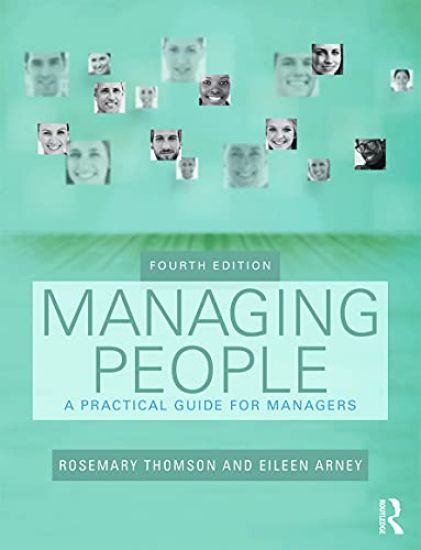
This updated and exciting fourth edition of Managing People: A Practical Guide for Front-Line Managers addresses the growing needs of front-line managers who are not themselves specialists in personnel management but whose roles require them to have these skills. A growing trend over the last two decades has given these managers an increasing amount of responsibility of direct line management, which can be extremely challenging especially if the correct training is not given. This book examines how the different parts of managing people fit together, whilst acknowledging that different contexts require different approaches and recognizing ongoing organizational, environmental and legal changes that affect the employment framework. It recognizes the rapidly changing context in which modern front-line managers have to operate and acknowledges the increasing expectations of good leadership as a necessity. However, the book also emphasizes the need for front-line managers to understand themselves, their own management styles and attitudes, together with the importance of empathy in appreciating the perspectives of the staff that work under them. Managing People: A Practical Guide for Front-Line Managers is designed for both new managers and for NVQ/SVQ Level 4 students. It is also appropriate for the first stages of Foundation Degrees and for HND courses combining academic study with workplace learning.
Path to the Perfect Life: Time to start walking
Andrew Thomson
Createspace Independent Publishing Platform
2014
nidottu
Upper Wind Observations and Results Obtained on Cruise VII of the Carnegie: Meteorology, Part 2
Andrew Thomson
Literary Licensing, LLC
2013
nidottu
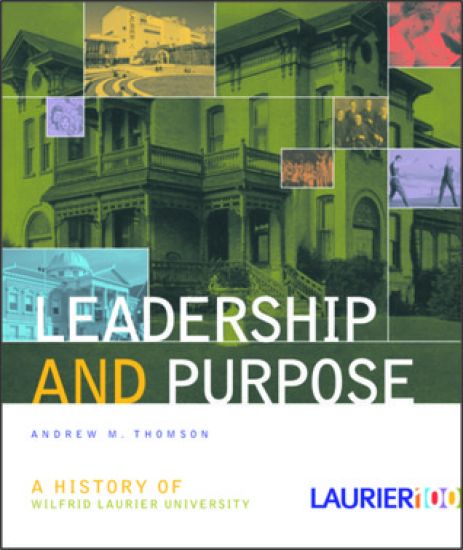
Leadership and Purpose: A History of Wilfrid Laurier University tells the story of the creation and growth of one of Canada's leading universities. On October 30, 1911, a jubilant crowd of nearly 1,500 people gathered in their Sunday finest on the lawn of a large home on the rural outskirts of Waterloo, Ontario. They were there to mark the opening of the Evangelical Lutheran Seminary of Canada. With just four students and one full-time professor, the seminary was modest in size but it had the enthusiastic support of an entire community. Even the most optimistic supporter, however, could not have foreseen how this small religious school would evolve over the next 100 years into a thriving public university with 17,000 students and a national reputation for teaching and research excellence. In Leadership and Purpose: A History of Wilfrid Laurier University, historian Andrew Thomson tells the remarkable story of an academic community whose vision, determination, and perseverance are a testament to the transformative power of education.
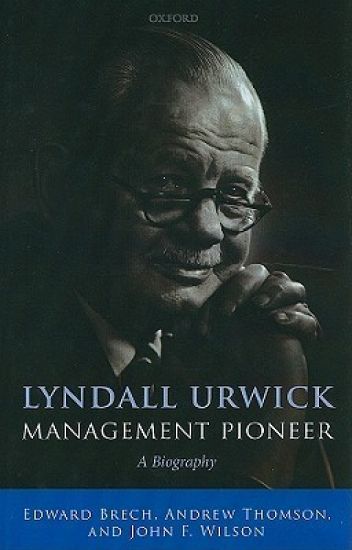
Lyndall Urwick, Management Pioneer
Edward Brech; Andrew Thomson; John F. Wilson
Oxford University Press
2010
sidottu
Lyndall Urwick was the dominant figure in British management between the late 1920s and the early 1960s. His writings and his passion in pursuit of management as a scientific and systematic activity rather than the rule-of-thumb approach to decision-making all too prevalent in Britain exercised a huge influence on management at the time; and ultimately management as we know it today. Urwick was greatly affected by his experience of the First World War and at Rowntree's. He went on to become Director of the International Management Institute between 1928-33, before forming a very influential management consultancy, Urwick Orr and Partners, which he chaired for the rest of his career. He was also deeply involved with almost all the institutional developments in British management up to the 1960s, including the Management Research Groups, the Institute of Industrial Administration, the British Institute of Management, the Administrative Staff College, and the management education side of the Anglo-American Council on Productivity. In pursuit of what he called his 'mission at large', he gave hundreds of talks in his lucid and charismatic style, many of which were published as articles or booklets. These talks were not only in Britain but in Australia after his emigration there in 1961, in America, where he became the best-recognized foreign exponent of management, and in a range of countries around the world. But he will probably be best remembered for his writings, not only on organization theory, where he is recognized as a great synthesizer and leader in the classical school, but on a wide range of other topics, including the history of management, leadership, marketing, and management education and development. Truly he was a man of many parts.
The Precentor's Guide To The Selection Of Tunes Suited To The Character And Metres Of The Psalms, Paraphrases, And Hymns Adopted By The United Presbyterian Church (1853)
Andrew Thomson; Matthew McGavin
KESSINGER PUBLISHING, LLC
2010
sidottu
Four Lectures To Young Men
Andrew Thomson; Alexander Fraser; William Cunningham
KESSINGER PUBLISHING, LLC
2010
sidottu
An Address to Christian Parents on the Religious Education of Their Children
Andrew Thomson
Kessinger Pub
2009
pokkari
Management has always been part of human organization, but it is only in the last two centuries or so that it has been the central driver of economic activity, as companies have moved from family firms to hugely complex, multinational corporations with many layers of management. The term management is commonly used in three ways: as a process or activity; as a structure in any organization; and as a group or class of people carrying out certain roles in an organization. This book is the first detailed account of the evolution of management in all three senses. The focus is mainly on the UK, but throughout the broader question of why corporate management structures developed so impressively in the USA, Germany and Japan is borne in mind, while arguably little progress was made in this regards in the UK. Equally the authors consider why, given that management is now so widely studied, so little careful research has been undertaken into the evolution of the practice and the profession of management. The book is divided into four sections. Part One provides An Introduction to Management History; Part Two, Management and Organization, explores the historical development through the 19th and 20th centuries; Part Three, Managers in Context, looks at the social and cultural context of management and managers; and Part Four considers three key functional areas, labour, marketing, and accounting and finance. This rich, detailed, and path-breaking book will be essential reading for anyone wanting to understand the evolution of management as we now understand it, whether academics, students or managers themselves.
Four Lectures To Young Men
Andrew Thomson; Alexander Fraser; William Cunningham
KESSINGER PUBLISHING CO
2009
pokkari
The Precentor's Guide To The Selection Of Tunes Suited To The Character And Metres Of The Psalms, Paraphrases, And Hymns Adopted By The United Presbyterian Church (1853)
Andrew Thomson; Matthew McGavin
KESSINGER PUBLISHING, LLC
2008
nidottu