Kirjailija
Andrew Wiest
Kirjat ja teokset yhdessä paikassa: 18 kirjaa, julkaisuja vuosilta 2001–2026, suosituimpiin kuuluu The Vietnam War. Vertaile teosten hintoja ja tarkista saatavuus suomalaisista kirjakaupoista.
18 kirjaa
Kirjojen julkaisuvuodet: 2001–2026.
Mankind has waged warfare for as long as hunters have been able to wield deadly weapons: rock paintings dating back 10,000 years show hunter-gatherers in Spain fighting with bows and arrows. The history of humankind is in part the history of warfare, as peoples and states have sought to impose themselves on each and protect their own interests, fighting for land, resources and influence. Arranged chronologically, History of War offers a broad overview of the most important wars, battles and campaigns from the Bronze Age to the present, with extensive coverage of the key developments in military technology along the way. Learn about the fabled Siege of Troy, and the Bronze Age weapons deployed at the time; understand how William of Normandy broke the Anglo-Saxon shield wall at Hastings with the clever use of feint cavalry tactics, and in so doing, won himself a kingdom; marvel at the final fall of the Eastern Roman empire, when Mehmet II’s Ottoman troops finally stormed the walls of Constantinople in 1453; follow the three-day battle at Gettysburg, where the Union army halted Lee’s Confederate advance north and turned the war in favour of the federal government; see the success of the tank as a spearhead of lightning tactics, deployed so effectively by Germany during the invasions of Poland, France and Russia in World War II; and understand the uses of drones in modern warfare, and their ability use stealth tactics to destroy tanks, artillery and fixed enemy positions. History of War provides a sumptuous, pictorial guide to the most significant wars, battles and campaigns in world history, from the Bronze Age to the 21st Century.
This is an unsparing account of the sharp end of war written by one of the finest military historians of his generation. Andrew Wiest, author of the bestselling Boys of ’67, traces the experience of the 150th Combat Engineers of the Mississippi National Guard in their 2005 tour of duty in Iraq, centered on the forward operating base Dogwood. Comprising youth hoping to attain a way out of grinding poverty, women seeking to break barriers, and patriots answering their nation’s call after 9/11, the 150th represented nearly all of what America had to offer in 2005. Amid the transformation of the US military in the 21st century, no longer were they destined to be weekend warriors tasked mainly with local disaster relief. The new Guard was a sharp weapon of war. Soldiers grew up in the same communities, played sports and served together. As Dogwood reveals, this provides a singular advantage, but also intensifies loss. Defying poor equipment, lack of specialist training and heart-breaking losses, the 150th endured combat. They also implemented their own homespun counterinsurgency policy that turned an insurgency hotbed into a thriving community – one of the war’s few success stories. But all was forgotten. Set within the context of a changing military, an evolving strategic situation and an unpopular war, Dogwood is an unflinching history which lays bare the harsh reality of combat through countless first-hand accounts.
World War II Illustrated Atlas
David Jordan; Andrew Wiest
AMBER BOOKS LTD
2023
sidottu
Halvin toimitettuna 28,40 €
World War II was the greatest conflict in the history of mankind. It penetrated into every corner of the globe, from the Arctic to the Pacific Oceans. Immense armed forces engaged one another in battle in every type of environment, from the desert sands of North Africa to the jungles of Burma and New Guinea. The Allied and Axis forces met in brutal encounters ranging from small commando raids to gigantic armoured battles. World War II Illustrated Atlas is a comprehensive visual guide to this complex conflict. It plots the exact course of the land, sea and air campaigns in fine detail, enabling the reader to trace the ebb and flow of the fortunes of both sides. With the aid of over 160 full-colour maps, every theatre of war is covered. Contents include the land campaigns in North-west Europe, Italy, North Africa, Russia, South-East Asia and the Pacific; the naval war in the Atlantic and Mediterranean; the great carrier battles of the Pacific war; and the strategic bombing campaigns of Europe and the Pacific, culminating in the destruction of Hiroshima and Nagasaki. This new edition provides another 25 maps showing the key raids and battles of the war, ranging from the St Nazaire raid in 1942 to the battle for Corregidor in February 1945. The isometric map views give a new perspective on the war, and are accompanied by detailed descriptions of the battles and raids along with photographs from the event. This complete atlas provides an invaluable work of reference for both the general reader and the serious student of World War II.
“A date which will live in infamy.”—US President Franklin Delano Roosevelt Sunday, December 7, 1941, was supposed to be a day of rest for the military personnel at Hawaii’s Pearl Harbor naval base on the island of Oahu. But at 7:55 a.m., Japanese carrier-based planes launched a surprise attack on the US Pacific Fleet moored in the harbour. Thousands of lives were lost that day, drawing the United States into World War II and beginning a new phase of the war in East Asia. In Pearl Harbor, our expert author offers a concise photographic guide to this key turning point in World War II. The book is divided into chapters covering the origins and military strength of the naval station; Japanese plans and dispositions; the attack itself; the damage caused; the clean-up operation and aftermath; and the life of the base today. See rare photographs of Japanese airplanes taking off to launch the attack; aerial views of the US naval base before and during the air attack; the destruction wrought; the key figures involved on both sides; and the memorials that have been erected, especially to the sunken battleship USS Arizona. Pearl Harbor provides a photographic exploration of this momentous event and its aftermath in 160 dramatic photos.
Atlas över andra världskriget : offensiver, slag och vapen 1939-1945
David Jordan; Andrew Wiest
Lind Co
2022
sidottu
Andra världskriget rasade i alla delar av världen, från Arktis till Stilla havet. De allierade och axelmakterna mötte varandras styrkor i alla slags miljöer, från Nordafrikas ökensand och Ukrainas stäpper till Burmas och Nya Guineas regnskogar, i brutala strider, från små kommandoräder till stora stridsvagnsdrabbningar. Kriget kastade in mänskligheten i ett sex år långt mörker och ändrade världen för alltid. Atlas över andra världskriget är en översiktlig vägvisare till denna komplexa konflikt. Den visar detaljerat operationerna på land, till sjöss och i luften. I 168 färgkartor, med foton från striderna och initierade texter skildras alla krigsskådeplatser: striderna i Europa, Nordafrika, Sovjetunionen, Sydostasien och Stillahavsområdet. Alla kartor i boken har beställts och ritats av fackkartografer. Denna heltäckande atlas är ett ovärderligt verk för den som intresserar sig för andra världskriget. DAVID JORDAN är lektor i försvarsstudier vid King's College London. Han har tidigare skrivit böcker om både första och andra världskriget. ANDREW WIEST är professor i historia vid University of Southern Mississippi. Han har tidigare skrivit böcker om bland annat Vietnamkriget.
In this fully illustrated introduction, leading Vietnam War historian Dr Andrew Wiest provides a concise overview of America’s most divisive war. America entered the Vietnam War certain of its Cold War doctrines and convinced of its moral mission to save the world from the advance of communism. However, the war was not at all what the United States expected. Dr Andrew Wiest examines how, outnumbered and outgunned, the North Vietnamese and Viet Cong forces resorted to a guerrilla war based on the theories of Mao Zedong of China, while the US responded with firepower and overwhelming force. Drawing on the latest research for this new edition, Wiest examines the brutal and prolonged resultant conflict, and how its consequences would change America forever, leaving the country battered and unsure as it sought to face the challenges of the final acts of the Cold War. As for Vietnam, the conflict would continue long after the US had exited its military adventure in Southeast Asia. Updated and revised, with full-colour maps and new images throughout, this is an accessible introduction to the most important event of the “American Century.”
The Western Front 1917-1918: From Vimy Ridge to Amiens and the Armistice
Andrew Wiest
Amber Books
2021
nidottu
The History of World War I series recounts the battles and campaigns that took place during the 'Great War'. From the Falkland Islands to the lakes of Africa, across the Eastern and Western Fronts, to the former German colonies in the Pacific, the World War I series provides a six-volume history of the battles and campaigns that raged on land, at sea and in the air. Following the climactic battles of Verdun and the Somme the previous year, the Allies sought to finish the war on the Western Front in 1917 through a major French offensive designed to rupture the German front and roll up their position. This attack was to be supported by a diversionary British offensive at Arras in the north, which would draw off both German attention and their reserves. In the event, the French offensive in Champagne failed to deliver the promised breakthrough, leaving the French Army in a state of open mutiny. While French discipline recovered, the British Expeditionary Force took on the burden of the bulk of the fighting for the rest of the year. The need for an Allied offensive to take the pressure off the French resulted in the Third Battle of Ypres, more commonly known as Passchendaele. The battle degenerated into a slaughter in the Flanders mud thanks to heavy rain, and the only rays of light for the Allies at the end of 1917 were the arrival of fresh American troops on the Western Front, and the potential for a decisive victory shown by the use of armour at the Battle of Cambrai. However the Russian Revolution brought the fighting on the Eastern Front to an end, releasing numerous battle-hardened divisions to reinforce the Germans in the west. The year 1918 saw Germany launch her Spring Offensives, desperate attempts to defeat the Allies before the Americans could arrive in force. Although these assaults came close to breaking the Allied line, they eventually petered out in the face of determined resistance and over-extended supply lines. Following the Battle of Amiens in August, the Allies pressed onwards: the British in Flanders, the French and the Americans in the Meuse-Argonne region. By September it was obvious that Germany was losing the war, and the decision was made to sue for peace before Allied troops reached German soil. The Armistice came into force at 11am on the morning of 11 November 1918, although the war did not officially end until the signing of the Treaty of Versailles in June 1919. With the aid of over 300 black and white and colour photographs, complemented by full-colour maps, The Western Front 1917-1918 provides a detailed guide to the background and conduct of the conflict on the Western Front in the final years of World War I.
The Navy is a colorful guide to an elite maritime force with a glorious history that plays a key role in US overseas operations and US foreign policy today. The US Navy is the largest in the world today. Deployed in every theatre, it has operational capabilities that are greater than the next 13 navies combined. The core of the Navy deployment, the carrier strike group, can bring to bear a force of more than 100 modern aircraft and 7000 Marines, which many other countries' armed forces struggle to match. Numbering almost 350,000 active duty personnel today, the Navy emerged during the early 19th century as a guarantor of American independence in the face of British incursions in 1812 and Barbary pirate raids on American shipping in the Atlantic. The Federal navy blockaded Confederate ports during the Civil War, and helped expand US influence across the Pacific and into the Caribbean in the early 20th century. During World War II, in combination with the Marines, the Navy formed the main thrust of the fight against Japan in the Pacific and East Asia. By 1945, it was the world's most powerful navy, and has remained so ever since. The book includes photographs from the Civil War up to the present, with a particular focus on recruitment, weaponry and modern training methods, as well as naval personnel on deployment in the Indian Ocean, Pacific and East Asia today. Highly illustrated with more than 200 photographs, The Navy is a colorful celebration of the world's most powerful navy.
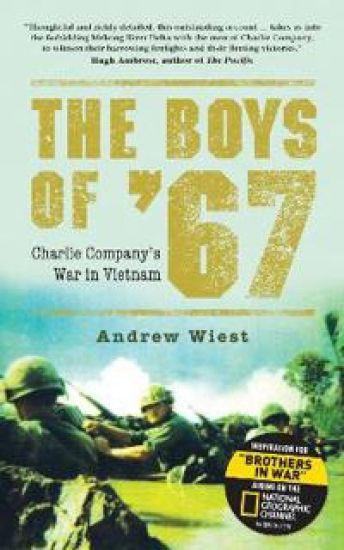
Across the nation in the spring of 1966, farm boys from the Midwest, surfers from California and city-slickers from Cleveland opened their mail to find greetings from Uncle Sam. Some of these men, optimistic and looking to serve their country, joined Charlie Company and trained for service. They deployed together, experiencing the camaraderie, fear, smell, pain, violence and senseless deaths. And through it all they wrote letters back and forth with the loved ones they’d left behind. Back at home, the families of Charlie Company faced fear, loneliness and uncertainty. As the war came to a close, everyone had irrevocably changed. Some families strove to set the war aside, while others wrestled with darkness as wives stood by their husbands through homelessness, alcoholism, and physical abuse. Some couldn’t stand the pain and left the loves of their lives forever. Some reclaimed their loved ones from the brink of oblivion. Some had only memories to cherish. An emotionally raw and visceral journey through the tragedies, sorrows and triumphs of the Vietnam War and its aftermath, The Boys of '67 brings the experiences of the soldiers and families of Charlie Company vividly to life.
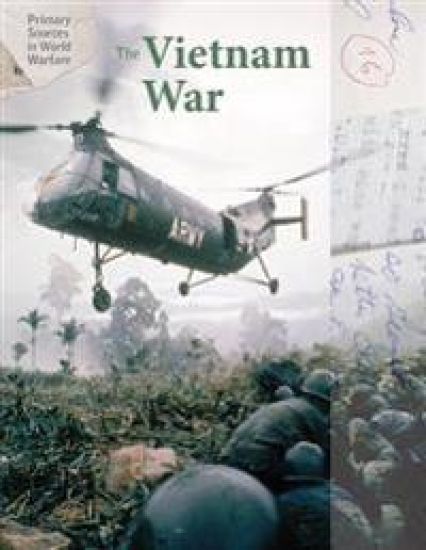
The Vietnam War chronicles the first war to be televised. The comprehensive description of battles, social and political issues, and revelations are all the more powerful because of first-hand accounts, telling photographs, and other primary sources. Students will learn the causes, outcomes, and repercussions of this polemic conflict through a historical lens and from the perspectives of soldiers, civilians, and others caught up in the Vietnam War.
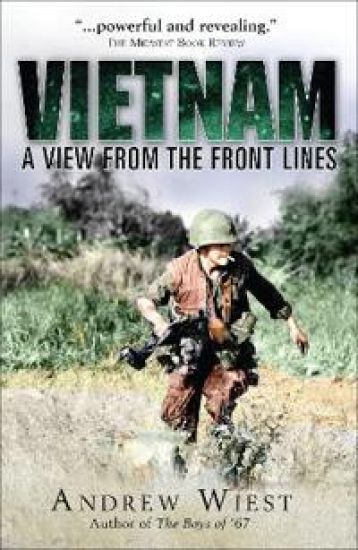
From Andrew Wiest, the bestselling author of The Boys of '67: Charlie Company's War in Vietnam and one of the leading scholars in the study of the Vietnam War, comes a frank exploration of the human experience during the conflict. Vietnam allows the reader a grunt's-eye-view of the conflict – from the steaming rice paddies and swamps of the Mekong Delta, to the triple-canopy rainforest of the Central Highlands and the forlorn Marine bases that dotted the DMZ. It is the definitive oral history of the Vietnam War told in the uncompromising, no-holds barred language of the soldiers themselves.
Following on from the stunning success of the novel Matterhorn as well as Osprey’s own Tonight We Die as Men, this book follows the trials and tribulations of a group of Vietnam draftees from basic training to the rice paddies of Vietnam. In the spring of 1966 the Vietnam War was intensifying, driven by the US military build up, under which the 9th Infantry Division was reactivated. Charlie Company was part of the 9th and representative of the melting pot of America. But, unlike the vast majority of other companies in the US Army, the men of Charlie Company were a close-knit family. They joined up together, trained together, and were deployed together. This is their story. From the joker who roller-skated into the Company First Sergeant’s office wearing a dress, to the nerdy guy with two left feet who would rather be off somewhere inventing computers, and the everyman who just wanted to keep his head down and get through un-noticed and preferably unscathed. Written by leading Vietnam expert Dr Andrew Wiest, The Boys of ’67 tells the unvarnished truth about the war in Vietnam, recounting the fear of death and the horrors of battle through the recollections of the young men themselves. America doesn’t know their names or their story, the story of the boys of Charlie, young draftees who had done everything that their nation had asked of them and received so little in return – lost faces and silent voices of a distant war.
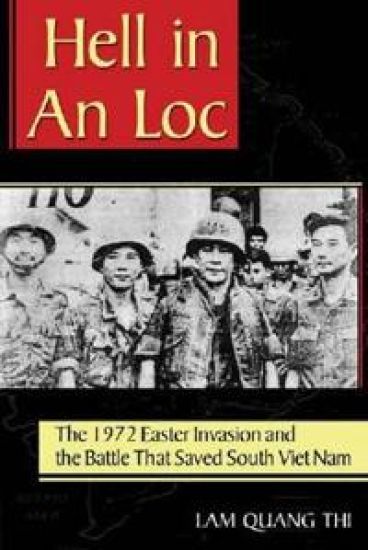
The title to this book is borrowed in part from the article 'The Battle That Saved Saigon'by Philip C. Clarke (Reader's Digest, March 1973). Its introduction reads: 'Three days before Easter last spring, the North Vietnamese struck South Vietnam with a fury unknown to the Vietnam war since the Tet offensive four years earlier. They poured south across the DMZ, smashed into the central highland from Laos, crossed the border from Cambodia and, with an army of 36,000 men and 100 Russian-made tanks, raced toward Saigon, boasting that they'd be in the city by May 19, Ho Chi Minh's birthday. From one end of the country to the other, bases and villages fell before the savagery of their onslaught. By April 5, all that blocked them from Saigon was a ragtag band of 6,800 South Vietnamese regulars and militiamen and a handful of American advisors holed up in An Loc, a once-prosperous rubber-plantation town of 15,000 astride Highway 13, which led to the capital, 60 miles to the south.' An Loc, indeed, had become the symbol of the determination of the South Vietnamese Army (ARVN) and its people to stand at all costs in face of the enemy. A depleted army, outnumbered and outgunned, stood its ground and fought to the end and succeeded. Against all expectations, the ARVN beat back furious assaults from three NVA divisions, supported by artillery and armored regiments, during three months of savage fighting. Yet this victory in 1972 was largely unreported in the U. S. media, which had effectively lost interest in the war after the disengagement of U. S. forces following the Vietnamization of the conflict. In Thi's opinion, reporting the victory of An Loc would contradict the U. S. media's basic premise that the war could not be won because ARVN was a corrupt and ineffective force. Subsequent published studies of the conflict provide a wealth of details about the use of U. S. airpower and the role of the U. S. advisors, but they fail to provide equal coverage to the activities and performance of ARVN units participating in the siege. Thi believes that it is time to set the record straight. Without denying the tremendous contribution of the U. S. advisors and pilots to the success of An Loc, this book is written primarily to tell the South Vietnamese side of the story and, more importantly, to render justice to the South Vietnamese soldier who withstood ninety-four days of horror and prevailed.
2009 Society for Military History Distinguished Book Award for Biography Examines South Vietnam's complex relationship with the United States through the stories of two Vietnamese soldiers' diverging paths Vietnam's Forgotten Army: Heroism and Betrayal in the ARVN chronicles the lives of Pham Van Dinh and Tran Ngoc Hue, two of the brightest young stars in the Army of the Republic of Vietnam (ARVN). Both men fought with valor in a war that seemed to have no end, exemplifying ARVN bravery and determination that is largely forgotten or ignored in the West. However, while Hue fought until he was captured by the North Vietnamese Army and then endured thirteen years of captivity, Dinh surrendered and defected to the enemy, for whom he served as a teacher in the reeducation of his former ARVN comrades. An understanding of how two lives that were so similar diverged so dramatically provides a lens through which to understand the ARVN and South Vietnam's complex relationship with America's government and military. The lives of Dinh and Hue reflect the ARVNs battlefield successes, from the recapture of the Citadel in Hue City in the Tet Offensive of 1968, to Dinhs unheralded role in the seizure of Hamburger Hill a year later. However, their careers expose an ARVN that was over-politicized, tactically flawed, and dependent on American logistical and firepower support. Marginalized within an American war, ARVN faced a grim fate as U. S. forces began to exit the conflict. As the structure of the ARVN/U. S. alliance unraveled, Dinh and Hue were left alone to make the most difficult decisions of their lives. Andrew Wiest weaves historical analysis with a compelling narrative, culled from extensive interviews with Dinh, Hue, and other key figures. Once both military superstars, Dinh is viewed by a traitor by many within the South Vietnamese community, while Hue, an expatriate living in northern Virginia, is seen as a hero who never let go of his ideals. Their experiences and legacies mirror that of the ARVNs rise and fall as well as the tragic history of South Vietnam.
This book provides a gripping exploration of the full two decades of the Vietnam War--arguably the most important event, or series of events, of the American Century. The United States entered this brutal conflict certain of its Cold War doctrines and its moral mission to save the world from the advance of communism. But the war was not at all what America expected. Outnumbered and outgunned, the North Vietnamese and Viet Cong forces resorted to guerrilla warfare based on the theories of China's Mao Zedong. This was war reduced to its most basic level--find the enemy and kill him.
From the German stormtroopers of 1918 to the jungles of Vietnam, the role of the infantry soldier has developed and evolved. This book describes the changes in the way that infantrymen have fought through the century, including an anlysis of tactics and strategies in the light of new technology.
The Pacific War is a military history of this sweeping conflict, from the Japanese attack on Pearl Harbor in December 1941 to the dropping of the ato mic bombs on Nagasaki and Hiroshima in 1945.