Kirjojen hintavertailu – 12 859 828 kirjaa ja 27 kauppaa

Kirjailija

Andrey Pilipenko

Kirjat ja teokset yhdessä paikassa: 3 kirjaa, julkaisuja vuosilta 2009–2025, suosituimpiin kuuluu Theory of Stochastic Processes. Vertaile teosten hintoja ja tarkista saatavuus suomalaisista kirjakaupoista.

3 kirjaa

Kirjojen julkaisuvuodet: 2009–2025.

Locally Perturbed Random Walks

Locally Perturbed Random Walks

Alexander Iksanov; Alexander Marynych; Andrey Pilipenko; Ihor Samoilenko

BIRKHAUSER VERLAG AG
2025
nidottu
This monograph provides a comprehensive overview of locally perturbed random walks, tools used for their analysis, and current research on their applications. The authors present the material in a self-contained manner, providing strong motivation in Chapter One with illustrative examples of locally perturbed random walks and an introduction of the mathematical tools that are used throughout the book. Chapter Two shows the construction of various stochastic processes that serve as scaling limits for locally perturbed random walks, particularly focusing on reflected and skewed processes. In Chapter Three, the authors prove various limit theorems for these perturbed random walks. The final chapter serves as an appendix that collects essential background material for readers who wish to understand the arguments more deeply. Locally Perturbed Random Walks will appeal to researchers interested in this area within modern probability theory. It is also accessible to students who have taken a second course in probability.
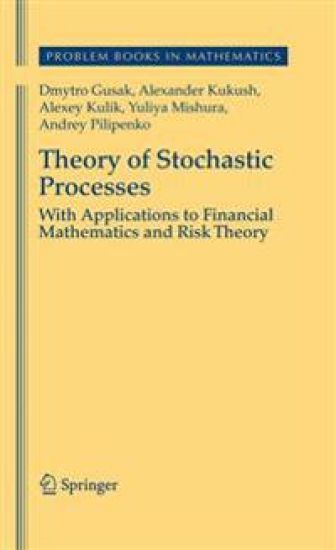
Theory of Stochastic Processes

Theory of Stochastic Processes

Dmytro Gusak; Alexander Kukush; Alexey Kulik; Yuliya Mishura; Andrey Pilipenko

Springer-Verlag New York Inc.
2012
nidottu
Thiscollectionofproblemsisplannedasatextbookforuniversitycoursesinthe theoryofstochasticprocessesandrelatedspecialcourses. Theproblemsinthebook haveawidespectrumofthelevelofdif cultyandcanbeusefulforreaderswith variouslevelsofmasteringinthetheoryofstochasticprocesses. Togetherwithte- nicalandillustrativeproblemsintendedforbeginners,thebookcontainsanumber ofproblemsoftheoreticalnaturethatcanbeusefulforstudentsandundergraduate studentsthatpursueadvancedstudiesinthetheoryofstochasticprocessesandits- plications. Amongothers,theimportantaimofthebookistoprovideateachingstaff anef cienttoolforpreparingseminarstudies,tests,andexamsconcerninguniversity coursesinthetheoryofstochasticprocessesandrelatedtopics. Whilecomposingthe book,theauthorshavepartiallyusedthecollectionsofproblemsinprobabilityt- ory[16,65,75,83]. Also,someexercisesandproblemsfromthemonographsand textbooks[4,9,19,22,82]wereused. Atthesametime,alargepartofourproblem bookcontainsoriginalmaterial. Thebookisorganizedasfollows. Theproblemsarecollectedintochapters,each chapterbeingdevotedtoacertaintopic. Atthebeginningofeachchapter,theth- reticalgroundsforthecorrespondingtopicaregivenbrie ytogetherwiththelistof bibliography,whichthereadercanuseinordertostudythistopicinmoredetail. For themostoftheproblems,eitherhintsorcompletesolutions(oranswers)aregiven, andsomeoftheproblemsareprovidedwithbothhintsandsolutions(answers). H- ever,theauthorsdonotrecommendthatareaderusethehintssystematically,because solvingaproblemwithoutassistanceismuchmoreusefulthanusingaready-made idea. Somestatementsthathaveaparticulartheoreticalinterestareformulatedon theoreticalgrounds,andtheirproofsareformulatedasproblemsforthereader. Such problemsaresuppliedwitheithercompletesolutionsordetailedhints. Inordertoworkwiththeproblembookef ciently,areadershouldbeacquainted withprobabilitytheory,calculus,andmeasuretheorywithinthescopeofresp- tiveuniversity courses. Standard notions, suchas random variable, measurability, independence, Lebesgue measure and integral, and so on are used without ad- tionaldiscussion. Allthenewnotionsandstatementsrequiredforsolvingthepr- lemsaregiveneitherontheoreticalgroundsorintheformulationsoftheproblems vii viii Preface straightforwardly. However,sometimesanotionisusedinthetextbeforeitsformal de nition. Forinstance,theWienerandPoissonprocessesareprocesseswithin- pendentincrementsandthusareformallyintroducedinaTheoreticalgroundsfor Chapter5,buttheseprocessesareusedwidelyintheproblemsofChapters2to4. Theauthorsrecommendthatareaderwhocomestoanunknownnotionorobject usetheIndexinorderto ndthecorrespondingformalde nition. Thesamerec- mendationconcernssomestandardabbreviationsandsymbolslistedattheendofthe book. Someproblemsinthebookformcycles:solutionstooneofthemaregrounded onstatementsofothersoronauxiliaryconstructionsdescribedinsomepreceding solutions. Sometimes,onthecontrary,itisproposedtoprovethesamestatement withindifferentproblemsusingessentiallydifferenttechniques. Theauthorsrec- mendareaderpayspeci cattentiontothesefruitfulinternallinksbetweenvarious topicsofthetheoryofstochasticprocesses. Everypartofthebookwascomposedsubstantiallybyoneauthor. Chapters1-6, and16arecomposedbyA. Kulik,Chapters7,12-15,18,and19byYu. Mishura, Chapters 8-10 by A. Pilipenko, Chapter 17 by A. Kukush, and Chapter 20 by D. Gusak. Chapter11waspreparedjointlybyD. GusakandA. Pilipenko. Atthe sametime,everyauthorhasmadeacontributiontootherpartsofthebookbyprop- ingseparateproblemsorcyclesofproblems,improvingpreliminaryversionsoft- oreticalgrounds,andeditingthe naltext. The authors would like to express their deep gratitude to M. Portenko and A. Ivanovfortheircarefulreadingofapreliminaryversionofthebookandva- ablecommentsthatledtosigni cantimprovementofthetext. Theauthorsarealso gratefultoT. Yakovenko,G. Shevchenko,O. Soloveyko, Yu. Kartashov, Yu. K- menko,A. Malenko,andN. Ryabovafortheirassistanceintranslation,preparing lesandpictures,andcomposingthesubjectindexandreferences. Thetheoryofstochasticprocessesisanextendeddiscipline,andtheauthors- derstandthattheproblembookinitscurrentformmaycausecriticalremarksfrom readers,concerningeitherthestructureofthebookorthecontentofseparatech- ters. Whilepublishingtheproblembookinitscurrentform,theauthorsareopenfor remarks,comments,andpropositions,andexpressinadvancetheirgratitudetoall theircorrespondents. Kyiv DmytroGusak December2008 AlexanderKukush AlexeyKulik YuliyaMishura AndreyPilipenko Contents 1 De?nition of stochastic process. Cylinder?-algebra, ?nite-dimensional distributions, the Kolmogorov theorem...1 Theoreticalgrounds ...1 Bibliography...3 Problems...3 Hints...7 AnswersandSolutions...9 2 Characteristics of a stochastic process. Mean and covariance functions. Characteristic functions...11 Theoreticalgrounds ...11 Bibliography...13 Problems...13 Hints...16 AnswersandSolutions...17 3 Trajectories. Modi?cations. Filtrations...21 Theoreticalgrounds ...21 Bibliography...24 Problems...24 Hints...29 AnswersandSolutions...31 4 Continuity. Differentiability. Integrability...33 Theoreticalgrounds ...33 Bibliography...34 Problems...34 Hints...38 AnswersandSolutions...40 ix x Contents 5 Stochastic processes with independent increments. Wiener and Poisson processes. Poisson point measures...

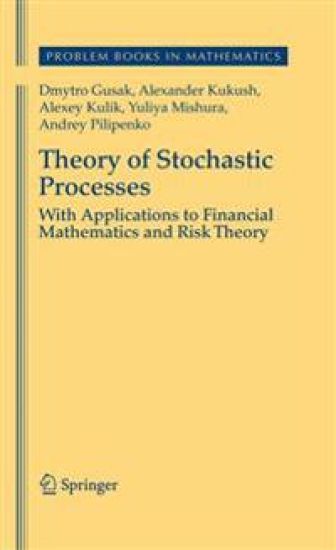
Theory of Stochastic Processes

Theory of Stochastic Processes

Dmytro Gusak; Alexander Kukush; Alexey Kulik; Yuliya Mishura; Andrey Pilipenko

Springer-Verlag New York Inc.
2009
sidottu
Thiscollectionofproblemsisplannedasatextbookforuniversitycoursesinthe theoryofstochasticprocessesandrelatedspecialcourses. Theproblemsinthebook haveawidespectrumofthelevelofdif cultyandcanbeusefulforreaderswith variouslevelsofmasteringinthetheoryofstochasticprocesses. Togetherwithte- nicalandillustrativeproblemsintendedforbeginners,thebookcontainsanumber ofproblemsoftheoreticalnaturethatcanbeusefulforstudentsandundergraduate studentsthatpursueadvancedstudiesinthetheoryofstochasticprocessesandits- plications. Amongothers,theimportantaimofthebookistoprovideateachingstaff anef cienttoolforpreparingseminarstudies,tests,andexamsconcerninguniversity coursesinthetheoryofstochasticprocessesandrelatedtopics. Whilecomposingthe book,theauthorshavepartiallyusedthecollectionsofproblemsinprobabilityt- ory[16,65,75,83]. Also,someexercisesandproblemsfromthemonographsand textbooks[4,9,19,22,82]wereused. Atthesametime,alargepartofourproblem bookcontainsoriginalmaterial. Thebookisorganizedasfollows. Theproblemsarecollectedintochapters,each chapterbeingdevotedtoacertaintopic. Atthebeginningofeachchapter,theth- reticalgroundsforthecorrespondingtopicaregivenbrie ytogetherwiththelistof bibliography,whichthereadercanuseinordertostudythistopicinmoredetail. For themostoftheproblems,eitherhintsorcompletesolutions(oranswers)aregiven, andsomeoftheproblemsareprovidedwithbothhintsandsolutions(answers). H- ever,theauthorsdonotrecommendthatareaderusethehintssystematically,because solvingaproblemwithoutassistanceismuchmoreusefulthanusingaready-made idea. Somestatementsthathaveaparticulartheoreticalinterestareformulatedon theoreticalgrounds,andtheirproofsareformulatedasproblemsforthereader. Such problemsaresuppliedwitheithercompletesolutionsordetailedhints. Inordertoworkwiththeproblembookef ciently,areadershouldbeacquainted withprobabilitytheory,calculus,andmeasuretheorywithinthescopeofresp- tiveuniversity courses. Standard notions, suchas random variable, measurability, independence, Lebesgue measure and integral, and so on are used without ad- tionaldiscussion. Allthenewnotionsandstatementsrequiredforsolvingthepr- lemsaregiveneitherontheoreticalgroundsorintheformulationsoftheproblems vii viii Preface straightforwardly. However,sometimesanotionisusedinthetextbeforeitsformal de nition. Forinstance,theWienerandPoissonprocessesareprocesseswithin- pendentincrementsandthusareformallyintroducedinaTheoreticalgroundsfor Chapter5,buttheseprocessesareusedwidelyintheproblemsofChapters2to4. Theauthorsrecommendthatareaderwhocomestoanunknownnotionorobject usetheIndexinorderto ndthecorrespondingformalde nition. Thesamerec- mendationconcernssomestandardabbreviationsandsymbolslistedattheendofthe book. Someproblemsinthebookformcycles:solutionstooneofthemaregrounded onstatementsofothersoronauxiliaryconstructionsdescribedinsomepreceding solutions. Sometimes,onthecontrary,itisproposedtoprovethesamestatement withindifferentproblemsusingessentiallydifferenttechniques. Theauthorsrec- mendareaderpayspeci cattentiontothesefruitfulinternallinksbetweenvarious topicsofthetheoryofstochasticprocesses. Everypartofthebookwascomposedsubstantiallybyoneauthor. Chapters1-6, and16arecomposedbyA. Kulik,Chapters7,12-15,18,and19byYu. Mishura, Chapters 8-10 by A. Pilipenko, Chapter 17 by A. Kukush, and Chapter 20 by D. Gusak. Chapter11waspreparedjointlybyD. GusakandA. Pilipenko. Atthe sametime,everyauthorhasmadeacontributiontootherpartsofthebookbyprop- ingseparateproblemsorcyclesofproblems,improvingpreliminaryversionsoft- oreticalgrounds,andeditingthe naltext. The authors would like to express their deep gratitude to M. Portenko and A. Ivanovfortheircarefulreadingofapreliminaryversionofthebookandva- ablecommentsthatledtosigni cantimprovementofthetext. Theauthorsarealso gratefultoT. Yakovenko,G. Shevchenko,O. Soloveyko, Yu. Kartashov, Yu. K- menko,A. Malenko,andN. Ryabovafortheirassistanceintranslation,preparing lesandpictures,andcomposingthesubjectindexandreferences. Thetheoryofstochasticprocessesisanextendeddiscipline,andtheauthors- derstandthattheproblembookinitscurrentformmaycausecriticalremarksfrom readers,concerningeitherthestructureofthebookorthecontentofseparatech- ters. Whilepublishingtheproblembookinitscurrentform,theauthorsareopenfor remarks,comments,andpropositions,andexpressinadvancetheirgratitudetoall theircorrespondents. Kyiv DmytroGusak December2008 AlexanderKukush AlexeyKulik YuliyaMishura AndreyPilipenko Contents 1 De?nition of stochastic process. Cylinder?-algebra, ?nite-dimensional distributions, the Kolmogorov theorem...1 Theoreticalgrounds ...1 Bibliography...3 Problems...3 Hints...7 AnswersandSolutions...9 2 Characteristics of a stochastic process. Mean and covariance functions. Characteristic functions...11 Theoreticalgrounds ...11 Bibliography...13 Problems...13 Hints...16 AnswersandSolutions...17 3 Trajectories. Modi?cations. Filtrations...21 Theoreticalgrounds ...21 Bibliography...24 Problems...24 Hints...29 AnswersandSolutions...31 4 Continuity. Differentiability. Integrability...33 Theoreticalgrounds ...33 Bibliography...34 Problems...34 Hints...38 AnswersandSolutions...40 ix x Contents 5 Stochastic processes with independent increments. Wiener and Poisson processes. Poisson point measures...