
Kirjojen hintavertailu – 12 859 828 kirjaa ja 27 kauppaa

Kirjailija

Andrzej Polanski

Kirjat ja teokset yhdessä paikassa: 2 kirjaa, julkaisuja vuosilta 2007–2010, suosituimpiin kuuluu Bioinformatics. Vertaile teosten hintoja ja tarkista saatavuus suomalaisista kirjakaupoista.

2 kirjaa

Kirjojen julkaisuvuodet: 2007–2010.

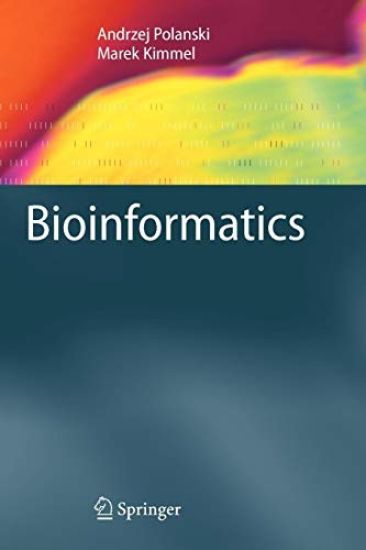
Bioinformatics

Bioinformatics

Andrzej Polanski; Marek Kimmel

Springer-Verlag Berlin and Heidelberg GmbH Co. K
2010
nidottu
Bioinformatics as a discipline arose out of the need to introduce order into the massive data sets produced by the new technologies of molecular biology: large-scale DNA sequencing, measurements of RNA concentrations in multiple gene expression arrays, and new profiling techniques in proteomics. As such, bioinformatics integrates a number of traditional quantitative sciences such as mathematics, statistics, computer science and cybernetics with biological sciences such as genetics, genomics, proteomics and molecular evolution. In this comprehensive textbook, Polanski and Kimmel present mathematical models in bioinformatics and they describe the biological problems that inspire the computer science tools used to handle the enormous data sets involved. The first part of the book covers the mathematical and computational methods, while the practical applications are presented in the second part. The mathematical presentation is descriptive and avoids unnecessary formalism, and yet remains clear and precise. Emphasis is laid on motivation through biological problems and cross applications. Each of the four chapters in the first part is accompanied by exercises and problems to support an understanding of the techniques presented. Each of the six chapters of the second part is devoted to some specific application domain: sequence alignment, molecular phylogenetics and coalescence theory, genomics, proteomics, RNA, and DNA microarrays. Each chapter concludes with a problems and projects section, to deepen the reader's understanding and to allow for the design of derived methods. Many of the projects involve publicly available software and/or Web-based bioinformatics depositories. Finally, the book closes with a thorough bibliography, reaching from classic research results to very recent findings, providing many pointers for future research. Overall, this volume is ideally suited for a senior undergraduate or graduate course on bioinformatics, with a strong focuson its mathematical and computer science background.
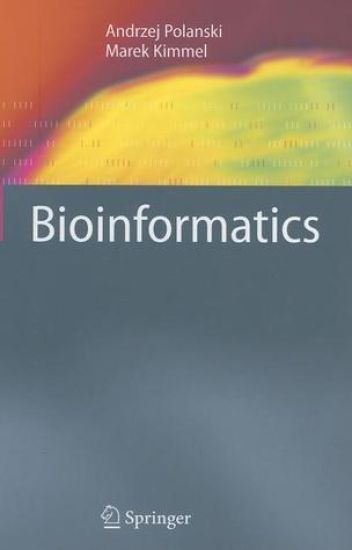
Bioinformatics

Bioinformatics

Andrzej Polanski; Marek Kimmel

Springer-Verlag Berlin and Heidelberg GmbH Co. K
2007
sidottu
Bioinformatics as a discipline arose out of the need to introduce order into the massive data sets produced by the new technologies of molecular biology: large-scale DNA sequencing, measurements of RNA concentrations in multiple gene expression arrays, and new profiling techniques in proteomics. As such, bioinformatics integrates a number of traditional quantitative sciences such as mathematics, statistics, computer science and cybernetics with biological sciences such as genetics, genomics, proteomics and molecular evolution. In this comprehensive textbook, Polanski and Kimmel present mathematical models in bioinformatics and they describe the biological problems that inspire the computer science tools used to handle the enormous data sets involved. The first part of the book covers the mathematical and computational methods, while the practical applications are presented in the second part. The mathematical presentation is descriptive and avoids unnecessary formalism, and yet remains clear and precise. Emphasis is laid on motivation through biological problems and cross applications. Each of the four chapters in the first part is accompanied by exercises and problems to support an understanding of the techniques presented. Each of the six chapters of the second part is devoted to some specific application domain: sequence alignment, molecular phylogenetics and coalescence theory, genomics, proteomics, RNA, and DNA microarrays. Each chapter concludes with a problems and projects section, to deepen the reader's understanding and to allow for the design of derived methods. Many of the projects involve publicly available software and/or Web-based bioinformatics depositories. Finally, the book closes with a thorough bibliography, reaching from classic research results to very recent findings, providing many pointers for future research. Overall, this volume is ideally suited for a senior undergraduate or graduate course on bioinformatics, with a strong focuson its mathematical and computer science background.