Kirjailija
Andy Adams
Kirjat ja teokset yhdessä paikassa: 224 kirjaa, julkaisuja vuosilta 1904–2026, suosituimpiin kuuluu The Greatest Westen Novels & Stories of Andy Adams: The Story of a Poker Steer, The Log of a Cowboy, A College Vagabond, The Outlet, Reed Anthony.... Vertaile teosten hintoja ja tarkista saatavuus suomalaisista kirjakaupoista.
224 kirjaa
Kirjojen julkaisuvuodet: 1904–2026.


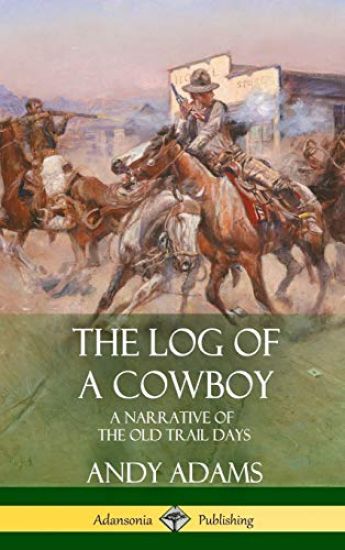
This first-hand account of a cowboy brings the Old West to life authentically and vividly for the modern reader. Written by Andrew Adams during and after his many years working as a cowboy in the rugged plains of the southwest USA, this book was first published in 1903. At the time, the ways of the Wild West were rapidly being superseded by the unstoppable modern advancement of the United States. As such, this book may be viewed as a sort of retrospective upon the 19th century, illustrating a time when the frontier culture reigned supreme over great tracts of North America. Much of the book is presented as a story with dialogue, whereby aspects of the cowboy trade, the geography of the rural West, and landmarks such as Yellowstone are detailed. We hear accounts of the lives of the ordinary people; although exciting action abounds throughout the book, we are shown that most people in the Wild West were simply making a living in a land untamed by human civilization.
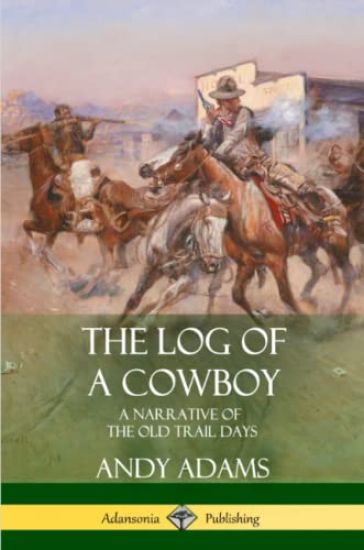
This first-hand account of a cowboy brings the Old West to life authentically and vividly for the modern reader. Written by Andrew Adams during and after his many years working as a cowboy in the rugged plains of the southwest USA, this book was first published in 1903. At the time, the ways of the Wild West were rapidly being superseded by the unstoppable modern advancement of the United States. As such, this book may be viewed as a sort of retrospective upon the 19th century, illustrating a time when the frontier culture reigned supreme over great tracts of North America. Much of the book is presented as a story with dialogue, whereby aspects of the cowboy trade, the geography of the rural West, and landmarks such as Yellowstone are detailed. We hear accounts of the lives of the ordinary people; although exciting action abounds throughout the book, we are shown that most people in the Wild West were simply making a living in a land untamed by human civilization.

Just why my father moved, at the close of the civil war, from Georgia to Texas, is to this good hour a mystery to me. While we did not exactly belong to the poor whites, we classed with them in poverty, being renters; but I am inclined to think my parents were intellectually superior to that common type of the South. Both were foreign born, my mother being Scotch and my father a north of Ireland man, -as I remember him, now, impulsive, hasty in action, and slow to confess a fault. It was his impulsiveness that led him to volunteer and serve four years in the Confederate army, -trying years to my mother, with a brood of seven children to feed, garb, and house. The war brought me my initiation as a cowboy, of which I have now, after the long lapse of years, the greater portion of which were spent with cattle, a distinct recollection. Sherman's army, in its march to the sea, passed through our county, devastating that section for miles in its passing. Foraging parties scoured the country on either side of its path. My mother had warning in time and set her house in order. Our work stock consisted of two yoke of oxen, while our cattle numbered three cows, and for saving them from the foragers credit must be given to my mother's generalship. There was a wild canebrake, in which the cattle fed, several hundred acres in extent, about a mile from our little farm, and it was necessary to bell them in order to locate them when wanted. But the cows were in the habit of coming up to be milked, and a soldier can hear a bell as well as any one. I was a lad of eight at the time, and while my two older brothers worked our few fields, I was sent into the canebrake to herd the cattle. We had removed the bells from the oxen and cows, but one ox was belled after darkness each evening, to be unbelled again at daybreak. I always carried the bell with me, stuffed with grass, in order to have it at hand when wanted
At the close of the civil war the need for a market for the surplus cattle of Texas was as urgent as it was general. There had been numerous experiments in seeking an outlet, and there is authority for the statement that in 1857 Texas cattle were driven to Illinois. Eleven years later forty thousand head were sent to the mouth of Red River in Louisiana, shipped by boat to Cairo, Illinois, and thence inland by rail. Fever resulted, and the experiment was never repeated. To the west of Texas stretched a forbidding desert, while on the other hand, nearly every drive to Louisiana resulted in financial disaster to the drover. The republic of Mexico, on the south, afforded no relief, as it was likewise overrun with a surplus of its own breeding. Immediately before and just after the war, a slight trade had sprung up in cattle between eastern points on Red River and Baxter Springs, in the southeast corner of Kansas. The route was perfectly feasible, being short and entirely within the reservations of the Choctaws and Cherokees, civilized Indians. This was the only route to the north; for farther to the westward was the home of the buffalo and the unconquered, nomadic tribes. A writer on that day, Mr.

The first herd of trail cattle to leave Dodge City, Kansas, for the Northwest, during the summer of 1885, was owned by the veteran drover, Don Lovell. Accidents will happen, and when about midway between the former point and Ogalalla, Nebraska, a rather serious mishap befell Quince Forrest, one of the men with the herd. He and the horse wrangler, who were bunkies, were constantly scuffling, reckless to the point of injury, the pulse of healthy manhood beating a constant alarm to rough contest. The afternoon previous to the accident, a wayfaring man had overtaken the herd, and spent the night with the trail outfit. During the evening, a flock of sand-hill cranes was sighted, when the stranger expressed a wish to secure a specimen of the bird for its splendid plumage. On Forrest's own suggestion, his being a long-range pistol and the covey wary, the two exchanged belts. The visitor followed the flock, stealing within range a number of times, and emptying the six-shooter at every chance. On securing a fine specimen near nightfall, he returned to the herd, elated over his chance shot and beautiful trophy. However, before returning the belt, he had refilled the cylinder with six instead of five cartridges, thus resting the hammer on a loaded shell.
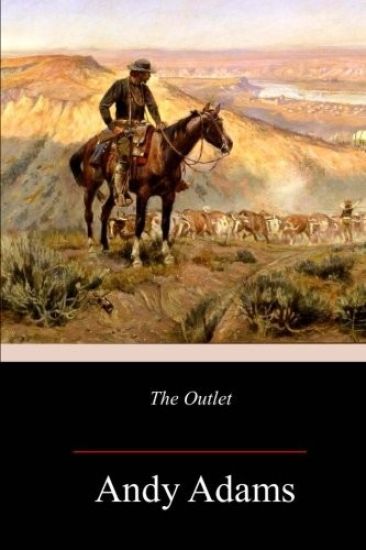
At the close of the civil war the need for a market for the surplus cattle of Texas was as urgent as it was general. There had been numerous experiments in seeking an outlet, and there is authority for the statement that in 1857 Texas cattle were driven to Illinois. Eleven years later forty thousand head were sent to the mouth of Red River in Louisiana, shipped by boat to Cairo, Illinois, and thence inland by rail. Fever resulted, and the experiment was never repeated. To the west of Texas stretched a forbidding desert, while on the other hand, nearly every drive to Louisiana resulted in financial disaster to the drover. The republic of Mexico, on the south, afforded no relief, as it was likewise overrun with a surplus of its own breeding. Immediately before and just after the war, a slight trade had sprung up in cattle between eastern points on Red River and Baxter Springs, in the southeast corner of Kansas. The route was perfectly feasible, being short and entirely within the reservations of the Choctaws and Cherokees, civilized Indians. This was the only route to the north; for farther to the westward was the home of the buffalo and the unconquered, nomadic tribes. A writer on that day, Mr.

From the writer and genuine Western Trail cattle driver, responsible for some of the best and most realistic accounts of cowboy life in literature.

Cattle Brands: A Collection of Western Camp-Fire Stories
Andy Adams
Createspace Independent Publishing Platform
2018
nidottu
Cattle Brands: A Collection of Western Camp-Fire Stories By Andy Adams



The Log of a Cowboy A Narrative of the Old Trail Days
Andy Adams
Createspace Independent Publishing Platform
2017
nidottu

Reed Anthony, Cowman an Autobiography
Andy Adams
Createspace Independent Publishing Platform
2017
nidottu
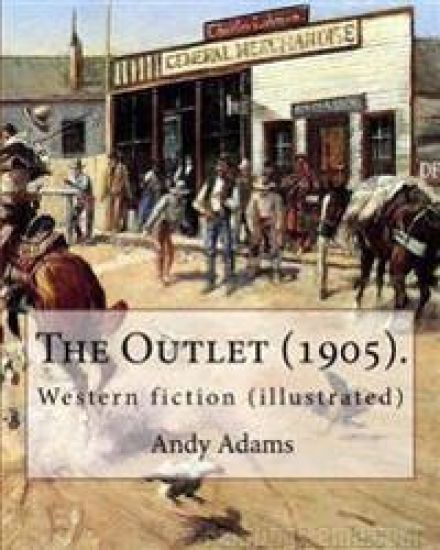
The Outlet (1905). By: Andy Adams, illustrated By: E. Boyd Smith (1860-1943).: Western fiction (illustrated)
E. Boyd Smith; Andy Adams
Createspace Independent Publishing Platform
2017
nidottu