Kirjojen hintavertailu – 12 903 733 kirjaa ja 27 kauppaa

Kirjailija

Andy King

Kirjat ja teokset yhdessä paikassa: 6 kirjaa, julkaisuja vuosilta 2003–2026, suosituimpiin kuuluu Edward I (Penguin Monarchs). Vertaile teosten hintoja ja tarkista saatavuus suomalaisista kirjakaupoista.

6 kirjaa

Kirjojen julkaisuvuodet: 2003–2026.

Edward I (Penguin Monarchs)

Edward I (Penguin Monarchs)

Andy King

Penguin Books Ltd
2018
nidottu
The acclaimed Penguin Monarchs series: short, fresh, expert accounts of England's rulers - now in paperbackEdward I (1272-1307) is one of the most commanding of all English rulers. He fought in southwest France, in Wales, In Scotland and in northern France, he ruled with ruthlessness and confidence, undoing the chaotic failure of his father, Henry III's reign. He reshaped England's legal system and came close to bringing the whole island of Great Britain under his rule. He promoted the idea of himself as the new King Arthur, his Round Table still hanging in Winchester Castle to this day. His greatest monuments are the extraordinary castles - Caernarfon, Beaumaris, Harlech and Conwy - built to ensure his rule of Wales and some of the largest of all medieval buildings. Andy King's brilliant short biography brings to life a strange, complex man whose triumphs raise all kinds of questions about the nature of kingship - how could someone who established so many key elements in England's unique legal and parliamentary system also have been such a harsh, militarily brutal warrior?
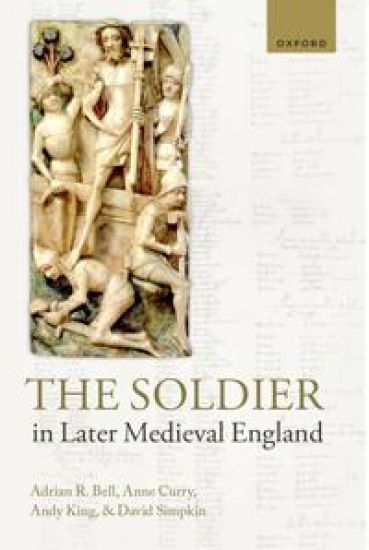
The Soldier in Later Medieval England

The Soldier in Later Medieval England

Adrian R. Bell; Anne Curry; Andy King; David Simpkin

Oxford University Press
2026
nidottu
The Hundred Years War was a struggle for control over the French throne, fought as a series of conflicts between England, France, and their respective allies. The Soldier in Later Medieval England is the outcome of a project which collects the names of every soldier known to have served the English Crown from 1369 to the loss of Gascony in 1453, the event which is traditionally accepted as the end-date of the Hundred Years War. The data gathered throughout the project has allowed the authors of this volume to compare different forms of war, such as the chevauchées of the late fourteenth century and the occupation of French territories in the fifteenth century, and thus to identify longer-term trends. It also highlights the significance of the change of dynasty in England in the early 1400s. The scope of the volume begins in 1369 because of the survival from that point of the 'muster roll', a type of documentary record in which soldiers names are systematically recorded. The muster roll is a rich resource for the historian, as it allows closer study to be made of the peerage, the knights, the men-at-arms (the esquires), and especially the lower ranks of the army, such as the archers, who contributed the largest proportion of troops to English royal service. The Soldier in Later Medieval England seeks to investigate the different types of soldier, their regional and national origins, and movement between ranks. This is a wide-ranging volume, which offers invaluable insights into a much-neglected subject, and presents many opportunities for future research.
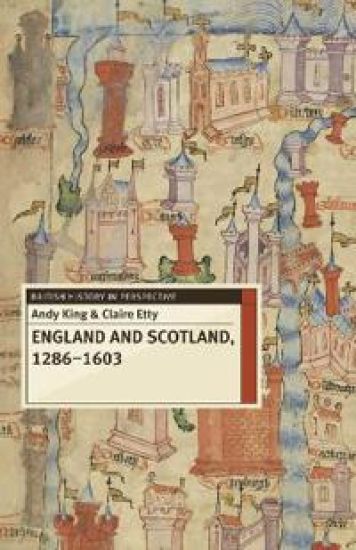
England and Scotland, 1286-1603

England and Scotland, 1286-1603

Andy King; Claire Etty

Red Globe Press
2015
nidottu
On a stormy night in 1286, a man fell off his horse and broke his neck, setting two kingdoms on a 300-year course of war. Edward I seized the opportunity to pursue English claims to overlordship of Scotland; William Wallace and Robert Bruce headed the 'patriotic' resistance. Their collision shaped the history, politics and nationhood of the two realms, and dragged in a third with the formation of the Franco-Scottish Auld Alliance. It also created a unique society on both sides of the Anglo-Scottish border. What prevented peace from breaking out? And how, at the dawn of the seventeenth century, could a Scottish king succeed, peacefully and unopposed, to the Auld Enemy's throne? Andy King and Claire Etty trace the fractious relationship between England and Scotland from the death of Alexander III to the accession of James VI as James I of England. Spanning medieval and early modern history, this book is the ideal starting point for students studying Anglo-Scottish relations up to the Union.
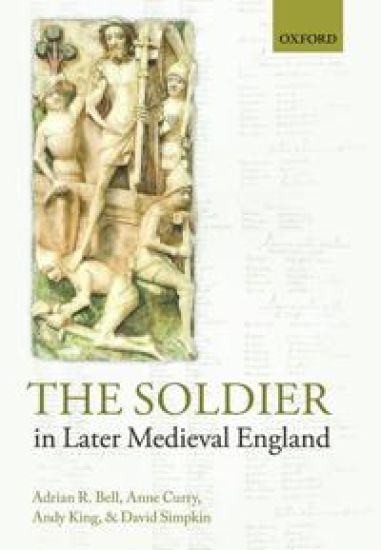
The Soldier in Later Medieval England

The Soldier in Later Medieval England

Adrian R. Bell; Anne Curry; Andy King; David Simpkin

Oxford University Press
2013
sidottu
The Hundred Years War was a struggle for control over the French throne, fought as a series of conflicts between England, France, and their respective allies. The Soldier in Later Medieval England is the outcome of a project which collects the names of every soldier known to have served the English Crown from 1369 to the loss of Gascony in 1453, the event which is traditionally accepted as the end-date of the Hundred Years War. The data gathered throughout the project has allowed the authors of this volume to compare different forms of war, such as the chevauchées of the late fourteenth century and the occupation of French territories in the fifteenth century, and thus to identify longer-term trends. It also highlights the significance of the change of dynasty in England in the early 1400s. The scope of the volume begins in 1369 because of the survival from that point of the 'muster roll', a type of documentary record in which soldiers names are systematically recorded. The muster roll is a rich resource for the historian, as it allows closer study to be made of the peerage, the knights, the men-at-arms (the esquires), and especially the lower ranks of the army, such as the archers, who contributed the largest proportion of troops to English royal service. The Soldier in Later Medieval England seeks to investigate the different types of soldier, their regional and national origins, and movement between ranks. This is a wide-ranging volume, which offers invaluable insights into a much-neglected subject, and presents many opportunities for future research.
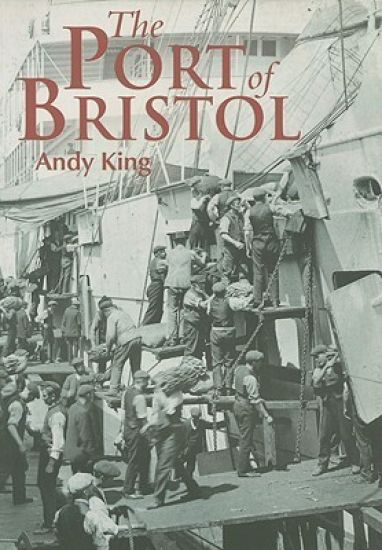
The Port of Bristol

The Port of Bristol

Andy King

The History Press Ltd
2003
nidottu
The Port of Bristol looks at a slice of the Port's long history and industrial heritage (1908 - 1977), a period in which it was thriving and growing dramatically. During the 1870s a number of granaries and mills were constructed in the City Docks, and more throughout the twentieth century at Avonmouth which, a decade later, became a major miling centre, with a million tons of grain arriving each year. Oil importing became the Port's biggest trade during the 1940s, while by the end of the 1960s there were major plants in the area producing zinc, carbon black, bricks and fertiliser. In the same decade Avonmouth was important as quarter of the UK's tea, as well as raw materials for two of Bristol's other traditional industries; cocoa and tobacco. The period covered by this book begins with the opening of the Royal Edward Dock at Avonmouth in 1908 and ends with the opening of the Royal Portbury Dock in 1977, which has since become the modern centre of the Port of Bristol, dealing with bulk cargoes, forest products and more cars than any other port in Europe. Illustrated with over 200 photographs from the Port of Bristol Authority Collection held at the Bristol Museums Service - many of which have not been seen in print before - Port of Bristol presents the reader not only with a unique insight into the everyday life of the Docks and the people who worked there, but also with a flavour of the life of the Port during a golden age.