

Kirjailija
Andy Miah
Kirjat ja teokset yhdessä paikassa: 9 kirjaa, julkaisuja vuosilta 2004–2024, suosituimpiin kuuluu Sport 2.0. Vertaile teosten hintoja ja tarkista saatavuus suomalaisista kirjakaupoista.
9 kirjaa
Kirjojen julkaisuvuodet: 2004–2024.
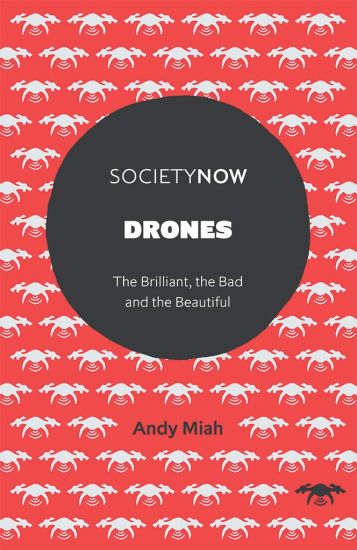
Against the backdrop of an increasingly dynamic world, driven by rapid digital innovation and technological advances, drones are becoming prolific within society. In this book, Andy Miah delivers a comprehensive analysis of the wide-reaching applications of drones, as well as a critical interrogation of the social, cultural and moral issues that they provoke. Delving into philosophical discussions about the implications of drone technology, this book shines a light on their real-world applications, the challenges they pose, and what they reveal about the human condition, when faced with a future of autonomous, intelligent robots.

Ramifications of the convergence of sports and digital technology, from athlete and spectator experience to the role of media innovation at the Olympics. Digital technology is changing everything about modern sports. Athletes and coaches rely on digital data to monitor and enhance performance. Officials use tracking systems to augment their judgment in what is an increasingly superhuman field of play. Spectators tune in to live sports through social media, or even through virtual reality. Audiences now act as citizen journalists whose collective shared data expands the places in which we consume sports news. In Sport 2.0, Andy Miah examines the convergence of sports and digital cultures, examining not only how it affects our participation in sport but also how it changes our experience of life online. This convergence redefines how we think of about our bodies, the social function of sports, and the kinds of people who are playing. Miah describes a world in which the rise of competitive computer game playing-e-sports-challenges and invigorates the social mandate. Miah also looks at the Olympic Games as an exemplar of digital innovation in sports, and offers a detailed look at the social media footprint of the 2012 London Games, discussing how organizers, sponsors, media, and activists responded to the world's largest media event. In the end, Miah does not argue that physical activity will cease to be central to sports, or that digital corporeality will replace the nondigital version. Rather, he provides a road map for how sports will become mixed-reality experiences and abandon the duality of physical and digital.

The Olympics: The Basics is an accessible, contemporary introduction to the Olympic movement and Games. Chapters explain how the Olympics transcend sports, engaging us with a range of contemporary philosophical, social, cultural and political matters, including:peace development and diplomacymanagement and economicscorruption, terror and activismthe rise of human enhancementethics and environmentalism. This book explores the controversy and the legacy of the Olympics, drawing attention to the deeper values of Olympism, as the Olympic movement’s most valuable intellectual property. This engaging, lively, and often challenging book, is essential reading for newcomers to Olympic studies and offers new insights for Olympic scholars.

The Olympics: The Basics is an accessible, contemporary introduction to the Olympic movement and Games. Chapters explain how the Olympics transcend sports, engaging us with a range of contemporary philosophical, social, cultural and political matters, including:peace development and diplomacymanagement and economicscorruption, terror and activismthe rise of human enhancementethics and environmentalism. This book explores the controversy and the legacy of the Olympics, drawing attention to the deeper values of Olympism, as the Olympic movement’s most valuable intellectual property. This engaging, lively, and often challenging book, is essential reading for newcomers to Olympic studies and offers new insights for Olympic scholars.

The entire infrastructure and culture of medicine is being transformed by digital technology, the Internet and mobile devices. Cyberspace is now regularly used to provide medical advice and medication, with great numbers of sufferers immersing themselves within virtual communities. What are the implications of this medicalization of cyberspace for how people make sense of health and identity? The Medicalization of Cyberspace is the first book to explore the relationship between digital culture and medical sociology. It examines how technology is redefining expectations of and relationships with medical culture, addressing the following questions: How will the rise of digital communities affect traditional notions of medical expertise? What will the medicalization of cyberspace mean in a new era of posthuman enhancements? How should we regard hype and exaggeration about science in the media and how can this encourage public engagement with bioethics? This book looks at the complex interactions between health, medicalization, cyberculture, the body and identity. It addresses topical issues, such as medical governance, reproductive rights, eating disorders, Web 2.0, and perspectives on posthumanism. It is essential reading for healthcare professionals and social, philosophical and cultural theorists of health.

The entire infrastructure and culture of medicine is being transformed by digital technology, the Internet and mobile devices. Cyberspace is now regularly used to provide medical advice and medication, with great numbers of sufferers immersing themselves within virtual communities. What are the implications of this medicalization of cyberspace for how people make sense of health and identity? The Medicalization of Cyberspace is the first book to explore the relationship between digital culture and medical sociology. It examines how technology is redefining expectations of and relationships with medical culture, addressing the following questions: How will the rise of digital communities affect traditional notions of medical expertise? What will the medicalization of cyberspace mean in a new era of posthuman enhancements? How should we regard hype and exaggeration about science in the media and how can this encourage public engagement with bioethics? This book looks at the complex interactions between health, medicalization, cyberculture, the body and identity. It addresses topical issues, such as medical governance, reproductive rights, eating disorders, Web 2.0, and perspectives on posthumanism. It is essential reading for healthcare professionals and social, philosophical and cultural theorists of health.

In a provocative analysis of sport ethics and human values, Genetically Modified Athletes imagines the brave new world of sport. The internationally acclaimed book examines this issue at a crucial time in its theorisation, questioning the very cornerstone of sporting and medical ethics, asking whether sporting authorities can, or even should, protect sport from genetic modification. This book brings together sport studies and bioethics to challenge our understanding of the values that define sport. We already allow that athletes can optimise their performance by the use of technologies; without wishing to assert that 'anything goes' in sports performance enhancement, Andy Miah argues that simply being human matters in sport and that genetic modification does not have to challenge this capacity. Genetically Modifies Athletes includes examination of:* the concept of 'good sport' and the definition of cheating* the doped athlete - should we be more sympathetic?* the role of the medical industry* the usefulness (or not) of the terms 'doping' and 'anti-doping'. An important and growing field of interest, this book should be read by students, academics and practitioners.

In a provocative analysis of sport ethics and human values, Genetically Modified Athletes imagines the brave new world of sport. The internationally acclaimed book examines this issue at a crucial time in its theorisation, questioning the very cornerstone of sporting and medical ethics, asking whether sporting authorities can, or even should, protect sport from genetic modification. This book brings together sport studies and bioethics to challenge our understanding of the values that define sport. We already allow that athletes can optimise their performance by the use of technologies; without wishing to assert that 'anything goes' in sports performance enhancement, Andy Miah argues that simply being human matters in sport and that genetic modification does not have to challenge this capacity. Genetically Modifies Athletes includes examination of:* the concept of 'good sport' and the definition of cheating* the doped athlete - should we be more sympathetic?* the role of the medical industry* the usefulness (or not) of the terms 'doping' and 'anti-doping'. An important and growing field of interest, this book should be read by students, academics and practitioners.