Kirjojen hintavertailu – 12 903 725 kirjaa ja 27 kauppaa
Kirjailija
Andy Mitchell
Kirjat ja teokset yhdessä paikassa: 20 kirjaa, julkaisuja vuosilta 2012–2026, suosituimpiin kuuluu Malt, Hops, Magic and Passion. Vertaile teosten hintoja ja tarkista saatavuus suomalaisista kirjakaupoista.
The mayor of Prescott, Arizona Territory, is shot at the end of the annual Horribles Parade. Haseya has just started her amateur investigation business in town and is drawn into the investigation. Talented but inexperienced, Haseya attempts to solve the murder, then the sheriff gets in her way. Meanwhile, she picks up two ragtag assistants, without knowing if they will help her or ruin everything. There are more murders, and Haseya is determined to solve the crimes. A prime suspect emerges. Now she must prove that the suspect is either innocent, or guilty. She may be in over her head.
The mayor of Prescott, Arizona Territory, is shot at the end of the annual Horribles Parade. Haseya has just started her amateur investigation business in town and is drawn into the investigation. Talented but inexperienced, Haseya attempts to solve the murder, then the sheriff gets in her way. Meanwhile, she picks up two ragtag assistants, without knowing if they will help her or ruin everything. There are more murders, and Haseya is determined to solve the crimes. A prime suspect emerges. Now she must prove that the suspect is either innocent, or guilty. She may be in over her head.
In 1880, in Prescott, Arizona Territory, a young man and woman meet and fall in love. Their happiness is shattered when she becomes a victim of a crime, and he spends most of the year searching for her. When they finally reunite, they face a harsh reality where each must take a life to save a life. Their love and courage are put to the ultimate test as they fight to stay together.
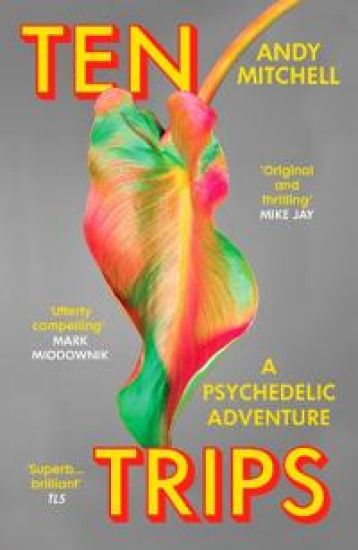
‘An original and thrilling investigation into psychedelics and the claims that currently surround them, achieving profound insights’ Mike Jay, author of Psychonauts Psychedelics have made a comeback, but the truth is they remain a mystery. In this daring, profound and wildly entertaining investigation, clinical neuropsychologist Andy Mitchell tests the claims being made for these substances by taking ten different psychedelics in ten different settings. Journeying from a neuroimaging lab in London to the Colombian Amazon via Silicon Valley and his friend’s basement kitchen, his encounters with scientists and gangsters, venture capitalists and con men, psychonauts and shamans, and above all with the drugs themselves, take us beyond the hype and reveal the reality of psychedelics in all their strangeness, darkness and wonder.‘Canny and somewhat sceptical . . . rigorous and penetrating . . . This is a wonderful book, a journey into the nature and potential of consciousness itself’ Literary Review'An incisive, deeply personal and beautifully written account of the power, the uses and the modern misuses of psychedelics. Highly recommended' Anil Seth, author of Being You‘Utterly compelling. Some books are in a category of their own and this is one them. Reading it is like having an out of body experience’ Mark Miodownik, author of Stuff Matters‘Superb . . . brilliant’ TLS
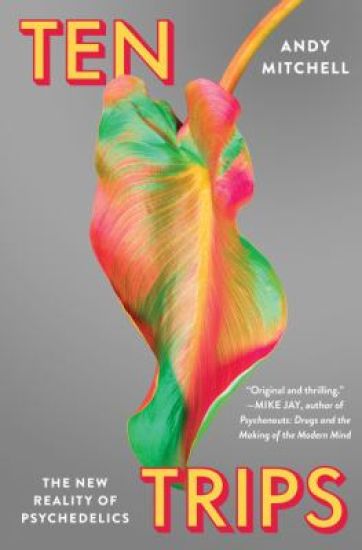
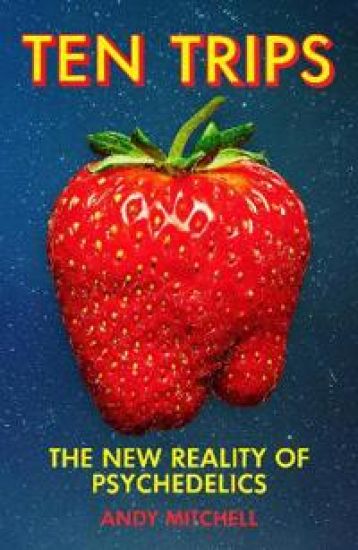
The more we learn about psychedelics, the less we seem to understand them. . . . In this engrossing, sometimes hilarious, always dramatic chronicle, a neuropsychologist deflates the hype, explores the limitless possibilities, and reveals a much-needed perspective about psychedelics, giving us a scientist's first-person experiment with ten different compounds in ten different settings. Once demonized and still largely illegal, psychedelic drugs are now officially a "breakthrough therapy" in treating mental illness, used to heal trauma, conquer addiction, and enhance well-being. But as Andy Mitchell reveals, this approach to psychedelics is overhyped, and most importantly, neglects what is so unusual and valuable about them: the psychedelic experience itself. In Ten Trips, Mitchell takes ten different drugs in ten diverse locations--including a neuroimaging lab in London, the Columbian Andes, Silicon Valley and his friend's basement kitchen--to document their remarkable effects. Along the way he encounters a cast of distinctive characters: scientists and gangsters, venture capitalists and philosophers, psychonauts and shamans, musicians, monks, therapists, poets, and conmen. His experience opens a doorway to psychedelics' full potential: for healing and trauma, for ecstatic one-ness and utter terror, for transcendence and corruption, for profundity and laughter. Mitchell argues that by removing psychedelics from their cultures and rituals, both indigenous and underground, we risk rejecting the expertise and the contexts which hold the key to understanding them--and from which their real benefits may derive. In the drive to standardize, control, and monetize the psychedelic experience, we may ultimately destroy what makes them potent: their ability to transform our whole perspective on mental health and reenchant us with the world. A hallucinogenic experience nearly as mind-blowing as actually taking psychedelics themselves, Ten Trips is Michael Pollan's How to Change Your Mind written by Hunter S. Thompson with a PhD in neuroscience--a perception-altering odyssey that will change the way we see these substances and the world.
Neuropsychologist Andy Mitchell punctures the hype around psychedelic drugs while providing the fullest picture yet of their limitlessly fascinating possibilities.'An incisive, deeply personal and beautifully written account of the power, the uses and the modern misuses of psychedelics. Highly recommended' Anil Seth, author of Being You‘A collection of tales from the far frontiers of psychedelic experience . . . superb . . . brilliant’ Charles Foster, TLSPsychedelics have made a comeback but remain a mystery. They are now a 'breakthrough therapy' for mental illness but in truth we have only a vague idea how they work and there is a limit to what the science can reveal. To have any hope of understanding them, we must broaden our view - dramatically - of what they actually are. In this daring, perception-shifting odyssey, clinical neuropsychologist Andy Mitchell takes ten different drugs in ten different settings, journeying from a London neuroimaging lab to the Colombian Amazon via Silicon Valley and his friend's basement kitchen. His encounters with scientists and gangsters, venture capitalists and con men, psychonauts and shamans, as well as with the drugs themselves, reveal the reality of psychedelics in all their strangeness, hilarity, darkness and wonder.'Original and thrilling ... achieving profound insights' Mike Jay, author of Psychonauts'A hair-raising hurtle of a ride' Henry Shukman, author of One Blade of Grass'Utterly compelling ... like having an out of body experience' Mark Miodownik, author of Stuff Matters'The psychedelic world has been waiting for this book' Professor Erika Dyck
Learn how to get better answers in map analysis when you use spatial measurements and statistics. Spatial measurements and statistics give you a powerful way to analyze geospatial data, but you don't need to understand complex mathematical theories to apply statistical tools and get meaningful results in your projects. The Esri Guide to GIS Analysis, Volume 2: Spatial Measurements and Statistics, second edition, builds on Volume 1 by taking you to the next step of GIS analysis. Learn to answer such questions as, how are features distributed? What is the pattern created by a set of features? Where can clusters be found? This book introduces readers to basic statistical concepts and some of the most common spatial statistics tasks: measuring distributions, identifying patterns and clusters, and analyzing relationships. Updated with the latest and most useful software tools and revised explanations, each chapter in The Esri Guide to GIS Analysis, Volume 2 is organized to answer basic questions about the topic. Explore how spatial statistical tools can be applied in a range of disciplines, from public health to habitat conservation. Learn how to quantify patterns beyond visualizing them in maps. Examine spatial clusters through an updated chapter on identifying clusters. Use The Esri Guide to GIS Analysis, Volume 2, second edition, to understand the statistical methods and tools that can move your work past mapping and visualization to more quantitative statistical assessment.
Do more with your GIS and understand the foundation of spatial analysis: geographic patterns and relationships. A geographic information system (GIS) enables so much more than mapping. A GIS inherently enables spatial analysis that can give you a better understanding of your geographic data. GIS analysis reveals answers to questions like: Where is it? Where’s the most and least? How much is where? What’s inside? What’s nearby? What’s changed? But how do you get started? The second edition of The Esri Guide to GIS Analysis, Volume 1 shows you how and more. With easier to read maps and text, The Esri Guide to GIS Analysis, Volume 1, second edition, updates a classic text and teaches foundational spatial analysis patterns that provides geographic insights. Learn the basic concepts of spatial analysis and GIS. Build on that understanding with essential map-building skills to unveil and display patterns and relationships. The Esri Guide to GIS Analysis, Volume 1, second edition, also includes a guide to online lessons that reinforce the concepts and demonstrate GIS application. Written for both new and experienced GIS users using an easy to follow format, the second edition of The Esri Guide to GIS Analysis, Volume 1 helps you build a foundation of the basic tasks needed to handle a wide range of analysis applications and prepares you for more advanced GIS skills.
This is the story of the world's very first club dedicated to football, founded in Scotland in 1824. Football was played from medieval times in schools and villages throughout Britain and took on many forms before the Victorians embarked on the process of codification. There were attempts in the 1840s to write down rules at Rugby School, Eton College and Cambridge University. When footballers got together they formed organisations and a club was founded at Trinity College, Dublin, in 1854, while Scotland's oldest is now the Academical Football Club in Edinburgh, established in 1857. Sheffield, also dating from 1857, makes a strong claim to be the oldest existing club now playing association football. Yet to find the world's first football club one has to go back to 1824, when an Edinburgh student called John Hope established what he simply called The Foot-Ball Club. No other contemporary football clubs are known to have existed, but this one thrived for almost 17 years, giving an outlet for organised football to a generation of young sportsmen. The club's extraordinarily detailed records have survived intact, including membership lists, accounts, letters and personal reminiscences. Many of these priceless items are reproduced in the book. Thanks to this unique archive, we know the names of almost 300 men who played for the club. The founding members might have been expected to leave football behind when they left school but by persisting with their juvenile activities and continuing to play this vigorous contact sport into adulthood, they were ahead of their time. The authors show in this book that the Foot-Ball Club fitted perfectly into the vibrant sporting culture which existed among a particular social class in Edinburgh. The city already had a wide range of clubs and societies devoted to physical exercise: Edinburgh sportsmen had already formed the world's first archery club, first golf club and first gymnastic club; they had written the first rules for golf, bowls and curling, and presented the first trophies for golf and bowls. The Foot-Ball Club continued in the same pioneering spirit, and the club's members went on to have an indelible influence on the ongoing development of football, in all its forms, far beyond their time and place. They had an impact on the game's future progress by passing on their enthusiasm and experiences to their sons, younger brothers and relatives. This is the story of how Edinburgh can lay claim to a number of football 'world firsts': the first club (1824), first written rules (1833), first medal (1851), first inter-school match (1858) and first organised games for girls (1861). There were Edinburgh-educated men at the founding meeting of the Football Association in 1863, and the city hosted the first rugby international match in 1871, in which the Scotland team was captained by the son of a Foot-Ball Club member. In writing the definitive history of the Foot-Ball Club, John Hutchinson and Andy Mitchell reveal who the club members were, how they played and what motivated them. They have uncovered a fascinating picture of sport and society in the city of Edinburgh, the people who lived in it and their social networks. They also tell the life story of the club's energetic founder, John Hope, who remained a passionate advocate of football throughout his long life, and was also a controversial character in other fields - philanthropy, education, religion, politics and temperance - which will resonate with historians of the period.
Getting Your FREE Bonus Download this book, read it to the end and see "BONUS: Your FREE Gift" chapter after the conclusion. Self-Sustainable Homesteader: 20 Steps And Reasons To Start Your Homestead Repeat after me: "We don't have to live how the corporations want us to live. They don't own us " The world is dying and it is entirely our own fault. It is not us that will face the harshest consequences, but our future generations as they will have to bear the burden of what we did to the planet. We fished the sea empty, we polluted the rivers and we killed the bees. Most of us can say 'well I didn't do that ' but we are all part of the chain. Everybody nowadays seems to want cheaper and easier ways to live comfortable lives. We all want cheaper food from supermarkets and cheaper furniture and technology from corporations that slowly destroy the world we live in. They pump the ground full of chemicals, they chop down all the trees and they fill the air with gasses and pollutants from fossil fuels. It doesn't have to be that way. It might be tough, but it is not completely impossible to remove yourself from this unsustainable chain. Homesteading is increasing in popularity across the globe as we fightback against rampant consumerism and destructive capitalism. There are many difficulties involved with living off your own land but there are so many perks to it that you will enjoy the hard work and literally taste the fruits of your labor You can control exactly what goes into the food you grow and you can minimize your own footprint on the Earth. This guide aims to give you reasons for homesteading and nifty little tricks and tips to help you on your way. After reading this guide you will understand the basics of homesteading and you can certainly start to think about how you can begin on your homesteading adventure. Download your E book "Self-Sustainable Homesteader: 20 Steps And Reasons To Start Your Homestead" by scrolling up and clicking "Buy Now with 1-Click" button
Whose wealth is it anyway? It's mine - All mine. What is? The clothes on my back before they go to the charity shop? My pay day loan or my lottery ticket ? The tins in the cupboard before they go to the food bank or after they have been to the food bank? Whose are the rent arrears and the UK Gross National Debt? In this provocative book Andy Mitchell surveys the scene in 'austerity' Britain through the words of the great first century activist and teacher - Jesus - while using British examples from newspaper and magazine articles from 2010 to 2015. -Poverty, partying, money and income and incentives are included. -Questions around tithing and taxation, charity and wealth creation, possessions and inheritance are studied. -'Are we all in this together' How can I deal with having too much and how can I cope with having too little? Whose wealth is it anyway? Cover photo credit Claire Campbell Smith
This is the story of how international football began, culminating in the Scotland v England match of 30 November 1872. That match had its origins in 1870, when two teams of English and Scots footballers kicked a ball about for 90 minutes in the outfield of a London cricket ground. They were cheered on by 'an assemblage of spectators such as is rarely seen', which was about 500 spectators. Over the next two years, international football took the first faltering steps on a journey of passion and emotion that now captivates hundreds of millions of football fans around the world. In this ground-breaking work, football historian Andy Mitchell explains why the pioneers came up with the idea, what challenges they faced, how the rugby and association codes fought for supremacy, and who the key players were. Following exhaustive research, he outlines in detail the events that led to the first internationals, and tells the surprising stories of the men who took part in the early internationals: from convicted killer to Prime Minister's son, the tragic deaths and the outstanding careers. This book shines new light on the birth of international football rivalry, and is a valuable addition to literature on the world's greatest sport. Chapters 1-5 describe the events of the five unofficial internationals between 1870-72, the first rugby international in March 1871, and the first official Scotland v England association football international on 30 November 1872. Chapters 6-8 tell the amazing stories of the football pioneers, their triumphs and disasters, with many photos never before published. The book concludes with an indispensible biographical dictionary of the 75 association football players and 40 rugby players who took part in the matches, including birth and death details, sporting and career highlights, and family background. There is also a timeline, bibliography and index.