Kirjojen hintavertailu – 12 903 725 kirjaa ja 27 kauppaa

Kirjailija

Ange Mlinko

Kirjat ja teokset yhdessä paikassa: 10 kirjaa, julkaisuja vuosilta 2005–2026, suosituimpiin kuuluu Shoulder Season. Vertaile teosten hintoja ja tarkista saatavuus suomalaisista kirjakaupoista.

10 kirjaa

Kirjojen julkaisuvuodet: 2005–2026.

Foxglovewise: Poems

Foxglovewise: Poems

Ange Mlinko

Farrar, Straus and Giroux
2026
nidottu
Ange Mlinko, whose poetry is "irresistible" (Los Angeles Review of Books), opens our perception of other lives, or lives unlived. Foxglovewise is, at its core, a response to the singular experience of the loss of one's parents. It begins at an Eastern Orthodox Epiphany ritual in Florida and ends in a cemetery in Los Angeles. Yet, as with Ange Mlinko's other books of poetry, the collection uses geography as a trope for the ways in which we try to map out our lives and make them legible, even as poetry, music, and paintings suggest that much of what happens, or matters, to us is "not on the maps" (not to mention "the apps"). Whether it's Europa borne over the waves, or gravestones bearing aliases rather than birth names, or books bequeathed to us by relatives in languages we can't read, we live "up in the air" or "on the wing" and not in fixed coordinates. Mlinko's poetry is suffused with wit, erudition, beauty, and boundless energy. As Declan Ryan wrote of her work in The Times Literary Supplement, "A reader could be merely dazzled by all this surface stylishness . . . but then they would miss the heart beneath it all." Foxglovewise is a direct line to the author's heart.
Foxglovewise

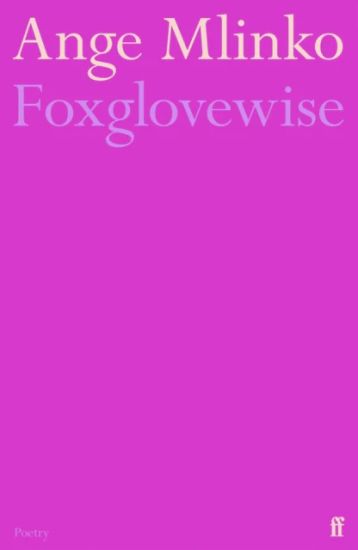
Foxglovewise

Ange Mlinko

FABER FABER
2025
nidottu
The UK debut of a celebrated American poet whose work is as lyrical as it is radical. Foxglovewise is complex but inviting, profound but wry. It is firmly contemporary while also being in lively conversation with deep histories: 'Where do stargazers go in a city of light?' Mlinko takes us from a Scottish cemetery to a mangrove in Florida via a supercell storm in Texas. Along the way, her use of form and rhyme is as light as it is enlightening as she probes our all-too-human nature and pays careful attention to the quiet marvels to be found by looking carefully at right where we happen to be.'Mlinko is rarely less than dazzling thanks to the pleasure and rigor of her phrasing. . . layered, allusive, and intelligent poems. . . . There is a moving and unignorable sense of grief and loss beneath the surface, in an expertly managed balance with the luster of the vocabulary and music of these poems.' Publishers Weekly (starred review)'Mlinko delivers again on the promise of a richly rewarding smorgasbord of sound, image, feeling, and thought.' Diego Báez, Booklist'Image-rich [with] densely discursive textures [...] This is a big and imposing book, worldly wise but warmly open and giving.' David Wheatley, Guardian, Best Recent Poetry
Foxglovewise: Poems

Foxglovewise: Poems

Ange Mlinko

Farrar, Straus and Giroux
2025
sidottu
Ange Mlinko, whose poetry is "irresistible" (Los Angeles Review of Books), opens our perception of other lives, or lives unlived. Foxglovewise is, at its core, a response to the singular experience of the loss of one's parents. It begins at an Eastern Orthodox Epiphany ritual in Florida and ends in a cemetery in Los Angeles. Yet, as with Ange Mlinko's other books of poetry, the collection uses geography as a trope for the ways in which we try to map out our lives and make them legible, even as poetry, music, and paintings suggest that much of what happens, or matters, to us is "not on the maps" (not to mention "the apps"). Whether it's Europa borne over the waves, or gravestones bearing aliases rather than birth names, or books bequeathed to us by relatives in languages we can't read, we live "up in the air" or "on the wing" and not in fixed coordinates. Mlinko's poetry is suffused with wit, erudition, beauty, and boundless energy. As Declan Ryan wrote of her work in The Times Literary Supplement, "A reader could be merely dazzled by all this surface stylishness . . . but then they would miss the heart beneath it all." Foxglovewise is a direct line to the author's heart.

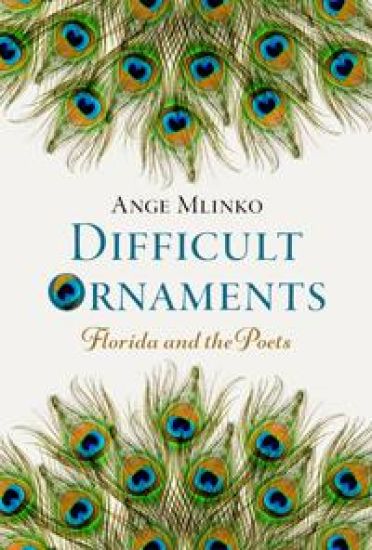
Difficult Ornaments

Difficult Ornaments

Ange Mlinko

OXFORD UNIVERSITY PRESS INC
2024
sidottu
This is a book about the works that six twentieth-century American poets created in and about the state of Florida--or, in one case, refused to create. Those poets who nourished their muse on Florida's landscape, history, and myths in turn helped perpetuate those myths: they keep an idea of Florida alive in the cultural imagination and in the language. They were not regional poets, because they did not live here permanently. But they do contribute to a psychogeography: theirs is a Florida that one can access from anywhere in the world through the pages of their books. It so happens that these poets compose a chain of personal friendship and influence: Marianne Moore was friendly with Wallace Stevens, Elizabeth Bishop was friendly with Moore, James Merrill was friendly with Bishop, and socialized frequently with Harry Mathews when both had houses in Key West. Only Riding, who rose to prominence in the 1920s, gave up poetry around 1941, and moved to Wabasso in 1943 to live an isolated existence, stands apart. And yet there are correspondences to be drawn between her work and Merrill's, for instance. The word "ornament" is used by both biologists and literary critics to describe the extras of beauty; but whether it is the encumbrance of a peacock's tail or the profusion of metaphor, ornaments are also seen as "difficult." What is it about "difficult ornaments" that make poems surprising, distinctive, and enduring? And does a proximity to the tropics-nature's own laboratory-compel poets to reach for invention and experiment? Does Florida contribute to an "evolution" of poetics? That's what this book explores.
Venice: Poems

Venice: Poems

Ange Mlinko

Farrar, Straus and Giroux
2023
nidottu
Ange Mlinko alchemizes art and life into a dazzling collection of poetry in Venice In Venice, Ange Mlinko dissolves the boundaries between the sublime and the ordinary, the mythic and the rational, the past and the present. She sees a Roman tablet, scratched with Greek script, in the waxen wings of a bouffant bee, and she thinks of the abyss between two airport terminals when considering Rodin's Gates of Hell. From Naples, Italy, to its sister city on the Gulf of Mexico, or at home, in the glow of a computer screen ("I worry / that Zoom is ruled by djinn / that filter out the wavelength of love / and so I wear my evil eye jewelry, // as you advised, against being too /much in view . . ."), Mlinko probes the etymologies and eccentricities of all she encounters. As Dan Chiasson wrote in The New Yorker, "Her extraordinary wit, monitoring its own excesses, is her compass." On her travels, Mlinko scrapes at the patina of the past and considers the line between destruction and preservation. Sparking with wit and intelligence, the poet's own lines break down and remake language, myth, and time. Mlinko is a poet of art and of life, and Venice is a sumptuous exploration of poetry's capacity to capture the miracles and ironies of our times.
Liberties Journal of Culture and Politics

Liberties Journal of Culture and Politics

Mamtimin Ala; Richard Thompson Ford; Jaroslaw Anders; Sean Wilentz; Ange Mlinko; Benjamin Moser; Jonathan Zimmerman; Leonard Cohen; Cass R. Sunstein; Mark Lilla; Helen Vendler; Holly Brewer; Shaul Tchernikhovsky; David Thomson

Liberties Journal Foundation
2021
pokkari
“A Meteor of Intelligent Substance”“Something was Missing in our Culture, and Here It Is”"Liberties is THE place to be. Change starts in the mind." Liberties, a journal of Culture and Politics, is essential reading for those engaged in the cultural and political issues and causes of our time. Liberties features serious, independent, stylish, and controversial essays by significant writers and leaders throughout the world; new poetry; and, introduces the next generation of writers and voices to inspire and impact the intellectual and creative lifeblood of today’s culture and politics. This issue of Liberties includes: new work from Nobel Prize winner Mario Vargas Llosa; drawings by Leonard Cohen published for the first time; Mamtimin Ala’s essay on China’s genocide of the Uyghurs; Jaroslaw Anders’ analysis of the crisis in Belarus; Cass R. Sunstein on liberalism inebriated; Richard Thompson Ford on what slavery does and does not explain; Sean Wilentz on the historical strategy of the Republican Party; Benjamin Moser writes about translation as a form of tourism in literary life; Jonathan Zimmerman on the scandal of college teaching; Mark Lilla on cults of innocence and their victims; Helen Vendler on Adrienne Rich; Holly Brewer on race and enlightenment; David Thomson asks, What shall we watch now?; Celeste Marcus (managing editor) on the legend of Alice Neel; Leon Wieseltier (editor) on Zionism’s beautiful stubbornness of survival; and new poetry from Ange Mlinko and Shaul Tchernikhovsky, translated by Robert Alter.
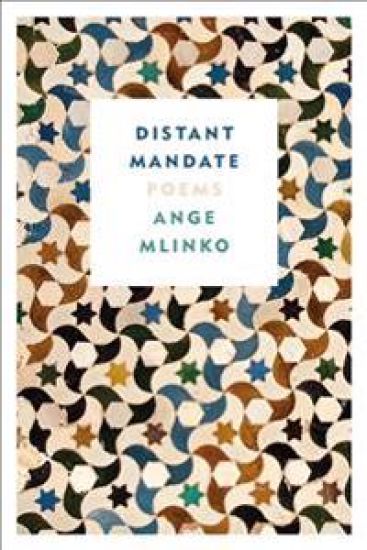
Distant Mandate: Poems

Distant Mandate: Poems

Ange Mlinko

Farrar, Straus and Giroux
2018
nidottu
In Distant Mandate, Ange Mlinko moves between the tormented southern landscape, with its alternately arid and flooded scrublands, and the imaginative landscapes of Western art. Guided by her spiritual forbears--Orpheus, Mallarm , Pound, Yeats, and others--Mlinko deftly places herself within the tradition of the poet in protest against the obduracy of the real. Mlinko takes the title from a piece by Laszl Krasznahorkai on the unknowable origins of the Alhambra, the monument "for the sight of which there is only a distant mandate . . . one] can see, in any event, the moment of creation of the world, of course all the while understanding nothing of it." This distant mandate, also the "bitter ideal" of Mallarm , is the foundation upon which all works of art are composed--the torment of eros and the intimation of war. Myth is central to these poems; some are based on the story Cupid and Psyche, others serve as odes to Aphrodite or as explorations of the myth of Orpheus and Eurydice. In Distant Mandate, Mlinko has given us a shimmering and vibrant collection, one that shows us not only how literature imagines itself through life but also how life reimagines itself through literature.
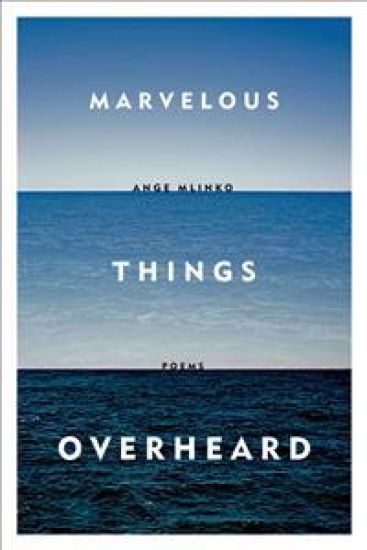
Marvelous Things Overheard

Marvelous Things Overheard

Ange Mlinko

Farrar, Straus and Giroux
2014
pokkari
A vibrant and eclectic collection from a stunningly mature young poet "The world--the time has come to say it, though the news will not be welcome to everyone--has no intention of abandoning enchantment altogether." Roberto Calasso's words in Literature and the Gods remind us that, in an age of reason, of mechanization, of alienation, of rote drudgery, we still seek out the transcendent, the marvelous. Ange Mlinko's luminous fourth collection is both a journey toward and the space of that very enchantment. Marvelous Things Overheard takes its title from a collection of ancient rumors about the lands of the Mediterranean. Mlinko, who lived at the American University of Beirut and traveled to Greece and Cyprus, has penned poems that seesaw between the life lived in those ancient and strife-torn places, and the life imagined through its literature: from The Greek Anthology to the Mu'allaqat. Throughout, Mlinko grapples with the passage of time on two levels: her own aging (alongside the growing up of her children) and the incontrovertible evidence of millennia of human habitation. This is an assured and revealing collection, one that readers will want to seek refuge in again and again.
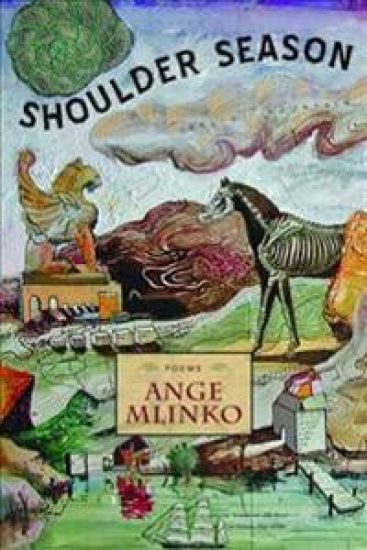
Shoulder Season

Shoulder Season

Ange Mlinko

Coffee House Press
2010
pokkari
“In Ange Mlinko’s Shoulder Season observation and metaphor are always on edge. . . . The poems are at once formally engaged, playful, and disturbing. It’s a wild ride and a great read.”—Rae Armantrout With a title that plays upon “shouldering” one’s burden, this equally fanciful and hard-hitting collection captures the uncertainties and economic turmoil of twenty-first-century life, where the mind might still be “a little spa,” but the future “is hedged against the / boys who died.” A longtime East Coast resident and language columnist for The Nation, Ange Mlinko currently lives in Beirut. Her poems have appeared in The New Yorker, The London Review of Books, Poetry, and elsewhere.
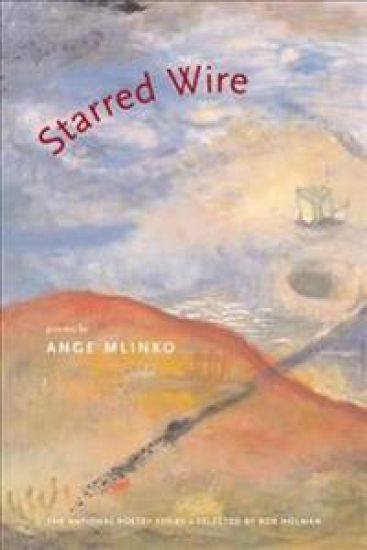
Starred Wire

Starred Wire

Ange Mlinko

Coffee House Press
2005
pokkari
“A fine-grained light like that of a nineteenth-century Danish landscape painting shimmers throughout these gorgeously tactile and tactful poems.”—John Ashbery “A heady heady brew—O’Hara conversation, Ashbery sophistication, Koch hilarity, Schuyler shapeliness, Guest adventures, Notley grain, Mayer utopia, Padgett whimsy, Oulipo oofs.”—Bob Holman, National Poetry Series judge Mlinko was hailed by Publishers Weekly as “one of the most exciting American poets under 40.” Her Starred Wire reaches across continents of language where, as in Borges, dream logic dictates an interactive, delirious exploration of art and childhood, place and possibility. Author of Matinées, Ange Mlinko lives in Brooklyn with her husband and young son.